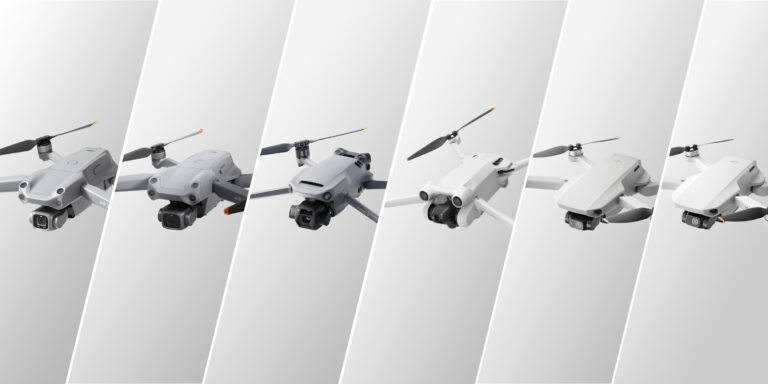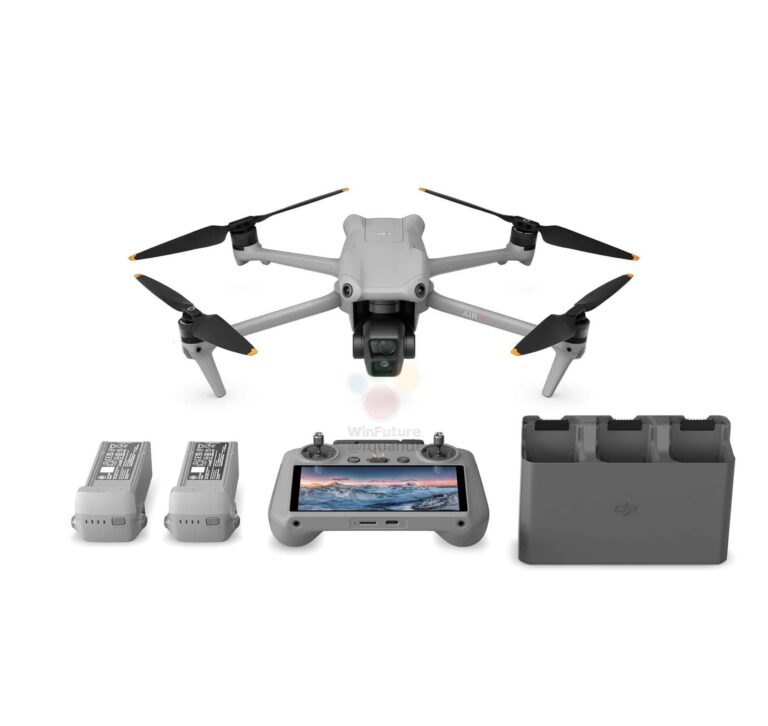
The DJI Mavic 3 has several key differences compared to the DJI Mavic 2 Pro. The Mavic 3 offers a longer flight time of 46 minutes, higher video resolution of 4K/120fps and 5.1K/50fps, and faster ascending and descending speeds of 8m/s and 6m/s respectively.
On the other hand, the Mavic 2 Pro has a flight time of 31 minutes, a video resolution of 4K/30fps, and ascending and descending speeds of 5m/s and 3m/s respectively. These specifications make the Mavic 3 a more advanced and capable drone compared to the Mavic 2 Pro in terms of flight time, video quality, and speed.
Prime for Young Adults — 6 Months Free
Exclusive Offer Amazon Prime for Young Adults, Students and 18–24s get six months of Prime free, then half price.
Start 6 Months Free As an Amazon Associate I earn from qualifying purchases.Design And Build Quality
The DJI Mavic 3 offers longer flight time, higher video resolution, and faster ascending and descending speeds compared to the DJI Mavic 2 Pro. Upgrade to the Mavic 3 for enhanced design and build quality.
A Comparison Of The Design And Build Quality Of The Two Drones
The design and build quality of a drone play a crucial role in its performance and durability. Let’s take a closer look at the design and build quality of the DJI Mavic 2 Pro and the DJI Mavic 3:
:
- Materials used: Both drones feature a sleek and sturdy design, with a combination of high-quality materials that ensure durability and reliability. The Mavic 2 Pro is crafted with an aircraft-grade aluminum frame and an ABS plastic shell, while the Mavic 3 boasts a similar aluminum frame but with a more robust composite material for enhanced strength.
- Weight: The weight of a drone significantly affects its portability and flight performance. The Mavic 2 Pro weighs around 907 grams, making it lightweight and easy to carry during outdoor adventures. On the other hand, the Mavic 3 is slightly heavier, weighing approximately 999 grams, but still maintains a manageable weight for smooth flight control.
- Overall durability: When it comes to durability, both drones are built to withstand various environmental conditions. The Mavic 2 Pro has proven to be a reliable companion, offering resistance against dust, water, and extreme temperatures. The Mavic 3 takes it up a notch with improved weather resistance and a reinforced structure to ensure long-term reliability.
- Additional features: Both drones come with foldable arms, making them compact and convenient for transport. The Mavic 3 introduces an upgraded Omnidirectional Obstacle Sensing system, providing enhanced safety during flight and obstacle avoidance capabilities. The Mavic 2 Pro, while not as advanced in terms of obstacle sensing, still offers reliable obstacle detection for a hassle-free flying experience.
Both the DJI Mavic 2 Pro and the DJI Mavic 3 exhibit excellent design and build quality. The Mavic 3 offers a more robust construction and additional features, while the Mavic 2 Pro remains a reliable option with its durable build and reliable performance.
Ultimately, the choice between the two will depend on your specific needs and preferences as a drone pilot.
Flight Performance And Battery Life
Recommended Best Deal Products


The DJI Mavic 3 offers longer flight time compared to the DJI Mavic 2 Pro, with 46 minutes versus 31 minutes. Additionally, the Mavic 3 provides higher video resolution options and faster ascending and descending speeds.
Compare The Flight Performance Capabilities Of The Dji Mavic 2 Pro And Dji Mavic 3:
Both the Dji Mavic 2 Pro and Dji Mavic 3 are top-of-the-line drones, each with their own set of impressive flight performance capabilities. Let’s take a closer look at their maximum flight time, top speed, and control range.
Maximum Flight Time:
- The Mavic 3 provides a longer flight time compared to the Mavic 2 Pro, with an impressive 46 minutes compared to the 31 minutes offered by the Mavic 2 Pro. This means you can fly the Mavic 3 for a longer duration, capturing stunning aerial footage without having to worry about battery life.
Top Speed:
- The Mavic 3 boasts faster ascending and descending speeds than the Mavic 2 Pro. With speeds of 8m/s for ascending and 6m/s for descending, the Mavic 3 outperforms the Mavic 2 Pro’s 5m/s ascending speed and 3m/s descending speed. This increased speed allows for more efficient and dynamic flight maneuvers.
Control Range:
- When it comes to control range, both drones offer impressive capabilities. The Mavic 2 Pro has a control range of up to 8 kilometers (4.97 miles), while the Mavic 3 takes it a step further with a control range of up to 10 kilometers (6.21 miles). This extended control range gives you the freedom to explore and capture footage from even greater distances.
Battery Life:
- The Mavic 3 showcases improvements in battery life compared to the Mavic 2 Pro. With a longer flight time, you can expect the Mavic 3 to have a more advanced battery system that not only increases flight time but also ensures enhanced overall performance and reliability. The improvements in the Mavic 3’s battery technology contribute to its extended flight time and allow for more uninterrupted flying experiences.
The Dji Mavic 3 offers several notable improvements in flight performance capabilities compared to the Mavic 2 Pro. With a longer flight time, faster ascending and descending speeds, greater control range, and advancements in battery technology, the Mavic 3 takes drone flying to new heights.
Prime for Young Adults — 6 Months Free
Exclusive Offer Amazon Prime for Young Adults, Students and 18–24s get six months of Prime free, then half price.
Start 6 Months Free As an Amazon Associate I earn from qualifying purchases.Whether you’re a professional photographer, videographer, or simply a drone enthusiast, the Mavic 3 is sure to impress with its enhanced flight performance.
Camera Specifications And Capabilities
The Dji Mavic 3 outperforms the Dji Mavic 2 Pro with its longer flight time of 46 minutes compared to 31 minutes, higher video resolution (4K/120fps and 5. 1K/50fps), and faster ascending and descending speeds. It is a significant upgrade in terms of camera specifications and capabilities.
Analyze The Camera Specifications And Capabilities Of Both Drones:
- The DJI Mavic 2 Pro features a 1-inch CMOS sensor, allowing for enhanced image quality and better low-light performance compared to its predecessor, the Mavic 2 Pro.
- On the other hand, the DJI Mavic 3 boasts an upgraded 1.7-inch CMOS sensor, providing even more detailed and crisp images. The larger sensor size allows for improved dynamic range and better handling of high-contrast scenes.
Compare Resolutions, Frame Rates, And Sensor Sizes:
- The Mavic 2 Pro supports a maximum video resolution of 4K at 30 frames per second (fps) and captures photos at 20 megapixels. It is equipped with a 1-inch CMOS sensor, which enhances image quality and offers a wide dynamic range for better exposure control.
- In comparison, the Mavic 3 raises the bar with exceptional video capabilities. It can record videos in 4K at an impressive 120 fps or 5.1K at 50 fps, allowing for stunning slow-motion footage and breathtaking detail. The Mavic 3 also captures photos with a resolution of 20 megapixels.
Discuss Features Such As Hdr, Raw Imaging, And Zoom Capabilities:
- Both drones offer High Dynamic Range (HDR) capabilities, ensuring that your photos have a wide range of tones, from deep blacks to vibrant highlights. HDR helps capture more details in both the shadows and highlights, resulting in visually appealing and balanced images.
- Additionally, both the Mavic 2 Pro and Mavic 3 support RAW imaging, giving photographers more control in post-processing. RAW files retain all the original data captured by the sensor, allowing for more flexibility in editing and greater image quality.
- When it comes to zoom capabilities, the Mavic 2 Pro offers a 2x digital zoom, which can be useful for getting closer to your subject without physically moving the drone. On the other hand, the Mavic 3 takes it up a notch with an impressive 3x optical zoom, allowing for even more precise and detailed shots. The optical zoom preserves image quality, unlike digital zoom, which can result in a loss of quality.
Both the DJI Mavic 2 Pro and the DJI Mavic 3 offer exceptional camera specifications and capabilities. The Mavic 3 surpasses its predecessor in terms of sensor size, resolution, frame rates, and zoom capabilities. Whether you’re a professional photographer looking to capture stunning aerial footage or a hobbyist wanting to take your photography skills to new heights, both drones can deliver outstanding results.
Intelligent Flight Modes And Features
The DJI Mavic 3 offers intelligent flight modes and features that are superior to those of the DJI Mavic 2 Pro, with longer flight time, higher video resolution, and faster speeds. Upgrade to the Mavic 3 for an enhanced flying experience.
The DJI Mavic 2 Pro and DJI Mavic 3 both offer a range of intelligent flight modes and features that enhance the overall flying experience. These modes are designed to make capturing stunning aerial footage easier and more convenient. Let’s compare the intelligent flight modes and features available on both drones:
Activetrack:
- Both the Mavic 2 Pro and Mavic 3 come equipped with ActiveTrack, a feature that allows the drone to automatically track and follow a subject while in flight.
- ActiveTrack uses advanced computer vision algorithms to recognize and identify subjects, ensuring smooth and reliable tracking.
- With the Mavic 3, DJI has introduced an improved version of ActiveTrack that offers even better tracking performance and precision.
Waypoints:
- The Waypoints feature allows users to pre-plan a flight path by selecting specific points on a map or the drone’s camera view.
- Both the Mavic 2 Pro and Mavic 3 offer Waypoints functionality, enabling users to capture complex shots and execute precise aerial maneuvers.
- The Mavic 3 introduces an updated Waypoints system that provides more precise control and flexibility when creating flight paths.
Point Of Interest:
- Point of Interest is another intelligent flight mode available on both the Mavic 2 Pro and Mavic 3.
- This mode allows the drone to circle around a specific point of interest while keeping it in the center of the frame, creating cinematic and visually striking shots.
- The Mavic 3 incorporates enhanced algorithms for Point of Interest, resulting in smoother and more precise orbits around the subject.
New Features And Improvements In The Dji Mavic 3
The DJI Mavic 3 introduces several new features and improvements over its predecessor, the Mavic 2 Pro:
Advanced Obstacle Avoidance:
- The Mavic 3 boasts an advanced obstacle avoidance system that utilizes a combination of sensors and algorithms to detect and avoid obstacles in its flight path.
- This system provides enhanced safety and peace of mind when flying, allowing users to focus on capturing footage without worrying about potential collisions.
Extended Flight Time:
- The Mavic 3 offers an impressive flight time of up to 46 minutes, significantly longer than the Mavic 2 Pro’s 31 minutes.
- This extended flight time allows users to capture more footage per flight and reduces the need for frequent battery changes.
Higher Video Resolution:
- The Mavic 3 features improved video resolution options, including 4K at 120fps and 5.1K at 50fps, surpassing the Mavic 2 Pro’s 4K at 30fps.
- This higher resolution allows for more detailed and cinematic footage, offering greater flexibility in post-production editing.
Increased Speed:
- DJI has boosted the ascent and descent speeds on the Mavic 3, with a maximum ascending speed of 8m/s and descending speed of 6m/s.
- This represents an improvement over the Mavic 2 Pro’s 5m/s ascending speed and 3m/s descending speed, providing more dynamic and responsive flight capabilities.
While both the DJI Mavic 2 Pro and DJI Mavic 3 offer intelligent flight modes and features that enhance the flying experience, the Mavic 3 introduces new features and improvements that take aerial photography and videography to new heights. The Mavic 3’s advanced obstacle avoidance, extended flight time, higher video resolution, and increased speed make it an outstanding choice for professional drone operators and enthusiasts alike.
Prime for Young Adults — 6 Months Free
Exclusive Offer Amazon Prime for Young Adults, Students and 18–24s get six months of Prime free, then half price.
Start 6 Months Free As an Amazon Associate I earn from qualifying purchases.Remote Control And Connectivity
Comparing the Dji Mavic 2 Pro and the Dji Mavic 3 Specs, the Mavic 3 offers a longer flight time, higher video resolution, and faster ascending and descending speeds. It provides an upgraded experience for remote control and connectivity.
Compare The Remote Control Options And Connectivity Features Of The Two Drones:
The remote control and connectivity features play a crucial role in the overall user experience of a drone. Let’s explore how the DJI Mavic 2 Pro and DJI Mavic 3 stack up against each other in this aspect:
- Range:
- Mavic 2 Pro: The Mavic 2 Pro offers an impressive maximum range of up to 8 kilometers, allowing you to explore the skies without worrying about losing connectivity.
- Mavic 3: The Mavic 3 takes it a step further with an enhanced maximum range of up to 10 kilometers, providing even more freedom to fly and capture breathtaking aerial shots.
- Signal Strength:
- Mavic 2 Pro: The Mavic 2 Pro utilizes OcuSync 2.0 technology, which ensures a stable and reliable connection between the drone and the remote control. This allows for smooth video streaming and precise control even in challenging environments.
- Mavic 3: The Mavic 3 builds upon the success of its predecessor by incorporating O3 (OcuSync 3.0), a cutting-edge transmission system that enhances signal strength and stability. This means you can fly your drone with confidence, knowing that the connection will remain strong and uninterrupted.
- Compatibility with Mobile Devices:
- Mavic 2 Pro: The Mavic 2 Pro is compatible with a wide range of mobile devices, including smartphones and tablets. You can easily connect your device to the remote control and use it as a live video feed monitor or to adjust camera settings.
- Mavic 3: The Mavic 3 continues the tradition of seamless compatibility with mobile devices. Whether you’re an iOS or Android user, you can connect your smartphone or tablet to the remote control and take advantage of the DJI Fly app’s intuitive features and capabilities.
Both the DJI Mavic 2 Pro and DJI Mavic 3 offer impressive remote control options and connectivity features. While the Mavic 2 Pro delivers a reliable range and signal strength, the Mavic 3 takes it a step further with extended range and enhanced signal stability.
Both drones also provide seamless compatibility with various mobile devices, ensuring a smooth and immersive flying experience. Ultimately, the choice between the two will depend on your specific needs and preferences as a drone enthusiast.
Pricing And Value For Money
The DJI Mavic 3 offers a longer flight time and higher video resolution compared to the Mavic 2 Pro, making it a better choice in terms of pricing and value for money.
Compare The Pricing Of The Dji Mavic 2 Pro And Dji Mavic 3:
- Dji Mavic 2 Pro: The Mavic 2 Pro is available at a starting price of $1,599, making it a solid option for those looking for a high-quality drone without breaking the bank.
- Dji Mavic 3: On the other hand, the Mavic 3 comes at a higher price point, starting at $2,199. While this may seem steep, the Mavic 3 offers a range of advanced features and improvements that justify the higher price tag.
Discuss The Value For Money Offered By Each Drone:
Dji Mavic 2 Pro:
- Excellent camera quality: The Mavic 2 Pro is equipped with a Hasselblad camera, delivering stunning image and video quality. This makes it a great choice for professional photographers and videographers.
- Advanced obstacle avoidance: With omnidirectional obstacle sensing, the Mavic 2 Pro ensures a safe and smooth flying experience, even in complex environments.
- Intelligent flight modes: The drone offers a range of automated flight modes, such as ActiveTrack 2.0 and Hyperlapse, allowing users to capture creative and dynamic shots effortlessly.
Dji Mavic 3:
- Enhanced camera capabilities: The Mavic 3 takes camera performance to the next level with its 46-megapixel sensor and improved low-light capabilities. It also offers 8K resolution for incredibly detailed footage.
- Longer flight time: With a flight time of up to 46 minutes, the Mavic 3 allows for extended flight sessions, perfect for capturing breathtaking aerial shots or covering larger areas.
- Advanced flight performance: The Mavic 3 features improved flight stability and maneuverability, thanks to its upgraded propulsion system and enhanced GPS technology. This makes it easier to pilot and control, even in challenging conditions.
While the Dji Mavic 2 Pro offers excellent value for its price range with its top-notch camera and intelligent flight modes, the Dji Mavic 3 takes things a step further with its advanced camera capabilities, longer flight time, and enhanced flight performance.
If you’re a professional seeking the best possible drone experience, the Mavic 3 is worth the investment.
Credit: www.youtube.com
Frequently Asked Questions On Dji Mavic 2 Pro Vs Dji Mavic 3 Specs
Is Mavic 3 Better Than Mavic 2 Pro?
The Mavic 3 is better than the Mavic 2 Pro because it has a longer flight time, higher video resolution, and faster speeds.
What Is The Difference Between Dji 3 And 2?
The DJI 3 offers a longer flight time, higher video resolution, and faster ascending/descending speeds compared to the DJI 2.
Is It Worth Upgrading To Mavic 3?
Upgrading to Mavic 3 is worth it because it offers longer flight time, higher video resolution, and faster speeds compared to Mavic 2 Pro.
What Is The Successor Of The Mavic 2 Pro?
The successor of the Mavic 2 Pro is the Mavic 3. It offers longer flight time and higher video resolution compared to the Mavic 2 Pro.
Conclusion
With the release of the DJI Mavic 3, drone enthusiasts are eager to compare its specs with its predecessor, the Mavic 2 Pro. The Mavic 3 offers several key improvements, making it a worthy upgrade for those looking to enhance their aerial photography and videography experience.
Firstly, the Mavic 3 boasts a longer flight time of 46 minutes, compared to the Mavic 2 Pro’s 31 minutes, allowing users to capture more footage without interruptions. Additionally, the Mavic 3 offers higher video resolution options, including 4K at 120fps and 5.
1K at 50fps, surpassing the Mavic 2 Pro’s 4K at 30fps. Not only that, but the Mavic 3 also exhibits faster ascending and descending speeds, further enhancing its agility during flights. Overall, the DJI Mavic 3 presents significant advancements in performance and image quality, solidifying its position as a leading choice for aerial photographers and videographers.