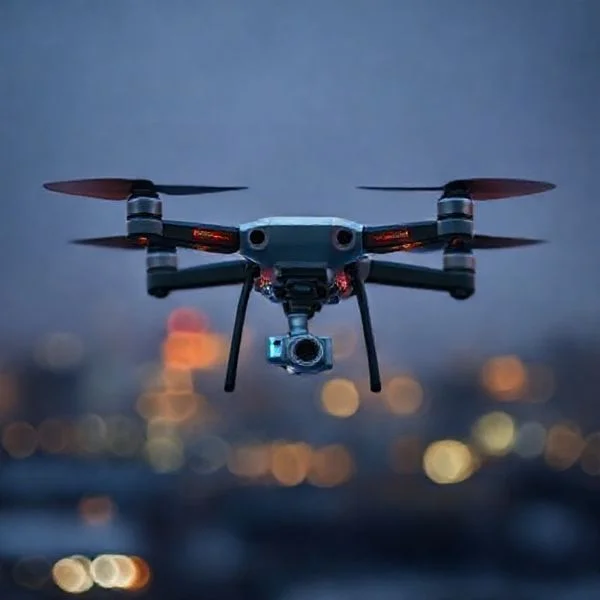
The standard legal altitude for drone flight is 400 feet (120 meters) Above Ground Level (AGL) to prevent collisions with manned aircraft. While many drones are technically capable of flying much higher, software geofencing and atmospheric conditions often limit their actual performance.
🎯 Key Takeaways
- The universal legal ceiling for recreational drones is 400 feet AGL.
- Altitude is measured from the ground level, not sea level.
- Manufacturers use geofencing software to enforce legal height limits automatically.
- Higher altitudes feature thinner air and stronger winds, reducing battery efficiency.
- Commercial pilots can exceed 400 feet when inspecting tall structures under specific rules.
In most countries, the legal altitude limit for flying a unmanned aerial vehicles”>regulations
for recreational flyers”>drone is 400 feet (120 meters) above ground level. This height serves as a universal ceiling designed to prevent collisions between small unmanned aircraft and manned vehicles like helicopters or low-flying planes. While your drone might be physically capable of soaring much higher, staying below this line is the most critical rule for any pilot. Exceeding it can lead to massive fines, the loss of your license, or even criminal charges.Prime for Young Adults — 6 Months Free
Exclusive Offer Amazon Prime for Young Adults, Students and 18–24s get six months of Prime free, then half price.
Start 6 Months Free As an Amazon Associate I earn from qualifying purchases.
Understanding these limits is about more than just staying out of legal trouble. It is about protecting your gear and ensuring the safety of everyone in the airspace. Whether you are a hobbyist capturing landscapes or a professional inspecting a tower, you must distinguish between what your drone is physically capable of and what the law permits. Falling on the wrong side of that line can result in a costly crash or a dangerous encounter with aviation authorities.
Understanding Legal Altitude Limits and Airspace Safety
Recommended Best Deal Products



The Federal Aviation Administration (FAA) in the US, EASA in Europe, and the CAA in the UK almost universally mandate a 400-foot ceiling for drone pilots. This specific height is not arbitrary; it creates a vital buffer zone. Most manned aircraft are required to maintain a minimum altitude of 500 feet. By capping drones at 400 feet, authorities ensure a 100-foot “safety gap” to prevent mid-air collisions. If you breach this limit, you enter controlled airspace where you become a significant hazard to pilots who cannot easily spot a small drone from a cockpit.
The Logic Behind the 400-Foot Ceiling
The primary reason for the altitude cap is the presence of low-flying manned aircraft. Helicopters, crop dusters, and emergency medical flights often operate below standard cruising altitudes. If you fly above 400 feet, you are operating in the same space as these vehicles. Key legal takeaways you need to remember include:
- Class G Airspace: This is uncontrolled airspace where the 400-foot rule is the standard maximum.
- Visual Line of Sight (VLOS): You must always be able to see your drone with your own eyes. At 400 feet, a standard drone becomes a tiny speck, making it difficult to maintain control.
- Airport Proximity: Limits are often much lower, or restricted to zero, if you are within five miles of an airport or in a flight path.
- Structure Exceptions: For commercial pilots (Part 107 in the US), you can fly 400 feet above a structure, such as a cell tower, provided you stay within 400 feet of that structure’s immediate radius.
Defining Above Ground Level (AGL)
It is vital to understand that the legal limit is measured in Above Ground Level (AGL), not Mean Sea Level (MSL). If you take off from a 1,000-foot hill, your 400-foot limit starts from that peak. However, if you fly your drone out over a valley, you must lower your altitude to remain within 400 feet of the ground directly beneath the aircraft. Most drone controllers display AGL based on your takeoff point, so you must manually adjust for changes in terrain to stay legal.
Technical Constraints: Signal Range, Battery, and Physics
Even if there were no laws, your drone would eventually hit a physical ceiling. Most modern consumer drones, like the DJI Mavic or Air series, are technically capable of reaching altitudes of 1,500 to 3,000 feet. However, pushing your hardware to these heights is risky. As you climb, you encounter technical hurdles that can lead to a “flyaway” or a total loss of your aircraft.
Signal Strength and Battery Drain
The higher you fly, the more distance your radio signal must travel through atmospheric interference. While many drones boast ranges of several miles, that usually refers to horizontal distance in ideal conditions. Vertical flight requires the drone to fight gravity constantly, placing an immense strain on the motors. Factors that limit your technical climb include:
- Radio Frequency (RF) Interference: At high altitudes, your drone gains a “clearer view” of more cell towers and radio sources. This can actually jam your controller signal more easily than at lower heights.
- Wind Resistance: Wind speeds are significantly stronger at higher altitudes. Your drone must use more battery power just to maintain its position against these gusts.
- Battery Safety: If you use 50% of your battery just to climb, you may not have enough power left to safely descend. Descending too quickly can also cause “vortex ring state,” where the drone falls into its own prop wash and crashes.
Atmospheric Pressure and Geofencing
Physics plays a major role in how high a drone can go. Drones rely on spinning propellers to create lift by moving air. As you ascend, the air becomes thinner and less dense. Eventually, the propellers cannot spin fast enough to generate the lift needed to move the drone’s weight upward. This is known as the “service ceiling.” Most consumer drones are not designed to operate in the thin air found at extreme altitudes.
Prime for Young Adults — 6 Months Free
Exclusive Offer Amazon Prime for Young Adults, Students and 18–24s get six months of Prime free, then half price.
Start 6 Months Free As an Amazon Associate I earn from qualifying purchases.Furthermore, most reputable manufacturers like DJI and Autel implement geofencing software. This internal software uses GPS to detect your location and enforce local laws. By default, many drones are hard-coded to stop climbing once they hit 120 meters (approx. 400 feet) or 500 meters, depending on the region. Even if you push the control stick up, the drone will simply stop ascending because the software prevents it from violating airspace regulations.
Legal Exceptions for Commercial Pilots and Tall Structures
Recommended Best Deal Products


While the 400-foot ceiling is the standard rule for hobbyists, the landscape changes slightly for commercial operators flying under FAA Part 107. These professionals often need to go higher to inspect infrastructure or capture specific industrial data. Understanding these nuances is vital if you plan to use your drone for more than just weekend photography.
The “400-Foot Buffer” Near Structures
One of the most significant exceptions for licensed commercial pilots involves flying near tall buildings, towers, or antennas. If you are inspecting a structure, the law allows you to fly within a 400-foot radius of that object. Most importantly, you can fly up to 400 feet above the topmost point of that structure, even if that puts you thousands of feet above the ground.
- Practical Example: If you are inspecting a 1,000-foot radio tower, you can legally fly at 1,400 feet, provided you stay within 400 feet of the tower’s perimeter.
- Safety Requirement: This exception exists because manned aircraft are required to maintain a safe distance from such obstacles, creating a “safe zone” for the drone.
- Accessory Tip: Using a high-gain antenna or signal booster is often necessary when performing these high-altitude structural inspections to maintain a stable link.
Airspace Waivers and Authorizations
If a commercial mission requires flying high in controlled airspace or exceeding the standard limits without a structure nearby, pilots must apply for a Part 107 Waiver (Section 107.51). The FAA reviews these on a case-by-case basis. You must prove that your flight can be conducted safely without endangering other aircraft. This usually requires advanced safety equipment like strobe lights for visibility and ADS-B In technology to track nearby manned planes.
Risks of High-Altitude Flight and Potential Consequences
Just because your drone can reach 2,000 feet doesn’t mean it should. Pushing the limits of altitude introduces technical variables that can lead to a catastrophic “flyaway” or a total loss of your equipment. Beyond the physical risks, the legal ramifications of ignoring altitude ceilings are increasingly severe.
Technical Strain and Environmental Factors
As you climb, the air becomes thinner. Your drone’s motors must spin significantly faster to generate the same amount of lift, which leads to rapid battery depletion. Furthermore, wind speeds at 400 feet are often double or triple what you feel at ground level. A calm day on your lawn could be a gale-force wind at the top of a climb.
- Signal Interference: Higher altitudes increase the “line of sight” to various radio towers, which can actually increase interference and cause your video feed to flicker or disconnect.
- Propeller Efficiency: Standard props are optimized for lower altitudes. High-altitude flight causes them to work harder, increasing the risk of mechanical failure or overheating.
- Manned Aircraft: This is the biggest risk. Medevac helicopters and crop dusters often fly below 500 feet. At high altitudes, you may not hear them in time to descend safely.
Legal and Financial Fallout
The FAA and local authorities take altitude violations seriously. With the implementation of Remote ID, it is easier than ever for authorities to track a drone’s position and its pilot’s location in real-time. Violating altitude limits can result in thousands of dollars in fines, the revocation of your pilot certificate, and even criminal charges if you interfere with manned aviation. Keeping your drone within the legal limit isn’t just about safety; it’s about protecting your investment and your future as a pilot.
Prime for Young Adults — 6 Months Free
Exclusive Offer Amazon Prime for Young Adults, Students and 18–24s get six months of Prime free, then half price.
Start 6 Months Free As an Amazon Associate I earn from qualifying purchases.Conclusion
Recommended Best Deal Products


Understanding how high you can fly your drone is a mix of knowing the law and respecting the technical limits of your gear. For most, the 400-foot ceiling is the golden rule that keeps the skies safe for everyone. Whether you are a hobbyist exploring the view or a commercial pilot inspecting a skyscraper, staying within legal bounds ensures you won’t face heavy fines or lose your drone to high-altitude winds. Always remember that air density and battery life change the higher you go.
To stay safe on your next flight, take these two steps: first, check a flight map app like B4UFLY to see if there are local altitude restrictions in your area. Second, calibrate your drone’s sensors and update your “Maximum Altitude” settings in your flight app to 400 feet to prevent accidental violations. Fly smart, stay low, and enjoy the view!
❓ Frequently Asked Questions
Why is the drone altitude limit set at 400 feet?
This limit provides a 100-foot safety buffer from manned aircraft, which generally must maintain a minimum altitude of 500 feet, except during takeoff and landing.
How does flying at high altitudes affect drone performance?
As altitude increases, the air becomes thinner, meaning the propellers must spin faster to maintain lift. This consumes more battery power and can lead to motor overheating.
Can I fly higher than 400 feet near a building?
Under FAA Part 107 rules, commercial pilots can fly up to 400 feet above a structure’s uppermost point, provided they remain within a 400-foot lateral radius of the structure.
What are the penalties for flying a drone too high?
Violating altitude regulations can result in significant fines from aviation authorities, the revocation of pilot certificates, and potential criminal charges if an accident occurs.
Do high-altitude drones require special propellers?
Some drones can be fitted with ‘high-altitude’ propellers designed with a different pitch to provide better lift in thinner atmospheric conditions found in mountainous regions.
Does wind speed change the higher you fly?
Yes, wind speeds typically increase significantly with altitude, which can make it difficult for a drone to return to its home point if it exceeds its maximum wind resistance.