Most professional thermal drones cost between $3,500 and $15,000, with entry-level hobbyist models starting as low as $2,000. The primary cost drivers are thermal sensor resolution (640×512 vs. 160×120) and whether the camera is integrated or a modular payload.
🎯 Key Takeaways
- Entry-level thermal drones typically start around $2,000 for basic detection.
- Industry-standard 640×512 resolution sensors significantly increase the total price.
- Radiometric thermal sensors cost more because they provide precise temperature data.
- Enterprise platforms like the DJI Matrice series often exceed $12,000 total.
- Higher frame rates (30Hz+) are essential for smooth tracking and higher costs.
If you are looking to purchase a thermal drone in 2024, expect to spend between $2,000 and $15,000+. Unlike standard hobbyist drones where you pay for camera stabilization and flight time, thermal drone pricing is almost entirely dictated by the sensor’s capabilities. A high-resolution thermal camera can often cost three times more than the actual aircraft it is attached to. Whether you are performing roof inspections, searching for lost pets, or monitoring livestock, your budget will be the primary filter for the level of detail you can see from the air.
Recommended Best Deal Products


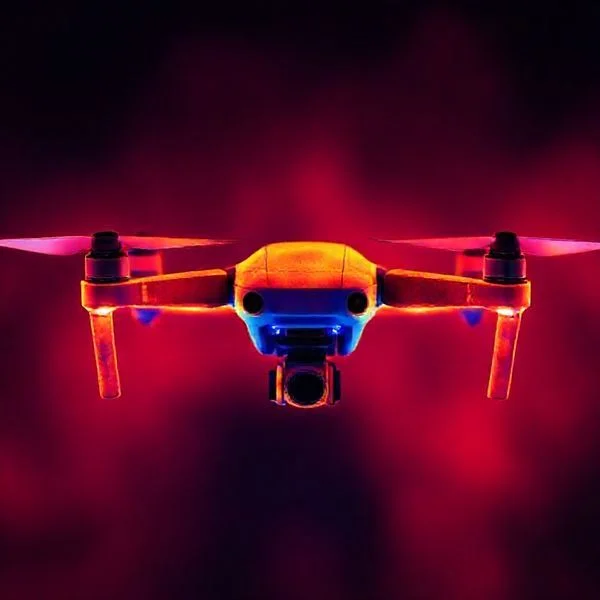
Investing in thermal technology is a significant jump from standard visual imaging. You aren’t just buying a flying camera; you are buying a diagnostic tool that visualizes heat signatures. For professionals in public safety or industrial inspection, the price is often justified by the massive amount of time saved and the safety benefits of remote sensing. Understanding the current market tiers will help you avoid overspending on features you don’t need or, conversely, buying a budget model that lacks the resolution required for your specific job.
Pricing Tiers for Thermal Drones: Entry-Level to Enterprise
The thermal drone market is divided into three distinct price brackets. Each tier offers a jump in sensor quality, flight stability, and software integration. Knowing which tier your project falls into is the first step in narrowing down your options.
The Entry-Level Professional Tier ($2,000 – $4,500)
This tier is perfect for small-scale inspections, basic search and rescue, and hobbyists with a specific need for heat mapping. These drones are usually “all-in-one” units where the thermal sensor is permanently integrated into the airframe. While portable, they often have smaller thermal sensors that require you to fly closer to the target to get accurate readings.
- DJI Mavic 3 Thermal (M3T): Currently the industry leader in this bracket, priced around $3,600 to $4,000. It features a 640×512 resolution sensor and a 45-minute flight time.
- Autel EVO II Dual 640T V3: A strong competitor to DJI, typically priced between $3,200 and $3,800. It offers high-resolution thermal imaging in a very compact, foldable body.
- Teledyne FLIR Hadron Modules: Often found on smaller, specialized American-made drones, these setups hover around the $4,000 mark for the complete kit.
The Mid-Range & Enterprise Tier ($5,000 – $10,000)
In this price range, you start seeing better optical zoom capabilities alongside thermal sensors. These drones are designed for daily professional use and often feature better weather resistance (IP ratings) and more advanced autonomous flight modes. This is where most commercial drone pilots land for serious inspection work.
- Parrot Anafi USA: Priced around $7,000, this drone is popular for government and first responder work due to its high-end data security and impressive 32x zoom.
- Teledyne FLIR SIRAS: Retailing for approximately $9,500, this drone features a swappable payload system, allowing you to upgrade the camera without replacing the entire drone.
The High-End Industrial Tier ($10,000 – $15,000+)
These are massive, heavy-lift platforms used for utility inspections, large-scale agriculture, and high-stakes search operations. At this price point, you are usually buying the “drone body” and “thermal payload” separately. These systems offer the highest level of accuracy and can carry multiple sensors simultaneously.
- DJI Matrice 350 RTK: The drone body alone costs about $12,000, but once you add a high-end thermal payload like the Zenmuse H30T, the total package can easily exceed $20,000.
- Freefly Alta X or Astro: Specialized American-made enterprise drones that, when equipped with high-resolution thermal rigs, often start at $15,000 and go up.
Everything You Need to Know About Thermal Drone Pricing
Purchasing a thermal drone is a significant investment that spans a massive price spectrum, ranging from $2,000 to over $30,000. This guide is designed to help you navigate the complex world of thermal imaging technology, ensuring you don’t overpay for features you don’t need or, conversely, end up with a “budget” tool that fails to meet professional standards. Following these steps will allow you to build an accurate budget, understand the technical specifications that drive costs, and ultimately make a purchase that provides the best return on investment for your specific industry.
Step 1: Define Your Specific Thermal Application
What you need: A clear list of operational requirements, a notebook or spreadsheet, and a basic understanding of your industry standards (e.g., ASTM standards for building inspections).
Instructions: Before looking at price tags, you must define exactly what you are “looking” for. Thermal drones are used in diverse fields, and the application dictates the cost. For example, if you are performing basic deer recovery or hobbyist wildlife tracking, a lower-resolution sensor (160×120 or 320×240) may suffice, placing your budget in the $2,000 to $3,500 range. However, if you are performing industrial solar panel inspections or high-voltage power line monitoring, you require a high-resolution 640×512 sensor and radiometric capabilities to measure specific temperatures. These professional requirements immediately push your starting price to at least $5,000. Write down your “must-have” vs. “nice-to-have” features based on the distance you will be from the target and the level of detail required for your reports.
Pro Tip: Don’t buy a drone for what you do today; buy for what you plan to do in twelve months. Upgrading a non-interchangeable thermal camera later usually requires buying an entirely new aircraft.
Step 2: Compare Sensor Resolutions and Frame Rates
What you need: Technical specification sheets from manufacturers like DJI, Autel, and Teledyne FLIR.
Instructions: Sensor resolution is the primary driver of thermal drone costs. You will typically encounter three tiers: 160×120 (Entry/Leisure), 320×240 (Mid-range/Public Safety backup), and 640×512 (Professional Standard). A 640×512 sensor has four times as many pixels as a 320×240 sensor, allowing you to fly higher and safer while still capturing actionable data. Additionally, pay attention to the frame rate, measured in Hertz (Hz). Lower-cost drones exported under certain regulations may be capped at 9Hz, which results in a “choppy” image during movement. For professional work, seek a 30Hz or 60Hz sensor to ensure smooth video feeds while the drone is in motion. This difference in resolution and refresh rate can account for a $3,000 price gap between otherwise identical drone bodies.
Pro Tip: If your work involves creating thermal maps (orthomosaics), a 640×512 resolution is virtually mandatory to ensure the software can stitch the images together accurately.
Step 3: Evaluate Radiometric vs. Non-Radiometric Capabilities
What you need: Access to sample data sets or manufacturer software demos (like DJI Thermal Analysis Tool).
Instructions: When researching “how much” a thermal drone costs, you must determine if you need “Radiometry.” A non-radiometric camera simply shows you heat differences (red is hot, blue is cold). A radiometric camera records the specific temperature value of every single pixel in the image. If you are an inspector who needs to tell a client, “This circuit breaker is exactly 185 degrees Fahrenheit,” you need a radiometric sensor. This feature usually adds a $500 to $1,500 premium to the camera’s price. Evaluate whether your deliverables require raw temperature data or if simple visual heat detection is sufficient for your goals. For search and rescue, non-radiometric is often enough, but for mechanical or structural engineering, radiometry is essential.
Pro Tip: Check if the drone includes post-processing software. Some manufacturers charge a recurring subscription fee for the tools needed to analyze radiometric data, which adds to the long-term cost.
Step 4: Analyze the Prosumer “All-in-One” Market
What you need: Current pricing for the DJI Mavic 3 Thermal (M3T) and Autel EVO II Dual 640T.
Instructions: For most small businesses and independent contractors, the “All-in-One” prosumer category offers the best value. These drones come with fixed thermal and visual cameras. As of current market rates, the Autel EVO II Dual 640T generally retails between $4,000 and $5,000, offering a high-resolution 640 sensor. The DJI Mavic 3 Thermal (M3T) is the industry leader in this segment, typically priced between $5,400 and $6,200. These kits usually include the drone, a controller with a built-in screen, and one battery. When calculating your total cost, remember that these “all-in-one” units cannot be upgraded; the camera you buy is the camera you keep for the life of the airframe.
Pro Tip: Look for “Worry-Free” or “Care” packages offered by the manufacturer. For an extra $500-$800, these plans cover accidental damage, which is vital for high-cost thermal sensors.
Step 5: Factor in Enterprise-Grade Modular Systems
What you need: Quotes from specialized enterprise drone dealers (retailers like DroneSense, Adorama Enterprise, or RMUS).
Instructions: If your work requires high-altitude inspections, interchangeable payloads, or extreme weather resistance, you move into the Enterprise tier. This includes drones like the DJI Matrice 350 RTK or the Matrice 30T. The Matrice 30T (M30T) is a weather-sealed unit that retails for approximately $10,000 to $14,000. If you opt for the larger M350 RTK, the “naked” drone costs about $12,000, and a compatible thermal gimbal (like the Zenmuse H20T) adds another $9,000 to $11,000. These systems are designed for 24/7 operations, public safety, and large-scale industrial use. In this tier, you aren’t just paying for the sensor; you are paying for redundancy, long-range transmissions (up to 15km), and the ability to fly in rain or snow.
Pro Tip: Enterprise drones often require proprietary batteries that cost $500 to $700 per pair. Always budget for at least three pairs of batteries for a full day of work.
Step 6: Calculate Necessary Accessories and Ecosystem Costs
What you need: A calculator and a list of secondary flight requirements (storage, power, transport).
Instructions: The “sticker price” of a thermal drone is rarely the final cost. To operate professionally, you must budget for the “support ecosystem.” At a minimum, you will need a multi-battery charging hub ($200-$500), 2-4 additional batteries ($400-$1,500 total), and a ruggedized transport case if one isn’t included ($200-$400). Furthermore, consider your data needs. High-capacity, high-speed microSD cards (V30 or V60 rated) are required to handle the dual streams of thermal and visual 4K video. Finally, if you are in the United States, you must factor in the cost of the FAA Part 107 Remote Pilot Certificate ($175 exam fee plus study materials), as any thermal work for “furtherance of a business” requires this license.
Pro Tip: Don’t skimp on the tablet or controller. Thermal images are hard to see in direct sunlight; budget for a high-brightness monitor (like the DJI RC Pro or a Tripltek tablet) if your kit doesn’t include one.
Step 7: Estimate Maintenance and Insurance Premiums
What you need: Insurance quotes (SkyWatch, Global Aerospace) and a maintenance schedule template.
Instructions: Thermal drones are precision instruments. Annual maintenance—including sensor calibration and firmware optimization—can cost between $300 and $700 per year through authorized service centers. Insurance is another non-negotiable cost for professionals. For a $6,000 drone, annual hull insurance (covering the drone if it crashes) and $1M in liability coverage typically costs between $800 and $1,500 per year. Alternatively, some pilots use “on-demand” insurance that costs roughly $10-$30 per flight hour. Adding these operational costs to your initial purchase price gives you the “Total Cost of Ownership” (TCO) for the first year, which is the most accurate way to answer “how much is a thermal drone.”
Pro Tip: Thermal sensors are sensitive to “sun burn.” Never point the camera directly at the sun, even when the drone is powered off, as it can permanently damage the sensor, leading to a total loss of the payload.
✅ Final Checklist
- Confirmed the sensor resolution (320×240 or 640×512) meets industry reporting standards.
- Verified if the sensor is “Radiometric” for specific temperature data collection.
- Added the cost of 3-4 total batteries and a rapid charging hub to the base price.
- Budgeted for Part 107 certification and hull/liability insurance.
- Confirmed that the chosen software (for analysis) is compatible with the drone’s file format (.R-JPEG or .SEQ).
Important Notes:
- Safety: Thermal sensors cannot see through glass, water, or walls; they only measure surface temperatures. Do not rely on them for “x-ray” style searching.
- Legality: Most high-end thermal drones are subject to ITAR (International Traffic in Arms Regulations) or EAR export controls. Be aware of travel restrictions when taking these drones across international borders.
- Professional Help: If you are spending over $15,000, contact a specialized enterprise consultant to ensure the payload is compatible with your specific airframe and software stack.
- Estimated Cost Range: $2,500 (Entry Professional) to $25,000+ (Heavy Industrial/Interchangeable Payload).
Key Technical Specifications That Drive Thermal Drone Costs
When you compare two thermal drones that look identical but have a $2,000 price difference, the discrepancy is usually hidden inside the sensor glass. There are two “non-negotiable” specs that drive the cost: resolution and refresh rate.
Thermal Resolution: The 640×512 Standard
Resolution is the most significant cost driver. Unlike standard cameras that boast 4K resolution, thermal sensors operate at much lower pixel counts. The current industry standard for professional work is 640×512. If a drone is significantly cheaper than its peers, it likely uses a 160×120 or 320×240 sensor.
- High Resolution (640×512): Allows you to fly higher while still detecting small heat signatures like a person’s hand or a faulty solar cell.
- Low Resolution (160×120): Only useful for very close-range work (within 20-30 feet). At higher altitudes, the “pixels” become too large to identify specific objects.
Choosing a lower resolution might save you $1,500 upfront, but it often makes the data unusable for professional reporting.
Frame Rate (Hz) and Radiometry
The “smoothness” of the thermal video is measured in Hertz (Hz). Most entry-level or export-restricted thermal cameras operate at 9Hz, which looks choppy and can make it difficult to track moving targets. High-end professional models operate at 30Hz or 60Hz, providing a fluid video feed that is essential for search and rescue or moving vehicle tracking.
Additionally, you are paying for Radiometric Data. A standard thermal camera just shows you a “picture” of heat (hot vs. cold). A radiometric thermal camera captures temperature data for every single pixel in the image. This allows you to click on any part of the photo during post-processing to see the exact temperature (e.g., “that spot on the roof is 142.4°F”). Radiometric sensors always command a premium price because of the complex calibration required at the factory.
Comparing Popular Thermal Drone Models and Market Prices
Navigating the current market requires a clear look at the leaders in the space. In 2024, the “sweet spot” for most professional users lies in the compact category, where portability meets high resolution. However, for those needing specialized sensors or extended flight times for large-scale industrial tasks, the investment climbs significantly. The price often reflects not just the camera, but the transmission range and obstacle avoidance capabilities of the aircraft.
Entry-Level to Mid-Range Professional Models
These drones are often the first choice for inspectors and first responders because they offer an excellent balance of price and performance. They typically feature a dual-sensor setup, combining a standard visual camera with a 640×512 thermal sensor, which is the industry standard for usable data.
- DJI Mavic 3 Thermal (M3T): Currently priced around $5,000 – $5,500. It is widely considered the gold standard for search and rescue due to its 56x hybrid zoom and radiometric sensor that allows for precise temperature readings.
- Autel EVO II Dual 640T V3: Priced approximately $4,500 – $5,000. It offers high thermal sensitivity and is often favored by those seeking an alternative to the DJI ecosystem while maintaining top-tier image quality.
- Teledyne FLIR SIRAS: Falling into the $8,000 – $9,500 range, this drone prioritizes data security and features a unique hot-swappable payload system for professional utility work.
Enterprise and Industrial Heavyweights
When the job demands high-altitude inspections, heavy wind resistance, or long-range surveillance, the price reflects the ruggedness of the platform. These units are usually sold as “airframes,” meaning the drone and the camera are often priced as separate line items in a quote.
- DJI Matrice 350 RTK: The airframe alone is roughly $12,000. When paired with a Zenmuse H30T thermal payload (approx. $10,000+), the total package often exceeds $22,000 – $25,000.
- Freefly AltaX: For specialized industrial applications where you might carry high-end custom thermal cores, costs can easily surge past $30,000 depending on the integration and battery packages required.
Integrated vs. Modular Thermal Payloads: Cost and Flexibility
A major factor in the total cost of ownership is how the thermal sensor is attached to the aircraft. You generally have two choices: a drone with a built-in thermal camera (integrated) or a professional platform that allows you to swap sensors (modular). Each has a very different impact on your long-term budget and operational versatility.
The Cost-Efficiency of Integrated Systems
Integrated drones, like the Mavic 3T, are “all-in-one” solutions. Because the manufacturer optimizes the hardware as a single unit, these are almost always cheaper than buying parts separately. They are lightweight, easy to deploy, and require very little technical setup time, making them ideal for quick-response scenarios.
- Pros: Lower initial investment, better battery efficiency, and a simplified software interface.
- Cons: If the camera sensor becomes obsolete or the gimbal is damaged, you often have to replace or repair the entire drone. You are “locked in” to the specific resolution provided at purchase.
Modular Payloads and Long-Term Value
For organizations with evolving needs, modular systems provide a “future-proof” path. You might start with a standard visual camera and upgrade to a high-resolution thermal sensor six months later. While the upfront cost of a modular airframe is much higher, it offers the flexibility to switch between thermal, LiDAR, or multispectral sensors as your business grows.
- Practical Example: A power line inspection company might use a high-zoom visual camera for structural bolts one day and swap it for a Zenmuse H20T thermal sensor to detect electrical “hot spots” the next.
- Specific Tip: Standalone high-end thermal payloads can cost between $6,000 and $13,000. However, the ability to share one expensive sensor across multiple compatible drone bodies in a fleet can actually save money in the long run.
Conclusion: Finding the Right Thermal Value
The cost of a thermal drone in 2024 is no longer a one-size-fits-all figure. From $4,000 entry-level professional units to $25,000+ industrial powerhouses, your investment should align with your specific data needs. Remember that the “total price” includes more than just the hardware; always factor in the value of the software, pilot training, and the potential ROI that high-quality thermal data brings to your operations. Whether you are performing roof inspections or looking for lost hikers, there is a thermal solution that fits your budget.
Next Steps: Start by defining your required thermal resolution—most professionals recommend 640×512 for truly actionable data. Then, determine if you need the portability of an integrated unit or the versatility of a modular system. Ready to upgrade your toolkit? Contact a specialized dealer for a demo to see these sensors in action before you make your final investment.
❓ Frequently Asked Questions
What is the price range for professional search and rescue drones?
For search and rescue, professionals typically spend between $5,000 and $15,000. These units require high-resolution 640×512 sensors and long flight times to effectively locate heat signatures in complex terrain.
How much does the DJI Mavic 3 Thermal cost?
The DJI Mavic 3 Thermal generally retails for approximately $3,600 to $4,500 depending on the bundle and local taxes. It is currently one of the most cost-effective high-resolution thermal drones on the market.
Is there a difference in price between radiometric and non-radiometric drones?
Yes, radiometric sensors, which measure the specific temperature of every pixel in the image, usually add a premium of $500 to $1,500 over non-radiometric models. These are essential for industrial inspections like solar farm or power line monitoring.
How much should I budget for a modular thermal payload?
Standalone thermal cameras like the Zenmuse H20T or FLIR Vue Pro can cost between $5,000 and $10,000. You must also account for the cost of the enterprise airframe, such as a DJI Matrice 350, which adds another $6,000 to $7,000.
Do thermal drone prices include software?
While basic flight apps are included, advanced thermal analysis and mapping software like FLIR Tools or DJI Terra often require separate annual subscriptions ranging from $500 to $3,000. Budgeting for these is critical for professional data reporting.
What affects the resale value of a thermal drone?
Resale value is heavily influenced by the sensor’s resolution and the condition of the lens. Since thermal sensors can be damaged by direct sunlight or extreme heat, a well-maintained sensor with a high pixel count retains significantly more value than entry-level units.

