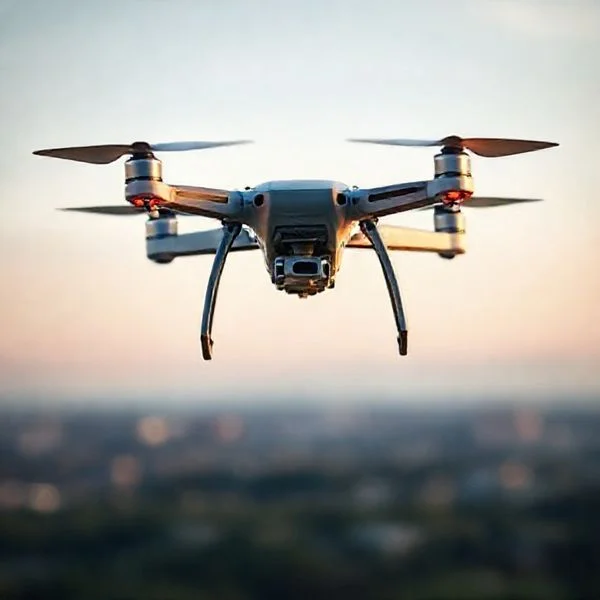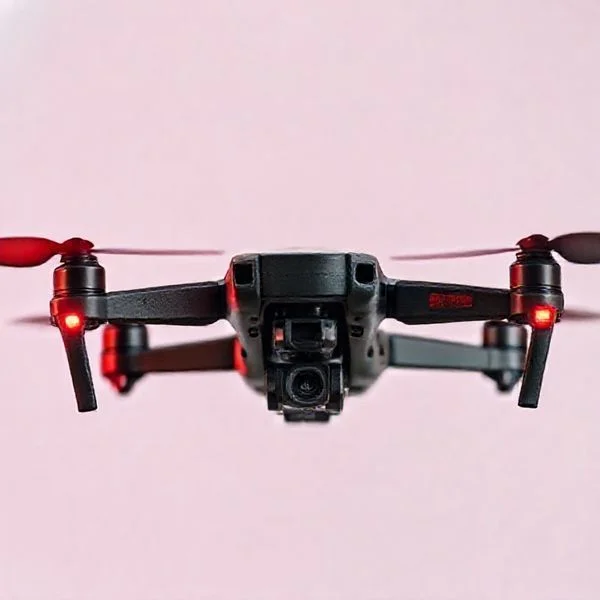
Most drones are recognized as quadcopters with four motor arms and spinning propellers, often featuring a central body housing a stabilized camera. However, designs vary wildly, ranging from airplane-like fixed-wing models to massive military aircraft and palm-sized racing drones.
🎯 Key Takeaways
- Takeaway 1:Quadcopters are the most common consumer shape featuring four rotors.
- Takeaway 2:Fixed-wing drones resemble small airplanes and fly without hovering.
- Takeaway 3:Commercial drones often include visible sensors, gimbals, and landing gear.
- Takeaway 4:Racing drones look ‘naked’ with exposed wires and carbon fiber frames.
- Takeaway 5:Military drones are significantly larger, often painted gray for stealth.
To the average observer, a drone looks like a high-tech cross between a toy helicopter and a robotic insect. Most consumer models feature a central body with four arms extending outward, each topped with a spinning propeller. This specific design is known as a quadcopter, and it is the visual standard for everything from hobbyist photography drones to racing rigs. Depending on its purpose, a drone might be small enough to fit in your palm or large enough to require two people to carry it.
Prime for Young Adults — 6 Months Free
Exclusive Offer Amazon Prime for Young Adults, Students and 18–24s get six months of Prime free, then half price.
Start 6 Months Free As an Amazon Associate I earn from qualifying purchases.
Understanding these physical characteristics is more than just an exercise in identification; it helps you recognize the drone’s capabilities at a glance. For instance, a drone with a large, glass-domed camera hanging underneath is built for cinematography, while a drone with a boxy, reinforced frame and exposed wires is likely designed for high-speed racing. Recognizing these visual cues allows you to understand how a drone moves, what it can carry, and how it interacts with the environment around it.
Anatomy of a Standard Consumer Quadcopter
Recommended Best Deal Products


The “X” or “H” shaped quadcopter is the most recognizable drone design on the market today. When you look at a standard consumer drone, like those used for travel vlogs or real estate photography, you are seeing a highly optimized machine built for stability. The design is functional, symmetrical, and increasingly aerodynamic to help the battery last longer in the air.
The Airframe and Folding Arms
The core of the drone is the fuselage or main body, which houses the flight controller, GPS modules, and internal sensors. Most modern consumer drones feature a sleek, plastic or composite shell that protects these sensitive electronics from dust and light moisture. A defining visual feature of modern drones is the folding arm mechanism. To make them portable, many manufacturers design the arms to tuck tightly against the body, transforming the drone into a compact rectangular brick about the size of a water bottle.
- Landing Gear: Some drones have fixed “legs” protruding from the bottom, while others use small molded bumps on the underside of the motor pods.
- LED Indicators: You will notice colored lights (usually red and green) on the arms or the rear. These help the pilot determine the drone’s orientation and flight status in the sky.
- Battery Compartment: Usually located at the rear or top, the battery often clips into the frame and features its own power button and indicator lights.
Propulsion Systems and The Gimbal
At the end of each arm sits a brushless motor. These look like small, silver or black cylinders. Attached to these motors are the propellers, which usually consist of two thin blades made of plastic or carbon fiber. Beneath the nose of the drone, you will find the most important visual element: the gimbal and camera. The gimbal is a mechanical stabilization system that looks like a small motorized cradle. It allows the camera to remain perfectly level even when the drone is tilting or shaking in the wind.
Visual Differences Between Fixed-Wing and Multi-Rotor Drones
While the quadcopter is the most common sight, drones come in two primary physical formats: multi-rotor and fixed-wing. These two designs look nothing alike because they generate lift in completely different ways. If you see a drone that looks like an insect, it’s a multi-rotor; if it looks like a miniature aircraft, it’s a fixed-wing.
Fixed-Wing Drones: The Mini-Airplane
A fixed-wing drone looks almost exactly like a traditional glider or airplane. It has a long wingspan and a central fuselage. Unlike a quadcopter, which uses propellers to pull itself straight up into the air, a fixed-wing drone uses its wings to generate lift as it moves forward. You will typically see a single propeller located either on the nose or at the very back (a “pusher” configuration).
- V-Tail or T-Tail: The rear of the drone usually features vertical and horizontal fins used for steering.
- Lack of Arms: There are no protruding arms or multiple motor pods; the design is smooth and continuous.
- Size: These drones often have wingspans ranging from three to ten feet, making them much wider than standard quadcopters.
Multi-Rotor Variations: Hexacopters and Octocopters
While the four-arm quadcopter is the standard, professional-grade multi-rotors often add more arms for safety and lifting power. A hexacopter features six arms arranged in a circular pattern, while an octocopter features eight. Visually, these drones look much more “busy” and industrial. They are typically made of dark, matte-finished carbon fiber rather than colorful plastic. The increased number of rotors makes them look like large, mechanical spiders. These designs are rarely foldable and usually feature tall, sturdy landing gear to protect heavy, high-end cinema cameras or specialized sensors mounted underneath.
Prime for Young Adults — 6 Months Free
Exclusive Offer Amazon Prime for Young Adults, Students and 18–24s get six months of Prime free, then half price.
Start 6 Months Free As an Amazon Associate I earn from qualifying purchases.Specialized Designs: Racing, Micro, and Industrial UAVs
Recommended Best Deal Products


While most people picture the sleek, white bodies of consumer drones, specialized models often look quite different. These machines are designed for performance over aesthetics, often resulting in a “skeleton-like” or heavy-duty appearance that prioritizes function above all else.
Racing and FPV Drones
If you see a drone that looks like a tangled mess of wires, antennas, and carbon fiber, it’s likely a racing or FPV (First Person View) drone. These are built for speed and agility rather than cinematic photography. Unlike consumer drones, they rarely have a protective outer shell to save on weight.
- Exposed Components: You can often see the flight controller, wires, and electronic speed controllers (ESCs) directly on the frame.
- Small but Powerful: Most racing drones are about 5 to 7 inches across but can reach speeds over 100 mph in seconds.
- The “GoPro Mount”: Many feature a specialized tilted mount on top for an action camera to record high-speed footage, separate from the FPV camera used for navigation.
Enterprise and Industrial Models
On the other end of the spectrum, industrial drones are built for work. These are the “heavy lifters” of the drone world. They are significantly larger than your average hobbyist drone and look like serious pieces of professional machinery.
- Multiple Payloads: Look for large, swappable sensors, such as thermal cameras, zoom lenses, or LIDAR scanners, hanging from the bottom or even the top.
- Rugged Build: They often feature matte finishes, thicker arms, and weather-sealing for flying in rain, dust, or snow.
- Bright Visibility: Many carry high-intensity strobe lights and bright orange or yellow markings to comply with aviation safety regulations during night missions.
Identifying Military Drones vs. Civilian Models
Distinguishing between a civilian drone and a military UAV (Unmanned Aerial Vehicle) is usually a matter of scale and shape. While consumer drones are meant to be portable and friendly, military models often rival the size of traditional aircraft and have a more utilitarian, “stealthy” aesthetic.
The Aircraft Silhouette
Most advanced military drones don’t look like quadcopters at all. Instead, they resemble traditional airplanes but without a cockpit for a pilot. This “fixed-wing” design allows them to stay in the air for hours or even days at a time to cover vast distances.
- Wingspan: Large military drones like the MQ-9 Reaper have wingspans up to 66 feet, making them impossible to miss if they are on the ground.
- Propeller Placement: Many military UAVs have a single propeller located at the rear of the fuselage (a “pusher” configuration) rather than on the nose.
- Nose Bulge: Look for a large, rounded “forehead” area which houses satellite communication equipment, giving them a distinct bulbous appearance at the front.
Micro-Tactical Drones
Not all military drones are huge. Some, like the Black Hornet, are small enough to fit in a soldier’s palm. These look like miniature helicopters rather than the X-shaped quadcopters you see in parks. They are almost silent and feature highly stabilized, tiny camera lenses embedded in the front of a sleek, aerodynamic pod.
Practical Tip: If you see a drone with a wingspan longer than a car or a “pod” instead of a windowed cockpit in the front, you’re likely looking at a military-grade surveillance or combat vehicle rather than a hobbyist toy.
Prime for Young Adults — 6 Months Free
Exclusive Offer Amazon Prime for Young Adults, Students and 18–24s get six months of Prime free, then half price.
Start 6 Months Free As an Amazon Associate I earn from qualifying purchases.Final Thoughts on Drone Designs
Recommended Best Deal Products

From the palm-sized toy that looks like a colorful beetle to the massive fixed-wing units used for global surveillance, the answer to “what does a drone look like” depends entirely on its purpose. Most civilian models favor a compact, four-rotor design that is easy to carry and fly, while specialized and military models prioritize endurance, speed, or heavy-duty sensing capabilities. Understanding these visual cues helps you better identify what is flying in the sky above you.
To continue your journey, take a moment to research different drone classes online or visit a local hobby shop to see these designs in person. Whether you are looking for a sleek photography tool or a rugged industrial workhorse, knowing the “look” is the first step toward finding the perfect flight experience. Happy flying!
❓ Frequently Asked Questions
What does a professional cinematography drone look like?
These are often ‘hexacopters’ or ‘octocopters’ with six to eight arms to carry heavy camera gear. They usually feature large, retractable landing gear so the camera can rotate 360 degrees without obstruction.
How can I tell the difference between a bird and a drone in the sky?
Drones move with very steady, linear paths and often have blinking LED lights, usually red and green. Unlike birds, drones don’t flap their wings and typically emit a distinct high-pitched buzzing sound.
What does a racing drone look like compared to a photography drone?
Racing drones are stripped-down and ‘industrial’ looking, often with exposed electronics and a tilted front camera. They prioritize speed and durability, featuring thick carbon fiber frames and brightly colored propellers.
What are the visual characteristics of military drones?
Large military drones like the Predator look like windowless gray airplanes with long, thin wings and a bulging nose. They are massive, often the size of a small private jet, and lack the visible spinning rotors seen on hobbyist drones.
Do drones always have lights?
Most consumer and commercial drones feature LED navigation lights to help pilots identify the front and back of the craft. These lights are typically located on the ends of the arms or at the base of the motors.
What does a fixed-wing drone look like?
A fixed-wing drone looks like a miniature remote-controlled airplane with a single set of wings and a rear or front-mounted propeller. They are designed for long-distance flight and cannot hover in place like a quadcopter.