A drone gimbal is a mechanical stabilization system that keeps your camera level and steady regardless of how the drone moves. It counteracts tilt, roll, and vibration to ensure cinematic, jitter-free aerial footage and sharp long-exposure photos.
🎯 Key Takeaways
- A gimbal keeps the camera level while the drone tilts or maneuvers.
- Three-axis gimbals offer superior stabilization by correcting pitch, roll, and yaw.
- Mechanical stabilization is generally superior to software-based Electronic Image Stabilization (EIS).
- Gimbals allow for long-exposure photography by holding the camera perfectly still.
- Most professional drone cinematography requires a 3-axis gimbal for high-quality results.
A drone gimbal is a motorized stabilization system designed to keep your camera perfectly level, even while the aircraft tilts, leans, and vibrates during flight. Without a gimbal, every time your drone moves forward or banks into a turn, your footage would tilt wildly along with the frame. In simple terms, the gimbal acts as a mechanical shock absorber and horizon leveler that works in real-time to ensure your video remains cinematic and your photos stay tack-sharp.
Prime for Young Adults — 6 Months Free
Exclusive Offer Amazon Prime for Young Adults, Students and 18–24s get six months of Prime free, then half price.
Start 6 Months Free As an Amazon Associate I earn from qualifying purchases.
This component is the single most important factor in modern aerial cinematography. It doesn’t just hold the camera; it uses high-speed sensors and brushless motors to counteract gravity and wind resistance at a micro-second pace. Whether you are flying through a gusty valley or performing a fast-paced tracking shot, the gimbal is what separates professional-grade drone footage from amateur, shaky clips that are difficult to watch.
Understanding the Mechanics of Drone Gimbal Stabilization
Recommended Best Deal Products
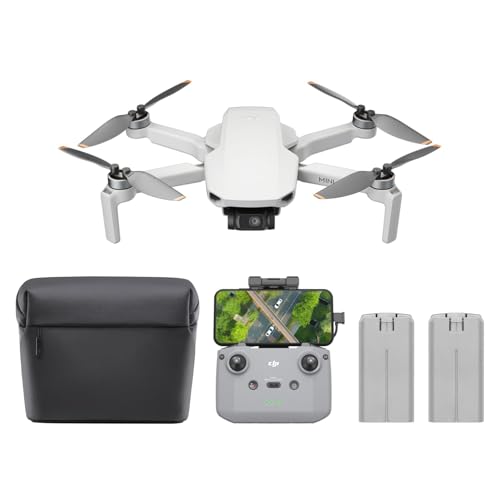

To understand how a gimbal works, you have to look at how a drone flies. Multi-rotors move by tilting. To go forward, the drone pitches its nose down. To move sideways, it rolls to the left or right. A gimbal uses an Inertial Measurement Unit (IMU) to detect these specific shifts in orientation. Once the IMU senses a tilt, it sends a signal to the gimbal’s internal processor, which tells the motors to move the camera in the exact opposite direction by the same degree.
The Three Axes of Control
A high-quality gimbal manages movement across three distinct planes to maintain a steady image. These axes ensure that the camera remains independent of the drone’s frame, regardless of how aggressively you are maneuvering the sticks:
- Pitch (Tilt): This controls the up and down movement. When your drone leans forward to accelerate, the gimbal tilts the camera up to keep the horizon centered in your frame.
- Roll: This handles side-to-side tilting. When your drone banks into a hard turn, the roll motor keeps the camera horizontal so the ground doesn’t look like it is sliding off the edge of the screen.
- Yaw (Pan): This manages left and right rotation. It smooths out the “jerks” that happen when the drone rotates on its vertical axis, ensuring transitions between directions are fluid rather than snappy.
Active Counter-Reaction in Real Time
The speed of this stabilization is incredible. Most modern gimbals calculate movements hundreds of times per second using brushless motors. These motors are silent and friction-free, allowing for the micro-adjustments needed to cancel out the high-frequency vibrations caused by the drone’s propellers spinning at thousands of RPMs. This active counter-reaction is vital because drones are inherently unstable platforms constantly fighting wind and prop-wash. By isolating the camera from the airframe, the gimbal allows you to capture long-exposure photos at night—shots that would otherwise be a blurry mess due to the natural “drift” of the aircraft.
Comparing 2-Axis vs. 3-Axis Gimbals for Aerial Video
When shopping for a drone or an external mount, you will generally choose between a 2-axis and a 3-axis system. The choice directly impacts the weight of your drone, your battery life, and most importantly, the professional quality of your final video file. While both types provide stabilization, the results are noticeably different once you begin moving the drone through the air.
2-Axis Gimbals: Lightweight and Compact
A 2-axis gimbal stabilizes the Pitch and Roll axes only. These are commonly found on smaller, budget-friendly drones or specialized hobbyist setups where weight is a primary concern. Because they lack a motor for the Yaw axis, any sudden horizontal rotation or “twitch” from the drone’s nose will be directly visible in your footage. If you are flying in a straight line, a 2-axis gimbal looks great, but the moment you turn, the footage may appear to “shudder” horizontally. This is often referred to as the “jello effect” or side-to-side shaking. While they are lighter and consume less battery power, they require much smoother piloting to achieve usable results.
3-Axis Gimbals: The Professional Standard
For anyone serious about videography, a 3-axis gimbal is the essential standard. By adding the Yaw motor, the gimbal absorbs horizontal vibrations and the jerky movements that occur when the drone rotates. This creates the “flying tripod” effect, where the camera appears to be floating smoothly through the air regardless of the drone’s physical orientation.
Prime for Young Adults — 6 Months Free
Exclusive Offer Amazon Prime for Young Adults, Students and 18–24s get six months of Prime free, then half price.
Start 6 Months Free As an Amazon Associate I earn from qualifying purchases.- Cinematic Panning: 3-axis systems allow for “follow mode” panning, where the camera slowly and gracefully follows the drone’s turn, eliminating the “snap” seen in cheaper systems.
- Superior Wind Resistance: The third motor helps compensate for side-gusts that knock the drone off-center, keeping your shot locked on the subject.
- Stability in Sport Mode: When flying at high speeds—often up to 40 or 50 mph—the 3-axis motor is the only thing keeping the footage from vibrating under the intense air pressure and motor load.
While 3-axis gimbals are slightly heavier and more expensive, the trade-off is almost always worth it. They provide the mechanical precision needed to shoot professional-grade 4K video that looks like it was filmed from a multi-million dollar helicopter rig rather than a small consumer device.
The Role of Gimbals in Improving Image and Video Quality
A drone’s gimbal is essentially the difference between a video that looks like a chaotic home movie and one that looks like a big-budget Hollywood production. While the drone’s flight controller handles the movement of the aircraft, the gimbal works independently to ensure the camera remains isolated from those movements. This separation is vital for achieving high-definition clarity in every frame.
Eliminating the “Jello Effect” and Micro-Vibrations
One of the most common issues in aerial photography is the “jello effect,” or rolling shutter distortion. This happens when the high-frequency vibrations from the drone’s motors translate directly to the camera sensor. A high-quality gimbal acts as a vibration dampener, absorbing these shakes before they reach the lens.
- Fluid Motion: Even during rapid acceleration or sudden stops, the gimbal compensates to keep the panning motions smooth.
- Sensor Protection: By reducing physical stress on the camera hardware, a gimbal helps maintain the longevity of the internal components.
- Wind Resistance: In gusty conditions, the drone may tilt aggressively to maintain its position; the gimbal ensures the camera stays perfectly level regardless of the tilt.
Unlocking Sharp Low-Light and Long-Exposure Photos
Gimbals aren’t just for video; they are transformative for still photography. To capture a sharp photo in low light, the camera’s shutter needs to stay open longer. Without a gimbal, even the slightest breeze would cause enough camera shake to blur the image. With a mechanical gimbal, you can often achieve long-exposure shots of two seconds or more while the drone is hovering mid-air, resulting in stunning night-time cityscapes and silky-smooth water effects.
Mechanical Gimbals vs. Electronic Image Stabilization (EIS)
When shopping for a drone, you will likely encounter two types of stabilization: mechanical (the physical gimbal) and electronic (software-based). While both aim to reduce shakiness, they function in vastly different ways and produce different levels of quality. Understanding this distinction is crucial for anyone looking to produce professional-grade content.
Mechanical Stability: The 3-Axis Advantage
A 3-axis mechanical gimbal uses brushless motors to physically move the camera in the opposite direction of the drone’s movement. This is proactive stabilization. Because the camera physically moves, it utilizes the entire surface area of the image sensor. This results in the highest possible resolution and a natural look that mimics the human eye’s ability to focus on a fixed point while moving.
- Full Resolution: No pixels are lost to cropping or digital manipulation.
- Natural Perspective: Real physical movement maintains the correct lens geometry and depth of field.
- Power Efficiency: While it uses battery power to move the motors, it saves the processor from having to perform heavy real-time video rendering.
EIS and the Trade-off of Digital Cropping
Electronic Image Stabilization (EIS) happens inside the drone’s software. It works by “cropping into” the image and moving the frame around digitally to counter the drone’s shaking. While EIS is impressive, it often comes with a significant loss in image quality. Since the software is essentially zooming in on the sensor, the final video is often less sharp, and you lose the wide-angle perspective that makes drone footage so immersive. For serious creators, EIS is usually a backup or a supplement to a physical gimbal, rather than a replacement.
Prime for Young Adults — 6 Months Free
Exclusive Offer Amazon Prime for Young Adults, Students and 18–24s get six months of Prime free, then half price.
Start 6 Months Free As an Amazon Associate I earn from qualifying purchases.Conclusion: The Secret to Professional Aerial Content
In the world of drones, the gimbal is the unsung hero that turns a flying camera into a cinematic tool. By physically isolating the camera from the tilt, vibration, and wind resistance of the aircraft, the gimbal ensures your footage remains rock-steady and professional. Whether you are capturing sweeping landscapes or high-speed action, a 3-axis mechanical gimbal is the single most important hardware feature for high-quality results.
To get the most out of your gear, always perform a quick visual check of your gimbal before takeoff and ensure your lens is clean. If you’re ready to take your shots to the next level, spend some time practicing “slow-and-low” flights to see how the gimbal handles complex transitions. Now, get out there, take flight, and start capturing the smooth, cinematic footage you’ve always dreamed of!
❓ Frequently Asked Questions
How does a drone gimbal actually work?
It uses brushless motors and sensors to detect the drone’s movement and instantly applies an equal and opposite motion. This ensures the camera remains fixed on the horizon even as the drone tilts to fly forward or fight the wind.
What is the main difference between 2-axis and 3-axis gimbals?
A 2-axis gimbal stabilizes pitch (up/down) and roll (side-tilt), while a 3-axis adds stabilization for yaw (left/right rotation). The 3-axis version is essential for eliminating the jerkiness seen when a drone turns horizontally during flight.
Why is a gimbal necessary for drone photography?
Beyond smooth video, a gimbal allows for long-exposure shots by keeping the camera perfectly still while the drone is hovering. Without one, the tiny vibrations from the motors would cause every photo to appear blurry or soft.
Can electronic stabilization (EIS) replace a mechanical gimbal?
EIS uses software to crop and shift the image, which can reduce resolution and struggle with heavy vibrations. A mechanical gimbal physically stabilizes the sensor, providing a much higher-quality and more natural-looking result.
What does pitch, roll, and yaw mean in gimbal terms?
Pitch refers to the camera tilting up or down, roll is the camera tilting side-to-side, and yaw is the horizontal rotation. A 3-axis gimbal counteracts all three movements to keep the frame perfectly stable.
Are there different types of drone gimbals?
Most modern drones come with integrated gimbals designed specifically for that model, but custom or racing drones may use separate, detachable gimbals designed to carry specific action cameras.
