The DJI Neo is an ultra-lightweight 135g drone specifically designed for vlogging and effortless 4K aerial capture. It features innovative palm takeoff and landing and AI subject tracking, allowing for high-quality footage without the need for a traditional remote controller.
🎯 Key Takeaways
- Takeaway 1:Weighs only 135g, making it DJI’s most portable drone to date.
- Takeaway 2:Records 4K/30fps video with RockSteady and HorizonBalancing stabilization.
- Takeaway 3:Supports controller-free operation via AI subject tracking and voice control.
- Takeaway 4:Offers up to 18 minutes of flight time per battery charge.
- Takeaway 5:Includes 22GB of internal storage, eliminating the immediate need for SD cards.
The DJI Neo is a 135g palm-sized powerhouse designed specifically for high-quality 4K aerial photography without the bulk of traditional gear. It is the lightest and most compact drone DJI has produced to date, prioritizing a “grab-and-go” philosophy for vloggers and casual creators. By eliminating the need for a dedicated remote controller for basic flights, the Neo allows you to capture cinematic footage instantly by launching and landing directly from your hand.
Recommended Best Deal Products

This drone matters because it bridges the gap between high-end action cameras and professional-grade drones. You no longer need to carry a heavy bag or spend minutes calibrating hardware before a shot. Whether you are hiking, cycling, or simply documenting a family gathering, the Neo provides stabilized 4K video with zero setup time. It is a tool designed to stay in your pocket until the moment you need a unique aerial perspective.
Core Technical Specifications and Hardware Analysis
The technical profile of the DJI Neo is defined by its extreme portability and surprisingly robust imaging hardware. At just 135 grams, it falls well below the 250-gram regulatory threshold in most regions, meaning you can fly it in many areas without complex registration. Despite its small size, the hardware is purpose-built to deliver professional-looking results in a variety of lighting conditions.
Imaging Sensor and Video Performance
At the heart of the DJI Neo is a 1/2-inch image sensor. While smaller than the sensors found in the Mavic series, this sensor is optimized for 4K video at 30fps. It also captures 12-megapixel still photos with impressive clarity. The 1/2-inch size is a significant step up from standard smartphone sensors, providing better dynamic range and lower noise in the shadows. The drone records at a high bitrate, ensuring that your 4K footage remains crisp even when you are moving quickly or flying through detailed environments like forests.
- Maximum Video Resolution: 4K at 30 frames per second.
- Photo Resolution: 12 Megapixels (JPEG format).
- Internal Storage: 22GB built-in memory (stores roughly 40 minutes of 4K/30fps video).
- Weight: 135 grams including battery and propeller guards.
- Wind Resistance: Level 4 (up to 8 m/s), which is remarkable for its weight class.
Battery Life and Physical Design
The DJI Neo offers a maximum flight time of 18 minutes per battery. While this may seem shorter than professional drones, it is ample for the “short-burst” style of filming the Neo is designed for. You can easily capture 10 to 15 different QuickShot clips on a single charge. The physical frame features integrated, full-coverage propeller guards. This design choice is critical for safety, as it allows you to launch the drone from your palm without risking injury and makes it resilient against minor bumps into walls or branches.
Intelligent Flight Modes and AI Tracking Capabilities
The DJI Neo stands out because of its “brain.” You do not need to be a skilled pilot to get cinematic shots. The drone uses advanced AI algorithms to identify and follow human subjects, keeping you in the center of the frame even as you move through complex environments. This autonomy is what makes the Neo a true personal photographer rather than just a remote-controlled aircraft.
Controller-Free Operation and Palm Launch
One of the most impressive features of the Neo is its ability to operate entirely without a remote or a smartphone. On top of the drone, there is a mode button that allows you to cycle through different flight behaviors. Once you select a mode, you simply place the drone on your open palm. Within seconds, it takes off, performs its pre-set flight path, and then returns to hover in front of you. When you are done, you place your hand underneath, and it lands safely. This removes the barrier to entry for users who find traditional joysticks intimidating.
Smart Stabilization and AI Subject Tracking
To ensure your footage doesn’t look shaky, the Neo uses two primary stabilization technologies: RockSteady and HorizonBalancing. RockSteady uses electronic image stabilization (EIS) to smooth out high-frequency vibrations from the motors and wind. HorizonBalancing ensures the camera stays level even if the drone is tilting during a turn. These work in tandem with the AI Subject Tracking, which uses visual recognition to lock onto you. Whether you are walking, running, or skating, the drone maintains a consistent distance and angle, ensuring professional framing without manual input.
- Dronie: The drone flies backward and upward while keeping the camera locked on you.
- Circle: The Neo orbits around you at a constant height and distance.
- Rocket: The drone ascends straight up with the camera pointing downward.
- Spotlight: The drone rotates in place to keep you in the frame as you move around it.
- Helix: The drone spirals upward and away from the subject in a widening circle.
Remote Control Compatibility and Ecosystem Integration
One of the most impressive aspects of the DJI Neo is its sheer versatility in how you choose to fly. While many entry-level drones lock you into a single interface, the Neo acts as a bridge between multiple DJI ecosystems. Whether you want a hands-free selfie experience or a fully immersive FPV flight, the hardware is designed to adapt to your specific gear setup.
From Controller-Free to Full FPV Immersion
The Neo is unique because it doesn’t actually require a remote to function. You can operate it entirely through palm-takeoff modes or via the DJI Fly app on your smartphone using virtual joysticks. However, for those who want to push the boundaries of its 7km video transmission range, the Neo is compatible with several high-end DJI controllers.
- RC-N3 Remote Controller: This is the standard physical controller option, providing a traditional flight experience with your smartphone as the monitor.
- DJI Goggles 3 & RC Motion 3: For a revolutionary experience, the Neo integrates with DJI’s FPV ecosystem. This allows you to fly the drone from a first-person perspective, performing “Easy ACRO” maneuvers like flips and rolls.
- DJI RC 2: Users who prefer a built-in screen can pair the Neo with the RC 2, making for a professional-grade handheld setup without the need for cables.
Expanding Your Creative Toolkit
Beyond just flight controls, the DJI Neo integrates seamlessly with the broader DJI accessory line. A standout feature is its compatibility with the DJI Mic 2. By connecting the microphone to your smartphone while flying, the DJI Fly app can automatically sync high-quality audio with your drone footage while digitally canceling out the noise of the propellers. This makes the Neo an incredible tool for vloggers who need to narrate their shots in real-time without carrying heavy recording equipment.
Pricing Tiers and Fly More Combo Accessory Value
DJI has positioned the Neo as their most accessible drone to date, making it an attractive “impulse buy” for tech enthusiasts and a perfect entry point for beginners. Understanding the difference between the base package and the Fly More Combo is essential for getting the most value out of your investment.
The Standard Package vs. Fly More Combo
The standalone DJI Neo typically retails at a price point that rivals high-end action cameras. This base version is ideal for users who already own a compatible DJI remote or those who plan to use it strictly as a “selfie drone” via palm control. However, for most pilots, the Fly More Combo is the gold standard for value.
- Standard Version: Includes the drone, one Intelligent Flight Battery, and propeller guards.
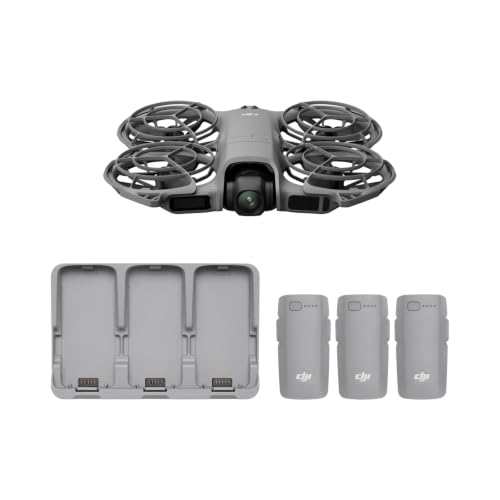
- Fly More Combo: Typically includes the drone, three Intelligent Flight Batteries, the RC-N3 Remote Controller, and a Two-Way Charging Hub.
- The “Combo” Advantage: Buying the accessories separately often costs significantly more than the bundled price, making the combo the smarter financial choice for long-term use.
Essential Accessories for the Neo
Because the Neo is so lightweight (just 135g), it relies heavily on specific accessories to maximize its utility. The Two-Way Charging Hub is perhaps the most critical accessory. It doesn’t just charge three batteries in sequence; it can also function as a power bank, allowing you to use your drone batteries to charge your smartphone or DJI Mic 2 in the field. This level of utility ensures that your gear stays powered during long hiking trips or travel days.
Practical Tip: If you plan on flying indoors, the included propeller guards are a must. Even though the Neo has “Full-Coverage Propeller Guards,” having a spare set of propellers in your kit is highly recommended, as small nicks can affect flight stability and battery efficiency.
Conclusion
The DJI Neo is a remarkable piece of engineering that proves you don’t need a massive aircraft to capture professional-looking 4K content. By balancing portability with high-end features like AI subject tracking, FPV compatibility, and an affordable price point, DJI has created a drone that fits into almost any creative workflow. Whether you are a solo vlogger looking for an automated cameraman or a hobbyist wanting to dip your toes into FPV flight, the Neo offers a low-risk, high-reward entry point into the world of aerial photography.
Ready to take to the skies? Start by deciding if you need the full control of the Fly More Combo or the simplicity of the standalone unit. Once you have your Neo, find an open outdoor space to test the palm-takeoff features and see just how easy it is to capture cinematic moments on the go. Happy flying!
❓ Frequently Asked Questions
What are the primary differences between the standalone DJI Neo and the Fly More Combo?
The standalone unit includes the drone and one battery, while the Fly More Combo adds two additional batteries, a two-way charging hub, and the DJI RC-N3 remote controller. This combo is recommended for users who want longer flight sessions and traditional stick control.
Which stabilization technologies are used in the DJI Neo?
The drone utilizes RockSteady and HorizonBalancing technology to ensure smooth footage even during moderate maneuvers or wind. These digital stabilization features keep the horizon level and minimize shakes common in small drones.
Is the DJI Neo compatible with FPV goggles?
Yes, the DJI Neo is compatible with DJI Goggles 3 and the RC Motion 3 controller. This allows users to experience immersive FPV flight and perform dynamic maneuvers similar to larger FPV platforms.
How does the palm takeoff and landing feature work?
By selecting a shooting mode on the drone’s top button, you can place it on your palm; it uses sensors to take off automatically, track you, and then land back on your outstretched hand when finished.
What AI tracking modes are available on the DJI Neo?
The Neo includes several AI-powered QuickShots such as Dronie, Circle, Rocket, Spotlight, and Helix. These modes allow the drone to automatically follow a subject and keep them centered in the frame without manual input.
Can the DJI Neo record audio for vlogs?
Yes, when connected to the DJI Fly app, the drone can record audio via your smartphone’s microphone or a connected DJI Mic 2. The app automatically eliminates propeller noise to ensure clear vocal tracks.


