Understanding your LiPo battery’s voltage and C-rating is critical for peak drone performance and flight safety. Proper maintenance requires strict adherence to storage voltages (3.80V–3.85V per cell) to prevent permanent capacity loss or fire hazards. Use a dedicated balance charger to ensure all cells remain stable throughout their lifespan.
🎯 Key Takeaways
- Always use a balance charger to keep cell voltages equal and prevent instability.
- Never discharge cells below 3.5V to avoid permanent chemical damage to the battery.
- Store batteries at 3.80V–3.85V per cell when not in use for more than 48 hours.
- Match the C-rating to your drone’s maximum current draw to prevent overheating.
- Inspect for puffiness or physical damage regularly and dispose of compromised packs safely.
Choosing the right LiPo battery for your drone requires matching three critical metrics to your specific hardware: cell count (voltage), capacity (mAh), and discharge rate (C). If the voltage is too high, you risk burning out your motors or ESCs; if the C-rating is too low, your battery will overheat and puff during aggressive maneuvers. Mastering these specs allows you to balance raw power with flight endurance while keeping your gear safe from electrical failure.
Proper battery management is not just about performance; it is a fundamental safety requirement. Because Lithium-Polymer batteries store massive amounts of energy in a volatile state, understanding how to read a label and monitor internal health is your first line of defense against fires. This guide breaks down the technical jargon into practical steps so you can fly longer and keep your workshop safe.
Decoding LiPo Specifications: S-Ratings, Capacity, and Discharge Rates
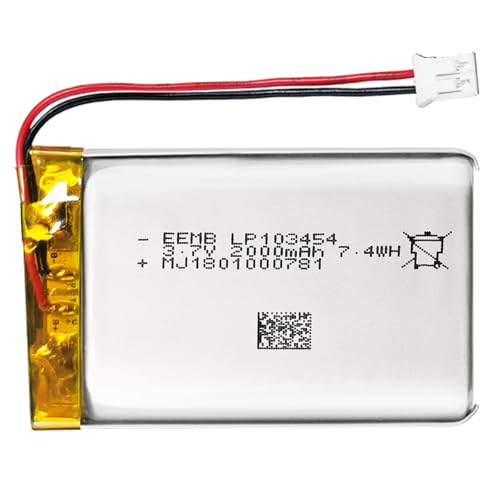
Every LiPo battery has a label covered in numbers that dictate how your drone will behave in the air. The most prominent figure is the “S” rating, which refers to the number of cells wired in series. Each individual cell has a nominal voltage of 3.7V. When you see a 4S battery, it means there are four cells combined for a total nominal voltage of 14.8V. A 6S battery provides 22.2V. Higher voltage generally translates to higher motor RPM and more punch, provided your motors and ESCs are rated to handle the extra pressure.
Recommended Best Deal Products


Understanding Capacity and the Weight Trade-off
Capacity, measured in milliamp-hours (mAh), represents the total amount of energy “fuel” the battery can hold. While it is tempting to buy the highest mAh battery available to get longer flight times, there is a point of diminishing returns. More capacity means more weight. If the battery is too heavy, the motors must work harder to stay airborne, which actually decreases efficiency and can make the drone feel sluggish or “boaty” in corners.
- 1300mAh – 1500mAh: The sweet spot for 5-inch FPV racing and freestyle drones.
- 450mAh – 850mAh: Ideal for micro drones and “toothpick” builds.
- 5000mAh+: Reserved for large cinema rigs or long-range endurance platforms.
The C-Rating: Managing Current Draw
The “C” rating indicates how fast the battery can safely discharge its energy. To calculate the maximum continuous current output in Amps, multiply the C-rating by the capacity (in Amps). For example, a 1500mAh (1.5A) battery with a 100C rating can theoretically provide 150 Amps of continuous current. If your drone’s four motors pull a combined 120 Amps at full throttle, a 75C battery might struggle, leading to “voltage sag” where the drone loses power momentarily during punch-outs.
- Constant C-Rating: The discharge rate the battery can handle for the duration of the flight.
- Burst C-Rating: The amount of power the battery can provide for short bursts (usually 10 seconds) during high-intensity maneuvers.
- Note: Manufacturers often inflate C-ratings. Always aim for a rating slightly higher than what your motors technically require to ensure a safety buffer.
Mastering Drone LiPo Batteries Like a Pro: A Practical Walkthrough
Lithium Polymer (LiPo) batteries are the lifeblood of modern drones, providing the high discharge rates and energy density required for flight. However, they are also chemically volatile and require precise handling to ensure both your safety and the longevity of your equipment. This guide covers everything from understanding complex specifications to safe charging, storage, and disposal. Following these steps will help you maximize your flight times, prevent house fires, and save money by extending the lifecycle of your expensive battery packs.
Step 1: Decoding Battery Specifications and Ratings
What you need: A new or existing LiPo battery pack and the manufacturer’s specification sheet.
Instructions: Before you even plug a battery into your drone, you must understand three critical numbers: Cell Count (S), Capacity (mAh), and Discharge Rate (C). The “S” rating tells you the voltage; each cell has a nominal voltage of 3.7V, so a 4S battery is 14.8V. The capacity (mAh) indicates how much “fuel” is in the tank—higher numbers mean longer flights but more weight. Finally, the “C” rating determines how fast the battery can safely discharge energy. To calculate the maximum continuous current draw, multiply the capacity by the C-rating (e.g., a 1500mAh 100C battery can theoretically provide 150 Amps). Always ensure your drone’s Electronic Speed Controllers (ESCs) and motors do not pull more current than the battery can safely provide, or you risk a “puffing” event or a fire.
Pro Tip: Don’t always trust high C-ratings on cheap brands; many manufacturers inflate these numbers for marketing. Stick to reputable brands for high-performance freestyle or racing drones where burst current is essential.
Step 2: Choosing and Calibrating a Balance Charger
What you need: A dedicated LiPo balance charger (e.g., SkyRC IMAX B6 or ISDT Q6), a power supply, and a fireproof charging bag.
Instructions: Never use a “dumb” wall charger that lacks a balance lead port. LiPo batteries consist of multiple cells that must stay at the same voltage level. Connect both the main XT60/XT30 power lead and the small white balance connector to the charger. Select the “Balance Charge” program—never use “Fast Charge” as it skips the balancing phase. Set the charge current to 1C for safety; this means if you have a 1500mAh battery, you charge at 1.5 Amps. Charging at higher rates (2C or 3C) is possible but shortens the battery’s lifespan and increases heat. Always place the battery inside a LiPo-safe fiberglass bag or a “Bat-Safe” box during the process to contain any potential thermal runaway.
Pro Tip: Never leave a charging LiPo battery unattended. Most LiPo fires happen during the charging cycle due to internal cell failure or incorrect charger settings.
Step 3: Implementing the 80% Rule During Flight
What you need: A drone with an On-Screen Display (OSD) or a battery voltage telemetry sensor.
Instructions: To keep your batteries healthy for hundreds of cycles, you must avoid over-discharging them. The “80% Rule” suggests you should never use more than 80% of the battery’s total capacity. In terms of voltage, a LiPo cell is considered empty at 3.0V, but you should never let it drop that low. Aim to land when your OSD shows a “resting voltage” of 3.7V per cell (e.g., 14.8V for a 4S pack). During high-throttle maneuvers, you will see “voltage sag,” where the number drops temporarily; this is normal, but your recovery voltage after landing is what matters. If you find your battery is hot to the touch after a flight, you are either pushing the C-rating too hard or discharging it too deeply.
Pro Tip: Set a “low battery” warning in your goggles or transmitter to 3.5V per cell to give yourself enough time to return to home and land with a safe margin.
Step 4: Managing Storage Voltage for Long-Term Health
What you need: Your balance charger and a digital battery checker.
Instructions: LiPo batteries are chemically unstable when left fully charged (4.2V per cell) or fully discharged (below 3.5V per cell) for more than 24–48 hours. If you leave a battery fully charged, the internal resistance will increase, leading to permanent capacity loss and “puffing.” If you aren’t planning to fly the next day, use your charger’s “Storage Mode.” This function will either charge or discharge the cells to exactly 3.80V–3.85V per cell. This is the “sweet spot” where the chemicals are most stable. Store your batteries in a cool, dry place, ideally in a metal ammo can or a dedicated fireproof locker. Avoid areas with extreme temperature fluctuations, like a garage or a car trunk.
Pro Tip: If you have a large fleet of batteries, invest in a “parallel charging board” to bring multiple packs to storage voltage simultaneously, but ensure all packs are within 0.1V of each other before connecting them.
Step 5: Inspecting for Physical Damage and Internal Resistance
What you need: A multimeter or a charger with an Internal Resistance (IR) reading function.
Instructions: After every crash, perform a physical inspection. Check for “puffiness”—if the battery feels like a bloated marshmallow, the internal layers have delaminated and generated gas; this battery is now a fire hazard. Look for dents in the corners or tears in the plastic heat-shrink wrap. Additionally, use your charger to check the Internal Resistance (measured in milliohms, mΩ). New, high-quality cells usually have an IR between 1–5 mΩ. As a battery ages or suffers damage, this number rises. If one cell has an IR significantly higher than the others (e.g., three cells at 4 mΩ and one at 20 mΩ), the pack is unbalanced and dangerous to use for high-performance flying.
Pro Tip: Smell the battery. If you detect a sweet, metallic chemical odor, it means a cell has been punctured. Immediately move the battery outdoors to a non-flammable surface.
Step 6: Extreme Weather and Temperature Management
What you need: Battery warmers or an insulated bag (for winter flying).
Instructions: LiPo batteries rely on chemical reactions that slow down significantly in the cold. If you fly in temperatures below 50°F (10°C), you will experience massive voltage sag and significantly reduced flight times. To combat this, keep your batteries in your pockets or a dedicated heated bag until the moment you plug them into the drone. Conversely, heat is the enemy of LiPo longevity. Avoid flying in 90°F+ (32°C+) weather if possible, and never charge a battery while it is still warm from a flight. Let it cool down to room temperature for at least 20 minutes. Operating a hot battery accelerates the breakdown of the electrolyte, leading to premature failure.
Pro Tip: In the winter, “pre-warm” your batteries to about 80°F (27°C) before flight to ensure the internal chemistry is active enough to handle high-current demands.
Step 7: Safe Disposal and End-of-Life Procedures
What you need: A halogen light bulb with soldered leads or a dedicated battery discharger, and a bucket of sand.
Instructions: When a battery is “puffed,” has high IR, or won’t hold a charge, it must be retired. You cannot simply throw a LiPo in the trash, as it can ignite when crushed in a garbage truck. First, discharge the battery to 0.0V. Many modern chargers have a “destroy” or “discharge” function that goes to zero. Alternatively, connect the battery to a 12V halogen bulb until the light goes out and the battery stays at zero volts for 24 hours. Once the voltage is completely gone, the battery is chemically inert. Cut the connectors off one by one (never cut both wires at the same time to avoid a short) and tape the wire ends. Take the neutralized pack to a dedicated battery recycling center (like those found at Best Buy or Home Depot).
Pro Tip: Avoid the old “saltwater bucket” method for disposal. It often corrodes the tabs before the battery is fully discharged, leaving a volatile charge inside an unreachable cell.
✅ Final Checklist
- All battery cells are within 0.03V of each other during a balance charge.
- Batteries are stored at 3.80V–3.85V per cell when not in use for more than 48 hours.
- The physical casing is firm, with no signs of swelling, punctures, or sweet odors.
- Charging is always performed on a non-flammable surface inside a LiPo-safe container.
- Flight times are adjusted so that the battery lands with at least 20% capacity remaining.
Important Notes:
- Safety First: Never charge or store LiPo batteries near exits or flammable materials like curtains or carpet.
- Seek Help: If a battery begins to smoke or hiss, do not use water. Use a Class D fire extinguisher or, more practically, dump it into a bucket of sand or a dirt-filled garden pot.
- Estimated Costs: High-quality LiPo chargers range from $50–$150. Safety bags/boxes cost $15–$60. Individual drone batteries typically range from $15 (small drones) to $50+ (high-end racing/cinematic drones).
Factors Influencing LiPo Battery Lifespan and Health
A LiPo battery is a consumable item, but how you treat it determines whether it lasts for 30 cycles or 300 cycles. The most common cause of premature battery failure is “over-discharging.” Unlike the batteries in your smartphone, LiPos do not have internal circuits to shut them off when they get too low. If you fly until the drone falls out of the sky, you have likely caused permanent chemical damage to the cells.
The 80% Rule and Voltage Thresholds
To maximize the life of your packs, never use more than 80% of the rated capacity. If you have a 1500mAh battery, you should aim to put back no more than 1200mAh during the charging process. Monitoring your voltage in real-time via an On-Screen Display (OSD) is the best way to manage this. You should set your low-voltage warnings based on these standard metrics:
- 4.20V per cell: Fully charged (Standard LiPo).
- 3.80V – 3.85V per cell: Storage voltage (Where the battery should sit when not in use).
- 3.50V per cell: The “land now” threshold under load.
- 3.00V per cell: The danger zone where permanent cell damage occurs.
Internal Resistance: The Health Metric You Can’t Ignore
As a battery ages or suffers abuse, its Internal Resistance (IR) increases. High IR means the battery produces more heat and less power, eventually leading to the “puffing” or swelling of the battery casing. Most modern smart chargers can measure the IR of each cell during the charging cycle. It is a good practice to log these numbers when the battery is new. When you see the IR double or triple from its original value, or if one cell shows a significantly higher resistance than the others, that battery is becoming unstable and should be retired from high-performance flight.
Typically, an IR value of 1-10mOhms per cell is considered excellent for a new high-performance pack. Once values reach 20-30mOhms, you will notice a significant drop in performance. Consistent heat is the enemy here; never charge a battery that is still hot from a flight, and never leave a fully charged battery sitting for more than 48 hours, as this accelerates chemical breakdown and increases resistance.
Critical Safety Standards for Charging and Fire Prevention
LiPo batteries are incredible power sources, but their high energy density comes with a caveat: they can be volatile if mishandled. Safety isn’t just a suggestion in the drone world; it is a fundamental part of the hobby. Proper storage and charging habits prevent “thermal runaway,” a chemical chain reaction that can lead to persistent, high-heat fires.
Optimal Charging Environments
Where you charge your batteries is just as important as how you charge them. Always choose a hard, non-flammable surface. A stone countertop or a concrete garage floor is ideal, while a wooden desk or a carpeted room is a recipe for disaster. Airflow is also a major factor; batteries generate heat during the charging cycle, and keeping them in a cramped, unventilated space can cause unnecessary stress on the cells.
Essential Fire Mitigation Gear
Investing in a few safety accessories can be the difference between a small scare and a total loss. Every pilot should own a LiPo-safe bag or, ideally, a specialized fireproof container like a Bat-Safe or a modified ammunition box. These tools are designed to contain flames and vent smoke safely if a cell fails. Remember, the most important safety rule is human presence; never leave your batteries charging while you are out of the room or asleep.
- Physical Inspection: Always check for “puffing” or swelling before charging. A bloated battery is a damaged battery.
- Temperature Checks: If a battery feels uncomfortably hot to the touch during or after a flight, let it cool down to room temperature before plugging it into a charger.
- The “Lipo Bag” Rule: Even when traveling to the field, store your batteries in a fire-retardant bag to prevent accidental punctures from tools or drone frames.
Comparative Analysis: High Voltage (LiHv) vs. Standard LiPo Batteries
As you browse for new packs, you will likely encounter LiHv batteries. While they look identical to standard LiPos, they operate on a slightly different chemical threshold. Understanding the distinction is vital for both performance gains and equipment longevity.
Performance Gains of LiHv
The primary difference lies in the peak voltage. A standard LiPo cell is fully charged at 4.2V, whereas a LiHv (High Voltage) cell can be safely charged to 4.35V. This extra 0.15V per cell might seem small, but in a 4S or 6S configuration, it results in a noticeable “punch” at the start of your flight. FPV racers and freestyle pilots often prefer LiHv because it offers a higher power-to-weight ratio and a slightly flatter discharge curve, meaning you feel more “throttle authority” for a longer portion of the flight.
Longevity and Compatibility Trade-offs
Higher performance often comes at a cost. LiHv batteries typically have a shorter overall lifespan than standard LiPos because the higher voltage puts more strain on the internal chemistry. Furthermore, you must ensure your charger has a dedicated LiHv mode. Charging a standard LiPo to 4.35V is extremely dangerous and will likely cause a fire. Conversely, charging a LiHv battery to only 4.2V is perfectly safe, though you won’t reap the performance benefits you paid for.
- Top-End Speed: LiHv is the go-to for speed runs and competitive racing where every gram of thrust counts.
- Service Life: Expect standard LiPos to last for more charge cycles (usually 150–300) compared to the more aggressive LiHv packs.
- Weight Efficiency: LiHv packs often provide more watt-hours per gram, making them attractive for long-range pilots trying to stay under weight limits.
Mastering Your Drone’s Power Source
Understanding the nuances of LiPo batteries is what separates a hobbyist from a pro. By mastering the relationship between cell counts, C-ratings, and safety protocols, you ensure that your gear stays functional and your flights remain safe. Whether you choose the raw power of LiHv or the reliable longevity of standard LiPos, the key is consistency in how you treat your equipment. Always prioritize safety gear, monitor your cell health, and never cut corners during the charging process.
Ready to upgrade your flight kit? Take a moment to audit your current battery stock, dispose of any damaged cells properly, and invest in a quality balance charger. Proper battery maintenance is the best way to guarantee more time in the air and less time troubleshooting on the ground. Happy flying!
❓ Frequently Asked Questions
How do I calculate the maximum current draw my battery can handle?
Multiply the capacity in Amp-hours (mAh divided by 1000) by the C-rating. For example, a 1500mAh 100C battery can theoretically handle a continuous draw of 150 Amps.
What are the signs that a LiPo battery is reaching the end of its life?
Look for increased internal resistance, significant voltage ‘sag’ during flight, and a noticeable decrease in total flight time. If the battery becomes physically soft or ‘puffy,’ it should be retired immediately.
Why is balance charging more important than fast charging?
Balance charging ensures that every individual cell in the pack reaches the exact same voltage level, preventing one cell from overcharging. Imbalanced cells can lead to fire hazards or premature battery failure during flight.
At what voltage is a LiPo battery considered ‘dead’ or dangerous?
A cell is critically over-discharged if it drops below 3.0V, often leading to permanent chemical damage. For flight safety, most pilots land when cells reach 3.5V to allow for a recovery ‘bounce back’ to 3.7V.
What is the best environment for storing drone batteries?
Store your batteries in a cool, dry place inside a fireproof container like a LiPo bag or an ammo can. Avoid extreme temperatures, as excessive heat accelerates chemical breakdown and cold reduces temporary capacity.
How do I safely dispose of a damaged or old LiPo battery?
Fully discharge the battery to 0V using a dedicated discharger or a light bulb load until no voltage remains. Once neutralized, take it to a local battery recycling center or a hazardous waste drop-off point.


