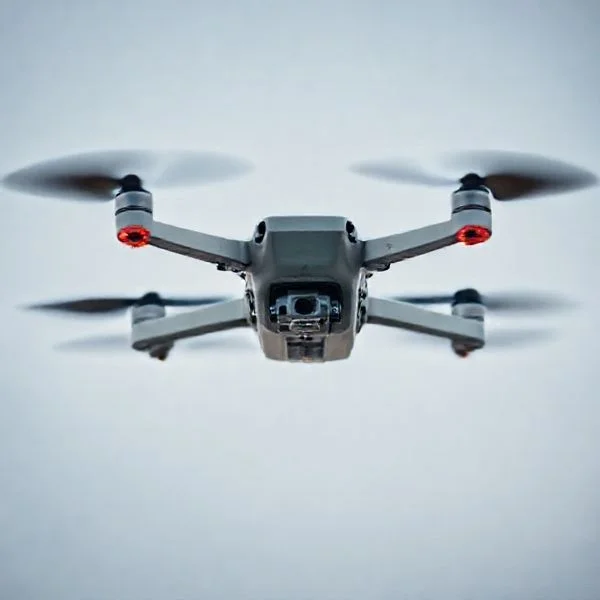
Establishing a legal foundation through FAA Part 107 certification is the most critical first step for any commercial drone operation. Success in this industry requires specializing in high-demand niches such as industrial inspection or mapping while maintaining robust liability insurance and professional-grade data processing software.
🎯 Key Takeaways
- Secure FAA Part 107 certification to operate legally within commercial airspace.
- Target high-margin sectors like construction, agriculture, or thermal infrastructure inspections.
- Purchase comprehensive drone insurance covering both liability and equipment damage.
- Invest in specialized photogrammetry software for high-value data deliverables.
- Register your business as an LLC to protect personal assets from liability.
Transitioning from a hobbyist to a professional drone pilot requires a fundamental shift from recreational rules to the FAA’s Part 107 regulatory framework. To legally charge for your services, you must obtain a Remote Pilot Certificate, register your aircraft for commercial use, and carry professional-grade liability insurance. This isn’t just about avoiding federal fines; it is about establishing the credibility needed to secure contracts with high-value enterprise clients who demand proof of compliance and safety.
Recommended Best Deal Products



The stakes are significantly higher in the commercial sector because you are no longer just capturing footage—you are providing critical data and managing operational risks. By following a structured legal and operational roadmap, you move beyond the “drone enthusiast” label and become a legitimate service provider. This professional foundation allows you to operate in controlled airspace and access lucrative industries like infrastructure, energy, and precision agriculture that are closed to uncertified flyers.
Legal Framework and FAA Part 107 Certification Requirements
In the United States, the Federal Aviation Administration (FAA) mandates that all commercial drone operations follow the Part 107 regulations. This is the bedrock of your business. If you receive any form of compensation—including “free” services used for marketing or trade—you must be a certified remote pilot. Operating without this certification can result in five-figure fines per violation and the permanent loss of your right to fly.
Earning Your Remote Pilot Certificate
The primary hurdle is the Part 107 Knowledge Test. You must schedule an appointment at an FAA-approved Knowledge Testing Center and pass a 60-question exam covering airspace classifications, weather patterns, and emergency procedures. This is not a flight test; it is a theory-based exam that proves you understand the National Airspace System (NAS).
- Eligibility: You must be at least 16 years old and be able to read, speak, and write English.
- Study Focus: Spend 60% of your time learning to read sectional charts and understanding “NOTAMs” (Notices to Air Missions).
- Cost: Expect to pay approximately $175 per exam attempt.
- Renewal: You must complete a free online recurrent training course every 24 months to keep your certificate current.
Airspace Authorizations and Liability Insurance
Holding a license does not give you carte blanche to fly anywhere. To operate in controlled airspace (Class B, C, D, or E), you must use the Low Altitude Authorization and Notification Capability (LAANC). This system provides near-instant digital authorization via apps like AirControl or Skyward. Furthermore, standard business insurance rarely covers aviation; you need a specific drone liability policy. Most enterprise clients will require a minimum of $1 million in liability coverage before you can step onto a job site.
- Commercial Registration: Every drone used for work must be registered individually at the FAA DroneZone for $5.
- Insurance Options: You can choose “on-demand” insurance for specific flights or annual policies if you fly more than three times a month.
- Remote ID: Ensure your drone is equipped with a functioning Remote ID broadcast module, as this is now a mandatory legal requirement for all commercial flights.
From Start to Finish: Launching a Drone Business Explained
The commercial drone industry is no longer a futuristic concept; it is a multi-billion dollar reality spanning agriculture, real estate, construction, and cinematography. Starting a drone business requires more than just a love for flying; it demands a strategic blend of technical skill, legal compliance, and sharp marketing. This guide covers the essential roadmap from your first flight to your first high-paying client, ensuring you build a foundation that is both profitable and legally sound. Following these steps systematically will help you avoid costly regulatory fines and equipment mistakes while positioning you as a premium service provider in a competitive market.
Step 1: Identify Your Profitable Niche
What you need: Market research tools (Google Trends, LinkedIn), a list of local industries, and a notebook for competitive analysis.
Instructions: Before buying hardware, you must determine who will pay you. General “drone photography” is a crowded market with low margins. Instead, focus on high-value niches such as thermal roof inspections for insurance adjusters, 3D mapping for construction site progress, or precision agriculture for crop health analysis. Research local competitors to see where gaps exist. For example, if every pilot in your city does real estate, pivot to infrastructure inspection for cell towers or bridges. Define your “Ideal Client Profile” (ICP) by identifying their pain points—such as the high cost of manual inspections or the need for faster data turnaround—and tailor your service offerings to solve those specific problems.
Pro Tip: Look for “boring” industries like industrial sewage or utility line inspection; these often pay three to five times more than high-glamour cinematography or wedding videos.
Step 2: Obtain Legal Certification and Licensing
What you need: A government-issued ID, approximately $175 for the exam fee, and a reputable Part 107 study guide or online course.
Instructions: In the United States, you must obtain a Remote Pilot Certificate from the FAA under Part 107 to fly drones commercially. This involves passing a 60-question multiple-choice exam covering weather, aeronautical charts, emergency procedures, and airport operations. Schedule your test at a Knowledge Testing Center (PSI). Once you pass, you must register your business drones via the FAA DroneZone portal (each drone costs $5 for a three-year registration). Ensure you also check local state and municipal laws, as some cities have additional “No-Fly Zones” or privacy ordinances that supersede general federal guidelines. Maintaining a digital and physical copy of your license during every flight is a non-negotiable legal requirement.
Pro Tip: Don’t just memorize the answers; master the reading of Sectional Charts. Understanding airspace classes (B, C, D, E, G) is the difference between a legal flight and a $10,000 fine.
Step 3: Choose the Right Hardware and Software
What you need: A primary drone, at least four intelligent flight batteries, a high-spec tablet/controller, and data processing software (e.g., DroneDeploy, Pix4D, or Adobe Creative Cloud).
Instructions: Your equipment must match your niche. For real estate, a DJI Air 3 or Mavic 3 Pro is excellent for its dynamic range and portability. However, for surveying and mapping, you will need a drone with a global shutter and RTK (Real-Time Kinematic) capabilities, such as the Mavic 3 Enterprise. Don’t forget the “ground” side of the business: you need a powerful workstation with at least 32GB of RAM and a dedicated GPU to process high-resolution photogrammetry or 4K video. Invest in high-speed UHS-II microSD cards (at least 128GB) to ensure you don’t drop frames during critical missions. Your software stack should include a flight logging app like AirData to track battery health and flight hours for maintenance records.
Pro Tip: Always carry a backup drone. If you are on a remote job site and your primary drone has a gimbal failure, having a “backup” (even a lower-spec model) ensures you still get paid and maintain professional credibility.
Step 4: Structure Your Business and Secure Insurance
What you need: A registered business name, an EIN (Employer Identification Number), a dedicated business bank account, and a drone-specific insurance policy.
Instructions: Register your business as an LLC to protect your personal assets from professional liability. Once registered, open a business bank account to keep your finances separate for tax purposes. Commercial drone insurance is the most critical part of this step. You need two types: Hull Insurance (covers the drone if it crashes) and Liability Insurance (covers damage to property or people). Most enterprise clients will require a minimum of $1 million to $5 million in liability coverage before you can step foot on their site. You can use on-demand insurance apps like SkyWatch or Verifly for hourly coverage, but as you scale, a yearly policy is more cost-effective and professional.
Pro Tip: Draft a “Standard Service Agreement” or contract. Never fly a commercial mission without a signed document that outlines the scope of work, delivery timelines, and limitation of liability.
Step 5: Master Operational Safety and Checklists
What you need: An anemometer (wind speed meter), landing pad, safety vests (PPE), and a comprehensive Pre-Flight Checklist.
Instructions: Professionalism is defined by your safety protocols. Create a written Standard Operating Procedure (SOP) that includes a Pre-Flight, In-Flight, and Post-Flight checklist. Before every takeoff, check the K-Index (solar activity affecting GPS), wind speeds at flight altitude (which are higher than on the ground), and the physical integrity of your propellers. Use a landing pad to prevent dust from entering the motors and gimbal. If you are working on construction sites, wear high-visibility vests and hard hats to signal that you are a professional contractor. Documenting these safety steps not only prevents crashes but also lowers your insurance premiums over time and builds massive trust with corporate clients.
Pro Tip: If a bystander or “Karen” approaches you during a flight, do not take your eyes off the controller. Politely state, “I am currently piloting an aircraft; I will be happy to speak with you once I land safely.”
Step 6: Build a Portfolio and Market Your Services
What you need: A professional website, a portfolio of at least 10 high-quality projects, and a LinkedIn business profile.
Instructions: Nobody hires a drone pilot without seeing their work first. In your first month, perform “portfolio builds” by offering discounted or free services to a few local businesses in your chosen niche in exchange for the right to use the footage. Create a sleek, fast-loading website that highlights your specific services—avoid generic “cool” shots and focus on “useful” shots (e.g., a crisp orthomosaic map or a perfectly framed commercial building). Use LinkedIn to connect with project managers, civil engineers, and real estate developers. Avoid Instagram for B2B sales; instead, focus on SEO-optimized blog posts on your site like “How Drone Inspections Save Construction Costs in [Your City].”
Pro Tip: When sending samples to clients, don’t just send a video file. Send a “Data Package” that includes a sample 3D model or a PDF report. This shows you are a data provider, not just a cameraman.
✅ Final Checklist
- Verified Part 107 Certification is active and registered with the FAA.
- Obtained a minimum of $1 million in commercial liability insurance.
- Established an LLC and opened a dedicated business bank account.
- Completed at least 10 hours of non-commercial flight practice in various weather conditions.
- Finalized a professional portfolio website and a set of operational safety checklists.
Important Notes:
- Safety first: Never fly over people or moving vehicles without specific waivers or Category 1-4 compliant hardware.
- Professional Help: Consult a CPA for tax advice regarding equipment depreciation and an attorney for your service contracts.
- Estimated Time: 4 to 8 weeks to get licensed and fully set up.
- Estimated Cost: $2,000 – $7,000 (includes drone, license, insurance, and initial marketing).
Market Analysis: High-Margin Drone Service Niches
The most common mistake new drone business owners make is trying to be a generalist. While real estate photography is an easy entry point, it is a “race to the bottom” in terms of pricing. To build a sustainable, high-margin business, you must specialize in niches where the data you provide is essential for the client’s bottom line. Focus on industries where drones replace expensive, dangerous, or slow manual processes.
Industrial Inspections and Thermal Imaging
Inspecting critical infrastructure like cell towers, wind turbines, and solar farms offers some of the highest ROIs in the industry. For these jobs, you aren’t just taking photos; you are identifying structural defects or heat anomalies. A single thermal scan of a solar farm can identify “dead cells” that cost the owner thousands in lost energy production. This work requires specialized sensors, such as the DJI Mavic 3 Thermal or the Matrice 350 RTK, which can cost between $5,000 and $15,000 but command day rates exceeding $1,500.
Photogrammetry and Construction Progress
Construction firms use drones for “photogrammetry,” the process of taking hundreds of overlapping photos to create accurate 2D maps and 3D models. These models allow project managers to calculate stockpile volumes, monitor site progress, and check for deviations from blueprints. Because construction projects last months or years, these contracts offer recurring monthly revenue, which is the “holy grail” of a drone business.
- Key Hardware: Drones with mechanical shutters, like the Phantom 4 Pro or Mavic 3 Enterprise, are preferred for mapping to prevent “rolling shutter” distortion.
- Software Requirements: You will need to factor in the cost of processing software like Pix4D or DroneDeploy, which often involves monthly subscription fees.
- Data Deliverables: Clients expect orthomosaic maps, digital elevation models (DEMs), and point clouds, not just raw JPEGs.
Essential Hardware and Software Infrastructure for Professionals
Your drone is the centerpiece of your business, but it is the supporting infrastructure that transforms a hobbyist flyer into a professional service provider. Professional-grade hardware extends far beyond the aircraft itself, focusing on reliability and data integrity. While a consumer drone might suffice for basic photography, industrial applications like thermal imaging, LiDAR mapping, or precision agriculture require specialized payloads that can cost more than the drone frame.
Building a Robust Field Kit
Downtime in the field translates directly to lost revenue. Successful drone entrepreneurs invest heavily in redundancy and power management. Professional kits typically include at least four to six high-capacity batteries and a portable charging station to maintain a continuous flight cycle. Furthermore, accessories like ND (Neutral Density) filters are essential for cinematic video, while high-speed, “V30” or “V60” rated microSD cards ensure that high-resolution data isn’t lost due to write-speed bottlenecks.
- Smart Controllers: High-brightness screens are vital for visibility in direct sunlight.
- Signal Boosters: Essential for maintaining a stable link in high-interference urban environments.
- Maintenance Tools: Always carry spare propellers, specialized screwdrivers, and lens cleaning kits.
- Landing Pads: These protect your gimbal and sensors from dust, sand, and tall grass during takeoff.
Data Processing and Management Software
The “magic” of a drone business often happens after the landing. Software infrastructure is what allows you to turn raw images into actionable 3D models or detailed inspection reports. Platforms like DroneDeploy or Pix4D are industry standards for photogrammetry, while tools like AirData UAV help you track flight logs and battery health for compliance and maintenance. Investing in a high-performance workstation with a dedicated GPU is also a hidden but necessary cost for processing large datasets locally.
Risk Management: Drone Insurance and Operational Safety
In the drone industry, risk management is not just a safety preference; it is a core business requirement. Many high-value clients, especially in construction and government sectors, will not even allow a drone to take off on their property without proof of significant liability insurance. A single technical malfunction or an unexpected gust of wind can lead to property damage or personal injury, potentially bankrupting an uninsured startup.
Navigating Commercial Drone Insurance
Professional insurance generally falls into two categories: Liability Insurance and Hull Insurance. Liability covers damage to third-party property or people, while Hull insurance covers the repair or replacement of the drone itself. Many modern providers offer “On-Demand” insurance through mobile apps, allowing you to purchase coverage by the hour for specific flight locations. However, as your business grows, an annual policy often becomes more cost-effective and provides more comprehensive “open-sky” coverage.
- Liability Limits: Standard commercial contracts often require $1M to $5M in coverage.
- Hull Coverage: Highly recommended if you are flying expensive enterprise rigs with thermal sensors.
- On-Demand Apps: Services like SkyWatch or Thimble provide instant certificates for field work.
Establishing a Professional Safety Culture
Safety is the most effective form of marketing in the drone world. Establishing Standard Operating Procedures (SOPs) proves to clients that you are a professional. This includes performing meticulous site surveys to identify obstacles like power lines or “no-fly” zones before you arrive. Using digital flight checklists ensures that every pre-flight check—from firmware versions to magnetic interference—is documented, creating a paper trail that can be invaluable for insurance claims or regulatory audits.
Conclusion: Your Path to a Sky-High Venture
Starting a drone business is a journey that blends technical skill with strategic professional planning. By moving beyond basic flight and focusing on the legal frameworks, specialized hardware, and rigorous safety standards discussed today, you position yourself as a high-value expert rather than just a pilot. The industry is shifting toward specialized data collection, meaning those who invest in the right infrastructure and risk management will lead the market.
Your next steps should be to finalize your niche and secure a comprehensive insurance policy. Once your legal and technical foundations are set, start building a portfolio that showcases the specific value you bring to your target industry. The sky is no longer the limit; it is your office. Take the first step today and get your professional drone business off the ground!
❓ Frequently Asked Questions
What is the difference between recreational and commercial drone flight?
Recreational flight is strictly for personal enjoyment. The FAA defines commercial flight as any operation that ‘furthers a business,’ which includes paid work, promotional filming, or even unpaid work intended for a business portfolio.
How do I choose the right drone for professional services?
Selection depends on your niche; real estate requires high-end gimbal stability and 4K cameras, while agriculture or inspections require specialized sensors like multispectral or thermal. Look for reliability, battery life, and the availability of professional accessories.
What are the recurring costs of a drone business?
Ongoing expenses include insurance premiums, software subscriptions for mapping or editing, battery replacements, and marketing costs. You should also budget for periodic equipment upgrades to stay competitive with evolving technology.
How do I secure high-paying B2B drone contracts?
Focus on providing data-driven solutions rather than just ‘pretty pictures.’ Building a portfolio that shows you can save a client time or money through aerial inspections or mapping is key to landing corporate contracts.
Do I need a new license for different states?
The FAA Remote Pilot Certificate is valid throughout the United States. However, you must always check for local and state-specific privacy laws or additional permits required for specific municipalities.
Can I fly commercial drones at night?
Under current FAA rules, Part 107 pilots can fly at night without a waiver provided they have completed the updated online training and use anti-collision lighting visible for at least three miles.