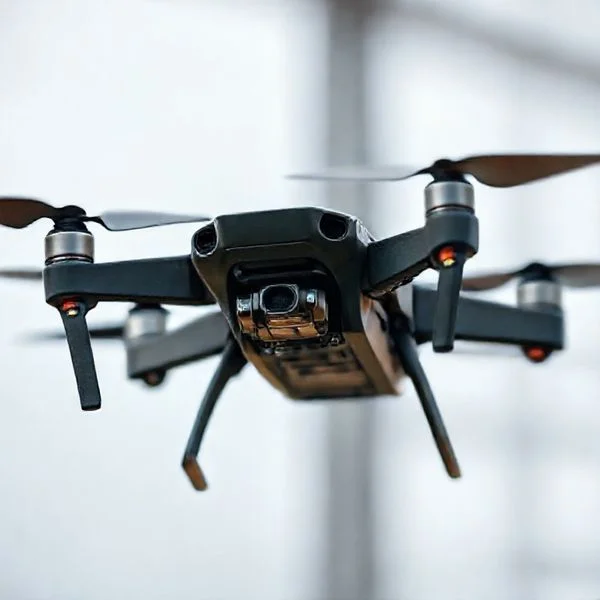
At night, a drone is most easily identified by its blinking red and green navigation lights and high-intensity white anti-collision strobes. Unlike airplanes or satellites, drones have the unique ability to hover perfectly still or perform instant, sharp directional changes.
🎯 Key Takeaways
- Identify drones by blinking red and green lights and bright white strobes.
- Drones can hover in one spot, unlike planes or satellites.
- Sharp 90-degree turns are a hallmark of drone flight behavior.
- Listen for a high-pitched buzzing sound that increases as it nears.
- Anti-collision strobes are often visible from up to three miles away.
A drone flying at night appears as a localized point of light that exhibits specific color patterns and flight behaviors unlike any other aerial object. Most consumer and commercial drones feature a combination of steady navigation lights and high-intensity flashing strobes. If you see a light that stays perfectly still for minutes at a time or makes sudden, sharp turns without losing altitude, you are almost certainly looking at a drone rather than a plane, star, or satellite.
Prime for Young Adults — 6 Months Free
Exclusive Offer Amazon Prime for Young Adults, Students and 18–24s get six months of Prime free, then half price.
Start 6 Months Free As an Amazon Associate I earn from qualifying purchases.
Identifying these aircraft is essential for maintaining your privacy and understanding the activity in your immediate airspace. Whether it is a neighbor practicing photography or a commercial crew performing a utility inspection, the lights and movement are your primary clues. By learning to “read” the light sequence and the physics of the craft’s travel, you can distinguish a small quadcopter from a high-altitude jet or a celestial body in seconds.
Decoding Drone Light Patterns: Red, Green, and White Strobes
Recommended Best Deal Products
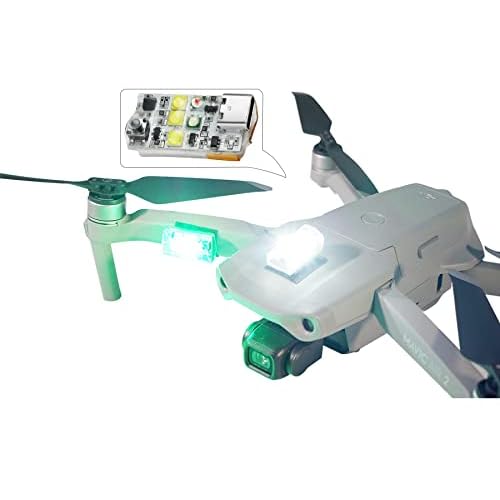


The most immediate way to identify a drone at night is by its lighting configuration. Unlike stars, which twinkle due to atmospheric interference, or satellites, which appear as steady white dots moving in a straight line, drones use high-output Light Emitting Diodes (LEDs). These LEDs are designed to be visible from miles away to prevent mid-air collisions. Most drones follow a specific color-coding system that helps observers and other pilots determine the craft’s orientation.
Navigation Lights: The Red and Green Standard
Drones typically use a “marine-style” lighting system to indicate which direction they are facing. This is the most common visual cue you will see from the ground. While manufacturers can vary their setups, the standard layout provides a clear map of the drone’s position in the sky.
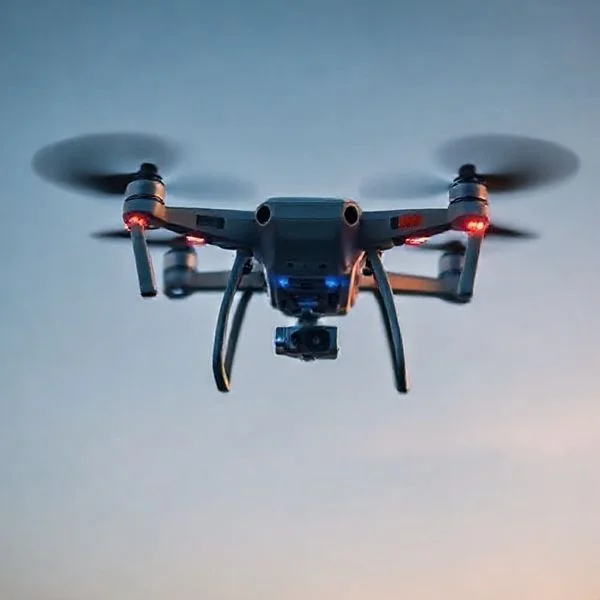
- Solid or Blinking Red: Typically located on the “port” (left) side or the front of the drone. If you see red lights, the drone is likely facing toward you or moving sideways to your right.
- Solid or Blinking Green: Usually located on the “starboard” (right) side or the rear of the drone. Green lights help the pilot and observers understand the lateral movement of the craft.
- Status Indicators: Some hobbyist drones use rapid-flashing yellow or blue lights to indicate GPS lock or battery status. These are usually much dimmer than the primary navigation lights.
Anti-Collision Strobes: High-Intensity White
If the drone is being flown legally at night for commercial purposes, it will likely be equipped with a high-intensity white strobe. These are much brighter than the standard navigation LEDs and are often visible for up to three statute miles. These strobes do not stay on constantly; instead, they flash at a specific cadence, usually between 40 and 100 times per minute. If you see a rhythmic, piercing white flash that illuminates the frame of the craft briefly, it is a clear indicator of a drone equipped for night operations.
Identifying Unique Drone Movement vs. Aircraft and Satellites
Once you have identified the lights, the next step is to observe how the object moves. Drones are powered by independent rotors, allowing them to ignore the laws of momentum that govern fixed-wing aircraft like airplanes. Their flight paths are often erratic, precise, and completely different from the smooth, predictable arcs of satellites or the long, straight descents of landing planes.
The Ability to Hover and Vertical Ascent
The most obvious “tell” of a drone is its ability to remain perfectly stationary. A star will appear to move very slowly across the sky over hours, and a plane must maintain forward airspeed to stay aloft. If you see a light that stops dead in its tracks and hangs in the air for five minutes, it is a drone. Furthermore, drones can move straight up or down. If a light in the sky suddenly drops 50 feet vertically or shoots upward at high speed without moving forward, you are watching a multi-rotor aircraft.
Instant 90-Degree Turns and Agility
Planes and helicopters require a “turning radius” to change direction, resulting in wide, sweeping curves. Drones do not. A drone can fly at 30 miles per hour in one direction, stop instantly, and immediately fly at full speed in the opposite direction or at a sharp 90-degree angle. This “robotic” movement is a hallmark of drone flight.
Prime for Young Adults — 6 Months Free
Exclusive Offer Amazon Prime for Young Adults, Students and 18–24s get six months of Prime free, then half price.
Start 6 Months Free As an Amazon Associate I earn from qualifying purchases.- Drone Movement: Characterized by jerky, stop-and-start motions, hovering, and rapid changes in altitude.
- Airplane Movement: Constant, steady speed with slow, banked turns and a consistent flickering of red and white lights.
- Satellite Movement: A constant, silent, and perfectly straight path across the sky, usually taking several minutes to cross from horizon to horizon without any blinking.
- Meteor Movement: An extremely fast streak of light that disappears in a split second, often leaving a brief trail.
By comparing the speed and “weight” of the movement, you can quickly rule out traditional aircraft. Drones often look “twitchy” in the air because their flight controllers are making hundreds of tiny adjustments per second to fight the wind. This creates a slight shimmering effect in the lights that is distinct from the steady glow of a distant cockpit or the strobe of a commercial airliner.
Visual Differences Between Consumer Drones and Commercial Models
Recommended Best Deal Products


Not all drones are created equal, and their appearance at night changes significantly depending on their purpose. Most consumer drones, like the ones you see in local parks, are designed for portability. Their lighting is often subtle, featuring small red and green navigation LEDs on the arms. These are meant to help the pilot maintain orientation rather than light up the entire sky. From a distance, a consumer drone looks like a tiny, flickering point of light that can easily be mistaken for a distant star if it is hovering perfectly still.
High-Intensity Strobes vs. Standard LEDs
Commercial and enterprise drones—such as those used for search and rescue, infrastructure inspection, or professional cinematography—are much easier to spot. These models are often required by law to carry anti-collision lighting. These strobes are significantly brighter than standard navigation lights and are typically visible for up to three statute miles. If you see a light that is piercingly bright and flashes in a rapid, rhythmic white or green pattern, you are likely looking at a professional-grade aircraft rather than a hobbyist toy.
Size and Silhouette at Night
The physical profile of the drone also changes how it interacts with ambient light. Larger commercial models have a bulkier silhouette that may “block” background stars as they move, creating a localized shadow effect. In contrast, small consumer drones are nearly invisible once they reach an altitude of 200 feet, leaving only their tiny LED glow behind. Here are some key identifiers for commercial models:
- Secondary Payloads: You might see a faint secondary glow from an underslung thermal camera or a powerful searchlight.
- Steady Sound Profile: Commercial drones use larger props, creating a lower-pitched “drone” sound that carries further than the high-pitched whine of consumer models.
- Synchronized Flashing: Many high-end models feature dual strobes that flash in perfect synchronization, a feature rarely found on basic hobbyist gear.
Environmental Factors: How Distance and Weather Affect Visibility
How a drone looks at night is heavily influenced by the atmosphere between you and the craft. On a perfectly clear, “crisp” night, drone lights appear as sharp, distinct points. However, environmental factors like humidity, light pollution, and altitude can play tricks on your eyes, making a small drone appear much larger or more mysterious than it actually is.
The Impact of Atmospheric Conditions
When there is high humidity, fog, or light mist, drone LEDs experience a phenomenon called “blooming.” Instead of seeing a sharp dot of light, you will see a soft, glowing orb. The moisture in the air scatters the light, making the drone look like a floating, translucent ball. This is one of the most common reasons people misidentify drones as “unexplained” lights. In heavy light pollution, such as in a city center, the dim navigation lights of a small drone may vanish entirely, leaving only the sound of the rotors to give its position away.
Altitude and the Parallax Effect
The higher a drone flies, the more its movement seems to slow down. This is the parallax effect. A drone flying at 400 feet might look like it is barely moving across the sky, while a drone at 50 feet will zip past your field of vision in seconds. This can make it difficult to judge the drone’s actual speed and distance. To accurately gauge what you are seeing, consider these environmental tips:
Prime for Young Adults — 6 Months Free
Exclusive Offer Amazon Prime for Young Adults, Students and 18–24s get six months of Prime free, then half price.
Start 6 Months Free As an Amazon Associate I earn from qualifying purchases.- Background Reference: Watch the light as it passes a tree or a building. If the light disappears behind a solid object, it is a drone or a low-flying aircraft, not a star.
- Color Distortion: At extreme distances, the atmosphere can make red lights look orange or white lights look slightly yellow.
- Sound Travel: On quiet nights, sound travels further. If you see a light but hear nothing, it is likely at a much higher altitude or further away than you perceive.
Conclusion
Recommended Best Deal Products


Identifying a drone at night is a mix of observing light patterns and understanding how they move through the sky. While consumer drones often look like small, colored dots, commercial models stand out with high-intensity strobes. By paying attention to the color, flash rate, and “bloom” of the lights, you can quickly distinguish a hobbyist’s flight from a professional operation or even a distant airplane. Knowing these visual cues helps demystify the night sky and ensures you stay informed about the technology operating around you.
Next Steps: The next time you see a suspicious light, try using a flight tracking app or a pair of binoculars to get a closer look at the light’s behavior. Keep exploring our blog to learn more about the latest drone accessories and how to enhance your own night-flying experience safely and legally!
❓ Frequently Asked Questions
Why do drones have red and green lights?
These are navigation lights used to indicate the drone’s orientation. Typically, red lights indicate the front or left side, while green lights indicate the rear or right, following standard aviation protocols.
Can you see a drone at night if the lights are turned off?
It is nearly impossible to spot a drone without lights unless it is silhouettes against the moon or city lights. However, flying without anti-collision lights at night is a violation of FAA regulations for most pilots.
How far away can you see drone lights at night?
Professional-grade anti-collision strobes are designed to be visible from up to three miles away, though standard orientation LEDs are usually only visible within a few hundred feet.
Do drones look like satellites in the night sky?
Satellites appear as steady, non-blinking points of light moving in a perfectly straight line at a constant speed. Drones usually blink and exhibit much more erratic or stationary behavior.
What do thermal drone cameras look like from the ground?
The thermal camera itself is invisible to the naked eye at night. You will only see the drone’s external navigation lights and strobes, regardless of the sensors it is carrying.
Why is that light hovering perfectly still?
If a light remains completely stationary for an extended period and then moves rapidly, it is likely a drone using GPS-locking technology to hold its position in the air.