The current world record for the fastest drone is held by the Red Bull Drone 1, which achieved a staggering top speed of over 310 mph (500 kph). While professional custom-built FPV rigs dominate the speed charts, specialized commercial models are also pushing the boundaries of what is possible for consumers.
🎯 Key Takeaways
- The Red Bull Drone 1 holds the current speed record at 310+ mph.
- Custom FPV drones utilize high-KV motors and 6S-8S batteries for speed.
- Aerodynamic bullet-shaped shells are essential for reducing high-speed drag.
- Commercial DJI drones generally peak around 60-97 mph in manual mode.
- Extreme speeds require specialized low-latency radio links for pilot control.
The current world record for the fastest drone is held by the Peregrine 2, a custom-built quadcopter that reached a blistering top speed of 298.47 mph (480.23 km/h). Developed by the father-son duo Luke and Mike Bell in 2024, this machine officially holds the Guinness World Record, surpassing all previous attempts by a significant margin. If you are looking for the fastest “functional” drone used in professional broadcasting, the Red Bull Drone 1 follows closely behind, hitting 217 mph (350 km/h) to track Formula 1 cars in real-time.
Recommended Best Deal Products


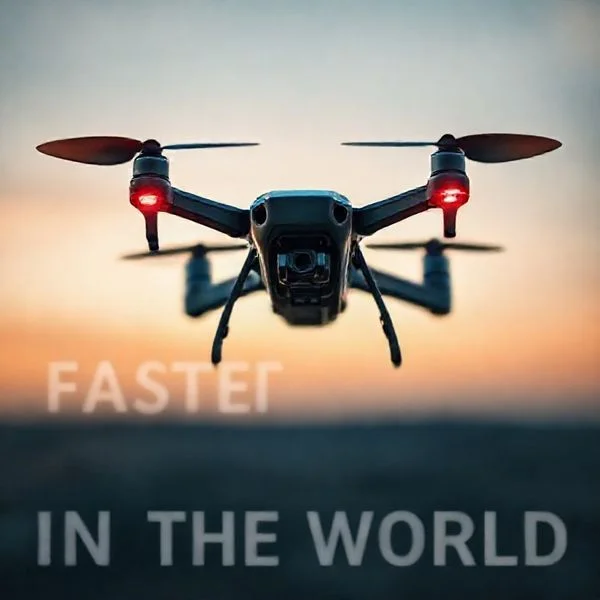
Understanding these speeds is critical for enthusiasts because they represent the absolute limit of modern battery discharge and motor efficiency. These record-breaking drones aren’t just toys; they are engineering marvels that push the boundaries of aerodynamics and thermal management. By studying these machines, you can better understand how high-end FPV components like high-KV motors and low-drag frames influence the performance of your own racing or freestyle builds.
The Red Bull Drone 1 & Peregrine 2: Breaking the World Speed Record
While the Peregrine 2 holds the absolute title, the Red Bull Drone 1 (created by Dutch Drone Gods) brought high-speed drones into the mainstream spotlight. The Peregrine 2 achieved its 298 mph record by focusing purely on a specialized aerodynamic “bullet” shape. It utilized a 3D-printed outer shell designed to minimize drag at subsonic speeds. In contrast, the Red Bull Drone 1 was built with a specific purpose: keeping up with Max Verstappen’s RB20 F1 car. This required not just raw speed, but the ability to maneuver and film at over 200 mph without the drone vibrating or losing signal.
Technical Specifications of the Record Holders
The engineering behind these drones is vastly different from anything you will find in a retail store. To achieve speeds nearing 300 mph, designers must overcome “the wall” where air resistance becomes an almost physical barrier. The Peregrine 2 and Red Bull Drone 1 share several high-end characteristics that allow them to survive these forces.
- Acceleration: The Red Bull Drone 1 can accelerate from 0 to 300 km/h (186 mph) in just 4 seconds. This outpaces even the fastest supercars.
- Propulsion System: These drones use high-voltage (8S to 12S) battery setups to provide enough “juice” to the motors without melting the electronics.
- Aerodynamics: Both drones utilize a vertical or “bullet” orientation. This reduces the surface area facing the wind during high-speed forward flight.
- Cooling: At these speeds, motors and ESCs (Electronic Speed Controllers) generate immense heat. Specialized airflow channels are integrated into the frames to prevent mid-air fires.
The Peregrine 2’s Path to 298 MPH
The Peregrine 2 succeeded by using a custom carbon fiber internal structure paired with ultra-lightweight components. During its record-breaking run, the team had to account for “propeller flutter,” a phenomenon where blades deform under extreme centrifugal force. By using stiff, carbon-reinforced propellers and high-torque motors, they maintained thrust even as the drone approached 300 mph. This project proved that consumer-grade FPV technology, when pushed to its logical extreme, can rival the speeds of small manned aircraft.
The Ultimate High-Speed Drone Performance Walkthrough
The pursuit of the fastest drone in the world is a journey through cutting-edge aerodynamics, high-voltage electrical engineering, and precision piloting. While off-the-shelf consumer drones typically top out at 45-60 mph, custom-built FPV (First Person View) racing drones have shattered records, with the current world record held by the Red Bull Drone 1 reaching speeds over 217 mph (350 km/h). This guide is designed to take you through the technical steps required to understand, build, or configure a drone capable of reaching these extreme velocities. Following these steps is critical because at 200 mph, even a minor vibration or a slightly loose screw can lead to a catastrophic mid-air disintegration.
Step 1: Master Aerodynamic Theory and Drag Reduction
What you need: Basic knowledge of fluid dynamics, access to 3D modeling software (optional), and lightweight carbon fiber materials.
Instructions: To reach world-record speeds, you must fight the “Square Law” of physics, which states that drag increases with the square of speed. Standard “bus” style drone frames act like bricks in the wind. You must transition to a “torpedo” or “vertical” arm design. This involves minimizing the front-facing surface area of the drone. In this step, you should select a frame where the electronics are housed in a slim, aerodynamic pod (canopy) rather than a flat plate. Orient your flight controller and battery in a way that creates the smallest possible silhouette when the drone is tilted at its maximum forward pitch angle (often 60-80 degrees during a speed run).
Pro Tip: Use “shrink wrap” or smooth electrical tape over any exposed wires on the arms; even small wires create turbulent “dirty air” that significantly slows down the craft at high speeds.
Step 2: Source High-KV Motors and High-Voltage Batteries
What you need: 2800KV+ brushless motors, 6S or 8S LiPo/LiHV batteries, and a high-amperage power lead (XT60 or XT90).
Instructions: Speed is a direct result of RPM (Revolutions Per Minute). To achieve world-class speed, you need a high KV rating (RPM per volt). For a 5-inch speed build, look for motors in the 2800KV to 3200KV range. However, high KV requires immense power. You must pair these with high-discharge (C-rating) batteries, preferably 120C or higher. Modern record-breakers are moving toward 8S (33.6V) configurations to push the limits of motor saturation. Ensure your motors are “stator-size” optimized—larger stators like 2507 or 2806.5 provide the torque necessary to spin aggressive propellers without overheating the coils during the initial punch-out.
Pro Tip: Pre-warm your batteries to about 35°C (95°F) before a flight to lower internal resistance and maximize the initial voltage “punch.”
Step 3: Optimize Propeller Pitch for Top-End Velocity
What you need: Various sets of high-pitch propellers (e.g., 5x5x3 or 5.1×5.1×3) and a prop tool.
Instructions: Propellers are the “gears” of your drone. A low-pitch prop (like a 5x3x3) provides great grip for racing but caps your top speed quickly. For extreme speed, you need high-pitch propellers, where the second number (the pitch) is equal to or higher than the first number (the diameter). For example, a 5×5.5 propeller travels 5.5 inches forward for every rotation. In this step, you must test various blade counts. While three blades are standard for control, two-blade (biblade) props often achieve higher top speeds because they have less surface area and produce less drag, allowing the motor to reach its maximum theoretical RPM.
Pro Tip: Check for “prop wash” and blade fluttering; if the props are too thin, they will deform at 40,000 RPM, losing all efficiency and potentially exploding.
Step 4: Configure Extreme ESC Settings and PWM Frequency
What you need: BLHeli_32 or AM32 configurator software and a 60A+ Electronic Speed Controller (ESC).
Instructions: Your ESC is the brain that manages the raw power from the battery to the motors. For high-speed runs, you must adjust the “Motor Timing.” Higher timing (25-30 degrees) can increase top-end RPM at the cost of heat and efficiency—perfect for a 30-second speed burst. Additionally, set your PWM frequency to high (48kHz or 96kHz) to smooth out the power delivery. You must also disable any “current limiting” features in the software. If your ESC detects a massive 150A spike during a speed run and throttles back to save itself, you will never hit your target speed. Ensure you have a massive capacitor (1000uF 35V-50V) soldered to the battery pads to absorb voltage spikes.
Pro Tip: Always use “Bidirectional DShot” to allow the flight controller to talk to the ESC in real-time, which helps filter out the high-frequency vibrations common in speed builds.
Step 5: Fine-Tune PID Controllers and TPA
What you need: Betaflight or FalcoX configurator and a laptop at the flight field.
Instructions: A drone that is stable at 50 mph can become a vibrating mess at 150 mph due to increased air pressure on the control surfaces. You must implement “TPA” (Throttle PID Attenuation). TPA automatically lowers your PID gains as your throttle increases. This prevents the “death shake” that occurs when the flight controller over-corrects at high speeds. Set your TPA threshold to around 1350us-1500us and a TPA value of 0.65 to 0.80. This ensures that when you are at 100% throttle, your gains are significantly reduced, allowing the physics of the drone’s momentum to keep it stable rather than the flight controller fighting the air.
Pro Tip: Increase your “I-term” slightly on the Pitch axis to help the drone “lock in” and resist being pushed upward by the massive airflow under the frame.
Step 6: Implement Long-Range Control and Video Links
What you need: ExpressLRS or Crossfire radio system and a high-power Video Transmitter (VTX).
Instructions: When traveling at 200+ mph, you cover the length of a football field in about one second. Standard 2.4GHz radio links can fail or experience latency that results in a crash miles away before you even realize you’ve lost control. You must use a 900MHz or high-refresh rate 2.4GHz link like ExpressLRS set to 500Hz or 1000Hz. For video, use a high-output VTX (800mW+) or a digital system like DJI O3, but ensure the antennas are mounted outside the carbon fiber frame. Carbon fiber shields RF signals; if your drone turns and the frame blocks the antenna, you will experience an instant “blackout” at a time when you have zero room for error.
Pro Tip: Use a “patch antenna” on your goggles and point it directly at the flight path to ensure the strongest possible video signal during the high-speed pass.
Step 7: Execute the “Speed Dive” and Data Logging
What you need: An onboard GPS module (M10 or better) and an SD card for Blackbox logging.
Instructions: To achieve the highest possible speed, professional pilots don’t just fly in a straight line from a standstill. You should perform a “gravity assist” or “split-S” maneuver. Fly to an altitude of 400-600 feet, turn toward your speed trap, and enter a shallow 30-degree dive while gradually increasing throttle. This uses gravity to overcome initial inertia. Once at the desired altitude, level out and hold 100% throttle for 3-5 seconds. Ensure your GPS is locked to at least 10 satellites before takeoff to ensure accurate ground-speed readings. After landing, download the Blackbox logs to see if your “Actual RPM” matched your “Target RPM,” which tells you if your propellers were cavitating.
Pro Tip: Do not hold 100% throttle for more than 5-8 seconds; the heat buildup in the motors and battery is exponential and can cause components to desolder or catch fire.
✅ Final Checklist
- Verify that all motor screws are secured with blue Loctite to prevent vibration-induced loosening.
- Ensure the battery strap is “double-looped” or reinforced; the g-force of a 200mph turn can eject a battery.
- Check that the GPS module has a 3D lock and is recording coordinates at a 10Hz refresh rate.
- Confirm that the ESC “Rampup Power” is set to a value that prevents desyncs during rapid throttle increases.
- Inspect propellers for any micro-fractures or “stress whitening” near the hub.
Important Notes:
- Safety: A drone traveling at 200 mph has the kinetic energy of a firearm projectile. Never fly near people, buildings, or animals. Use a dedicated, empty airfield or desert.
- Seek Help: If you are new to FPV, do not attempt a high-speed build alone. Join communities like “FPV Speed Run” on Facebook or Discord to have your logs reviewed by experts.
- Estimated Time and Cost: Building a world-class speed drone takes 15-20 hours of assembly and tuning. Expect to spend $600-$1,200 on the drone itself, excluding goggles and radio gear.
Custom FPV vs. Commercial Drones: A Speed Comparison
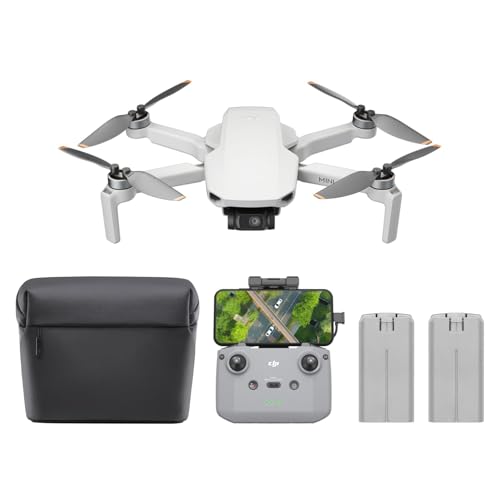
If you go to a store and buy a drone today, it will not come close to the records set by the Peregrine 2. Most commercial drones are built for stability and battery life, not raw velocity. For example, the DJI Avata 2 or the DJI Mini series are electronically limited to ensure safety and flight duration. To get into the triple digits (MPH), you generally have to move away from “out of the box” solutions and look toward specialized FPV (First Person View) racing gear.
Why Your Retail Drone Has a Speed Ceiling
Commercial drones like the DJI Mavic 3 or the Autel EVO II are designed for cinematography. Their software limits their tilt angle, which in turn limits their maximum speed. Even the “fastest” consumer drone from DJI, the DJI FPV, is capped at around 87 mph (140 km/h) in Manual Mode. While this feels incredibly fast to a beginner, it is less than a third of the speed achieved by the world record holders. The limitation is primarily due to the plastic frames and motor efficiency tuned for 20-minute flight times rather than 2-minute speed bursts.
Speed Tiers: What Can You Actually Fly?
When you move into the world of custom FPV builds, the speed brackets change significantly. You can build or buy “Bind-and-Fly” (BNF) drones that far exceed commercial limits. Here is how the speeds generally break down across different categories:
- Consumer Photography Drones (DJI Mini/Mavic): 30 mph to 45 mph (48 – 72 km/h).
- Commercial FPV Drones (DJI FPV/Avata): 60 mph to 87 mph (96 – 140 km/h).
- Professional Racing Drones (5-inch Custom): 100 mph to 120 mph (160 – 193 km/h).
- Specialized Speed Builds (6S/8S Power): 150 mph to 200 mph (241 – 322 km/h).
- World Record Prototypes: 217 mph to 298 mph (350 – 480 km/h).
To reach the 150+ mph tier, you typically need to build your own drone using a dedicated speed frame. These frames are usually stretched or slimmed down to minimize the frontal profile. You will also need Electronic Speed Controllers (ESCs) rated for at least 60-80 Amps to handle the massive current draw required to spin propellers at 40,000+ RPM. While custom drones offer the highest performance, they require significant skill to pilot, as a crash at 150 mph will usually result in the total destruction of the hardware.
Engineering Velocity: High-KV Motors and Aerodynamic Design
Breaking speed records isn’t just about pushing the throttle; it is an exercise in extreme physics. To reach speeds exceeding 200 mph, engineers must balance raw power with clinical precision. Every gram of weight and every millimeter of surface area matters when wind resistance becomes a brick wall at high velocities.
The Powerhouse: High-KV Motors and High-Voltage Batteries
The heart of any record-breaking drone lies in its propulsion system. Unlike standard consumer drones that prioritize efficiency, speed demons utilize High-KV motors. KV refers to the constant of the motor, essentially meaning the number of revolutions per minute (RPM) the motor will turn for every volt applied. For these builds, pilots often use custom-wound motors paired with 6S or even 8S LiPo batteries to provide a massive surge of current.
- High-C Rating Batteries: Fast drones require batteries with high discharge rates to prevent “voltage sag” during full-throttle sprints.
- ESC Calibration: Electronic Speed Controllers (ESCs) must be capable of handling 60 to 100 amps of current without overheating or failing.
- Propeller Pitch: Aggressive propeller pitches move more air per rotation but require immense torque from the motors to maintain RPM.
Aerodynamics and Structural Rigidity
At 200 mph, even a slight vibration can cause a drone to disintegrate mid-air. Speed-focused builds typically use a vertical frame design or a “stretched X” configuration to minimize the surface area facing the wind. This reduces drag and allows the drone to cut through the air like a knife. Manufacturers use high-grade 3K carbon fiber for the chassis, ensuring the frame is stiff enough to handle the massive G-forces during rapid acceleration.
Safety and Regulatory Challenges of High-Speed Drone Flight
With great speed comes significant responsibility. Flying a drone at triple-digit speeds transforms the aircraft into a high-energy projectile. This introduces a layer of risk that standard hobbyists rarely encounter, making safety protocols and legal compliance the top priorities for professional speed pilots.
Legal Limits and FAA Regulations
In many regions, including the United States under FAA guidelines, there are strict speed limits for recreational and commercial drone flight. Generally, the limit for a standard sUAS (Small Unmanned Aircraft System) is 100 mph. To legally fly faster for record attempts, pilots must often secure specific waivers or fly in designated, restricted airspaces where they aren’t a threat to manned aviation or the public.
- Remote ID Compliance: Most high-speed custom builds must now integrate Remote ID technology to remain legal in controlled airspaces.
- Visual Line of Sight (VLOS): At 200 mph, a drone can leave your field of vision in seconds. This often requires the use of multiple spotters to track the aircraft’s position.
- Insurance Requirements: Professional racing leagues and record-setters typically carry high-limit liability insurance to cover potential property damage.
The Human Factor: Reaction Times and FPV Latency
Physics doesn’t just challenge the hardware; it challenges the pilot. When a drone travels at 300 feet per second, a human’s 250-millisecond reaction time means the drone has moved 75 feet before the pilot can even process a visual cue. To combat this, pilots use ultra-low latency FPV (First Person View) systems. Even a few milliseconds of lag in the video feed can result in a catastrophic crash, making high-end analog or specialized digital transmission systems essential.
Conclusion
The quest for the fastest drone in the world has pushed FPV technology to its absolute limits. From the custom-built “Peregrine” by Luke Maximo Bell hitting over 298 mph to the industrial-strength racers used in the Drone Racing League, the evolution of speed is breathtaking. Reaching these velocities requires a perfect marriage of high-KV motor engineering, advanced aerodynamics, and expert-level piloting skills. While most of us won’t be breaking world records tomorrow, understanding the tech behind these machines helps us appreciate the engineering in our own gear.
If you are ready to feel the rush, start by exploring FPV racing simulators to hone your reflexes. Once you have the basics down, look into high-performance “bind-and-fly” racing drones to begin your journey into the world of high-velocity flight. Do you think we will see a drone hit 400 mph in the next five years? Let us know your thoughts in the comments below!
❓ Frequently Asked Questions
How was the Red Bull Drone 1 engineered for such high speeds?
The Red Bull Drone 1 was custom-built by the Dutch Drone Gods using lightweight carbon fiber and a unique aerodynamic ‘bullet’ shape to minimize air resistance. It was designed specifically to accelerate faster than an F1 car, requiring specialized electronics to handle the immense heat and battery drain.
What makes a custom FPV drone faster than a consumer drone?
Custom FPV drones have a much higher power-to-weight ratio because they lack the heavy sensors, GPS modules, and stabilized gimbals found on consumer drones. They use high-KV motors and high-discharge batteries that prioritize raw performance over flight time and stability.
Can I buy the world’s fastest drone off-the-shelf?
No, the record-breaking Red Bull Drone 1 is a one-of-a-kind prototype. However, you can purchase high-performance racing components to build your own FPV drone capable of exceeding 150 mph with the right configuration.
What are the primary factors that limit a drone’s top speed?
The main limiting factors are aerodynamic drag, which increases exponentially with speed, and the battery’s ‘C-rating,’ which determines how much current can be pulled at once. Additionally, motor heat can cause components to fail if the drone stays at max throttle for too long.
How do pilots control drones at 200+ mph?
Pilots use ultra-low latency digital or analog video systems and specialized radio protocols like ELRS or Crossfire. At these speeds, the pilot must anticipate turns and obstacles seconds in advance because the drone covers a football field’s length in less than a second.
Are military drones faster than FPV racing drones?
While some military UAVs like the MQ-9 Reaper reach speeds of 300 mph, they are significantly larger and use turboprop or jet engines. In terms of small, battery-powered quadcopters, custom FPV drones are currently the fastest machines in the air.