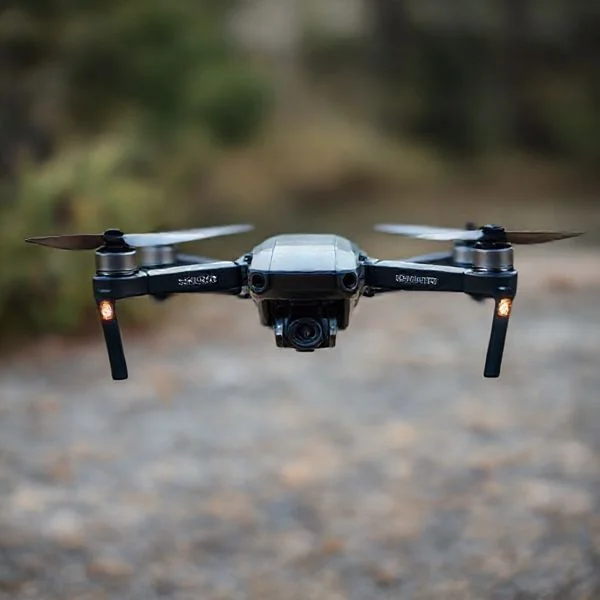
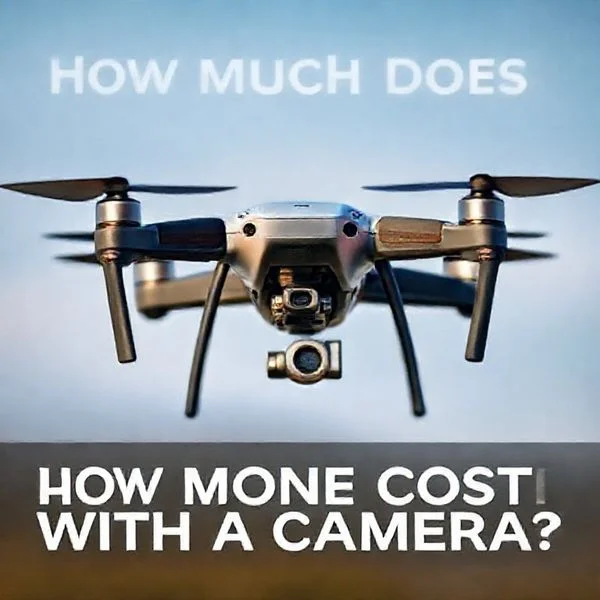
Camera drone prices range from $50 for basic toys to over $2,000 for professional cinema rigs, with most hobbyists finding the best value in the $400 to $800 range. The primary cost drivers are mechanical gimbals, sensor size, and intelligent flight safety features.
🎯 Key Takeaways
- Toy drones under $100 provide basic 720p/1080p video without stabilization.
- Mid-range drones ($400-$800) offer 4K video and 3-axis mechanical gimbals.
- Professional models ($1,500+) feature 1-inch sensors for cinematic low-light performance.
- GPS capabilities are standard above $200, ensuring safer flight and return-to-home.
- Factor in an extra 20% for ‘Fly More’ bundles and essential accessories.
In 2024, a camera drone will cost you anywhere from $50 to over $15,000. For the vast majority of hobbyists and content creators, the realistic “sweet spot” for a reliable, high-quality camera drone is between $350 and $900. At this price point, you move away from shaky, unstable toys and into the realm of 4K stabilized video and GPS-backed flight safety.
Recommended Best Deal Products

Choosing the right budget matters because the drone market is saturated with misleading marketing. Many drones under $200 claim “4K resolution,” but lack the physical stabilization required to make that footage usable. By understanding the specific price brackets, you can avoid overpaying for professional-grade cinema features you don’t need or, conversely, wasting money on a cheap model that lacks the signal range to stay connected in your local park.
Drone Price Brackets: From Beginner Toys to Professional Rigs
The drone market is strictly segmented by hardware capability. You generally get what you pay for regarding flight stability and image clarity. Here is how the 2024 price brackets break down for consumers.
The Budget and Toy Tier ($50 – $250)
Drones in this category are primarily for learning the “feel” of flight. They are lightweight and often lack a mechanical gimbal, meaning your video will look shaky whenever the drone moves or encounters wind. Most use Electronic Image Stabilization (EIS) to mimic smoothness, which often results in a “jello” effect in the footage.
- Key Features: 1080p or upscaled 4K video, 7–15 minute flight times, and Wi-Fi-based smartphone control.
- Primary Limitations: No obstacle avoidance, very limited range (usually under 100 meters), and poor performance in winds over 10 mph.
- Best Value Model: Ryze Tello ($99). It is powered by DJI flight tech and is the gold standard for indoor fun and basic coding, though its 720p camera is strictly for casual use.
The Enthusiast and Mid-Range Tier ($300 – $900)
This is where “real” aerial photography begins. In this bracket, you find 3-axis mechanical gimbals, which keep the camera perfectly level even if the drone is tilting aggressively. These drones use GPS to hover in place precisely, even if you let go of the controller.
- Key Features: True 4K video at 30 or 60 fps, 30+ minute flight times, and specialized transmission systems (like DJI’s OcuSync) that reach up to 6–10 miles.
- Target User: Travelers, YouTubers, and hobbyists who want cinematic landscape shots.
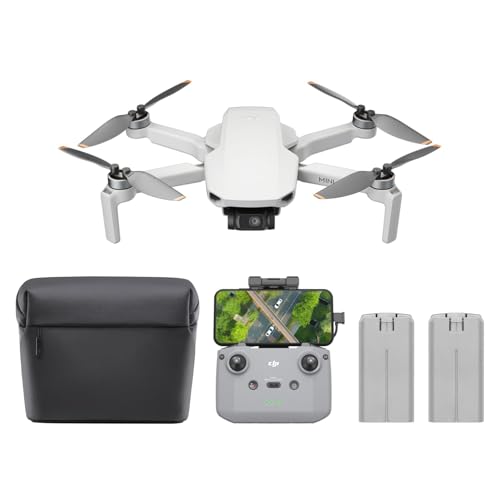
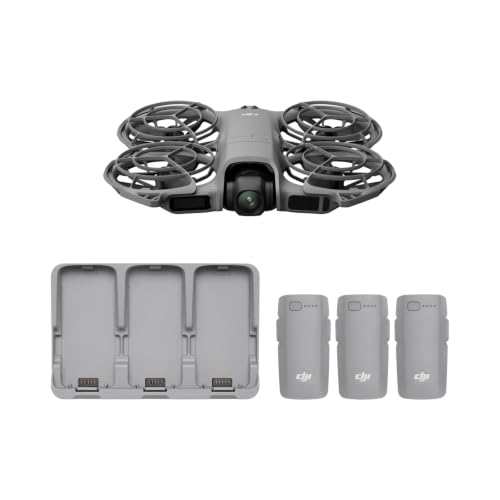
- Best Value Model: DJI Mini 4K ($299) or DJI Mini 3 ($419). These offer the best “pixels-per-dollar” ratio on the market today. For those wanting more safety, the Potensic Atom offers a compelling alternative with excellent tracking features.
The Prosumer and Professional Tier ($1,000 – $3,000+)
Once you cross the $1,000 threshold, you are paying for sensor physics and redundancy. These drones feature larger 1-inch or Micro Four Thirds sensors that perform beautifully in low light, whereas cheaper drones struggle with graininess (noise) during sunset or sunrise.
- Key Features: Omnidirectional obstacle sensing (it won’t let you crash), 10-bit color for professional editing, and dual-camera systems with telephoto lenses.
- Best Value Model: DJI Air 3 ($1,099). It features a dual-camera system that allows for both wide-angle and zoomed-in cinematic shots, making it the versatile choice for professional creators.
Everything You Need to Know About Drone Pricing with Cameras
Navigating the world of drone photography can be overwhelming, especially when prices range from fifty dollars to several thousand. This guide is designed to demystify the costs associated with camera drones, helping you identify exactly how much you should spend based on your specific needs. Understanding the breakdown of costs—from the hardware itself to the hidden fees like registration and accessories—is essential for making a smart investment and avoiding buyer’s remorse.
Step 1: Define Your Primary Use Case
What you need: A clear list of goals (recreational, photography, or commercial work).
Instructions: Before looking at price tags, you must categorize your needs. If you are buying a drone for a child to fly in the living room, you are looking at the “Toy” category, which ranges from $30 to $100. If you want to capture high-quality vacation photos for social media, you are in the “Consumer” or “Hobbyist” bracket, ranging from $300 to $900. Professional cinematographers or industrial inspectors need “Enterprise” or “Prosumer” gear, which starts at $1,500 and can exceed $10,000. Identifying your category prevents you from overpaying for features you won’t use or underbuying and ending up with poor image quality.
Pro Tip: Don’t buy a professional drone as a first-time pilot; the high cost of replacement parts makes learning on an expensive machine a risky financial move.
Step 2: Evaluate the Entry-Level Budget Tier
What you need: A budget of $50 to $250 and basic expectations for image quality.
Instructions: In this price range, drones usually feature 720p or 1080p cameras. At the lower end ($50-$100), the cameras are often “fixed,” meaning they don’t tilt, and they lack stabilization, leading to shaky “jello-effect” video. As you approach $200, you might find drones with basic GPS for stability. These drones are excellent for learning the flight controls but are generally unsuitable for serious photography. The sensors are small, and low-light performance is virtually non-existent. Expect flight times of 8 to 12 minutes per battery. Brands like Holystone or Potensic dominate this space, offering decent value for those testing the waters of the hobby.
Pro Tip: Check if the drone uses a proprietary battery; cheap drones often have expensive replacement batteries that can double your initial investment over time.
Step 3: Analyze Mid-Range and Prosumer Costs
What you need: A budget of $400 to $1,200 and a requirement for 4K video.
Instructions: This is the “sweet spot” for most users. In this bracket, you are paying for three main things: a 3-axis mechanical gimbal, a 4K camera with a larger sensor (usually 1/2.3-inch or 1-inch), and advanced flight safety features. A mechanical gimbal is crucial because it physically stabilizes the camera, ensuring buttery-smooth footage even in high winds. Drones in this category, such as the DJI Mini or Air series, provide 25 to 35 minutes of flight time. You are also paying for sophisticated software features like “Follow Me” modes and automatic obstacle avoidance, which significantly reduce the risk of expensive crashes.
Pro Tip: Look for “Fly More Combos” in this price range; they usually cost $150-$200 more but include extra batteries and a charging hub that would cost $300 if bought separately.
Step 4: Factor in Professional and Enterprise Hardware
What you need: A budget of $2,000 to $15,000 and specialized industry requirements.
Instructions: Professional drones are expensive because they utilize Micro Four Thirds or Full Frame sensors that rival high-end ground cameras. For $2,000 to $5,000, you get drones like the DJI Mavic 3 Pro or Inspire series, which offer interchangeable lenses, ProRes recording, and 10-bit color profiles. Beyond $5,000, you enter the Enterprise market, where drones include thermal cameras for search and rescue, LiDAR for 3D mapping, or multispectral sensors for agriculture. These drones are built with redundancy in mind, featuring dual batteries and multiple IMUs to ensure they don’t fall out of the sky during critical commercial missions.
Pro Tip: For professional work, the cost of the drone is often tax-deductible as a business expense, so keep all receipts and consult an accountant.
Step 5: Account for Essential Accessories
What you need: An additional $150 to $400 beyond the drone’s sticker price.
Instructions: The “drone cost” rarely includes everything you need. You must budget for high-speed microSD cards (U3 or V30 rated) which cost $20-$50 for 128GB. Extra batteries are the biggest hidden cost, usually priced between $60 and $200 each. You will also want a carrying case ($50-$100) and possibly ND (Neutral Density) filters ($30-$80) to control light exposure for cinematic video. If the drone doesn’t come with a remote that has a built-in screen, you may want to invest in a dedicated tablet or a high-brightness controller, which can add another $200 to $600 to your total expenditure.
Pro Tip: Never skimp on the SD card; a slow card will cause the drone to stop recording or drop frames in the middle of a flight.
Step 6: Include Legal and Regulatory Fees
What you need: $5 to $175 depending on your location and intended use.
Instructions: In the United States, if your drone weighs more than 250 grams, you must register it with the FAA for a $5 fee (recreational). However, if you plan to make any money with your camera drone—even just from YouTube ad revenue—you must obtain a Part 107 Remote Pilot Certificate. The exam for this certificate costs approximately $175. Additionally, many states or municipalities require specific permits for flying in parks, which can range from $10 to $50 per session. Ignoring these costs can lead to thousands of dollars in fines, making the “legal cost” of a drone a vital part of your initial budget planning.
Pro Tip: Check the weight of the drone before buying; drones under 249g (like the DJI Mini series) bypass many registration requirements in multiple countries.
Step 7: Calculate Insurance and Protection Plans
What you need: $50 to $300 annually for peace of mind.
Instructions: Since drones are prone to “flyaways” or pilot error, insurance is a highly recommended cost. Manufacturer protection plans (like DJI Care Refresh) typically cost 10-15% of the drone’s value per year and provide 1-2 replacements for a small deductible if you crash. Alternatively, professional pilots often carry liability insurance through providers like SkyWatch.ai or Verifly, which can cost $10 per hour or a flat annual fee of $500+. This insurance covers damage to third-party property or injuries, which is a critical financial consideration if you are flying a heavy camera drone in populated areas.
Pro Tip: Check your homeowner’s or renter’s insurance policy; some companies allow you to add a “scheduled personal property” rider for drones at a very low cost.
Step 8: Estimate Long-Term Maintenance Costs
What you need: $20 to $100 per year for wear-and-tear items.
Instructions: Drones are not one-time purchases. Propellers are consumable items; they become chipped or warped over time and should be replaced every 20-50 flight hours to maintain stability. A set of propellers usually costs $10-$25. Motors may eventually need cleaning or replacement if you fly in sandy or salty environments. Additionally, lithium-polymer (LiPo) batteries have a finite lifespan, usually lasting 200-300 charge cycles before they lose significant capacity. If you fly frequently, you should expect to replace your battery fleet every 18-24 months to ensure flight safety and predictable flight times.
Pro Tip: Store your batteries at 50% charge in a cool place to maximize their lifespan and reduce the frequency of expensive replacements.
✅ Final Checklist
- Identified whether you need a toy, hobbyist, or professional grade camera.
- Verified that the drone includes a mechanical gimbal for video stabilization.
- Added the cost of at least two extra batteries and a high-speed SD card to the total.
- Checked the drone’s weight to determine if FAA registration ($5) is required.
- Budgeted for a protection plan or liability insurance to cover potential crashes.
Important Notes:
- Safety First: Never fly near airports, wildfires, or restricted airspace; fines can exceed the cost of the drone itself.
- Professional Help: If you are buying an enterprise-level drone ($5k+), contact a specialized dealer for a demo rather than buying blindly online.
- Estimated Time: Research typically takes 3-5 hours; shipping takes 2-5 days; and registration takes 15 minutes.
- Cost Range: Expect to spend between $450 and $1,100 for a high-quality, reliable setup that will last several years.
Key Value Drivers: What Makes a Camera Drone Expensive?
It is easy to wonder why one “4K drone” costs $200 while another costs $800. The price difference usually comes down to three specific hardware components that dictate the quality of your experience.
Mechanical Gimbals vs. Electronic Stabilization
The mechanical gimbal is the most expensive physical component outside of the motor system. A 3-axis gimbal uses tiny brushless motors to counteract the drone’s pitch, roll, and yaw in real-time. Cheap drones save $100–$200 by using a fixed camera and software to “crop” the image to look stable. This software-only approach loses significant detail and fails in windy conditions. If you want “cinematic” footage, a 3-axis gimbal is a non-negotiable requirement that typically starts at the $300 price point.
Sensor Size and Image Processing
Expensive drones use larger physical sensors (measured in inches, like 1/1.3″ or 1″). A larger sensor captures more light, which is essential for shooting at dusk or dawn—the “golden hour” most photographers crave.
- Budget Sensors (1/2.3″): Great for bright daylight, but footage becomes “muddy” and losing detail in shadows.
- Premium Sensors (1/1.3″ to 1″): Found in drones like the DJI Mini 4 Pro or Air 3. These provide high dynamic range (HDR), allowing you to see details in both the bright sky and the dark ground simultaneously.
Transmission Technology and Range
A major cost driver is the technology used to send video from the drone back to your controller. Budget drones use standard Wi-Fi, which is prone to interference and usually starts flickering or lagging after just 200–300 feet. Professional drones use proprietary radio frequencies (like DJI’s O4 or Autel’s SkyLink). These systems are significantly more expensive to manufacture but provide a lag-free, high-definition feed even when the drone is miles away or behind a line of trees. You are paying for the confidence that your screen won’t go black mid-flight.
Intelligent Flight Systems and Safety
Finally, your budget dictates how much “brainpower” the drone has. A $200 drone is “dumb”—if it flies toward a tree, it will hit it. A $900 drone features APAS (Advanced Pilot Assistance Systems). It uses vision sensors to map the environment in 3D, allowing the drone to automatically fly around obstacles or stop before a collision. For many beginners, paying the extra $300 for obstacle avoidance is effectively “insurance” against a total loss on their first flight.
Feature Comparison: Resolution, Stabilization, and Flight Time
When you are looking at the price tag of a camera drone, you aren’t just paying for the plastic shell. You are paying for the sophistication of the sensors and the mechanics that keep your shots steady. Understanding these three pillars will help you decide if a $300 drone is a bargain or a waste of money for your specific needs.
Image Quality and Sensor Size
The biggest price driver in 2024 is the camera sensor. Entry-level drones typically offer 1080p or basic 4K resolution with small sensors that struggle in low light. As you move into the $800+ range, you start seeing 1-inch sensors or even Micro Four Thirds systems. These allow for professional-grade dynamic range and color grading capabilities.
- Budget ($100-$300): Usually 1080p or “interpolated” 4K. Fine for social media but lacks sharpness.
- Mid-Range ($400-$900): True 4K at 60fps. These drones often feature HDR video and 48MP photos.
- Professional ($1,500+): 5.4K or 8K resolution, Apple ProRes support, and adjustable apertures.
Stabilization and Battery Endurance
Stabilization is what separates a “toy” from a “tool.” Cheap drones use Electronic Image Stabilization (EIS), which crops the image to reduce shake. Better drones use a mechanical 3-axis gimbal, which physically moves the camera to counteract wind. Flight time also scales with price; while a $150 drone might stay airborne for 15 minutes, a $1,000 model can often push 45 minutes on a single charge.
Total Cost of Ownership: Accessories, Insurance, and Maintenance
The “sticker price” of a drone is rarely the final amount you will spend. To actually use your drone effectively in the field, you need to budget for the ecosystem of accessories that keep you flying. Many pilots find they spend an additional 20% to 30% of the drone’s cost within the first six months.
Essential Accessories and Power
One battery is almost never enough. Since most drones fly for about 25-30 minutes, you will likely want a “Fly More” bundle or extra batteries. High-speed microSD cards are also a requirement; a standard card won’t keep up with 4K video bitrates. Don’t forget a quality carrying case to protect your investment during transport.
- Extra Batteries: Expect to pay $60 to $200 per battery depending on the model.
- Storage: A 128GB U3-rated microSD card typically costs around $20-$30.
- ND Filters: Essential for cinematic motion blur, these kits usually range from $50 to $150.
Insurance and Legal Compliance
In the US, any drone over 250g must be registered with the FAA, which costs $5 for three years. More importantly, consider crash insurance. Programs like DJI Care Refresh or dedicated drone insurance policies provide peace of mind. If you crash a $1,000 drone, paying a $100 deductible for a replacement is much better than buying a whole new unit. Maintenance costs are generally low, but you should always have a spare set of propellers ($15-$25) on hand for those inevitable minor clips.
Conclusion: Finding Your Flying Sweet Spot
Choosing the right camera drone comes down to balancing your creative ambitions with your budget. As we have seen, you can get started for as little as $300, but the “sweet spot” for most hobbyists in 2024 lies between $600 and $900. In this range, you get the perfect mix of 4K clarity, reliable stabilization, and smart safety features like obstacle avoidance.
Before you hit the buy button, define your primary goal. If you just want fun backyard clips, stay under $400. If you want to create cinematic travel videos, look at the mid-range folding drones. Your next step is to pick a model that fits your budget and check for “Refurbished” options from reputable manufacturers to save a few extra dollars. Happy flying!
❓ Frequently Asked Questions
What features should I expect in a camera drone under $500?
In the $300-$500 range, you should expect 4K video resolution, a 3-axis mechanical gimbal for smooth footage, and at least 25 minutes of flight time. Models like the DJI Mini series or Potensic Atom are industry leaders in this specific price bracket.
Why do some camera drones cost over $2,000?
Professional drones at this price point offer large 1-inch or Micro 4/3 sensors, omnidirectional obstacle avoidance, and dual-camera systems. They are designed for commercial work, offering specialized features like ProRes recording and extended transmission ranges.
How much does a drone with a 4K camera cost vs. 1080p?
A decent 1080p drone can be found for $150-$250, whereas a true 4K drone with a stabilized gimbal typically starts at $350. The price jump accounts for the higher processing power and better lens optics required for 4K video.
Are there hidden costs when buying a camera drone?
Yes, the sticker price is rarely the final cost; you should budget for extra batteries ($60-$150 each), a high-speed microSD card ($20), and possibly a carrying case or ND filters. Many users also opt for accidental damage insurance like DJI Care Refresh.
Does weight affect the price of a camera drone?
Drones under 250 grams are often engineered to be lightweight to bypass FAA registration, which can actually increase the price due to the miniaturization of high-end tech. However, larger drones are generally more expensive because they carry bigger cameras and batteries.
What is the difference between a ‘toy’ camera and a ‘cinematic’ camera?
A toy camera is fixed to the drone’s body, resulting in shaky video, while a cinematic camera uses a mechanical gimbal to stay level regardless of the drone’s movement. Cinematic quality usually requires a budget of at least $300.