What Does a Drone Sound Like at Night? Identification Guide
At night, a drone typically sounds like a high-pitched mechanical whirring or a swarm of ‘angry bees’ that stands out due to the lower ambient noise floor. Most consumer drones become virtually inaudible to a person on the ground once they exceed an altitude of 300 to 400 feet.
🎯 Key Takeaways
- Identify drones by their consistent, high-frequency mechanical ‘whine’ or ‘zip’ sound.
- Nighttime acoustics make drones audible at greater distances than during the day.
- Smaller drones produce mosquito-like screams; larger drones create a rhythmic ‘thrum.’
- Distinguish drones from cicadas by the lack of rhythmic pulsing or clicking.
- Most consumer drones vanish acoustically at altitudes above 400 feet in quiet areas.
A drone at night sounds like a localized, persistent mechanical “bee” that doesn’t follow the linear path of a plane or the fading rumble of a car. Unlike natural nocturnal sounds, a drone produces a rhythmic, high-frequency oscillation that shifts in pitch whenever it changes direction or fights a gust of wind. Because ambient noise drops significantly after dark, the electric whine of drone motors can carry much further than you might expect, often sounding like a distant hair dryer or a small electric fan hanging in mid-air.



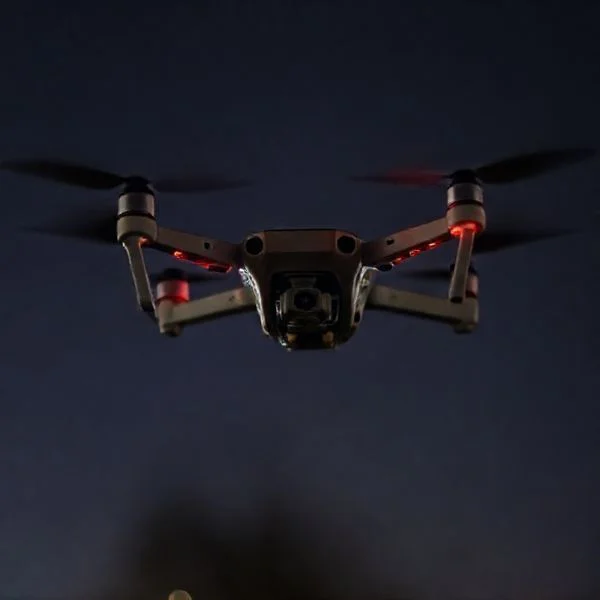
Identifying this sound is critical for distinguishing between harmless neighborhood activity and something that requires your attention. While a passing airplane has a deep, heavy roar that vibrates through the air, a drone has a “tight” sound profile that feels localized to a specific spot in the sky. If you hear a buzzing that stays in one place for several minutes or moves in erratic patterns, you are likely hearing a multi-rotor aircraft rather than a conventional vehicle or a nocturnal insect.
The Acoustic Signature: High-Frequency Whine vs. Low-Frequency Thrum
The sound of a drone is actually a combination of two distinct noises: the high-speed rotation of the electric motors and the air displacement caused by the propeller blades. At night, when the wind usually dies down, these two components become much easier to separate and identify. The specific “voice” of the drone tells you exactly what kind of craft is in the air.


Small Consumer Drones: The “High-Frequency Whine”
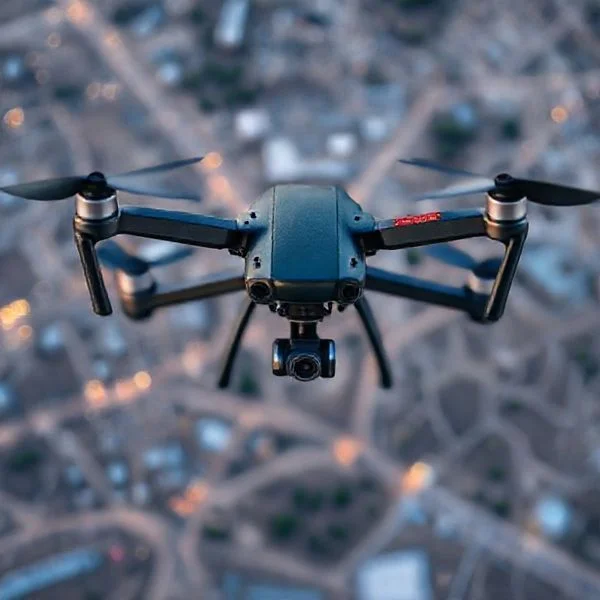
Most drones you will encounter at night are consumer models like the DJI Mavic or Mini series. These use small, high-RPM (revolutions per minute) motors. Because the propellers are short, they must spin incredibly fast to maintain lift, resulting in a signature “mosquito” sound. If you are hearing a sharp, piercing whine that changes pitch frequently, it is a small consumer drone. These sounds are often described as “angry” or “buzzy” and are highly directional.
- Pitch: High-pitched, similar to a dental drill or a large insect.
- Rhythm: Fluctuating. You will hear the pitch rise when the drone ascends and drop when it hovers.
- Duration: Typically lasts 20-30 minutes before the sound disappears (battery limit).
Pro-Level and Industrial Drones: The “Low-Frequency Thrum”
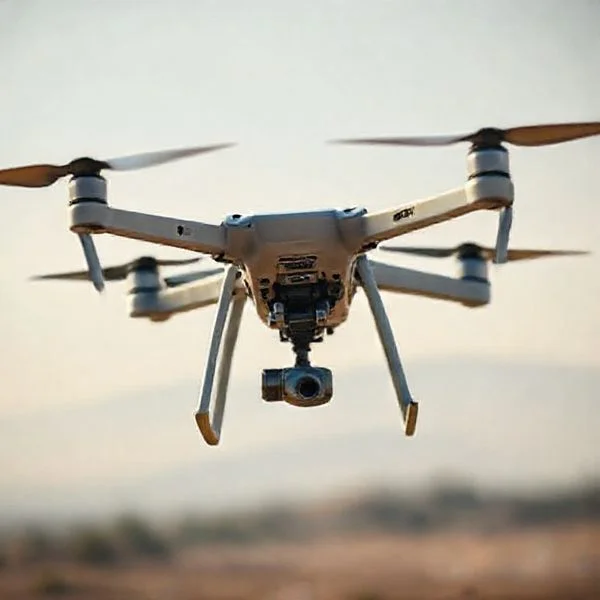
Larger drones, such as those used for professional cinematography or delivery, sound entirely different. They use much larger propellers that move a higher volume of air at lower speeds. Instead of a sharp whine, these drones produce a heavy, rhythmic thrum or a “pulsing” sound. This noise is more bass-heavy and can be mistaken for a distant lawnmower or a very small helicopter, though it lacks the metallic “clink” of a helicopter’s tail rotor.
- Pitch: Mid-to-low range, more of a “hum” than a “buzz.”
- Rhythm: Steady and “heavy.” The air displacement sounds thicker and more consistent.
- Presence: You may feel the vibration of a large drone in your chest if it is flying low, which never happens with small consumer drones.
Audibility and Altitude: How Far Drone Sound Carries in the Quiet of Night
Nighttime acoustics are unique because the “noise floor” of the world drops. During the day, city traffic and wind mask drone sounds. At night, a drone that was “silent” at 100 feet during the day might be clearly audible from 300 feet away. Sound waves travel more efficiently through the cool, dense night air, allowing the high-frequency vibrations of a drone to reach your ears from significant distances.

The Vertical Silence Threshold
Every drone has a specific altitude where it becomes “acoustically invisible” to a person on the ground. For most hobbyist drones, this happens between 300 and 400 feet. If a pilot is flying at the legal limit of 400 feet, you will likely only hear a faint, ghostly hum—if you hear anything at all. However, if the drone descends to 150 feet, the sound becomes unmistakable and can even become intrusive in a quiet suburban backyard.
Use this general guide to estimate a drone’s distance based on what you hear at night:
- 50–100 Feet: Extremely loud. You can hear the individual motors adjusting. It sounds like a leaf blower is in your yard.
- 150–250 Feet: Clearly audible. A distinct mechanical buzzing that would wake a light sleeper or be heard through a closed window.
- 300–400 Feet: The “Faint Hum” Zone. You have to stop moving and listen closely to identify it. It sounds like a distant refrigerator.
- 500+ Feet: Virtually silent. In almost all nighttime environments, the sound of the propellers dissipates before reaching the ground at this height.
The Impact of Ambient Environment
Your surroundings change how a drone sounds. In a dense forest, trees absorb the high-frequency whine, making the drone sound further away than it actually is. In an urban alleyway or a paved cul-de-sac, the sound waves bounce off hard surfaces, creating an echoing effect that makes it difficult to pinpoint exactly where the drone is hovering. If you are near water, the sound can skip across the surface, making a drone half a mile away sound like it is right over the next dock.
Drone Sounds vs. Nature: Distinguishing Mechanical Whirring from Insects and Planes
When the sun goes down, the soundscape of your neighborhood shifts. Identifying a drone becomes a game of “spot the difference” between mechanical engineering and biological rhythms. At night, the lack of traffic noise makes small sounds seem much more significant, often leading to confusion between a neighbor’s hobbyist quadcopter and common nocturnal creatures.
The Cricket Test: Rhythmic vs. Constant Pitch
One of the most frequent mistakes is confusing the high-pitched chirp of a cricket or the “whir” of a cicada with a distant drone. However, nature has a rhythm that technology rarely mimics. Drones produce a sustained, unwavering pitch that only changes when the pilot maneuvers. In contrast, insects usually have a pulsing or rhythmic quality to their sound.
- Drone Sound: A flat, consistent “eee” or “zzz” sound that only shifts pitch during acceleration or turns.
- Insect Sound: A repetitive, staccato pattern (chirp-chirp-chirp) or a buzzing that naturally swells and fades.
- Consistency: Drones will eventually run out of battery (usually within 20–30 minutes), whereas insects can buzz for hours.
High-Altitude Planes vs. Low-Altitude Rotors
Large aircraft at high altitudes produce a deep, bass-heavy rumble that seems to vibrate the air itself. Because drones are much smaller and closer to the ground, they lack this low-end frequency. If you hear a low-frequency growl that takes minutes to pass, it’s likely a commercial flight. If you hear a high-frequency whine that seems to move rapidly or hover in one spot, you are likely listening to a drone.
Environmental Factors: Why Drones Sound Different in the Nighttime Atmosphere
The air at night isn’t just darker; it is physically different, which changes how sound waves reach your ears. This is why a drone that sounded like a quiet toy during the day might sound like a swarm of angry hornets at 2:00 AM. Understanding these physics can help you accurately judge how far away a drone actually is.
Sound Propagation in Cool Night Air
At night, the ground cools quickly, often creating a “temperature inversion” where warm air sits above a layer of cool air near the surface. This inversion acts like a sound tunnel. Instead of sound waves dissipating upward into the atmosphere, they are refracted back toward the ground. This allows the high-pitched “buzz” of drone rotors to travel significantly further than it would during a hot afternoon.
The Silence Effect: Background Noise Ratios
During the day, the “noise floor”—the collective sound of wind, cars, and distant lawnmowers—is relatively high. This masks the sound of a drone. At night, the noise floor drops dramatically. This makes the signal-to-noise ratio much higher. A drone hovering 100 feet away that would be “invisible” to your ears at noon becomes the dominant sound in your environment at night.
- Echoes: Without daytime traffic to drown them out, drone sounds reflect more clearly off houses, fences, and trees, making it harder to pinpoint their exact location.
- Doppler Effect: Because night air is often stiller, you can hear the “pitch shift” more clearly as a drone moves toward or away from you.
- Humidity: Higher nighttime humidity can actually “soften” the highest frequencies, making a distant drone sound more like a muffled hum than a sharp whine.
Conclusion
Identifying a drone at night is all about recognizing the unique, mechanical signature of high-speed rotors against the quiet backdrop of the evening. While insects pulse and airplanes rumble, drones maintain a distinctive, steady whir that cuts through the cool night air. By understanding how temperature inversions and lower background noise amplify these sounds, you can better distinguish between a curious hobbyist and the natural sounds of the night.
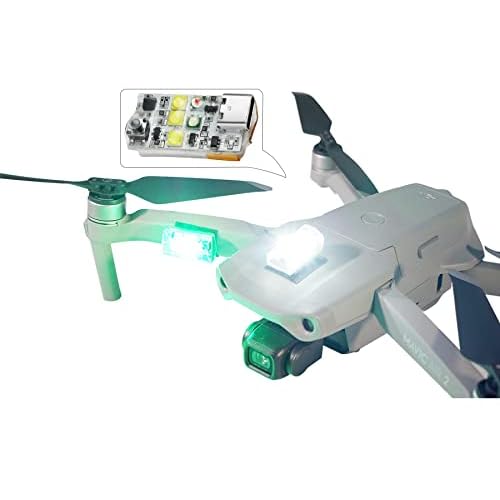
If you suspect a drone is nearby, your best next step is to look for its required navigation lights—usually a combination of blinking red, green, and white LEDs. You can also use “flight tracker” apps to see if there is any authorized low-altitude activity in your area. Stay observant, trust your ears, and you’ll soon be an expert at identifying the sounds of the modern night sky.
❓ Frequently Asked Questions
How can I tell the difference between a drone and cicadas at night?
Cicadas and other nocturnal insects usually have a rhythmic, pulsing, or ‘singing’ quality that rises and falls. In contrast, a drone produces a steady, mechanical whirring that only changes pitch when the pilot changes the drone’s speed or direction.
What does a professional-grade drone sound like compared to a toy drone?
Small toy or racing drones have a very high-pitched, ‘screaming’ sound due to their high-RPM motors. Larger professional drones have bigger propellers that move more air, resulting in a deeper, more resonant ‘thrumming’ or ‘pulsating’ sound.
At what distance is a drone completely silent at night?
In a typical suburban environment, a standard drone like a DJI Mavic will be difficult to hear beyond 300 feet. In a dead-silent rural area, you might be able to pick up the faint buzz up to 500 feet away depending on wind conditions.
Do ‘stealth’ propellers actually make a drone silent at night?
No propeller makes a drone silent. ‘Low-noise’ propellers are designed to change the acoustic frequency of the sound to a lower, less ‘piercing’ pitch that doesn’t travel as far, but the mechanical whir is still detectable at close range.
Could a distant transformer or electrical hum be mistaken for a drone?
It is possible, but electrical transformers produce a constant 60Hz hum that never moves. If the sound stays in one place and has a ‘heavy’ vibration feel, it’s likely electrical; if the sound moves across the sky or changes pitch, it’s likely a drone.
Does cold night air change how a drone sounds?
Yes, colder air is denser, which allows sound waves to travel slightly more efficiently. Additionally, temperature inversions at night can sometimes ‘bend’ sound waves back toward the ground, making a distant drone sound surprisingly close.

Similar Posts