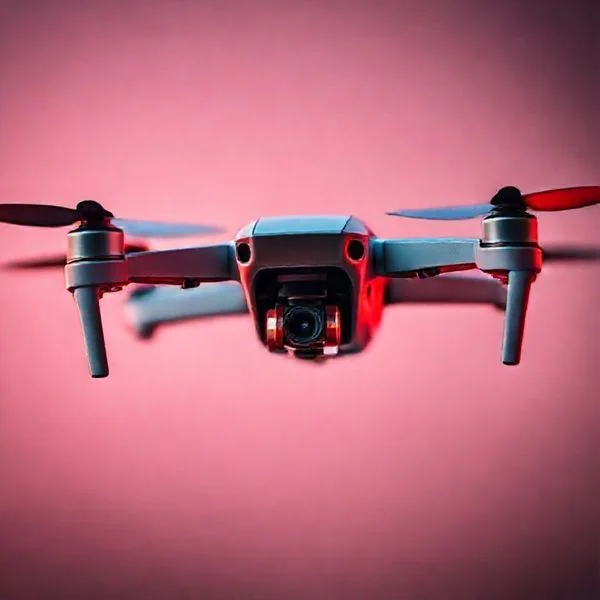
FPV drones in modern conflict function as high-precision kamikaze munitions that allow operators to navigate directly into vulnerable targets using real-time video goggles. Unlike traditional surveillance drones, these low-cost, highly maneuverable aircraft are designed for one-way strikes on tanks and bunkers with surgical accuracy.
🎯 Key Takeaways
- FPV drones provide immersive, real-time perspectives for precision-guided strikes.
- They function as low-cost, expendable loitering munitions in asymmetric warfare.
- Analog video signals are preferred for zero-latency tactical maneuvers.
- Operators target specific armor weak points like hatches and engines.
- Mass-produced civilian hardware is fundamentally changing modern frontline tactics.
In modern warfare, an FPV (First-Person View) drone is no longer a hobbyist’s toy; it is a precision-guided, low-cost kamikaze weapon. Unlike traditional drones that drop munitions and return to base, tactical FPV drones are designed for a one-way trip. By strapping an anti-tank grenade or plastic explosives to a high-speed racing frame, operators create a “loitering munition” that can be piloted directly into the weakest point of an armored vehicle or a fortified bunker with surgical accuracy.
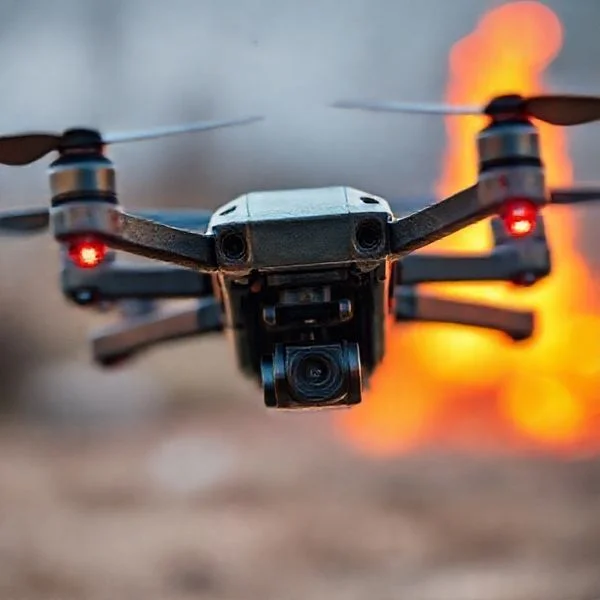
This shift in technology matters because it has democratized air superiority. For the price of a mid-range smartphone—roughly $400 to $600—a single soldier can disable a multi-million dollar Main Battle Tank (MBT). These drones bypass traditional electronic warfare and physical armor by utilizing extreme speed and maneuverability, allowing pilots to “fly into the hatch” of a target. This guide explores the hardware, tactics, and technical advantages that have turned consumer electronics into the most feared tools on the contemporary battlefield.
Defining the FPV Kamikaze: How Civilian Tech Becomes a Weapon
The transition from “racing drone” to “tactical weapon” is surprisingly simple. At its core, a military-grade FPV drone is a 7-inch to 10-inch carbon fiber quadcopter frame equipped with high-KV brushless motors and high-discharge LiPo batteries. While standard military drones like the Switchblade are purpose-built in factories, today’s frontline FPV units are often improvised. Technicians take civilian components and add a custom trigger mechanism—usually two copper wires that complete a circuit upon impact—to detonate an attached payload.
Recommended Best Deal Products


The Anatomy of an Improvised Weapon
The effectiveness of an FPV drone lies in its payload integration. Most tactical units utilize the PG-7V anti-tank warhead, originally designed for the RPG-7 rocket launcher. Because the drone is controlled manually via a remote, the pilot does not need to rely on complex guidance systems. They simply use zip ties or 3D-printed mounts to secure the warhead to the drone’s belly. The result is a guided missile that can hover, change direction mid-flight, and wait for the perfect moment to strike.
- Frame Size: Usually 7-inch to 10-inch frames to support the weight of a 1.5kg – 2.5kg warhead.
- Power-to-Weight Ratio: These drones maintain a high thrust-to-weight ratio, allowing them to hit speeds of 100km/h even when fully loaded.
- Payload Variety: While anti-tank warheads are common, “anti-personnel” versions use claymores or thermobaric charges for clearing trenches.
Precision Over Power: Targeting the “Soft Spots”
In the past, destroying a tank required a heavy anti-tank guided missile (ATGM) or a direct hit from another tank. FPV drones change this by focusing on precision rather than raw explosive force. A pilot wearing VR-style goggles sees exactly what the drone sees, enabling them to target the “soft spots” of armor that are often no larger than a few inches wide. This includes the engine deck, the thin armor on top of the turret, or the gap between the hull and the turret. By hitting these specific points, a small 1kg shaped charge can trigger a catastrophic “jack-in-the-box” effect, where the internal ammunition explodes and destroys the vehicle from the inside out.
Technical Advantages: Why Latency and Maneuverability Matter Most
To understand why FPV drones are so effective, you must look at the radio technology involved. Unlike commercial DJI drones that use digital signals for high-definition video, combat FPV drones almost exclusively use analog video signals. In a combat environment, the difference between a digital signal and an analog signal is the difference between a hit and a miss. Analog signals offer near-zero latency, meaning the pilot sees the target in real-time without the “lag” that plagues digital systems.
Zero Latency: The Analog Requirement
When a drone is traveling at 30 meters per second toward a moving target, a delay of even 100 milliseconds can cause the pilot to overcorrect and miss. Analog video (typically on the 5.8GHz frequency) provides an instantaneous feed. If the signal is jammed or the drone flies behind an obstacle, an analog feed degrades into “snow” or static. A pilot can often still “see” through the static to finish their run. In contrast, a digital signal will simply freeze or cut to black, rendering the drone useless in the final, most critical seconds of an attack.
Full Manual Control: The Acrobatic Edge
Most civilian drones utilize “GPS-stabilized” flight, where the drone levels itself automatically. Tactical FPV drones operate in Acro Mode (Rate Mode). In this setting, the drone’s onboard gyroscope and flight controller do not fight the pilot’s input. This allows for extreme maneuverability that no other weapon system can match. You can dive vertically, perform sharp 180-degree hair-pin turns, or fly through a 12-inch window to strike a target inside a building. Key advantages include:
- Evasive Maneuvers: FPV pilots can “zig-zag” to avoid small arms fire or shotgun blasts from defenders.
- Under-Cage Strikes: Many tanks now use “cope cages” (steel mesh) to stop top-down attacks. FPV pilots use their maneuverability to fly under these cages or strike from the side.
- Indoor Flight: Because FPV drones do not rely on GPS for stability, they can be flown inside bunkers, hangars, or industrial basements where traditional drones would lose signal and crash.
This level of control is achieved through high-performance Flight Controllers (FC) running firmware like Betaflight. By adjusting “rates”—the speed at which the drone rotates—pilots can tune their drones to be as twitchy or as smooth as the mission requires. This technical flexibility makes the FPV drone a highly adaptable tool that can be reconfigured in minutes to suit different tactical needs on the ground.
Tactical Roles: From Precision Strikes to Anti-Armor Operations
The transition of FPV drones from hobbyist toys to frontline assets has completely redefined modern infantry tactics. Unlike traditional artillery, which relies on saturation to hit a target, an FPV drone offers surgical precision. A pilot can fly a drone directly into a bunker opening or a tank’s engine exhaust from miles away, making it a “smart weapon” at a fraction of the cost of a guided missile.
Precision Targeting in Complex Environments
In urban combat or dense trench networks, traditional line-of-sight weapons often fail. FPV drones thrive here because they can navigate three-dimensional obstacles with high agility. Pilots use the drone’s maneuverability to scout around corners or enter collapsed buildings where enemies might be hiding. This capability allows small units to clear high-threat areas without putting boots on the ground first.
- Trench Clearing: Drones can fly low into winding trenches, eliminating the need for dangerous manual clearing.
- Structural Penetration: Flying through windows or doorways to neutralize snipers or heavy machine gun nests.
- Supply Interdiction: Targeting moving logistical vehicles far behind the immediate frontline to disrupt the flow of ammunition and food.
Eliminating High-Value Armored Assets
Perhaps the most shocking tactical shift is the ability of a $500 drone to destroy a multi-million dollar Main Battle Tank (MBT). By strapping shaped charges—like RPG-7 warheads—to the drone frame, operators create a guided kamikaze platform. These “loitering munitions” target the weakest points of armor, such as the thin top plating or the rear engine deck, often resulting in catastrophic vehicle failure.
The Strategic Impact of Low-Cost Asymmetric Aerial Warfare
FPV drones have democratized air power. Previously, only wealthy nations with advanced air forces could project power from the sky. Today, any small group with access to commercial drone parts can create a formidable “air force” that challenges traditional military dominance. This shift toward asymmetric warfare means that quantity and innovation can often overwhelm expensive, legacy defense systems.
The Cost-Effectiveness Equation
The strategic value of FPV drones lies in their incredible Return on Investment (ROI). While a single Javelin anti-tank missile can cost over $200,000, a custom-built FPV kamikaze drone costs less than a high-end smartphone. This allows military forces to deploy them in massive quantities, creating a “swarm” effect that traditional air defenses struggle to intercept.
- Rapid Iteration: Because these drones use off-the-shelf components, designs are updated weekly based on battlefield feedback.
- Saturation Tactics: Deploying dozens of cheap drones simultaneously can overwhelm electronic warfare (EW) systems.
- Supply Chain Resilience: Using non-military grade parts makes it harder for international sanctions to stop production.
Psychological Warfare and Battlefield Denial
Beyond the physical damage, the constant presence of FPV drones exerts a massive psychological toll on soldiers. The distinct high-pitched buzz of drone motors can cause panic, as troops know they are being watched or targeted from above at all times. This creates a state of “battlefield denial,” where the enemy is afraid to move vehicles or congregate in the open, effectively paralyzing their movement and slowing down their operational tempo.
Conclusion
FPV drones have fundamentally altered the landscape of modern conflict, turning a niche hobby into one of the most feared tactical tools on the battlefield. From precision trench strikes to neutralizing heavy armor, these agile kamikaze platforms prove that low-cost, high-tech solutions can often outmatch traditional military hardware. As the technology continues to evolve with better electronic warfare resistance and increased range, their role in global security will only expand.
To stay ahead of these developments, it is essential to follow the latest trends in drone component modularity and flight control software. Whether you are a researcher, a defense enthusiast, or a tech developer, understanding the mechanics of these systems is the first step in navigating the future of aerial warfare.
What do you think is the next big evolution for FPV technology in the field? Leave a comment below and join the discussion on the future of tactical drones!
❓ Frequently Asked Questions
How effective are FPV drones against heavy armor like tanks?
They are highly effective because pilots can maneuver them into specific weak spots, such as the thin armor on top of a turret or the rear engine compartment. This precision allows a $500 drone to disable a multi-million dollar tank.
What kind of range do military-adapted FPV drones have?
Most tactical FPV drones have a range of 3 to 10 kilometers, depending on the battery capacity and the use of signal repeaters. Their primary limitation is the radio line-of-sight required for control.
Why are FPV drones considered a tool for asymmetric warfare?
They allow forces with limited budgets to inflict significant damage on much larger, better-equipped militaries. The low cost and high availability of civilian components make them a sustainable and scalable tactical choice.
What components are needed to turn a racing drone into a weapon?
Beyond the frame and motors, it requires a flight controller, a high-discharge battery, a video transmitter (VTX), and a secure mounting system for an explosive charge.
How do electronic warfare systems counter FPV drones?
Signal jammers are the primary defense, attempting to sever the connection between the operator’s remote and the drone’s receiver. However, pilots often cycle through different frequencies to bypass these electronic shields.
Can FPV drones operate autonomously in combat?
While most are currently manually piloted for maximum precision, developers are increasingly integrating AI for terminal guidance to ensure the drone hits its target even if the signal is jammed.