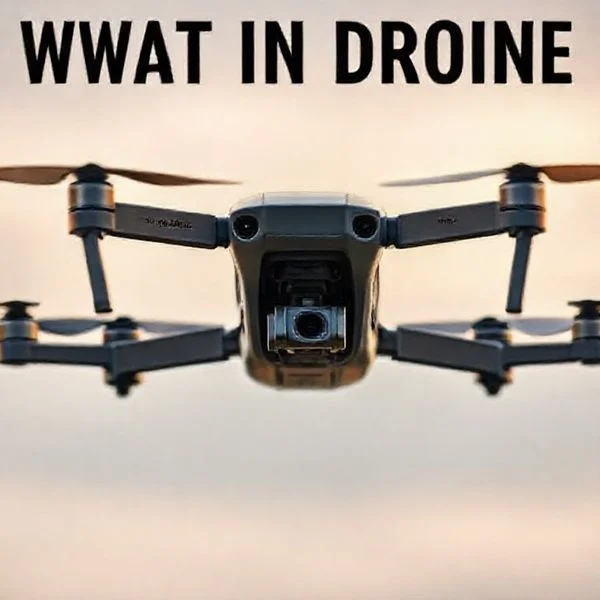
The current world record for the fastest drone is held by the Red Bull Drone 1, which achieved a staggering top speed of over 217 mph (350 km/h). Developed by the Dutch Drone Gods, this custom-built FPV drone was designed specifically to keep pace with Formula 1 cars on the track.
🎯 Key Takeaways
- Takeaway 1:The Red Bull Drone 1 holds the record at 217+ mph.
- Takeaway 2:Consumer drones like the DJI FPV top out at 87 mph.
- Takeaway 3:High-speed drones require specialized high-KV motors and 8S batteries.
- Takeaway 4:Aerodynamic drag is the primary limiting factor for drone velocity.
- Takeaway 5:Carbon fiber frames are essential to withstand high-speed structural stress.
The current world record for the fastest quadcopter stands at a staggering 298.47 mph (480.23 km/h). This speed was achieved by the Peregrine 2, a custom-built drone that pushed the absolute limits of battery discharge and motor torque. To put that in perspective, this drone travels faster than a Bugatti Chiron at full tilt and covers the length of a football field in less than a second. For any pilot or enthusiast, these numbers represent the “Space Race” of the drone world, driving innovations in aerodynamics and motor efficiency that eventually trickle down to consumer gear.
Prime for Young Adults — 6 Months Free
Exclusive Offer Amazon Prime for Young Adults, Students and 18–24s get six months of Prime free, then half price.
Start 6 Months Free As an Amazon Associate I earn from qualifying purchases.
Understanding these top speeds matters because it defines the operational envelope of your equipment. Whether you are filming high-speed motorsports or competing in FPV races, knowing how these record-breakers manage heat and drag helps you optimize your own setup. The technology required to keep a drone from disintegrating at 300 mph is the same technology that makes your everyday FPV rig more durable and responsive during aggressive maneuvers.
The Current World Record: Breaking the 200 MPH Barrier
Recommended Best Deal Products


The quest for the world’s fastest drone has evolved from a hobbyist pursuit into a high-stakes engineering challenge. Currently, two major projects dominate the conversation: the Peregrine 2 and the Red Bull Drone 1. While the Peregrine 2 holds the official Guinness World Record for top speed, the Red Bull project, developed by the Dutch Drone Gods, gained international fame for successfully tracking a Formula 1 car at full race speed. Both projects moved away from traditional “box” frames toward bullet-shaped, aerodynamic shells to minimize air resistance.
The Peregrine 2: The Official Speed King
Created by Luke and Mike Bell, the Peregrine 2 is the current Guinness World Record holder. Reaching a two-way average of nearly 300 mph, this drone had to overcome the “thermal wall.” At these speeds, traditional drone motors often melt or catch fire due to the massive electrical current required. The Peregrine 2 utilizes a highly specialized vertical frame designed to slice through the air with minimal frontal surface area. Every component, from the wires to the battery leads, was optimized to prevent voltage sag during the record-breaking run.
- Top Speed: 298.47 mph (Official Guinness Record)
- Acceleration: 0 to 186 mph in roughly 2 seconds
- Body Design: Carbon fiber aerodynamic shell with a 3D-printed internal skeleton
- Key Challenge: Preventing the 6S LiPo batteries from exploding under 400+ amp draws
The Red Bull Drone 1: The F1 Chaser
While the Peregrine 2 was built for a straight-line sprint, the Dutch Drone Gods collaborated with Red Bull to create a drone that could actually sustain high speeds while cornering. This drone was designed specifically to follow Max Verstappen’s RB20 F1 car. It reaches a top speed of 217 mph (350 km/h). This project is significant because it proved that a high-speed drone could be more than a “one-trick pony” and actually serve a functional, cinematic purpose at speeds that were previously impossible for any camera platform.
- Top Speed: 217 mph
- Practical Use: Live broadcast filming for Formula 1
- Design Philosophy: Balanced agility with top-end velocity
- Innovation: Advanced ESC (Electronic Speed Controller) cooling to handle sustained high-speed flight
From Start to Finish: High-Speed Drone Performance Explained
Exploring the limits of drone velocity is a journey into cutting-edge physics, electrical engineering, and precise piloting. While a standard consumer drone might hover around 40 miles per hour, the world of high-speed “sprinter” drones operates in a different dimension, with records currently exceeding 300 miles per hour. This guide covers the essential steps to understanding how these machines achieve such velocity, the hardware required to break records, and how you can measure these speeds yourself. Following these steps is vital for anyone looking to transition from casual flying to high-performance FPV (First Person View) racing or speed-run engineering.
Step 1: Categorize Drone Speed Classes
What you need: Research access to current drone specifications and an understanding of different drone categories.
Instructions: Before diving into the technical specs, you must identify which “fast” you are looking for. Consumer drones, like the DJI Mavic series, usually top out at 45-50 mph in “Sport Mode.” Racing drones used in the Drone Racing League (DRL) typically reach speeds of 80-120 mph. However, the world of custom-built speed drones is where the real records live. You should categorize drones into three tiers: Camera Drones (40-50 mph), Racing Drones (90-130 mph), and Experimental Speed Drones (200-300+ mph). Knowing these benchmarks allows you to set realistic expectations for your own builds or purchases.
Prime for Young Adults — 6 Months Free
Exclusive Offer Amazon Prime for Young Adults, Students and 18–24s get six months of Prime free, then half price.
Start 6 Months Free As an Amazon Associate I earn from qualifying purchases.Pro Tip: Don’t confuse “airspeed” with “groundspeed.” Wind resistance can significantly alter your perceived velocity, so always check manufacturer specs for “max speed in windless conditions.”
Step 2: Analyze Aerodynamic Frame Design
What you need: Knowledge of drag coefficients and access to carbon fiber frame designs.
Instructions: Speed is a battle against air resistance. For a drone to reach the highest speeds, it must have a minimal frontal surface area. Standard “X” or “Deadcat” frames are too bulky for record-breaking runs. Instead, look at “vertical arm” frames or “teardrop” canopies. These designs orient the arms of the drone so that they cut through the air like knives rather than flat boards. You must also consider the “tilt” of the camera. To go fast, a drone must pitch forward aggressively; therefore, a speed-focused drone often has a camera tilted at 60 to 80 degrees just so the pilot can see the horizon while the drone is tilted nearly horizontal.
Pro Tip: Use “motor wire shields” or “fairings” on your arms to further reduce the turbulent wake caused by exposed wiring.
Step 3: Optimize the Power Train and Battery Voltage
What you need: High-discharge LiPo (Lithium Polymer) or LiHV (High Voltage) batteries, typically 6S or 8S ratings.
Instructions: Voltage is the primary driver of motor RPM (Revolutions Per Minute). Most racing drones use a 4S (14.8V) or 6S (22.2V) battery. However, the fastest drones in the world are currently pushing into 8S territory. You need to select a battery with a high “C-rating,” which indicates how fast the battery can discharge its energy. For speed runs, look for a 120C to 150C rating. This ensures that when you punch the throttle, the motors get the massive surge of current they need without the battery sagging or failing. Ensure your XT60 or XT90 connectors are perfectly soldered to handle the intense heat generated by this current.
Pro Tip: Pre-warm your batteries to about 100°F (38°C) before a speed run to lower internal resistance and maximize punch.
Prime for Young Adults — 6 Months Free
Exclusive Offer Amazon Prime for Young Adults, Students and 18–24s get six months of Prime free, then half price.
Start 6 Months Free As an Amazon Associate I earn from qualifying purchases.Step 4: Select High-KV Motors and Aggressive Propellers
What you need: Brushless motors with specific KV ratings and high-pitch propellers (e.g., 5x5x3 or 5x6x2).
Instructions: The motor’s KV rating determines how many RPMs it generates per volt. For high speed, you need a balance; too high a KV with a heavy prop will draw too many amps and burn out the motor. For a 5-inch speed build, motors in the 2000KV to 2500KV range on 6S are common. Pair these with “aggressive” propellers, meaning props with a high pitch (the second number in the prop spec). A 5×4.5 propeller is standard, but a 5×6 propeller moves much more air per rotation, though it requires significantly more torque and power to spin.
Pro Tip: For absolute top speed, two-blade (biblade) props are often more efficient than three-blade props because they have less “prop wash” interference at ultra-high velocities.
Step 5: Configure the Electronic Speed Controller (ESC) and Firmware
What you need: A high-amperage ESC (60A-80A continuous) and BLHeli_32 or AM32 configurator software.
Instructions: The ESC is the “brain” that tells the motors how fast to spin. For speed runs, you must ensure the ESC can handle the massive burst of current (often over 100 amps for short durations). Use configurator software to set your “PWM Frequency” higher (up to 48kHz or 96kHz) for smoother motor response, but be careful as this can increase heat. You should also adjust your “Motor Timing” to “Medium-High” or “High” to squeeze every bit of RPM out of the motors, though this comes at the cost of efficiency and increased risk of motor desync.
Pro Tip: Always add a large low-ESR capacitor (e.g., 1000uF 35V or higher) to your battery pads to soak up voltage spikes that can fry your ESC during high-speed maneuvers.
Step 6: Implement Accurate Speed Measurement
What you need: An onboard GPS module (like the BN-180 or BN-220) or a calibrated radar gun.
Instructions: You cannot accurately judge speed by looking through goggles. To verify how fast your drone actually is, you must install a GPS module and configure your OSD (On-Screen Display) in Betaflight or INAV to show “GPS Ground Speed.” For official record-keeping, you must perform two passes—one in each direction—to account for wind assistance and then average the results. Alternatively, use a high-end Doppler radar gun positioned at the end of a straightaway. Ensure the drone flies directly toward or away from the radar for the most accurate reading, as “cosine error” occurs when the drone passes at an angle.
Pro Tip: Record your DVR (flight video) so you can review the telemetry data frame-by-frame to find the exact peak speed achieved during the flight.
Step 7: Study the World Record Holder Specifications
What you need: Access to the Guinness World Record database and technical blogs from record-holding pilots.
Instructions: To understand the absolute peak of drone speed, look at the “Peregrine 2” built by Luke Bell and his father, which recently set a world record by hitting over 300 mph (480 km/h). Study its design: it is a highly aerodynamic, bullet-shaped craft with custom-wound motors and specialized battery configurations that are far beyond consumer tech. By analyzing these record-breakers, you learn that the “fastest” drones move away from the traditional quadcopter shape and toward “pusher” configurations or rocket-shaped enclosures. This step involves synthesizing all previous steps to understand that the fastest drone is a result of extreme optimization of weight, power, and drag.
Pro Tip: Follow the “DRL RacerX” project history to see how the industry transitioned from 160 mph to 300+ mph in just a few short years.
✅ Final Checklist
- Verify that the frame is rigid and has no loose wires or components that could vibrate at high speeds.
- Confirm the battery is fully charged and the internal resistance (IR) is low across all cells.
- Ensure the GPS module has at least 8-10 satellite locks before takeoff for accurate speed data.
- Check that propellers are tightened with locknuts and show no signs of stress fractures or chips.
- Ensure the FPV camera angle is high enough (at least 50 degrees) to maintain visibility at full pitch.
Important Notes:
- Safety First: Kinetic energy increases with the square of velocity. A drone traveling at 200 mph has the destructive power of a firearm; never fly near people, buildings, or livestock.
- Legal Compliance: Always follow FAA (or your local aviation authority) regulations. In the US, drones must stay below 400 feet AGL and require Remote ID for most operations.
- Estimated Cost: A high-speed 6S FPV drone usually costs between $400 and $800, while world-record experimental craft can cost several thousand dollars in custom parts.
- Flight Time: High-speed runs are extremely inefficient. Expect a total flight time of only 60 to 90 seconds when pushing for top speeds.
Speed Categories: Racing FPVs vs. Consumer vs. Military UAVs
Recommended Best Deal Products


Not all drones are built for the record books, and speed varies wildly depending on the drone’s intended purpose. To understand how fast the “fastest” drone really is, you have to compare it against the categories you likely interact with daily. While a record-breaking drone is built for a 10-second burst of speed, consumer and professional drones must balance velocity with battery life, safety, and camera stability.
High-Performance Racing Drones (FPV)
If you watch the Drone Racing League (DRL) or Drone Champions League (DCL), you are seeing the fastest maneuverable aircraft in the world. These drones aren’t just fast in a straight line; they can take 90-degree corners at 80 mph. A standard professional racing drone typically tops out between 100 mph and 120 mph. These rigs use high-KV motors and aggressive propeller pitches to prioritize acceleration over top-end cruising speed.
- Standard Speed: 90–120 mph
- Power Source: High-discharge 4S or 6S LiPo batteries
- Weight: Usually under 800 grams to maintain power-to-weight ratios
Consumer and Prosumer Drones (DJI & Others)
For most pilots, the “fastest” drone they will ever touch is a consumer FPV model or a high-end photography drone. These are limited by software and safety regulations. For example, the DJI FPV and DJI Avata 2 offer impressive speeds but are far cries from racing rigs. The DJI FPV can hit about 87 mph in Manual Mode, which is more than enough for most cinematic applications, but it lacks the raw thrust of a custom-built speeder.
- DJI FPV: 87 mph (140 km/h)
- DJI Mavic 3 Pro (Sport Mode): 47 mph (75 km/h)
- Autel EVO Lite+: 42 mph (68 km/h)
Military Fixed-Wing UAVs
It is important to distinguish between “drones” (quadcopters) and “UAVs” (fixed-wing unmanned aerial vehicles). While the fastest quadcopter hits 300 mph, military drones like the MQ-9 Reaper or the Global Hawk operate at much different scales. The Reaper has a cruise speed of about 190 mph, while experimental jet-powered military drones can reach supersonic speeds (over 760 mph). These use jet turbines rather than electric motors and propellers, placing them in an entirely different engineering class focused on long-range surveillance and combat rather than local maneuverability.
The Engineering of Speed: Motors, ESCs, and Aerodynamics
To reach speeds exceeding 200 mph, you cannot simply “give it more gas.” The fastest drones in the world are masterpieces of weight-to-power ratios. Every single component is chosen to maximize output while minimizing the resistance that the air naturally provides at high velocities.
The Powerhouse: High-KV Motors and High-Amp ESCs
The core of a speed-demon drone lies in its motor and Electronic Speed Controller (ESC) combination. In the world of high-speed FPV, builders use “High-KV” motors. KV refers to the constant velocity of a motor (RPMs per volt). While a standard camera drone might use low KV motors for efficiency, speed builds use high KV ratings to spin propellers at astronomical speeds.
- High-Amp ESCs: Speed runs require massive bursts of current. Custom drones often use ESCs rated for 60A to 120A to prevent the electronics from “desyncing” or burning out under the load.
- Propeller Pitch: Faster drones use props with a “steeper” pitch. Think of it like a high gear in a car; it moves more air per rotation but requires much more torque to turn.
- Specific Timing: Advanced pilots tune their ESC firmware (like Bluejay or AM32) to optimize motor timing for top-end speed rather than low-end stability.
Cutting Through the Air: Frame Geometry
At 100 mph, air feels like water; at 300 mph, it feels like concrete. Aerodynamics becomes the primary concern. Traditional “Deadcat” or “True X” frames used for freestyle or cinematic shots are too bulky for record-breaking runs. Instead, speed builds utilize specialized Stretched X frames or fully enclosed aerodynamic pods.
Example: The Quadcopter 16, which set a Guinness World Record, uses a thin, vertical orientation to minimize its surface area. By reducing the frontal profile, the drone encounters less “form drag,” allowing the thrust to push the craft forward rather than fighting the atmosphere.
Factors Limiting Drone Velocity: Battery Sag and Drag
Even with the best engineering, two invisible enemies prevent drones from reaching supersonic speeds: chemistry and physics. Understanding these limits is essential for anyone looking to push their drone accessories and hardware to the absolute edge.
Battery Sag: The Voltage Bottleneck
The faster you go, the more energy you demand. This creates a phenomenon known as battery sag. When a motor pulls a massive amount of current, the internal resistance of the LiPo (Lithium Polymer) battery causes the voltage to drop instantly. This drop limits the maximum RPM the motors can achieve.
- C-Rating Matters: High-speed pilots look for batteries with a C-rating of 120C or higher. A higher C-rating means the battery can discharge its energy faster without a catastrophic voltage drop.
- 6S vs. 8S Power: While 4S (14.8V) was once the standard, speed seekers have moved to 6S (22.2V) or even custom 8S setups to maintain high voltage throughout the run.
- Heat Management: Extreme discharge generates incredible heat. Many speed drones can only fly for 60 to 90 seconds before the battery becomes dangerously hot.
The Wall of Air: Exponential Drag
The most frustrating part of high-speed flight is that drag does not increase linearly; it increases quadratically. This means if you want to double your speed, you need roughly eight times the power. This “wall of air” is why jumping from 100 mph to 150 mph is relatively easy, but jumping from 250 mph to 300 mph requires a complete reimagining of the drone’s physics.
Practical Tip: If you are trying to increase your top speed, focus on weight reduction first. Using lightweight carbon fiber accessories and removing unnecessary items like GoPro mounts or heavy landing gear can provide a better speed boost than simply buying slightly larger motors.
Conclusion
The quest for the world’s fastest drone has evolved from a hobbyist’s curiosity into a high-stakes engineering challenge. From the retail-ready speeds of the DJI Avatar 2 to the record-breaking 300+ mph runs of custom-built FPV machines, the ceiling for drone velocity continues to rise. Reaching these speeds requires a perfect harmony of high-KV motors, aerodynamic frames, and high-discharge batteries that can withstand the brutal reality of physics.
Next Steps:
- If you are a beginner, practice your control at lower speeds with a simulator before attempting high-velocity runs.
- Explore high-performance ESC and motor combos to see how different hardware affects your current build’s potential.
Are you ready to break your own personal speed record? Start by optimizing your aerodynamics and upgrading to high-C-rated batteries today. The sky—and the laws of physics—are the only things holding you back!
❓ Frequently Asked Questions
Who built the world’s fastest quadcopter?
The Red Bull Drone 1 was engineered by the Dutch Drone Gods in collaboration with Red Bull. It was specifically built to film Max Verstappen’s RB20 F1 car, reaching a documented top speed of 350 km/h (217 mph).
What technical specs are needed to reach 100+ mph?
Achieving these speeds requires 6S or 8S LiPo batteries with high C-ratings for massive power discharge, high-KV brushless motors, and an extremely lightweight carbon fiber frame. The ESCs must also be capable of handling high amperage without overheating.
How does aerodynamic drag limit drone speed?
As a drone moves faster, air resistance increases exponentially. To overcome this, record-breaking drones use streamlined, ‘bullet-shaped’ canopies and thin arms to minimize the surface area facing the wind.
Are there legal speed limits for drones?
In the United States, the FAA Part 107 regulations limit small unmanned aircraft to a maximum ground speed of 100 mph. Special waivers are required for sanctioned racing events or official speed record attempts.
How do batteries influence a drone’s top speed?
Batteries must provide high voltage and maintain it under load; ‘battery sag’ occurs when the voltage drops during high-speed sprints. Specialized high-discharge batteries are essential for sustaining peak velocity.
What is the difference between speed and acceleration in drones?
Acceleration is determined by the thrust-to-weight ratio, allowing drones to hit 60 mph in under a second. Top speed is the ceiling where motor power can no longer overcome atmospheric drag and physical RPM limits.