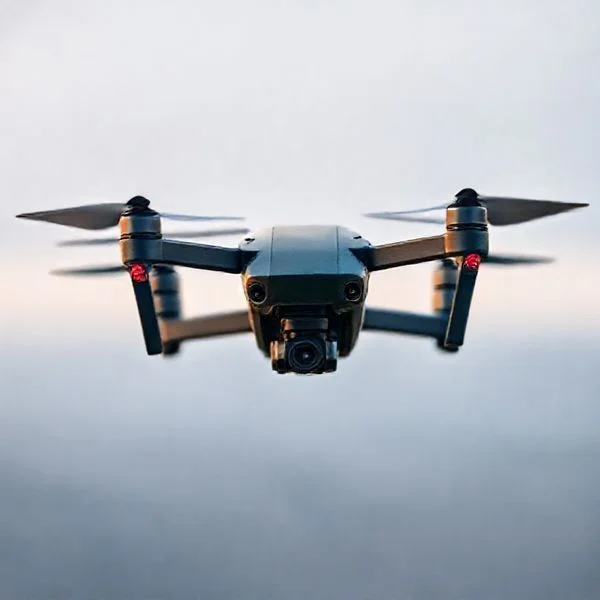
Electronic disruption via RF jamming and GPS spoofing is the primary method used to neutralize unauthorized drones by severing communication links. Physical countermeasures, such as net guns and interceptor drones, provide kinetic alternatives for capturing craft. It is vital to note that interfering with a drone is highly regulated and typically restricted to military or law enforcement personnel.
🎯 Key Takeaways
- RF jamming disrupts the communication link between the drone and the remote controller.
- GPS spoofing provides false coordinates to force a drone off-course or to land.
- Kinetic methods like net guns physically disable propellers without using radio interference.
- Signal jamming is strictly prohibited for civilians under federal FCC regulations.
- Protocol manipulation allows security professionals to hijack a drone’s control software.
Disrupting a drone requires a precise strike against its primary flight systems: its radio frequency (RF) link, its satellite navigation, or its physical airframe. To effectively neutralize an unauthorized craft, you must either overwhelm its communication channels with electronic noise or physically impede its rotors. Most commercial drones are programmed with “fail-safe” protocols that trigger a landing or a “return-to-home” sequence when they lose contact with the pilot or encounter unexpected obstacles.
Understanding these countermeasures is vital for high-stakes security, privacy protection, and airspace management. Whether you are dealing with a localized nuisance or a significant security breach, you need tools that offer immediate results. This guide breaks down the high-tech electronic warfare and the specialized physical tools used to ground drones safely and effectively. We will skip the basics and dive straight into the technical methods that actually work against modern flight controllers.
Prime for Young Adults — 6 Months Free
Exclusive Offer Amazon Prime for Young Adults, Students and 18–24s get six months of Prime free, then half price.
Start 6 Months Free As an Amazon Associate I earn from qualifying purchases.Electronic Countermeasures: RF Jamming and GPS Spoofing
Recommended Best Deal Products


Electronic countermeasures are the most common way to stop a drone without causing it to fall out of the sky uncontrollably. These methods target the “brain” and “ears” of the aircraft, making it impossible for the drone to receive instructions or understand its position in space.
RF Jamming: Severing the Control Link
Radio Frequency (RF) jamming is the frontline of drone defense. Most consumer and professional drones operate on the 2.4GHz and 5.8GHz ISM bands. A jammer works by emitting a powerful signal on these same frequencies, effectively “shouting louder” than the pilot’s remote control. When the drone’s receiver is flooded with this electronic noise, it can no longer distinguish the pilot’s commands from the interference.
- Directional Jammers: These look like rifles and allow you to aim a concentrated beam of RF energy at a specific drone. This minimizes interference with other nearby electronics.
- Omnidirectional Jammers: These create a “shield” or bubble of interference around a fixed location, protecting a 360-degree perimeter.
- Protocol Manipulation: Advanced electronic countermeasures go beyond simple noise. They use “protocol hacking” to mimic the pilot’s signal, allowing the interceptor to take over the command link and fly the drone themselves.
GPS/GNSS Spoofing: Redefining Reality
While jamming blocks signals, spoofing sends false signals. Drones rely heavily on GNSS (GPS, GLONASS, or Galileo) to stay stable and navigate. A spoofing device generates a fake satellite signal that is slightly stronger than the real one coming from space. Once the drone locks onto the fake signal, the operator can feed it false coordinates.
By manipulating these coordinates, you can trick a drone into thinking it has drifted off course. More effectively, you can spoof a “No-Fly Zone.” Most drones have internal geofencing that prevents them from flying near airports. If you spoof a location that mimics a restricted runway, the drone’s software will automatically force it to land immediately or exit the area at high speed.
How to Disrupt Drone Surveillance Like a Pro: A Practical Walkthrough
The rapid proliferation of consumer and commercial drones has led to a significant increase in unauthorized surveillance, privacy breaches, and airspace intrusions. Whether you are protecting a private residence, a sensitive commercial facility, or an outdoor event, knowing how to legally and effectively disrupt a drone’s mission is a critical modern skill. This guide covers a multi-layered approach to drone mitigation, focusing on detection, privacy shielding, and technical identification. Following these steps is essential because drones move quickly and can capture high-definition data from hundreds of feet away, meaning your response must be both immediate and calculated to be effective.
Step 1: Execute Visual and Acoustic Detection
What you need: High-powered binoculars (8×42 or 10×50), a directional microphone or decibel meter, and a clear line of sight to the horizon.
Instructions: The first step in disrupting a drone’s operation is identifying its presence before it reaches its target. Start by scanning the sky in a grid pattern, focusing on the “golden hour” (dawn and dusk) when drone LEDs are most visible but the body is obscured. Listen for the distinct high-pitched “wasp-like” buzzing sound of brushless motors. Professional drones typically operate between 40 and 80 decibels depending on altitude. Use your binoculars to identify the drone’s silhouette—quadcopters are the most common for surveillance. Determine if the drone is hovering (indicating data collection) or transiting (passing through). Document the flight path to identify the likely location of the operator, as disrupting the operator is often more effective than disrupting the hardware itself.
Prime for Young Adults — 6 Months Free
Exclusive Offer Amazon Prime for Young Adults, Students and 18–24s get six months of Prime free, then half price.
Start 6 Months Free As an Amazon Associate I earn from qualifying purchases.Pro Tip: Look for “birds” that don’t flap their wings or move in perfectly straight lines. Natural birds change velocity and direction organically, whereas drones often maintain a fixed altitude and robotic movements.
Step 2: Conduct RF Spectrum Analysis
What you need: A handheld RF (Radio Frequency) scanner or a dedicated drone detection sensor (operating in the 2.4 GHz and 5.8 GHz bands).
Instructions: Most consumer drones rely on radio frequencies to transmit video feeds and receive pilot commands. To disrupt the drone’s anonymity, use an RF scanner to detect spikes in the 2.4 GHz or 5.8 GHz bands. When a drone is nearby, you will see a consistent, high-bandwidth signal pulsing on the analyzer. Move the scanner in a sweeping motion; as the signal strength (measured in dBm) increases, you are getting closer to either the drone or its pilot. By identifying the frequency the drone is using, you can understand the technology level of the intruder. Advanced scanners can even identify the MAC address of the drone, which is vital for legal reporting later.
Pro Tip: Be aware that modern Wi-Fi routers also use these frequencies. To differentiate, look for a “FHSS” (Frequency Hopping Spread Spectrum) pattern, which is typical of drone controllers like those used by DJI or Autel.
Step 3: Implement Physical Privacy Shielding
What you need: Anti-drone privacy netting (UV-stabilized polyethylene), tall foliage (fast-growing bamboo or arborvitae), and angled shade sails.
Instructions: If you cannot stop the drone from flying, you can disrupt its ability to see. Install privacy netting with a mesh density that prevents camera sensors from resolving details. This netting should be placed at least 10-15 feet high around the perimeter of the area you wish to protect. For a more aesthetic approach, plant staggered rows of tall trees. Drones are restricted by their line-of-sight requirements; if a pilot cannot see the target through the camera, they are likely to move on to avoid a collision. Additionally, use reflective or patterned shade sails over patios. The irregular patterns confuse the drone’s autofocus sensors, making it difficult to capture clear images of people or objects below.
Pro Tip: Avoid using standard bird netting, as it is too thin. Use “debris netting” or “70% density shade cloth,” which provides a solid visual barrier while still allowing wind to pass through so the structure doesn’t blow over.
Prime for Young Adults — 6 Months Free
Exclusive Offer Amazon Prime for Young Adults, Students and 18–24s get six months of Prime free, then half price.
Start 6 Months Free As an Amazon Associate I earn from qualifying purchases.Step 4: Deploy Optical Glare Countermeasures
What you need: High-intensity LED floodlights (10,000+ lumens) or a strobe-capable tactical flashlight.
Instructions: Drones rely on digital CMOS sensors to “see.” These sensors are highly sensitive to sudden, intense light. By directing a high-lumen light source toward the drone’s camera lens, you can cause “white-out” or “flare,” effectively blinding the operator’s video feed. If the drone is hovering at night, use a strobe setting. The rapid flashing interferes with the drone’s auto-exposure settings, causing the video to flicker between pitch black and blown-out white. This makes navigation nearly impossible for a manual pilot and renders any recorded footage useless. Position these lights at the corners of your property and aim them upward at a 45-degree angle to create a “light curtain” that is difficult for drones to penetrate without losing visual clarity.
Pro Tip: Never use lasers to disrupt a drone. In many jurisdictions, including the United States, pointing a laser at any aircraft (including drones) is a federal crime and can lead to severe legal penalties.
Step 5: Utilize Remote ID Identification Apps
What you need: A smartphone with a “Remote ID” receiver app (such as DroneScanner or AirHub) and an active internet connection.
Instructions: As of recent aviation regulations, most modern drones are required to broadcast “Remote ID” data, which is essentially a digital license plate. Open your Remote ID app when you detect a drone. The app will pick up the Bluetooth or Wi-Fi signals broadcast by the drone. It will display the drone’s serial number, its current altitude, its velocity, and—most importantly—the location of the pilot. Disrupt the drone’s mission by locating the pilot and politely informing them that they are infringing on private space or violating local ordinances. Often, the mere knowledge that their identity and location are being tracked is enough to make a pilot recall the drone immediately.
Pro Tip: If the drone does not appear on a Remote ID app, it is either an older model, a custom-built FPV drone, or is being operated illegally. This information is crucial for your documentation if you need to involve law enforcement.
Step 6: Create Sonic Masking Zones
What you need: Outdoor white noise machines or high-frequency acoustic emitters.
Instructions: While many think of disruption as stopping the drone’s flight, disrupting its data collection is equally important. Many surveillance drones are equipped with sensitive microphones. To disrupt audio surveillance, install white noise machines around areas where sensitive conversations take place. These machines should be tuned to a frequency that overlaps with human speech (300 Hz to 3400 Hz). By creating a “sonic wall,” you ensure that even if a drone is hovering nearby, its microphones will only capture a distorted hiss rather than private details. For high-security needs, ultrasonic transducers can be used to create an environment that is uncomfortable for the drone’s internal components, though this requires specialized hardware and careful placement.
Pro Tip: Water features like fountains or waterfalls are excellent natural “disruptors” for drone audio. The broad spectrum of sound created by falling water is incredibly difficult for digital noise-reduction algorithms to filter out.
Step 7: Formal Documentation and Legal Escalation
What you need: A digital camera with a telephoto lens, a logbook, and contact information for the local FAA (Federal Aviation Administration) or equivalent aviation authority.
Instructions: If a drone persists despite your defensive measures, you must transition to legal disruption. Record the date, time, and duration of the flight. Use a high-resolution camera to photograph the drone, attempting to capture the registration number (usually a small sticker on the arm or body). Note the drone’s behavior—was it hovering over a window, or following a person? This constitutes “harassment” or “stalking” in many states. File a report with your local police and the FAA. Provide them with the Remote ID data you collected in Step 5. Legal intervention is the most permanent way to disrupt a recurring drone nuisance, as pilots face heavy fines and the revocation of their flight licenses for reckless or intrusive behavior.
Pro Tip: Check your local municipal codes. Many cities have passed “No-Fly Zone” ordinances for parks or residential areas that go beyond federal laws, providing you with more leverage when reporting the disruption.
✅ Final Checklist
- Verified the drone’s presence through both visual and acoustic cues.
- Cross-referenced the drone’s frequency on an RF scanner to confirm it is an active surveillance threat.
- Ensured all physical barriers (netting/foliage) are positioned to block the drone’s line of sight to sensitive areas.
- Captured the pilot’s location or the drone’s serial number using a Remote ID application.
- Logged all flight data and photo evidence for potential submission to aviation authorities.
Important Notes:
- Safety Warning: Do not attempt to shoot down or physically strike a drone with projectiles. Drones are considered “aircraft” under federal law, and damaging one can result in felony charges, even if it is over your property.
- Seek Professional Help: If you are dealing with persistent, high-end industrial espionage drones, consult with a professional TSCM (Technical Surveillance Counter-Measures) firm.
- Estimated Time: 1-2 hours for initial setup of barriers; real-time detection is instantaneous.
- Cost Range: $50 (basic netting) to $1,500+ (high-end RF scanners and lighting systems).
Physical Interception Tools: Net Guns and Kinetic Solutions
When electronic measures aren’t enough—or if you are dealing with a drone that is flying autonomously via pre-programmed waypoints—you must resort to physical intervention. These kinetic methods focus on stopping the propellers or capturing the airframe entirely.
Net Guns and Entanglement Systems
Net guns are the most reliable way to physically capture a drone while minimizing the risk of a dangerous crash. These systems use compressed air or a blank cartridge to launch a high-tensile strength net at the target. Once the net makes contact, the rotating propellers instantly wrap the mesh around the motors, causing them to seize up.
- Handheld Launchers: Portable units used by security personnel for short-range protection (usually up to 20-30 meters).
- Drone-Mounted Net Cannons: Some “interceptor drones” carry their own net guns. They hunt the target drone in the air and fire the net from above, often keeping the captured drone attached to a tether so it doesn’t fall on people below.
- Weighted Nets: Many systems use small weights at the corners of the net to ensure it spreads wide and wraps tightly around the airframe.
Anti-Drone Drones and Birds of Prey
In high-security environments, you can fight fire with fire. Specialized interceptor drones are designed to be faster and more agile than standard commercial models. These “hunter-killer” drones use onboard AI to track a target and either collide with it or deploy a capture mechanism. Using a secondary drone allows you to engage the intruder much further away from your protected perimeter.
Interestingly, some agencies have experimented with biological countermeasures: trained birds of prey. Eagles and hawks are naturally territorial and can be trained to snatch small drones out of the air. While effective because the bird treats the drone as prey and carries it to a safe landing spot, this method is difficult to scale and presents risks to the birds from high-speed propeller blades. Consequently, most modern security teams prefer localized physical barriers, such as high-tensile wire mesh or specialized fencing, to protect sensitive ground-level equipment from low-flying “suicide” or surveillance drones.
The Legal Landscape and Federal Regulations on Signal Interference
Before exploring the technical side of drone disruption, it is vital to understand the heavy legal weight behind these actions. In the United States and many other regions, the radio frequency spectrum is strictly regulated. While the technology to interrupt a drone’s flight exists, deploying it without authorization can lead to severe federal consequences. Drones are legally classified as aircraft, meaning that interfering with them is often viewed with the same severity as interfering with a manned helicopter or plane.
The FCC and the Communications Act
The Federal Communications Commission (FCC) maintains a zero-tolerance policy regarding the use of “jammers” or any device designed to intentionally block, jam, or interfere with authorized radio communications. This includes the Wi-Fi and GPS frequencies that drones rely on to navigate. Even if a drone is hovering over your private property, using a signal-blocking device is generally a violation of the Communications Act of 1934.
- Federal Fines: Violations can result in tens of thousands of dollars in fines per occurrence.
- Criminal Charges: In extreme cases, interference can lead to imprisonment for endangering the national airspace.
- Seizure of Equipment: Federal agencies have the authority to confiscate unauthorized transmission equipment.
FAA Jurisdiction and Property Rights
The Federal Aviation Administration (FAA) oversees the safety of the National Airspace System. Because a drone is an “aircraft,” damaging it—even if it is trespassing—can be a federal felony. Property owners often feel a conflict between their privacy and drone flight paths, but “self-help” measures like physical takedowns or electronic disruption are rarely protected under current laws. Practical security usually involves reporting the incident to local law enforcement or the FAA rather than taking direct action.
Comparing Protocol Manipulation and Cybersecurity-Based Disruption
Electronic countermeasures have evolved beyond simple signal jamming. Modern drone disruption often involves sophisticated protocol manipulation or cybersecurity exploits. These methods are “surgical” compared to the “sledgehammer” approach of traditional jamming. Instead of drowning out the signal with noise, these techniques interact with the drone’s internal logic to force a landing or a “return to home” command.
Signal Spoofing vs. Protocol Hijacking
Signal spoofing typically targets a drone’s GPS receiver. By transmitting a fake GPS signal that is stronger than the real one from the satellites, a counter-drone system can trick the drone into thinking it is in a different location. Protocol hijacking, on the other hand, involves “man-in-the-middle” tactics where a device mimics the controller’s signal to take over flight maneuvers. These methods are frequently used in high-security environments like airports or military bases.
- GPS Spoofing: Replaces legitimate coordinates with fake data to lead the drone away from a sensitive area.
- Command Injection: Exploits the lack of encryption in certain drone communication protocols to send unauthorized “land” or “disarm” commands.
- Geofencing Triggers: Some systems trick the drone into thinking it has entered a “No-Fly Zone,” causing the internal software to automatically initiate a landing sequence.
Exploiting Firmware and Software Vulnerabilities
Many consumer drones run on complex software that is susceptible to standard cybersecurity vulnerabilities. Security researchers often look for “backdoors” or unencrypted data streams that allow for remote access. For example, if a drone’s telemetry data is transmitted without encryption, an observer can see exactly what the drone’s camera sees. In some cases, buffer overflow exploits can be used to crash the drone’s flight controller software mid-air, though this is significantly more difficult with modern, frequently updated firmware from major manufacturers like DJI or Autel.
Conclusion
Disrupting a drone is a complex intersection of cutting-edge technology and strict legal boundaries. From electronic jamming and GPS spoofing to physical nets and cybersecurity exploits, the tools available for drone defense are diverse. However, the most important takeaway is that for the average person, prevention and reporting are far safer than active disruption. Engaging in electronic interference can lead to significant legal trouble with federal agencies like the FCC and FAA.
If you are concerned about drone privacy, start by documenting the activity and checking your local ordinances regarding low-altitude flight. Stay informed on the latest drone regulations to ensure your privacy remains protected without crossing legal lines. Are you interested in the latest drone security hardware? Check out our other guides on drone accessories to stay ahead of the curve!
💬 Quick Questions & Answers
Is it legal for a civilian to jam a drone signal?
No, signal jamming is a federal offense under FCC regulations and can result in significant fines or imprisonment.
What happens to a drone when its signal is disrupted?
Most drones will either hover in place, land immediately, or execute a ‘Return to Home’ (RTH) command.
What is the range of a handheld drone jammer?
Typical handheld units have a range of 500 meters to 2 kilometers, depending on power and environment.
Can a drone be stopped without electronic interference?
Yes, physical methods like net-launching guns or trained birds of prey can disable a drone without signals.
Does a drone jammer affect Wi-Fi signals?
Yes, because many drones use 2.4GHz and 5.8GHz frequencies, jammers often disrupt local Wi-Fi networks simultaneously.
❓ Frequently Asked Questions
What is the difference between RF jamming and GPS spoofing?
RF jamming broadcasts noise to drown out the controller’s signal, while GPS spoofing sends a fake satellite signal to the drone’s receiver to trick it into moving to a specific location or landing.
Are there any legal ways to protect my privacy from drones?
Legally, you should contact local law enforcement or the FAA to report harassment. Using technology to disrupt the flight of a drone is generally illegal for private citizens regardless of the drone’s location.
How do anti-drone net guns work?
Net guns use compressed CO2 to launch a weighted net that entangles the drone’s rotors. This is considered a ‘kinetic’ disruption method and is often used to capture a drone for forensic analysis without destroying it.
Why is it dangerous to disrupt a drone in flight?
Disrupting a drone can cause it to fall from the sky, potentially causing injury to people on the ground or damage to property. Additionally, electronic interference can disrupt emergency communications and aircraft navigation.
What is protocol manipulation in drone disruption?
Protocol manipulation involves intercepting the drone’s digital transmission and injecting commands. Unlike jamming, this allows a person to take full control of the drone and fly it safely to a secure location.
Can birds of prey actually be used to disrupt drones?
Yes, some police forces have trained eagles to snatch drones from the air. However, this is increasingly rare due to the risk of the drone’s high-speed propellers injuring the bird.