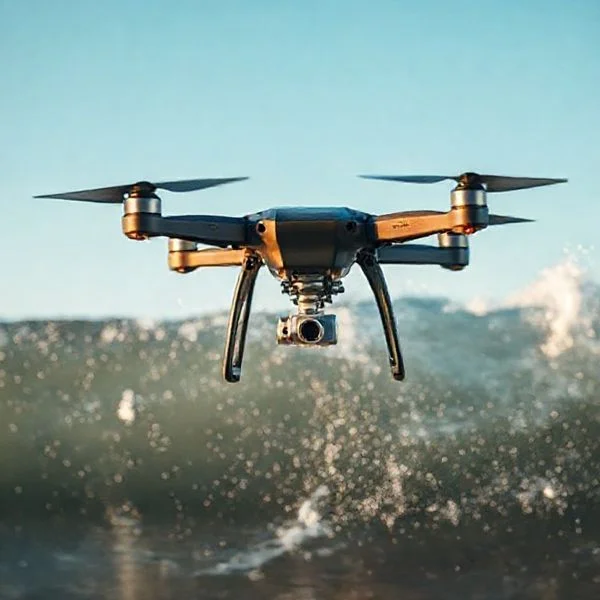
The most effective way to distinguish a drone from a plane is by observing flight dynamics, specifically the ability to hover or change direction instantly. While planes follow steady, linear paths, drones are characterized by their maneuverability and high-pitched acoustic signatures.
🎯 Key Takeaways
- Drones can hover indefinitely; manned planes must maintain forward momentum.
- Observe the turn radius; drones can perform instant 90-degree pivots.
- Airliners have standardized red/green wing lights; drones often use custom LEDs.
- Listen for a high-pitched ‘bee-like’ buzz versus a low-frequency engine roar.
- Drones typically fly below 400 feet, appearing much lower than commercial aircraft.
Distinguishing a drone from a plane relies on one primary observation: planes move with momentum, while drones move with precision. If you see an object in the sky that can stop dead in its tracks, hover for minutes, or instantly reverse its direction, you are looking at a drone. While planes follow predictable, linear paths dictated by aerodynamics, drones utilize multi-rotor propulsion that allows for flight patterns impossible for manned aircraft.
Prime for Young Adults — 6 Months Free
Exclusive Offer Amazon Prime for Young Adults, Students and 18–24s get six months of Prime free, then half price.
Start 6 Months Free As an Amazon Associate I earn from qualifying purchases.
Correctly identifying these aircraft is crucial for maintaining your privacy, ensuring airspace safety, and satisfying your curiosity about what is buzzing overhead. Whether you are a hobbyist concerned about local air traffic or a homeowner wondering about a strange light at night, understanding these mechanical behaviors provides immediate clarity. By focusing on flight dynamics and lighting patterns, you can categorize aerial objects with high accuracy in seconds.
Flight Dynamics: Hovering Capabilities vs. Fixed-Path Trajectories
Recommended Best Deal Products


The most significant difference between a drone and a plane is how they interact with the air. A fixed-wing airplane must maintain forward motion to generate lift over its wings. If a plane stops moving forward, it stalls and falls. Drones, specifically quadcopters, generate lift through vertically oriented propellers. This allows them to “park” in the sky, a behavior that is the single biggest “tell” when identifying a drone.
The “Dead Stop” and Vertical Displacement
If you observe an object that remains perfectly stationary for more than a few seconds, it is almost certainly a drone. While helicopters can hover, they are significantly louder and rarely maintain a static position at low altitudes in residential areas. Drones can also move vertically with extreme speed, “popping” up or down in altitude without any forward movement.
- Planes: Must fly in wide arcs or straight lines; cannot stay still.
- Drones: Can hover indefinitely until the battery expires.
- Observation Tip: Watch the object against a fixed point, like a tree branch or a roofline. If it doesn’t move relative to that point, it’s a drone.
Instantaneous Agility and Robotic Movement
Planes have a large turning radius. Even a nimble fighter jet requires significant space to change heading. Drones, however, can change their orientation instantly. They can fly forward, stop, and immediately fly backward or sideways without turning their “nose” around. This “robotic” or “twitchy” movement is a hallmark of drone flight. Drones often exhibit a “darting” behavior, moving in short, high-speed bursts followed by sudden stops, which contrasts sharply with the smooth, rhythmic banking of a manned aircraft.
Low-Altitude Operation
Behaviorally, drones operate in a different “slice” of the sky. Most consumer drones are flown below 400 feet to stay within regulatory safety margins and maintain visual contact. If an object looks small but is clearly flying below the level of local clouds or just above the treeline, it is likely a drone. Planes generally maintain much higher altitudes unless they are within a few miles of an airport runway.
Everything You Need to Know About Telling a Drone from a Plane
With the rapid proliferation of unmanned aerial vehicles (UAVs) in our airspace, it is becoming increasingly common to look up and wonder exactly what is flying over your head. Whether you are a concerned homeowner, a hobbyist pilot, or a curious stargazer, being able to distinguish between a consumer drone and a commercial or private airplane is a vital skill. This guide covers the physical, auditory, and behavioral differences between these two types of aircraft, ensuring you can identify aerial objects with high accuracy, even in low-light conditions.
Step 1: Analyze Flight Maneuverability and Patterns
What you need: Clear line of sight and 30 seconds of observation time.
Prime for Young Adults — 6 Months Free
Exclusive Offer Amazon Prime for Young Adults, Students and 18–24s get six months of Prime free, then half price.
Start 6 Months Free As an Amazon Associate I earn from qualifying purchases.Instructions: The most immediate way to distinguish a drone from a plane is by watching how it moves through the air. Airplanes are fixed-wing vessels that rely on forward momentum to generate lift; consequently, they must follow linear paths and wide, banking turns. If the object performs a sharp, 90-degree turn, stops instantly in mid-air to hover, or moves vertically (up and down) like an elevator, it is almost certainly a multi-rotor drone. Observe the object for at least 30 seconds. A plane will maintain a consistent heading or a gradual arc, whereas a drone often displays “twitchy” or erratic movements as the pilot adjusts the controls or the flight controller compensates for wind gusts.
Pro Tip: Watch the “transition” points. If an object remains perfectly stationary for more than five seconds, it is technically impossible for it to be a standard fixed-wing airplane; it is either a drone or a helicopter.
Step 2: Identify Sound Frequency and Decibel Levels
What you need: A quiet environment or a decibel meter app on your smartphone.
Instructions: Sound is a major giveaway. Airplanes generally produce a low-frequency roar or a deep hum caused by jet engines or large propellers. This sound is “heavy” and can often be felt as a vibration if the plane is low. Drones, conversely, use small, high-RPM (revolutions per minute) electric motors that produce a high-pitched “whining” or “buzzing” sound, often compared to a swarm of angry bees. Because sound dissipates over distance, if you see an object that looks large but you hear a high-pitched buzz, it is likely a drone very close to you. If you see a tiny speck but hear a distant, low-frequency rumble, it is a high-altitude airplane.
Pro Tip: Be aware of the “Doppler Effect.” A plane’s sound will change pitch gradually as it passes, while a drone’s sound pitch will fluctuate rapidly as the pilot changes throttle levels frequently to maintain position.
Step 3: Decipher Lighting and Strobe Patterns
What you need: Low-light or nighttime conditions and a basic understanding of FAA lighting regulations.
Instructions: At night, identifying the object depends on its “light signature.” Standard airplanes are required by the FAA to have specific navigation lights: a red light on the left wingtip (port), a green light on the right wingtip (starboard), and a white light on the tail. They also feature bright, rhythmic white or red anti-collision strobes. Drones often have much more varied lighting. Many consumer drones (like the DJI series) feature solid red lights on the front arms and blinking green or yellow lights on the rear to indicate GPS status. If you see a light that is changing colors (cycling through RGB), or if the lights are positioned very closely together in a square or circular pattern, you are likely looking at a quadcopter.
Prime for Young Adults — 6 Months Free
Exclusive Offer Amazon Prime for Young Adults, Students and 18–24s get six months of Prime free, then half price.
Start 6 Months Free As an Amazon Associate I earn from qualifying purchases.Pro Tip: Check for a “landing light.” Planes on approach or departure will have an incredibly bright, forward-facing white light that looks like a searchlight. Drones rarely have forward-facing white lights of that intensity.
Step 4: Estimate Altitude and Relative Scale
What you need: A reference point (like a tree or building) and the “Rule of Thumb.”
Instructions: Scale can be deceptive in a clear blue sky. In the United States, the FAA restricts consumer drones to an altitude of 400 feet above ground level (AGL). Commercial airplanes typically fly at altitudes between 10,000 and 35,000 feet, while even small Cessnas usually stay above 1,000 feet unless landing. Use the “Rule of Thumb”: extend your arm fully and cover the object with your thumb. If the object is a tiny speck that your thumb easily hides, but it is moving very slowly across the sky, it is a high-altitude plane. If the object appears relatively large and moves across your field of vision in just a few seconds, it is likely a drone flying low (under 400 feet).
Pro Tip: If the object is below the “treeline” or appears to be lower than the tops of nearby cell towers, it is almost certainly a drone, as planes (except in emergency or landing scenarios) are legally barred from flying that low over populated areas.
Step 5: Use Digital Tracking Tools and Apps
What you need: A smartphone with a data connection and apps like FlightRadar24 or OpenSky.
Instructions: Use technology to verify your visual findings. Open a flight tracking app like FlightRadar24 or FlightAware. These apps track the ADS-B transponders required on almost all manned aircraft. If you see an object in the sky but it does not appear on the flight tracker map, there is a high probability it is a drone. To confirm it is a drone, you can use apps like OpenSky or DJI’s AeroScope (if available to you), which are designed to detect “Remote ID” broadcasts that modern drones are now required to emit. Remote ID acts like a digital license plate, broadcasting the drone’s position and the pilot’s location to nearby receivers.
Pro Tip: Keep in mind that some military aircraft or small private gliders may not appear on public flight trackers, so a lack of a signal is not 100% proof of a drone, but it is a very strong indicator.
Step 6: Observe Environmental Context and Launch Points
What you need: Knowledge of your local surroundings and 5-10 minutes of patience.
Instructions: Consider where you are. If you are in a public park, near a scenic landmark, or in a residential cul-de-sac, the likelihood of a drone is high. Planes follow specific flight corridors leading to and from airports. If the object appears to be “searching” or orbiting a specific house, construction site, or event, it is behaving like a drone used for photography or inspection. Furthermore, watch the object’s “end of life” for that flight. Drones have limited battery lives (typically 20-30 minutes). If the object suddenly descends vertically into a backyard or a nearby field, you have successfully identified a drone and found its landing zone.
Pro Tip: Look for the operator. If you see a person standing nearby holding a large controller with an antenna or looking into a set of FPV (First Person View) goggles, they are the pilot of the drone you are observing.
✅ Final Checklist
- Was the movement linear (plane) or could it hover and move vertically (drone)?
- Was the sound a low-frequency rumble (plane) or a high-pitched buzz (drone)?
- Did the lights follow the Red-Left/Green-Right/White-Tail convention (plane)?
- Is the object flying below the 400-foot legal ceiling for UAVs (drone)?
- Did the object show up on a commercial flight tracking app (plane)?
Important Notes:
- Safety Warning: Never attempt to interfere with a drone or a plane. Lasers pointed at either aircraft are a federal crime and can cause catastrophic accidents.
- Privacy Concerns: If you believe a drone is hovering over your private property illegally, document the flight with your own camera and contact local law enforcement rather than attempting to “ground” the device yourself.
- Seeking Professional Help: If you are experiencing repeated unauthorized drone activity, contact the FAA’s local Flight Standards District Office (FSDO).
- Estimated Time: Identification usually takes 30 seconds to 2 minutes of observation.
- Cost Range: Free (visual/auditory) to $5.99 (premium flight tracking apps).
Decoding Light Patterns and Anti-Collision Strobe Requirements
Recommended Best Deal Products


At night, your ability to see the physical body of the aircraft disappears, leaving only light patterns to guide you. While both drones and planes use lights, the configuration, color, and flash rate differ significantly. Understanding the “Red-Green-White” standard used by the FAA can help you determine the direction an aircraft is traveling and whether it is a drone or a plane.
Standard Aviation Navigation Lights
Manned aircraft follow a strict lighting protocol known as navigation lights. These are steady, non-flashing lights that tell other pilots which way the plane is facing. If you see a steady red light on the left and a steady green light on the right, the aircraft is flying toward you. A steady white light indicates the tail, meaning the aircraft is flying away. Planes also feature “strobe” lights on the wingtips, which are usually white and flash at a very consistent, rhythmic pace.
The Unique Lighting of Consumer Drones
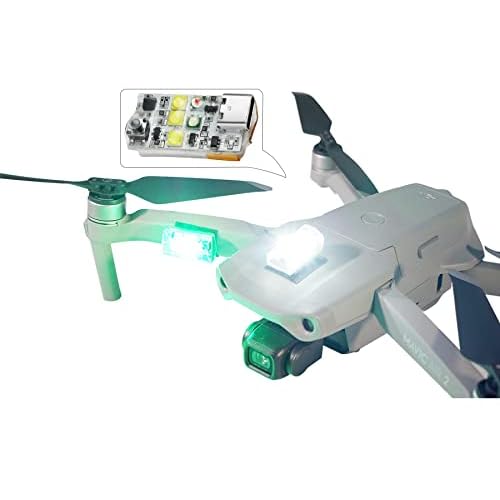
Drones often have “status” lights on their motor arms that do not follow standard aviation rules. Many popular consumer models use these lights to communicate with the pilot regarding GPS lock or battery status. This leads to lighting behaviors you will never see on a plane:
- Rapid Color Cycling: Drones may flash between green, yellow, and red rapidly.
- Underbelly Glow: Many drones have high-intensity LEDs on the bottom of the fuselage to assist with landing sensors.
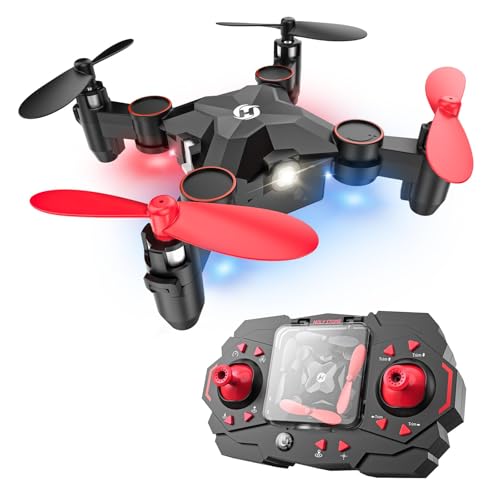
- Customization: Hobbyist drones often feature RGB LED strips that can be any color, including blue or purple, which are never used on standard planes.
Anti-Collision Strobes for Night Flight
To fly at night, the FAA requires drones to have an anti-collision light visible for at least three statute miles. These strobes are incredibly bright and usually sit on top of the drone. Unlike the rhythmic, slow pulse of a plane’s wingtip lights, drone strobes often have a much higher frequency or a “double-blink” pattern. If you see a light that is piercingly bright but the object itself is moving slowly or hovering, you are likely seeing a drone equipped with a high-output strobe like those from Firehouse Technology or Lume Cube.
Spatial Orientation via Lights
Because drones are small, their lights are clustered close together. From a distance, a plane’s lights will have a distinct “width” to them, as they are located on the ends of wings that may span 30 to 100 feet. A drone’s lights will look like a single, flickering point of light because the LEDs are only inches apart. If the red and green lights appear to be touching or overlapping, it is a small-form-factor drone.
Auditory Signatures: High-Pitched Whirring vs. Low-Frequency Roar
Sound is often your first clue before you even spot a craft in the sky. Because drones and planes rely on vastly different propulsion systems, they create distinct acoustic profiles that are hard to mistake once you know what to listen for. Drones utilize high-RPM electric motors, while planes generally rely on internal combustion or jet turbines, leading to a massive discrepancy in frequency.
The Pitch Profile: Whirring Bees vs. Thundering Engines
Drones, especially the popular quadcopters used by hobbyists and photographers, rely on small, high-speed propellers. These produce a distinctive high-pitched whirring or “angry bee” buzzing sound. In contrast, even the smallest Cessna has a much deeper, more resonant engine note that vibrates at a lower frequency.
- Drones: High-frequency, “mechanical whine,” and sound that often fluctuates rapidly as the pilot adjusts the throttle or changes direction.
- Planes: Low-frequency, consistent “roar” or “hum,” characterized by deep bass tones that can often be felt as much as they are heard.
- Helicopters: A rhythmic, low-frequency “thumping” or “chopping” sound (known as blade slap) that is completely unique to rotorcraft.
Sound Persistence and Directionality
Because drones are lightweight and have smaller propellers, their sound doesn’t travel nearly as far as a jet or propeller plane. You might hear a drone only when it’s within a few hundred feet of your position. If the sound disappears the moment the craft moves behind a building or a line of trees, it is almost certainly a drone. Large aircraft sound waves are powerful enough to “bend” around obstacles and can be heard from miles away, lingering long after the plane has passed your immediate field of vision.
Visual Perspective: Altitude, Scale, and Velocity Differences
Recommended Best Deal Products

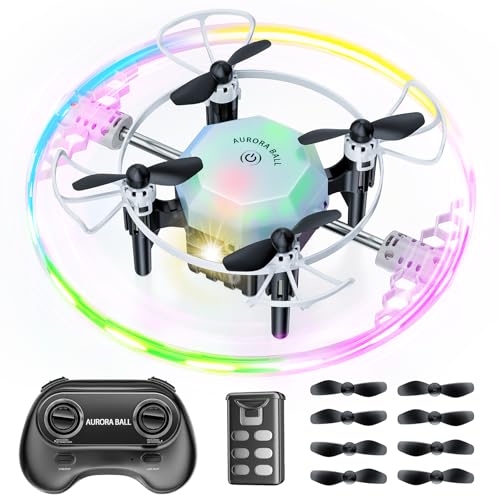
Your eyes can sometimes deceive you when looking at a clear blue sky because there are few reference points for scale. However, by observing how the object moves and where it sits in the atmosphere, you can quickly categorize it. The “behavior” of the craft is often a dead giveaway for its identity.
Altitude Clues and the 400-Foot Rule
In most regions, legal drone flight is restricted to below 400 feet to prevent interference with manned aviation. Commercial planes and private aircraft usually stay well above 1,000 feet unless they are in the process of taking off or landing. This creates a massive “dead zone” between the two types of craft.
- Scale Check: If you can see the distinct shape of the propeller arms or the landing gear with the naked eye, it is likely a drone flying at a low altitude.
- Atmospheric Haze: Planes at high altitudes often look slightly muted in color or “fuzzy” due to the amount of air and moisture between you and the craft. A drone will usually look crisp and high-contrast because it is much closer to the observer.
- Cloud Interaction: If an object disappears into the clouds, it is almost certainly a plane, as drones rarely fly at such heights and pilots must maintain a visual line of sight.
Maneuverability and Inertia
The physics of flight are the ultimate giveaway. Drones have incredibly high power-to-weight ratios, allowing them to perform maneuvers that would be physically impossible for a manned aircraft. A drone can come to a complete dead stop and hover in place indefinitely. It can also rotate 360 degrees on a dime or change direction instantly. A plane, meanwhile, must maintain forward momentum to stay airborne. If the object is making wide, sweeping turns, it’s likely a plane; if it’s “darting” like a dragonfly, it’s a drone.
Conclusion: Mastering the Skies
Telling the difference between a drone and a plane is a skill that combines careful observation with a bit of physics. By focusing on the pitch of the sound, the agility of the movement, and the apparent altitude, you can quickly identify what is sharing the airspace with you. Remember that while planes follow predictable, linear paths, drones are more localized and erratic in their flight patterns. If you want to take your spotting to the next level, consider investing in a pair of high-quality binoculars or using flight-tracking apps to verify your sightings in real-time. Next time you hear a distant buzz, use these cues to stay informed and enjoy the view!
❓ Frequently Asked Questions
How do FAA lighting requirements differ for drones and planes?
Manned aircraft must follow strict navigation light protocols (red/green/white). Drones flying at night are required to have anti-collision strobes visible for 3 miles, which often flash much faster than standard plane strobes.
Why do drones appear to move faster than planes at night?
This is often an optical illusion. Because drones fly at much lower altitudes, they cross your field of vision more quickly than a high-altitude plane traveling at a higher speed.
What does a drone sound like compared to a small Cessna?
A drone produces a high-frequency ‘whine’ or ‘buzz’ from small electric motors. A small plane like a Cessna produces a consistent, mechanical combustion engine thrum that is much lower in pitch.
Can drones have flashing red and blue lights?
Yes, many consumer and professional drones come with customizable LED patterns, including red and blue, which can sometimes be confused with emergency vehicles or unique aircraft strobes.
How can I tell the difference by looking at the silhouette?
Planes have a distinct fuselage and wing shape. Even at a distance, a drone (multirotor) will appear as a small, compact dot or an ‘X’ shape without a tail or long wingspan.
Do drones fly in formation like some planes do?
While light-show drones fly in precision swarms, they typically hover and shift in unison, whereas planes flying in formation maintain constant, high-speed forward movement.