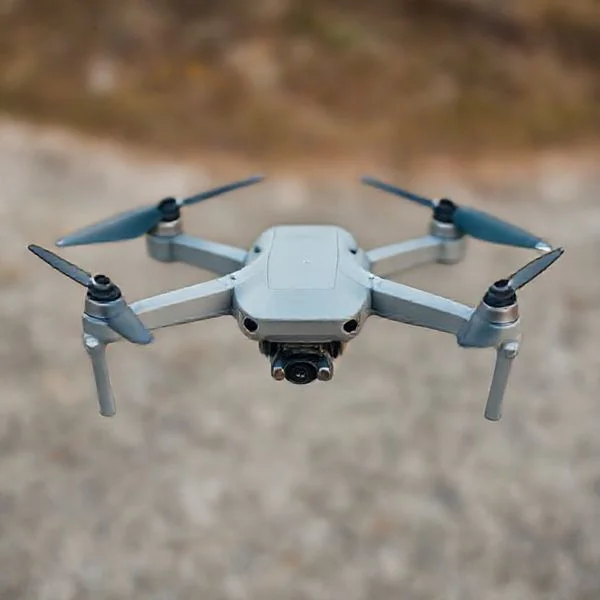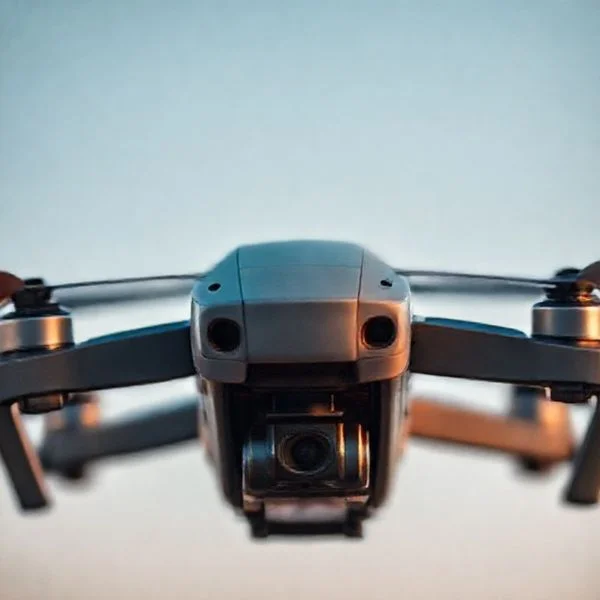
A fiber optic drone is a tethered aerial vehicle that communicates via a physical micro-fiber cable instead of radio frequencies. This link provides total immunity to electronic jamming and enables a high-bandwidth, zero-latency data stream for mission-critical operations.
🎯 Key Takeaways
- Fiber optic drones use physical cables for command instead of radio frequencies.
- They are immune to electronic warfare, signal jamming, and RF interference.
- Physical tethers enable zero-latency, high-definition video feeds for precise control.
- Operating range is physically limited by the length of the cable spool.
- Lack of radio emissions makes these drones invisible to RF detection systems.
A fiber optic drone is a specialized Unmanned Aerial Vehicle (UAV) that communicates through a physical spool of optical fiber instead of traditional radio frequencies (RF). While standard drones rely on invisible airwaves to transmit commands and video, these drones use pulses of light sent through a wire thinner than a human hair. This physical connection acts as a direct “hardwired” data link between the pilot’s ground control station and the aircraft in the sky.
Prime for Young Adults — 6 Months Free
Exclusive Offer Amazon Prime for Young Adults, Students and 18–24s get six months of Prime free, then half price.
Start 6 Months Free As an Amazon Associate I earn from qualifying purchases.
This technology is critical in high-interference environments where electronic warfare or dense signal congestion makes standard flight impossible. By eliminating the wireless link, you remove the drone’s biggest vulnerability: the risk of losing connection due to signal blocking or distance. Whether you are navigating a deep underground tunnel or a combat zone filled with frequency jammers, fiber optic drones provide a guaranteed stream of high-definition data that wireless systems simply cannot match.
The Mechanics of Fiber-Optic Tethered Flight
Recommended Best Deal Products


The core of a fiber optic drone system is the micro-spooling mechanism. Unlike a power-tethered drone that receives electricity from a heavy cable, a fiber optic drone typically carries its own power onboard via batteries. The “tether” is strictly for data. The aircraft carries a compact, lightweight canister containing several kilometers of glass fiber. As the drone moves forward, it “pays out” the fiber behind it, allowing the wire to rest gently on the ground or obstacles without creating tension that would pull the drone off course.
Converting Electrons to Photons
To make this work, the drone and the ground station use high-speed optical transceivers. These components convert the electrical signals from your flight controller into light pulses. This process happens at the speed of light, resulting in near-zero latency. You get an instantaneous response from your stick inputs and a crystal-clear video feed. This is a massive upgrade over RF systems, which often suffer from “packet loss” or signal delay when passing through walls or over long distances.
- Cable Diameter: Typically between 0.1mm and 0.25mm, making it nearly invisible to the naked eye.
- Tensile Strength: Despite being thin, the fiber is often reinforced with aramid yarn (Kevlar) to prevent snapping during high-speed maneuvers.
- Data Bandwidth: Easily supports 1 Gbps to 10 Gbps, allowing for uncompressed 4K video streams and complex sensor data simultaneously.
- Distance Capability: Modern micro-spools can hold 5km to 20km of fiber without adding significant weight to the airframe.
The Spooling Strategy: Drone-Side vs. Ground-Side
The technical mechanism usually places the spool on the drone itself. If the spool were on the ground, the drone would have to “pull” the weight of the entire cable through the air, creating massive drag and limiting range. By having the drone drop the cable as it flies, the only weight the motors must support is the remaining fiber inside the canister. This allows for incredibly agile flight paths, including the ability to fly through windows, around corners, and inside metallic structures where radio waves would bounce and die.
Un-jammable Command: Security and Anti-Interference Benefits
The primary reason you would choose a fiber optic drone over a standard RF model is its total immunity to electronic interference. In modern security and tactical scenarios, “the air is a lie.” Radio environments are increasingly cluttered with noise, and intentional jamming is now a common counter-drone tactic. Because a fiber optic drone does not “listen” for a radio signal, it cannot be confused by a jammer. The command signals are contained entirely within the physical glass core of the tether.
Bypassing Electronic Warfare (EW)
Standard drones operate on common frequencies like 2.4GHz, 5.8GHz, or specialized 900MHz bands. An electronic jammer floods these frequencies with “noise,” effectively deafening the drone and forcing it into an automated “Return to Home” mode or causing it to crash. A fiber optic drone is functionally invisible to these devices. You can fly directly toward a high-powered jammer without losing a single frame of video or a millisecond of control.
- No GPS Dependence: Many fiber optic drones utilize visual odometry or inertial navigation, making them immune to GPS spoofing or “circle-jamming.”
- Signal Stealth: Standard drones emit an RF signature that can be detected by “aeroscope” tools. Fiber drones emit zero RF, making them impossible to detect via radio scanners.
- Physical Security: Since the data isn’t traveling through the air, it cannot be intercepted or “sniffed” by third parties. There is no signal to decrypt because there is no signal in the air.
Operational Reliability in “Dead Zones”
Beyond tactical combat, the anti-interference nature of fiber optics is a game-changer for industrial inspections. In environments like nuclear power plants, large metal ship hulls, or underground mining shafts, RF signals suffer from multipath interference. This is where radio waves bounce off metal surfaces and cancel each other out. Using a fiber optic link eliminates this headache entirely. You get a perfect connection regardless of the surrounding material, allowing you to fly deep into structures that would act as a Faraday cage for any other drone.
Prime for Young Adults — 6 Months Free
Exclusive Offer Amazon Prime for Young Adults, Students and 18–24s get six months of Prime free, then half price.
Start 6 Months Free As an Amazon Associate I earn from qualifying purchases.Data Superiority: Zero Latency and High-Bandwidth Feeds
In the world of professional drone operations, data is king. While standard wireless drones struggle with signal interference and video compression, fiber optic drones operate on a completely different level. Because the data travels via light pulses through a physical strand, it is immune to the “noise” of crowded radio frequencies. This creates a dedicated, ultra-high-speed pipeline that wireless technology simply cannot match in terms of reliability.
Real-Time Decision Making with Zero Latency
For tactical teams or emergency responders, a delay of even half a second in a video feed can be the difference between success and failure. Wireless systems often experience “lag” or stuttering when the drone moves behind an obstacle or reaches the edge of its range. Fiber optic drones eliminate this issue entirely. The latency is virtually zero, providing a “live” experience that feels as if you are looking through a window rather than a screen.
- Tactical Precision: Pilots can navigate tight indoor spaces or complex industrial environments with millisecond accuracy.
- Consistent Frame Rates: There are no “dropped frames” or pixelation issues caused by signal interference.
- Secure Command: Because the control signals are sent via the cable, the drone is immune to GPS spoofing or command-link hijacking.
Uncompressed 4K and Thermal Feeds
Most drones compress video data to fit it through a wireless “pipe.” This often results in a loss of detail, which is critical during infrastructure inspections or search-and-rescue missions. Fiber optics offer massive bandwidth, allowing for the transmission of raw, uncompressed 4K video and high-resolution thermal imaging simultaneously. This is a game-changer for engineers who need to spot hairline cracks in a bridge or search teams looking for heat signatures in dense foliage.
Physical Constraints: Range, Weight, and Maneuverability
While the technical specs of fiber optic drones are impressive, they do come with a unique set of physical challenges. Flying with a “leash” requires a different mindset than traditional pilotage. The drone is no longer a free-roaming agent; it is a specialized tool restricted by the length and weight of its own data link. Understanding these limitations is key to using this technology effectively.
Managing the “Tether Drag”
The most obvious constraint is the cable itself. Even though fiber optic strands are incredibly thin and light, the weight adds up as the drone gains altitude or distance. This is known as tether drag. If the drone flies too far or if there is a strong crosswind, the cable can act like a sail, pulling on the aircraft and draining the battery faster. Pilots must account for this extra tension when planning their flight paths.
- Active Spooling: High-end fiber optic systems use motorized “active” spools that automatically reel the cable in or out to maintain the perfect amount of tension.
- Environmental Awareness: Pilots must be hyper-aware of obstacles like tree branches or sharp corners that could snag or damage the delicate fiber line.
- Vertical vs. Horizontal: These drones excel at vertical climbs (like inspecting a tower) but face more resistance when trying to fly long horizontal distances.
Range Limitations vs. Mission Profile
A fiber optic drone typically has a range limited to the length of its cable, which usually spans between 50 and 500 meters. While this may seem restrictive compared to a wireless drone that can fly kilometers away, it is more than enough for stationary or localized missions. These drones aren’t meant for long-distance exploration; they are built for “over-the-hill” surveillance, persistent monitoring of a specific site, or high-security data collection where wireless is prohibited.
Conclusion
Fiber optic drones represent a powerful niche in the evolving drone ecosystem. By trading the freedom of wireless flight for the absolute security and speed of a physical connection, these “jam-proof” machines solve some of the biggest hurdles in modern aerial tech. They provide a level of data integrity and signal reliability that is simply unattainable through traditional radio waves, making them indispensable for high-stakes security, industrial inspection, and tactical applications.
Prime for Young Adults — 6 Months Free
Exclusive Offer Amazon Prime for Young Adults, Students and 18–24s get six months of Prime free, then half price.
Start 6 Months Free As an Amazon Associate I earn from qualifying purchases.If you are looking to integrate fiber optic technology into your workflow, start by evaluating your environment—specifically looking for areas where radio interference is high or data security is paramount. Researching specialized tethered power stations is a great next step to see how these systems can extend your flight time indefinitely. Whether you are protecting a sensitive site or capturing high-fidelity data, the “wired” drone is a tether to a more secure future in the sky. Ready to upgrade your aerial capabilities? Explore our latest drone accessories to find the perfect fit for your mission.
❓ Frequently Asked Questions
Why use fiber optics instead of standard wireless drones?
Fiber optics are used in environments where radio signals are jammed, blocked by heavy structures, or where absolute data security is required to prevent interception.
How does the cable not get tangled during flight?
The drone uses a precision micro-spooling system that releases the thin fiber cable with minimal tension as the drone moves forward.
What are the primary use cases for this technology?
They are predominantly used in military reconnaissance, EOD (explosive ordnance disposal) operations, and industrial inspections inside metal-heavy environments.
Is the video quality better on a fiber optic drone?
Yes, because fiber optics can transmit uncompressed 4K or 8K video without the lag or artifacts common in wireless transmissions.
How does wind affect a fiber-optic drone?
Wind creates ‘drag’ on the trailing cable, which requires the drone’s flight controller to work harder to maintain stability and position.
How thick and heavy is the fiber optic cable?
The cable is typically a ‘micro-fiber’ that is as thin as a fishing line and incredibly lightweight to minimize its impact on flight physics.