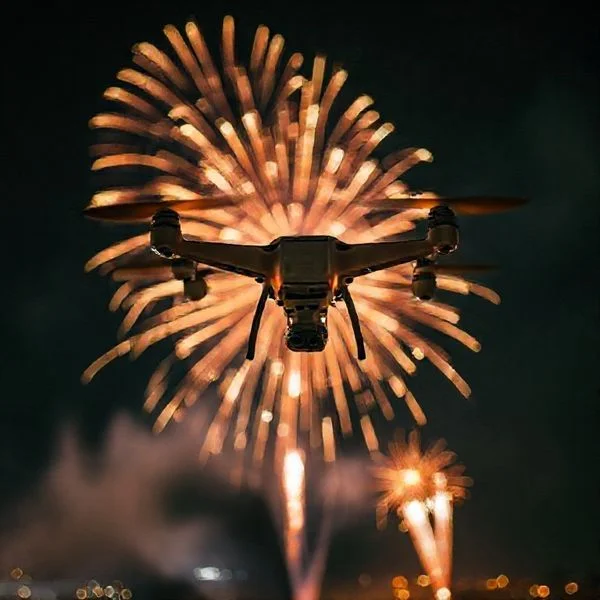
Drone fireworks are synchronized light shows that use fleets of LED-equipped UAVs to create complex 3D animations in the night sky. Controlled by sophisticated swarming software and GPS, they offer a silent, reusable, and eco-friendly alternative to traditional chemical-based pyrotechnics.
🎯 Key Takeaways
- Drone fireworks use high-intensity LEDs instead of explosives to create visual displays.
- A single computer typically controls the entire swarm using pre-programmed flight paths.
- They are environmentally friendly, producing zero smoke, debris, or chemical runoff.
- Silent operation makes them ideal for noise-sensitive areas or animal-friendly events.
- Displays are highly customizable, capable of forming recognizable logos and 3D shapes.
Drone fireworks, technically known as drone light shows, are synchronized swarms of specialized quadcopters equipped with high-intensity LED lights. Unlike traditional pyrotechnics that rely on chemical explosions and gunpowder, these displays use sophisticated software to orchestrate hundreds—sometimes thousands—of drones into complex 3D shapes, logos, and animations in the night sky. Each drone acts as a single “pixel” in a massive, aerial digital screen.
Understanding this technology is essential because it is rapidly becoming the gold standard for high-profile events like the Olympics, Super Bowl, and major city celebrations. You are witnessing a fundamental shift from “point-and-shoot” explosives to “pixel-perfect” digital storytelling. This transition offers unparalleled creative flexibility, allowing organizers to display specific brand colors and intricate movements that are physically impossible with traditional fireworks.
Prime for Young Adults — 6 Months Free
Exclusive Offer Amazon Prime for Young Adults, Students and 18–24s get six months of Prime free, then half price.
Start 6 Months Free As an Amazon Associate I earn from qualifying purchases.Defining Drone Fireworks: LEDs vs. Pyrotechnics
Recommended Best Deal Products


The term “drone fireworks” is often used because these shows provide the same “wow” factor as traditional displays, but the underlying mechanics are entirely different. While a firework shell uses a timed fuse to ignite metal salts for color, a drone uses a programmable LED module. These modules can produce over 16 million color combinations using the RGB spectrum, providing a level of vibrancy and specificity that chemical reactions simply cannot match.
Precision Imagery and Persistence
One of the most significant differences you will notice is the duration and clarity of the display. A traditional firework shell explodes and disappears in a matter of seconds, leaving behind a cloud of smoke. In contrast, a drone can hold its position and color for several minutes. This allows for the creation of recognizable 3D objects—such as a rotating globe, a soaring bird, or a scrolling text message—that remain crisp and visible from multiple angles.
- Zero Chemical Residue: There are no falling debris, heavy metals, or “dud” shells that fail to explode and create safety hazards on the ground.
- Silent Operation: Drone shows eliminate the concussive blasts of gunpowder, making them ideal for urban environments, zoos, or areas with noise-sensitive residents and pets.
- Perfect Repeatability: Because the show is digital, it can be performed exactly the same way every night, whereas fireworks are subject to the inconsistencies of chemical manufacturing.
- Sustainability: Once a drone show is over, the units land, recharge their lithium-polymer batteries, and are ready for the next event, unlike fireworks which are single-use consumables.
Environmental and Safety Advantages
Safety is perhaps the strongest argument for the “fireless” firework. Traditional shows carry a high risk of wildfires, especially in drought-prone regions. Since drone light shows use no heat or combustion, they can be deployed in areas where traditional pyrotechnics are legally banned. Furthermore, the lack of smoke means the air quality remains clear, and the visuals are never obscured by the “fog” often created during a heavy firework finale.
The Technology Behind the Swarm: GPS and Ground Control
You might wonder how a single operator manages 1,000 drones simultaneously without them colliding. The secret is that these drones are not “piloted” in the traditional sense. Instead of a thousand people with joysticks, a single Ground Control Station (GCS) computer executes a pre-programmed flight script. The drones are essentially flying robots following a highly precise digital map.
RTK-GPS: The Secret to Centimeter Accuracy
The GPS on your smartphone is usually accurate to about three to five meters. For a drone swarm, that margin of error would result in a mid-air catastrophe. Professional light show drones utilize Real-Time Kinematic (RTK) GPS. This technology uses a static ground base station to provide corrections to the satellites, giving each drone centimeter-level precision. This is why you can see drones flying within inches of each other to create incredibly dense and detailed images.
- Automated Flight Paths: The show begins in 3D animation software (like Blender or Maya). Designers create the movements, and specialized “swarm” software translates those movements into individual XYZ coordinates for every drone in the fleet.
- High-Speed Data Links: The Ground Control Station communicates with the swarm via high-frequency radio or encrypted Wi-Fi. It sends “heartbeat” signals to every unit multiple times per second to ensure they are on their correct path.
- Safety Geofencing: Every show includes a “virtual cage.” If a drone experiences a sensor error or drifts outside the designated performance zone, the software automatically triggers a “return to home” or a controlled landing to prevent it from entering spectator space.
Single Computer Orchestration
During the performance, the “pilot” acts more like a system monitor. The computer software tracks the battery voltage, GPS signal strength, and internal temperature of every single drone in real-time. If the wind picks up, the system can automatically adjust the thrust of individual motors across the entire swarm to maintain the formation. If one drone identifies a critical hardware failure, the software can often “extinguish” that drone’s light and send it to land, while the remaining drones adjust to fill the gap in the visual pattern.
This level of centralized control is what allows for the “light pixel” effect. Because the computer knows exactly where every drone is at every millisecond, it can trigger color changes in sync with music, creating a choreographed dance of light that feels more like a high-definition movie screen than a traditional light show.
Prime for Young Adults — 6 Months Free
Exclusive Offer Amazon Prime for Young Adults, Students and 18–24s get six months of Prime free, then half price.
Start 6 Months Free As an Amazon Associate I earn from qualifying purchases.Environmental and Safety Advantages of Drone Light Shows
One of the primary reasons cities and event organizers are pivoting toward drone fireworks is the significantly reduced environmental footprint. Traditional fireworks, while beautiful, release chemical pollutants, heavy metals, and sulfurous smoke into the atmosphere. Drones offer a cleaner, “green” alternative that aligns with modern sustainability goals without sacrificing the “wow” factor.
Eco-Friendly and Silent Displays
Unlike pyrotechnics, drones are reusable and produce zero direct emissions during a show. This makes them ideal for environmentally sensitive areas, such as national parks or cities with strict air quality regulations. Furthermore, the lack of explosive noise is a major benefit for local communities. The “silent” nature of drones allows shows to happen in venues where traditional fireworks would be prohibited due to noise ordinances.
- Reduced Waste: There are no cardboard tubes, plastic casings, or spent shells to clean up after the performance.
- Wildlife Protection: Drone shows minimize the distress and disorientation caused to birds and local fauna by loud, sudden bangs.
- Pet Safety: Local residents with dogs or cats often prefer drones, as they don’t trigger the anxiety associated with loud explosions.
- Long-term Sustainability: A single fleet can perform hundreds of shows, making the long-term carbon footprint much lower than thousands of single-use rockets.
Mitigating Fire Hazards
In drought-prone regions or areas experiencing high-heat summers, traditional fireworks are often banned due to the extreme risk of wildfires. Drone light shows eliminate this danger entirely. Since there are no sparks, heat sources, or falling embers, they can be safely deployed in dry canyons, forested areas, or densely packed urban centers where fire safety is the top priority. For instance, many Western U.S. cities now opt for drones during 4th of July celebrations to prevent accidental brush fires.
Operational Logistics: Regulations, Weather, and Space Requirements
While drone fireworks look effortless from the ground, they require meticulous planning and adherence to strict aviation standards. Managing a fleet of dozens—or even thousands—of synchronized aircraft is a complex feat of engineering, programming, and legal coordination.
Navigating Regulations and Airspace
In the United States, any commercial drone show must comply with FAA regulations. This typically involves Part 107 certification for the pilots and specific waivers for flying multiple aircraft per pilot, flying at night, and occasionally flying over people. Professional teams spend weeks, sometimes months, securing the necessary permits and ensuring the “mission” doesn’t interfere with local flight paths or restricted airspace.
- Geofencing: Software “cages” are programmed to ensure no drone can physically leave the designated performance volume, even if a sensor fails.
- Signal Integrity: Operators must monitor radio frequency (RF) interference, as hundreds of drones communicating simultaneously require a “clean” signal environment to stay in formation.
- Visual Observers: Professional crews use ground-based observers to maintain a 360-degree watch for any manned aircraft entering the area.
The Impact of Weather and Space
Drones are highly precise but remain sensitive to the elements. High winds are the biggest enemy; if gusts exceed 15-20 mph, the drones may struggle to maintain their positions, leading to distorted images or shortened flight times due to battery drain. Additionally, a successful show requires a significant “staging area.” This flat, open space serves as the launch pad and must be kept clear of spectators and obstacles like power lines or tall trees to ensure a safe takeoff and landing sequence.
The Future is Bright (and Electric)
Drone fireworks represent a stunning intersection of art and technology. By swapping gunpowder for LEDs and physics for algorithms, we are entering a new era of storytelling in the sky. While they may not entirely replace the nostalgic “boom” and smell of traditional fireworks in every setting, they offer a safer, more sustainable, and infinitely more creative canvas for public celebrations. From brand launches to massive holiday festivals, the precision of drone light shows is truly the future of entertainment.
Prime for Young Adults — 6 Months Free
Exclusive Offer Amazon Prime for Young Adults, Students and 18–24s get six months of Prime free, then half price.
Start 6 Months Free As an Amazon Associate I earn from qualifying purchases.Next Steps: If you are interested in seeing these in person, check your local city event calendars for upcoming drone displays. For those interested in the tech, look into swarm robotics to understand how these synchronized fleets communicate. Ready to see the sky in a whole new light? Keep an eye on the horizon!
❓ Frequently Asked Questions
How do drone fireworks create complex images in the sky?
The drones use precision GPS and specialized swarming software that assigns each unit a unique 3D coordinate. The drones follow these paths in perfect synchronization while changing LED colors to form animations.
Why are events switching from fireworks to drone shows?
Drones are safer for fire-prone areas and much better for pets and veterans due to the lack of loud explosions. They also eliminate the chemical pollution and physical debris associated with traditional gunpowder fireworks.
How long do drone light shows typically last?
Most shows last between 8 and 15 minutes. This duration is limited by the battery life of the drones, which must account for the power used during takeoff, formation, and landing.
Can drone fireworks be customized for specific events?
Yes, they are highly programmable, allowing organizers to display specific logos, text, or 3D objects. This provides a level of branding and storytelling that traditional pyrotechnics cannot achieve.
Are drone shows more expensive than traditional fireworks?
While the initial technology investment is high, drone shows can be competitive for large-scale events. The lack of recurring explosive costs and the ability to reuse the hardware adds long-term value.
What happens if a drone fails during a performance?
The swarm software includes safety protocols that detect malfunctions and command the individual drone to land or return to home safely. The rest of the swarm continues the show without risk of collision.


