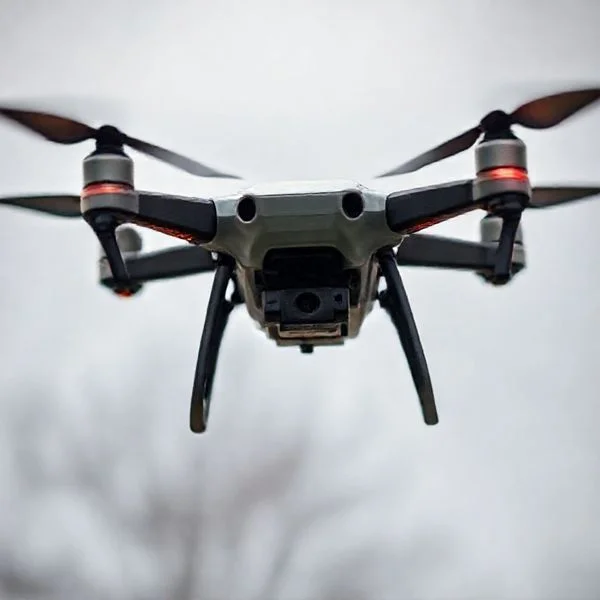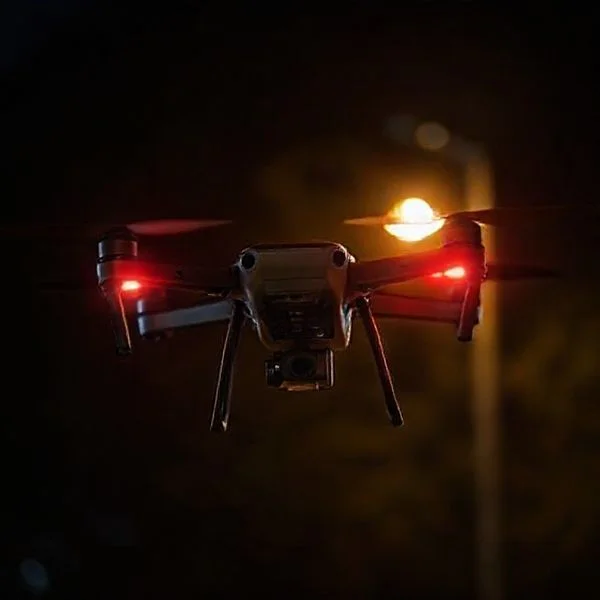
FPV stands for First Person View, a technology that allows drone pilots to see a real-time video feed from the drone’s perspective via goggles. This creates an immersive cockpit experience, using low-latency transmission to enable precise high-speed racing and cinematic maneuvers.
🎯 Key Takeaways
- FPV stands for First Person View, providing a pilot-eye perspective.
- Low-latency video transmission is essential for real-time control and safety.
- The setup requires a camera, video transmitter, and head-mounted goggles.
- FPV is the standard for drone racing and freestyle acrobatics.
- Choosing between analog and digital systems impacts image clarity and speed.
FPV stands for First Person View. In the world of drones, this means you are piloting the aircraft from the perspective of an onboard camera rather than watching it from the ground. By wearing a pair of specialized video goggles, you see exactly what the drone sees in real-time. It effectively teleports your consciousness into the “cockpit” of the craft, allowing you to navigate through three-dimensional space with a level of precision and immersion that traditional drones simply cannot match.
Understanding FPV is crucial because it represents a fundamental shift in how we interact with unmanned aerial vehicles. It moves the pilot from being a spectator on the ground to an active participant in the flight path. Whether you are interested in high-speed racing, cinematic filmmaking, or technical inspections, FPV technology provides the visual feedback necessary to fly closer to obstacles and react faster to environmental changes. This immersive link between pilot and machine is what defines the modern FPV experience.
Prime for Young Adults — 6 Months Free
Exclusive Offer Amazon Prime for Young Adults, Students and 18–24s get six months of Prime free, then half price.
Start 6 Months Free As an Amazon Associate I earn from qualifying purchases.Understanding First Person View (FPV) Technology
Recommended Best Deal Products

At its core, FPV technology is about perspective. When you fly a standard consumer drone, you usually rely on Line of Sight (LOS), meaning you watch the drone’s physical body in the sky. While effective for basic photography, LOS flying limits your ability to judge distances or navigate complex environments. FPV removes these boundaries by placing your eyes on the front of the drone. This creates a sensation of “telepresence,” where your brain begins to process the drone’s movements as if they were your own body’s movements.
The Virtual Cockpit Experience
The defining characteristic of FPV is the use of a Head-Mounted Display (HMD), commonly referred to as FPV goggles. Unlike looking at a smartphone screen mounted on a controller, goggles block out all peripheral light and external distractions. This isolation is what creates the immersive “cockpit” feel. Because your entire field of vision is occupied by the drone’s video feed, you gain a heightened sense of spatial awareness. You can fly through narrow gaps, under tree canopies, and around sharp corners because you are seeing the environment from the drone’s specific point of entry. This perspective is why FPV is the standard for drone racing and freestyle acrobatics.
The Psychological Edge of Immersive Flight
Flying in First Person View triggers a “flow state” for many pilots. Because the visual feedback is so direct, the lag between seeing an obstacle and reacting to it is minimized. In a traditional flight setup, you must mentally translate the drone’s orientation relative to your position on the ground. If the drone is flying toward you, “left” on your controller moves the drone to its right. In FPV, this mental translation disappears. Left is always left, and right is always right, because you are seeing through the drone’s eyes. This makes complex maneuvers more intuitive and allows for the aggressive, high-speed flight paths that characterize FPV “bando” diving and proximity flying.
- Spatial Awareness: Real-time depth perception allows for flying in tight, indoor, or cluttered environments.
- Intuitive Control: Eliminates the need for mental orientation mapping required by line-of-sight flying.
- Enhanced Precision: Enables “cinewhoop” style shots where the drone passes within inches of subjects.
The Core Components of an FPV Hardware Loop
To achieve a seamless First Person View experience, a specific hardware loop must be established. This loop is a high-speed relay system that captures, transmits, and displays video data. Unlike standard drones that prioritize high-resolution video for recording, FPV systems prioritize speed. The goal is to move data from the drone’s lens to the pilot’s eyes as fast as humanly possible. Any delay in this process can lead to a “crash-inducing” disconnect between what the pilot sees and where the drone actually is in space.
The Signal Journey: From Lens to Eye
The hardware loop begins with the FPV camera mounted on the front of the drone. This camera captures the environment and sends the raw video data to a Video Transmitter, often called a VTX. The VTX converts the video into a radio signal and broadcasts it through an antenna. On the pilot’s end, the FPV goggles are equipped with receivers and antennas that “catch” this signal. The goggles then decode the radio waves back into a visual image displayed on internal screens. This entire journey—from the moment light hits the camera lens to the moment the image appears in the goggles—happens in a fraction of a second.
The Critical Role of Low Latency
In the FPV world, latency is measured in milliseconds (ms), and it is the most important metric for a successful hardware loop. High-end FPV systems aim for “low latency,” typically between 20ms and 40ms. To put this in perspective, the human blink takes about 100ms to 150ms. If the latency is too high—above 60ms or 70ms—the pilot will feel a “disconnected” sensation. By the time you see a tree branch in your goggles, the drone may have already hit it. This is why FPV hardware often uses specialized transmission protocols rather than standard Wi-Fi, which is far too slow for real-time, high-speed piloting.
- FPV Camera: Specialized sensors (CMOS or CCD) designed to handle rapid changes in lighting and high-speed motion.
- Video Transmitter (VTX): The “engine” that pushes the video signal out into the air at specific power levels (milliwatts).
- Antennas: Polarized components that ensure the signal remains stable even when the drone is flipping or turning.
- Receiver (VRX): Usually built into or attached to the goggles to intercept the broadcasted signal.
Analog vs. Digital FPV Systems: Key Differences
Recommended Best Deal Products

When you dive into the world of FPV, the most significant technical decision you will make is choosing between an analog or a digital video system. This choice dictates which goggles you buy and how the world looks when you are in the air. Both systems have dedicated fans, and the “best” choice usually depends on your budget and what you plan to do with your drone.
Prime for Young Adults — 6 Months Free
Exclusive Offer Amazon Prime for Young Adults, Students and 18–24s get six months of Prime free, then half price.
Start 6 Months Free As an Amazon Associate I earn from qualifying purchases.Analog: The Traditional Choice for Speed
Analog was the only way to fly for years, and it remains incredibly popular today. It works by transmitting a raw video signal over radio frequencies. Because there is no heavy processing involved, the latency (the delay between the camera seeing something and it appearing in your goggles) is virtually non-existent. This is why professional racers still prefer analog; at 100 mph, every millisecond counts.
- Visuals: Lower resolution, often compared to an old VHS tape.
- Signal Loss: When the signal gets weak, you see “static” or “snow,” but you can often still see enough to fly back safely.
- Cost: Generally much cheaper and more lightweight than digital alternatives.
- Compatibility: Most analog gear works across different brands, making it very flexible.
Digital: High-Definition Clarity
Digital FPV systems, like those from DJI, Walksnail, and HDZero, have revolutionized the hobby by bringing high-definition video into the cockpit. Instead of a fuzzy image, you see the world in crisp 720p or 1080p. This makes it much easier to spot thin tree branches or power lines that would be invisible on an analog feed.
While digital systems are more expensive, the immersion is unparalleled. If your goal is to explore beautiful landscapes or feel like you are truly a bird, digital is the way to go. Just keep in mind that when a digital signal drops, the image may stutter or freeze entirely rather than showing static.
Common Uses: Racing, Freestyle, and Cinematic FPV
An FPV drone is a tool, and how it is built depends entirely on its intended purpose. Unlike standard camera drones that are designed to hover steadily, FPV drones are built for movement. Here are the three main ways pilots use this technology today.
Drone Racing and Freestyle
FPV racing is a high-speed sport where pilots navigate complex obstacle courses at incredible speeds. It requires lightning-fast reflexes and drones built for maximum power-to-weight ratios. On the other hand, freestyle flying is about expression. Pilots use the environment—like abandoned buildings, parks, or “bando” spots—to perform flips, rolls, and dives. It is essentially “skateboarding in the sky,” where the pilot finds creative lines and gaps to fly through.
- Practical Example: A freestyle pilot might “power loop” a bridge or “dive” down the side of a skyscraper, keeping the camera focused on the target while falling at terminal velocity.
- Pro Tip: If you are interested in freestyle, look for a “5-inch” drone, as this is the industry standard for durability and airtime.
Cinematic and Commercial Applications
Hollywood has recently embraced FPV for its ability to capture dynamic, immersive shots. “Cinewhoops”—small FPV drones with guarded propellers—can fly safely around people or through tight indoor spaces. You have likely seen these in viral videos flying through bowling alleys, stadiums, or car dealerships. Because these drones can carry high-end cameras like a GoPro, they produce footage that feels like a high-speed roller coaster ride.
- Chase Scenes: FPV drones are perfect for following drift cars, mountain bikers, or skiers at close range.
- Indoor Tours: Their small size allows them to fly through windows and under furniture for a unique perspective.
- Stability: While the pilot flies aggressively, modern software (like ReelSteady or Gyroflow) smooths out the footage to make it look professional.
Wrapping Up: Your FPV Journey Starts Here
Recommended Best Deal Products


Understanding what FPV stands for is just the first step into a massive, rewarding hobby. First Person View technology has evolved from a niche experiment into a sophisticated tool for racers, filmmakers, and hobbyists alike. Whether you choose the raw speed of analog or the stunning clarity of digital, the sensation of “leaving the ground” never gets old.
Prime for Young Adults — 6 Months Free
Exclusive Offer Amazon Prime for Young Adults, Students and 18–24s get six months of Prime free, then half price.
Start 6 Months Free As an Amazon Associate I earn from qualifying purchases.If you are ready to take the next step, here is how to begin:
- Start with a Simulator: Download an FPV sim on your computer and connect a radio controller. This allows you to crash for free while you learn the muscle memory.
- Join a Community: Look for local flight clubs or online forums. The FPV community is incredibly helpful to beginners.
Are you ready to see the world from a new perspective? Pick up a controller, start practicing, and prepare for the thrill of flight. The sky is no longer the limit—it’s your playground!
❓ Frequently Asked Questions
How does the video signal travel from the drone to the goggles?
The drone’s onboard camera captures video, which is sent by a Video Transmitter (VTX) via radio waves. A receiver in the pilot’s goggles catches this signal and displays it instantly.
What makes FPV drones better for racing than standard drones?
FPV drones are designed for high power-to-weight ratios and low latency, allowing pilots to navigate tight gates and obstacles at speeds exceeding 100mph.
What is the difference between analog and digital FPV signals?
Analog offers the lowest possible latency and is cheaper, while digital systems provide high-definition video but may have slightly higher latency or signal clipping.
Do FPV drones have a steep learning curve?
Yes, because most FPV drones are flown in ‘Acro’ mode without self-leveling, requiring significant practice to master manual control.
What accessories are needed for a complete FPV setup?
A complete kit includes the drone itself, a radio transmitter (controller), FPV goggles, specialized LiPo batteries, and a battery charger.
Why is FPV used in professional cinematography?
It allows for unique, high-speed ‘one-take’ shots and proximity flying that traditional, slower-moving drones cannot achieve.