Most drone shows officially begin 30 to 60 minutes after sunset to ensure the LEDs are perfectly visible against a dark sky. Since these displays typically last between 10 and 15 minutes, arriving at your chosen viewing spot at least an hour early is critical for the best experience.
🎯 Key Takeaways
- Check official event social media pages for real-time weather-related delays or cancellations.
- Arrive at the designated viewing zone 60 minutes before the scheduled start time.
- Position yourself centrally to the display area for the best 3D perspective.
- Note that high winds over 15-20 mph usually result in show postponement.
- Confirm if the show uses a dedicated app for synchronized musical accompaniment.
Most major drone shows tonight will begin approximately 30 to 60 minutes after local sunset. Because drone LEDs require a dark “canvas” to be visible, the exact start time is often fluid rather than a fixed minute on the clock. To find the precise moment for your specific event, you should prioritize checking the official event app or the organizer’s social media feeds, as these are updated in real-time based on light conditions.
Prime for Young Adults — 6 Months Free
Exclusive Offer Amazon Prime for Young Adults, Students and 18–24s get six months of Prime free, then half price.
Start 6 Months Free As an Amazon Associate I earn from qualifying purchases.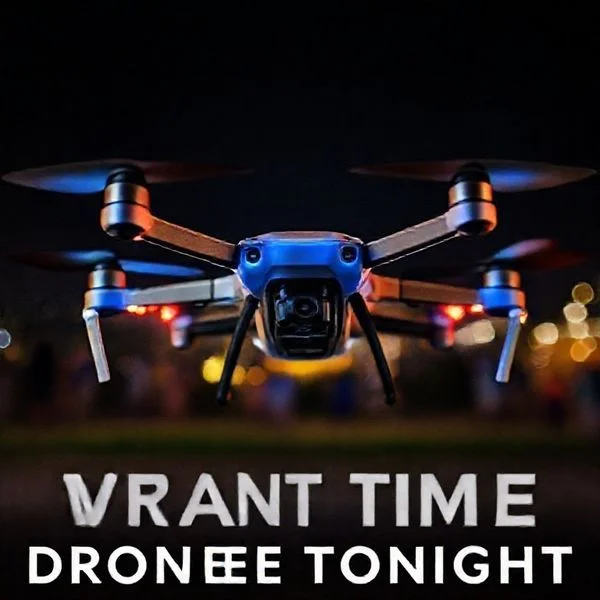
Getting the timing right is critical because most light shows only last between 10 and 15 minutes. Unlike fireworks, which might have a long and predictable finale, a drone show is a tightly choreographed sequence. Often, the first three minutes feature the most impressive technical launches and transitions. Arriving even five minutes late means you might miss the primary storytelling elements or the “hero” formations that make the show famous.
Determining the Exact Start Time: Sunset vs. Scheduled Time
Recommended Best Deal Products


The “official” time listed on an event flyer is rarely when the drones actually take flight. Most organizers list a broad window, such as “8:00 PM – 10:00 PM,” to account for shifting light levels and safety checks. The drones usually wait for the end of civil twilight to ensure maximum contrast for the onboard LEDs.
The Civil Twilight Rule of Thumb
Drone show pilots generally wait until the sun is at least 6 degrees below the horizon. This provides the deep blue or black backdrop necessary for the show’s colors to appear vibrant and crisp. You can estimate the launch by checking your local weather app for the sunset time and adding about 30 minutes. Consider these typical scenarios:
- Sunset at 7:45 PM: Expect a drone launch between 8:15 PM and 8:30 PM.
- Sunset at 8:30 PM: The show will likely start no earlier than 9:00 PM.
- Heavy Overcast: Thick cloud cover can occasionally allow for an earlier start due to decreased ambient light.
Official Event Windows vs. Actual Launch
Do not confuse the “Event Start” with the “Show Start.” Festivals often feature live music, food trucks, or opening acts for hours before the drones launch. If an event website says “Drone Show at 9:00 PM,” that is typically the earliest the fleet will lift off. However, the pre-flight safety checks and “arming” of the drones begin 15 minutes prior. You should be in your final viewing spot by that time to ensure you don’t miss the initial ascent.
Everything You Need to Know About Finding the Drone Show Tonight
Drone light shows have quickly become the modern alternative to traditional fireworks, offering intricate animations and synchronized storytelling in the sky. However, unlike fireworks which can often be heard from miles away, drone shows are highly precise and have much shorter durations, usually lasting between 8 and 15 minutes. Because these shows are extremely sensitive to weather conditions, battery life, and airspace regulations, the advertised start time is often a “window” rather than a hard deadline. This guide covers the essential steps to track down the exact “go-time” for a drone performance, ensuring you don’t miss a single second of the choreographed magic due to technical delays or location confusion.
Step 1: Identify the Primary Event Organizer
What you need: A smartphone or computer with internet access and a basic understanding of the event’s location.
Instructions: The first step in determining what time a drone show starts is identifying the “host.” Most drone shows are commissioned for specific events like city festivals, sports halftime shows, corporate product launches, or holiday celebrations. Search for the specific venue or city name followed by “drone show” to find the official event page. For example, if you are in Austin, search “Austin Downtown Drone Show Official Site.” Avoid third-party “event aggregator” websites which often scrape old data and provide incorrect times. Look for a “.gov” or “.org” site, or the official website of the drone company itself (such as Verge Aero, Firefly, or Intel), as they often list their public performance schedules with the most up-to-date accuracy.
Prime for Young Adults — 6 Months Free
Exclusive Offer Amazon Prime for Young Adults, Students and 18–24s get six months of Prime free, then half price.
Start 6 Months Free As an Amazon Associate I earn from qualifying purchases.Pro Tip: Look for the “Frequently Asked Questions” (FAQ) section on the event website; organizers often hide the most specific timing details there to manage crowd flow.
Step 2: Monitor Real-Time Social Media Channels
What you need: Access to X (formerly Twitter), Instagram, or Facebook.
Instructions: Official websites are rarely updated in real-time if a show is delayed by twenty minutes due to a technical glitch. To get the most accurate “tonight” timing, follow the event’s official social media profiles and check their “Stories” or “Live” feeds. Organizers will post “Go/No-Go” status updates based on immediate weather conditions. Search for the event’s specific hashtag (e.g., #VegasDroneShow) and sort the results by “Latest.” This allows you to see what people currently on the ground are reporting. If the crew is still calibrating the GPS on the drones, locals will often post photos of the drones sitting on their launch pads, giving you a physical cue that the show hasn’t started yet.
Pro Tip: Turn on “Post Notifications” for the official event account at least three hours before the show to receive instant alerts regarding time shifts.
Step 3: Analyze Local Wind and Precipitation Patterns
What you need: A hyper-local weather app (like Windy.com or Dark Sky) that shows wind gusts.
Instructions: Drones are highly sophisticated but have strict physical limitations. Most commercial show drones cannot fly safely in sustained winds exceeding 18-20 miles per hour or in any level of active precipitation. If the weather forecast shows high winds at the “advertised” start time, expect a delay. Open your weather app and look specifically at the “Wind Gusts” and “Hourly Precipitation” for the exact neighborhood of the launch site. If you see a storm cell moving in at 9:00 PM, the show may be pushed earlier to 8:30 PM or delayed until 10:00 PM. Knowing the weather gives you a realistic expectation of whether the “official” time will actually be honored by the flight director.
Pro Tip: Check the wind speed at an altitude of 400 feet, not just ground level, as wind is significantly stronger higher up where the drones perform.
Prime for Young Adults — 6 Months Free
Exclusive Offer Amazon Prime for Young Adults, Students and 18–24s get six months of Prime free, then half price.
Start 6 Months Free As an Amazon Associate I earn from qualifying purchases.Step 4: Calculate the “Civil Twilight” Window
What you need: A sunset calculator or a simple Google search for “Sunset time [City Name].”
Instructions: Drone shows require a specific level of darkness for the LED lights to be vibrant and for the “blackout” effect (where the drone bodies are invisible) to work. Most shows do not begin exactly at sunset. Instead, they typically start during “Civil Twilight” or “Nautical Twilight,” which occurs 20 to 45 minutes after the sun has officially dipped below the horizon. If an event says the show is “at dusk,” look up the exact sunset time for your zip code and add 30 minutes. This is usually the “sweet spot” when the sky is dark enough for high-contrast viewing but not so late that it violates local noise or park ordinances.
Pro Tip: If the show is performed over water, it might start slightly later to allow the sun’s reflection on the waves to fade completely.
Step 5: Check for Temporary Flight Restrictions (TFRs)
What you need: A drone pilot app like B4UFLY or the FAA’s Air Map.
Instructions: For large-scale professional drone shows, the FAA (Federal Aviation Administration) often issues a Temporary Flight Restriction (TFR) to clear the airspace of other aircraft. These restrictions are public records and have very specific start and end times. By checking a drone airspace app, you can see if a “Notice to Air Missions” (NOTAM) has been filed for your area. If the TFR is scheduled from 8:45 PM to 9:15 PM, you can be almost certain the drone show will take place within that precise 30-minute window. This is the “insider” method for finding the exact operational window that the pilots are legally required to follow.
Pro Tip: TFRs are usually listed in UTC (Coordinated Universal Time), so be sure to convert it to your local time zone correctly.
Step 6: Scout the Launch Site and Perimeter Setup
What you need: Physical presence at the location or a local community forum like Nextdoor.
Instructions: The physical setup of the drones provides the final clue for the start time. Professional drone shows require a “Launch Box,” a large fenced-off area where the drones are laid out in a grid. If you are near the venue, look for when the security teams begin clearing the “safety “buffer zone” (the area directly under the flight path). Usually, local police or event security will start moving crowds back 15-20 minutes before takeoff. If the drones are still under their protective covers or if the crew is still walking the grid with handheld tablets, the show is at least 30 minutes away. Once the “propellers start spinning” (which creates a distinct buzzing sound like a swarm of bees), the show will commence within 60 seconds.
Pro Tip: Most drone shows have a “test drone” that flies solo 5 minutes before the main show to verify wind resistance and GPS signal—watch for this lone light!
✅ Final Checklist
- Confirmed the official host/organizer website for the base schedule.
- Checked the “Latest” posts on social media for real-time delay announcements.
- Verified that wind speeds are below 18 mph and no rain is in the immediate forecast.
- Identified the sunset time and added 30 minutes for the optimal “darkness” window.
- Arrived at the viewing area 45 minutes early to account for traffic and security perimeters.
Important Notes:
- Safety Warning: Never attempt to fly your own personal drone near a professional drone show; this can cause a signal interference that may force the entire show to be aborted.
- When to Seek Help: If you cannot find any information online, contact the local Chamber of Commerce or the Parks and Recreation department during business hours.
- Estimated Time: Most shows last 10-12 minutes.
Cost: Public shows are generally free to view, though parking fees at venues may range from $10 to $40.
Top Factors Affecting Drone Show Schedules and Potential Delays
Recommended Best Deal Products

Even with a published schedule, drone shows are highly sensitive to external factors. Unlike a stage performance, a drone fleet is at the mercy of the atmosphere and local regulations. Understanding these variables helps you predict if a show tonight will be delayed or pushed forward at the last minute.
Wind Speeds and Gust Thresholds
Safety is the primary reason for schedule shifts. Most commercial show drones have strict operating envelopes. If conditions exceed these limits, the show will be paused until a “clear window” appears in the weather data. Ground winds might feel calm, but sensors at 400 feet tell a different story.
- Sustained Winds: Safety limits are usually set at 15–18 mph. High-altitude gusts can delay a show even on a clear night.
- Precipitation: Most show drones are not waterproof. Even a light drizzle can postpone the launch by 20 to 30 minutes while pilots wait for the front to pass.
- Battery Temperature: In extremely cold weather, pilots may delay the launch to keep batteries in warming jackets until the last possible second.
Airspace Clearance and Technical Sync
Drones rely on high-precision GPS (RTK) to maintain their formations. If there is sudden solar activity or local signal interference, the “Go/No-Go” decision might be delayed by several minutes. Furthermore, if an unauthorized aircraft or a “rogue” personal drone enters the geofenced show area, the pilots are legally required to land or hold. This is a common cause for those frustrating 10-minute delays that happen right at the scheduled start time. Always keep an eye on the launch field; if you see the “strobe” lights on the drones blinking in unison, they are likely moments away from takeoff.
Viewing Logistics: Gate Times and Arrival Strategy
Finding the start time is only half the battle; you also need to know when the viewing area becomes inaccessible. For ticketed events or fenced-off public parks, “Gate Opening” times are usually 2 to 3 hours before the drones fly. This allows security to process the crowd safely before the lights go out.
When to Arrive for the Best View
For a major show, the “prime” viewing spots—directly in front of the launch “stage” area—usually fill up 60 to 90 minutes before the scheduled start. If you arrive 15 minutes before the drones launch, you may find yourself pushed to the edges where the 3D formations look flat or distorted. Arriving early also ensures you are inside the “audio zone” where the choreographed soundtrack is played.
- Gate Opening: Typically 5:00 PM or 6:00 PM for a 9:00 PM show.
- Last Entry: Many venues stop admitting new spectators 30 minutes before launch to prevent crowd surges in the dark.
- Parking Cut-off: Nearby lots often reach capacity 45 to 60 minutes before the show. Plan to be parked and walking at least an hour before sunset.
Optimal Viewing Locations and Logistics for Major Events
Finding the right spot to watch a drone show is slightly different than picking a seat for a traditional fireworks display. Because drone formations are often designed as 3D images or scrolling text, they usually have a “primary viewing angle.” If you are standing too far to the side or behind the launch zone, the shapes might look distorted or reversed. To get the most out of the experience, you need to think about perspective and proximity.
The “Sweet Spot” and Elevation
Most event organizers will designate a specific viewing area, often referred to as the “front of house.” This is the location where the drone choreography looks perfectly aligned. For example, during a holiday display over a harbor, the best view is typically from the main pier or waterfront promenade directly facing the water. If possible, look for a spot with a slight elevation—like a rooftop bar or a small hill—to ensure that trees, streetlights, or tall buildings don’t obstruct the lower-flying drones in the formation.
Navigating the Logistics
Because drone shows are high-tech and relatively quiet, they draw massive crowds into concentrated areas. Managing your arrival is just as important as finding the right coordinate. Consider these logistical tips:
- Arrival Window: Aim to arrive at least 45 to 60 minutes before the scheduled “battery on” time. This gives you a buffer for security checkpoints and finding a clear line of sight.
- Check the Wind: Drone shows are highly sensitive to weather. If the wind exceeds 15-20 mph, the show might be delayed. Stay near the official announcer or keep an eye on the event’s social media feed for real-time updates.
- Exit Strategy: Identify the nearest public transit station or parking garage ahead of time. Once the final drone lands, the exodus of spectators happens all at once.
Essential Accessories for the Best Drone Show Spectator Experience
While you can certainly enjoy a drone show with just your eyes, having a few key accessories can transform a fleeting moment into a lasting memory. Since drone shows are effectively “light sculptures” in the sky, they provide incredible opportunities for photography and shared viewing experiences.
Photography and Optics Gear
Capturing the vibrant LEDs of hundreds of drones requires more than just a standard smartphone point-and-shoot approach. To get those crisp, trail-free images or stunning long-exposure shots, specific accessories are vital. For instance, a compact travel tripod is the most important accessory you can carry. It stabilizes your device, allowing for the slow shutter speeds needed to capture the vivid colors of the drones against the dark sky.
- Mobile Gimbal: If you plan on filming video, a handheld gimbal will smooth out the shakes that occur when you’re looking up for ten minutes straight.
- Wide-Angle Lens Attachments: For large-scale shows involving 500+ drones, a clip-on wide-angle lens for your phone helps fit the entire “canvas” into the frame.
- High-Capacity Power Bank: Between checking the schedule, using GPS, and filming the 15-minute show, your battery will drain fast. A 10,000mAh power bank ensures you don’t go dark right as the finale begins.
Comfort and Visibility Tools
Since you will likely be standing in a crowded area for a significant amount of time, comfort is key to enjoying the spectacle. Small additions to your kit can make the wait much more bearable. Don’t overlook the simple things:
- Portable Folding Stool: A lightweight, telescopic stool is much better than sitting on cold pavement or standing for an hour.
- Anti-Reflective Screen Protector: If you are monitoring the show’s official app for synchronized music or commentary, an anti-glare protector makes it easier to see your screen under bright event lights.
- Binoculars: For massive shows, binoculars allow you to see the technical precision of the individual drone units and how they maintain their “box” in the wind.
Conclusion: Ready for the Show
Knowing what time the drone show starts tonight is only the first step in experiencing this modern marvel. By checking the official event schedule for “lights up” times, positioning yourself in the primary viewing zone, and bringing along the right accessories—like a tripod and a power bank—you ensure that your night is spectacular rather than stressful. These shows represent the perfect marriage of technology and art, and they are best enjoyed when you aren’t rushing at the last minute.
Before you head out, take a moment to double-check the local weather forecast and the event’s official Twitter or Instagram page for any sudden timing changes. Once you’re there, set up your gear, find your spot, and prepare to be amazed. If you found this guide helpful, feel free to share your best drone show photos with us or check out our other guides on the latest drone technology and accessories!
❓ Frequently Asked Questions
How do I find the specific schedule for tonight’s drone show?
The most reliable source is the official event website or their social media channels (Twitter/X or Facebook). These platforms provide real-time updates on exact ‘go-times’ and any last-minute changes due to technical issues or weather.
Why do drone shows have such a narrow window for starting?
Drone shows require a specific level of darkness for the LED lights to be effective, but they also have to navigate strict airspace windows. Because drone batteries have limited flight time, the window for the actual performance is very precise.
What should I do if the weather looks questionable tonight?
Keep a close eye on the event’s official ‘status’ page. Drone show operators prioritize safety and equipment protection, so even a light drizzle or gusty winds at higher altitudes can result in a ‘hold’ or cancellation.
Is there a best spot to park for a drone show?
Identify parking garages or lots that are at least a 10-minute walk away from the primary viewing area. This allows for an easier exit, as the immediate vicinity of the show often experiences heavy pedestrian and vehicle congestion right after the 15-minute display ends.
Do I need any special equipment to enjoy the show?
No special equipment is required to see the show, but a smartphone with a good ‘Night Mode’ camera is recommended for photos. Some shows also broadcast synchronized music via an FM frequency or a mobile app, so bringing headphones can enhance the experience.
Are drone shows better for children and pets than fireworks?
Yes, drone shows are an excellent alternative for children and pets who are sensitive to loud noises. Since there are no explosions, the environment is much calmer, though the visual stimulation remains high.