Editorial disclosure: This is a specification-based buying guide using DJI’s official product information, checked on June 9, 2026. DroneNestle has not independently laboratory-tested these aircraft. Manufacturer flight-time and transmission figures come from controlled conditions and are not guaranteed in normal use.
DJI Mini 4K is the lower-cost route to stabilized 4K aerial video. DJI Mini 3 costs more but adds a substantially larger sensor, HDR capture, true vertical shooting, and longer published battery options. Both remain compact, beginner-oriented drones under 249 g in their standard configurations.
Prime for Young Adults — 6 Months Free
Exclusive Offer Amazon Prime for Young Adults, Students and 18–24s get six months of Prime free, then half price.
Start 6 Months Free As an Amazon Associate I earn from qualifying purchases.DJI Mini 3 vs Mini 4K Specifications
| Feature | DJI Mini 3 | DJI Mini 4K |
|---|---|---|
| Weight | 248 g standard configuration | Under 249 g standard configuration |
| Camera sensor | 1/1.3-inch CMOS, 48 MP | 1/2.3-inch CMOS |
| Lens aperture | f/1.7 | f/2.8 |
| Maximum video | 4K/30 fps HDR | 4K/30 fps |
| Vertical capture | True vertical shooting by rotating the gimbal | No rotating vertical-camera mode |
| Standard battery flight time | Up to 38 minutes | Up to 31 minutes |
| Optional longer battery | Up to 51 minutes where the Plus battery is available | No Plus-battery option listed by DJI |
| Transmission | DJI O2, up to 10 km FCC | DJI O2, up to 10 km FCC |
| Obstacle sensing | Downward vision positioning | Downward vision positioning |
| Wind resistance | 10.7 m/s, Level 5 | 10.7 m/s, Level 5 |
Image Quality
Recommended Best Deal Products
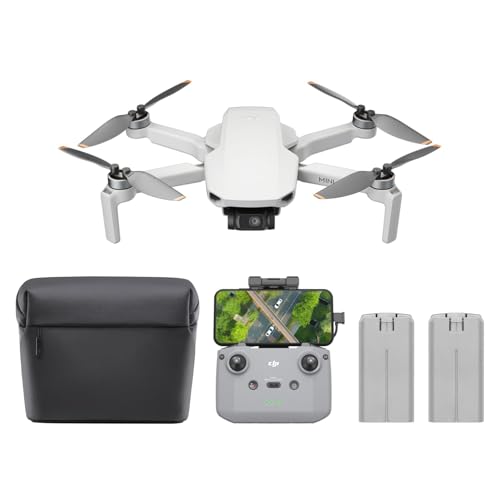


Mini 3 has the stronger camera system. Its 1/1.3-inch sensor is larger than Mini 4K’s 1/2.3-inch sensor, and DJI pairs it with a brighter f/1.7 lens. Mini 3 also supports 4K HDR recording and 48 MP still capture. Those specifications provide more imaging flexibility, particularly when light is limited or highlight and shadow detail matter.
Mini 4K records 4K/30 fps video and supports RAW photos, QuickShots, panoramas, and up to 4x digital zoom. It is capable of producing stabilized aerial footage, but its main advantage is accessibility rather than matching Mini 3’s camera hardware.
Vertical Video
Mini 3’s gimbal can rotate the camera 90 degrees for true vertical capture. That records a portrait-oriented frame directly instead of cropping a horizontal image. Mini 4K does not have DJI’s rotating true-vertical gimbal, so portrait delivery generally requires cropping during editing.
Flight Time and Range
Recommended Best Deal Products
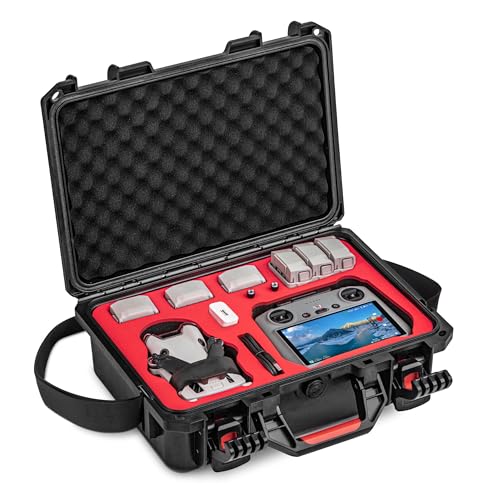


DJI publishes up to 38 minutes for Mini 3 with the standard battery and up to 51 minutes with the Plus battery where it is sold. Mini 4K is rated for up to 31 minutes. In practice, pilots should land with a reserve rather than plan around a battery-depletion laboratory maximum.
Both use DJI O2 and carry a maximum 10 km FCC transmission claim in unobstructed, interference-free testing. Buildings, terrain, radio interference, regulatory power limits, and line-of-sight rules reduce the useful operating distance.
Safety Features
Neither drone has forward, rear, or side obstacle-avoidance cameras. Both use downward sensing for positioning and stable hovering. Return to Home and stable hovering help a new pilot, but they do not remove the need to inspect the route and maintain visual control.
Which One Should You Buy?
Recommended Best Deal Products


Choose DJI Mini 4K if:
- Your priority is the lowest practical cost for a stabilized DJI 4K drone.
- You mainly fly in good light and publish horizontal video.
- A 31-minute manufacturer battery rating is sufficient.
- You do not need HDR or true vertical capture.
Choose DJI Mini 3 if:
- You want the larger 1/1.3-inch sensor and f/1.7 lens.
- You need true vertical shooting for mobile-first content.
- Longer battery options matter.
- 4K HDR and 48 MP stills justify the higher price.
Verdict
Mini 4K is the budget choice and covers the basics well. Mini 3 is the better camera drone, with meaningful upgrades in sensor size, aperture, HDR, vertical capture, and endurance. Buy Mini 4K to minimize cost; choose Mini 3 when image quality and creative flexibility are worth the premium.
Prime for Young Adults — 6 Months Free
Exclusive Offer Amazon Prime for Young Adults, Students and 18–24s get six months of Prime free, then half price.
Start 6 Months Free As an Amazon Associate I earn from qualifying purchases.