The most reliable way to spot a police drone at night is to identify FAA-mandated anti-collision strobes and distinct Remote ID signals. While tactical drones may minimize light, the high-pitched whirring sound and specific hovering behavior are key environmental indicators of law enforcement presence.
🎯 Key Takeaways
- Look for high-intensity flashing white or red anti-collision strobes visible for 3 miles.
- Use Remote ID apps like DroneScanner to identify law enforcement registration signatures.
- Listen for a consistent ‘angry bee’ buzzing sound that differs from airplanes.
- Distinguish drones from stars by their rapid movement or static hovering patterns.
- Thermal cameras or night vision can reveal heat signatures from drone batteries.
To identify a police drone at night, you must look for high-intensity anti-collision strobes that flash at a specific frequency and monitor for stable, high-altitude loitering patterns. While hobbyist drones often fly low and erratically, law enforcement units typically operate high-performance platforms like the DJI Matrice series, which are equipped with powerful, multi-colored lighting systems and sophisticated thermal gimbals. Recognizing these signatures allows you to distinguish between a neighbor’s toy and a professional surveillance operation.
Prime for Young Adults — 6 Months Free
Exclusive Offer Amazon Prime for Young Adults, Students and 18–24s get six months of Prime free, then half price.
Start 6 Months Free As an Amazon Associate I earn from qualifying purchases.Understanding these indicators is critical for privacy and situational awareness. Whether you are a drone enthusiast or a curious bystander, knowing how to read the sky ensures you aren’t mistaking a police mission for a passing star or a standard aircraft. In low-light conditions, your eyes and ears are your primary sensors, provided you know exactly which frequencies and patterns to track.
Visual Signatures: Decoding Anti-Collision Strobes and Navigation Lights
Recommended Best Deal Products
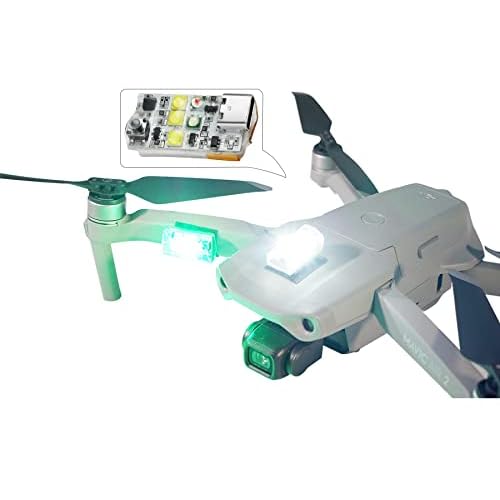


The most obvious giveaway of a police drone at night is its lighting rig. Per FAA regulations, drones operating at night must be equipped with anti-collision lighting visible for at least three statute miles. Law enforcement agencies strictly adhere to these rules. Unlike civilian drones that might have small, dim LEDs, police drones use high-output strobes that “pop” against the dark sky with intense clarity.
Identifying Strobe Patterns and Colors
Police drones typically feature two types of lighting: steady navigation lights and pulsing anti-collision strobes. While navigation lights help the pilot determine the drone’s orientation (red on the left, green on the right), the strobes are designed for maximum visibility to other aircraft. Look for these specific visual cues:
- White or Green Strobes: Most professional police drones utilize high-intensity white or green strobes that flash 40 to 100 times per minute.
- Top and Bottom Placement: High-end law enforcement drones often have strobes on both the top and the bottom of the chassis, making them visible from above and below.
- The “Red/Blue” Myth: While some specialized units can carry flashing red and blue lights, most tactical drones avoid these while in transit to maintain a lower profile or comply with standard aviation lighting.
Observing Flight Behavior and Movement
Movement is the second major visual indicator. A police drone is rarely “just passing through.” Instead, its flight path is dictated by a specific objective. By watching how the lights move, you can determine if the craft is conducting a search or monitoring a perimeter.
- The Stationary Hover: Law enforcement drones often use powerful thermal cameras. If you see a bright strobe that remains perfectly still for five to ten minutes, it is likely a drone using a stabilized gimbal to monitor a specific ground coordinate.
- Grid Patterns: If the light moves in a “lawnmower” pattern—flying straight, turning 180 degrees, and flying back—it is likely performing an automated search-and-rescue or mapping mission.
- Angular Velocity: Drones can stop and change direction instantly. If the light source makes a 90-degree turn without a turning radius, it is a drone, not a manned aircraft or a satellite.
Master Nocturnal Drone Detection in 8 Simple Steps
Operating under the cover of darkness, police drones have become a primary tool for law enforcement surveillance, search and rescue, and tactical monitoring. While these Unmanned Aerial Vehicles (UAVs) are designed to be discreet, they are governed by physics and federal regulations that make them detectable to a trained observer. This guide provides a comprehensive walkthrough on how to utilize your senses and technology to identify police drones in the night sky. Understanding these methods is essential for anyone interested in aerial technology, privacy awareness, or public safety monitoring. By following these steps, you will learn to distinguish between celestial bodies, civilian aircraft, and specialized police hardware.
Step 1: Achieve Night Vision Acclimatization
What you need: A dark environment away from streetlights and a red-filtered flashlight for any necessary navigation.
Instructions: Before you can effectively spot a drone at night, your eyes must undergo a biological process called dark adaptation. It takes approximately 20 to 30 minutes for the chemical rhodopsin to build up in your retinas, allowing you to see faint lights in the sky. Find a location with a wide, unobstructed view of the horizon. Avoid looking at your smartphone or any white light sources during this period, as even a brief flash can reset your night vision. Use a red light if you need to move or check equipment, as red wavelengths do not disrupt night vision as severely as white or blue light. Once acclimated, you will be able to notice the subtle movements of distant LEDs that would otherwise be invisible.
Prime for Young Adults — 6 Months Free
Exclusive Offer Amazon Prime for Young Adults, Students and 18–24s get six months of Prime free, then half price.
Start 6 Months Free As an Amazon Associate I earn from qualifying purchases.Pro Tip: Use “averted vision” when looking for dim lights; look slightly to the side of where you suspect the drone is. The periphery of your retina is more sensitive to light and movement in the dark than the center.
Step 2: Identify FAA-Mandated Lighting Patterns
What you need: Basic knowledge of Federal Aviation Administration (FAA) Part 107 lighting requirements.
Instructions: Most police drones are required to follow FAA regulations, which dictate that any UAV flown at night must have anti-collision lighting visible for at least three statute miles. These are typically high-intensity strobes. Unlike standard aircraft that have steady red and green navigation lights on the wingtips, drones often feature a rapid white or red strobe that flashes at a rate of 40 to 100 cycles per minute. Police departments frequently use drones like the DJI Matrice 300 RTK, which features top and bottom anti-collision beacons. Look for a light that seems “detached” from the usual flight paths of commercial airliners and appears much lower in altitude, usually between 200 and 400 feet.
Pro Tip: Be aware that in “tactical mode,” some law enforcement agencies may have waivers to fly with lights extinguished, though this is usually reserved for specific high-risk operations.
Step 3: Analyze Flight Behavior and Stationary Hovering
What you need: A reference point like a tree branch, chimney, or power line to gauge movement.
Instructions: One of the most significant tells of a police drone is its flight pattern. While stars and planets remain relatively fixed (or move very slowly across the sky), and planes travel in straight lines, drones exhibit “erratic” or precision-based movements. Watch for an object that hovers perfectly still for several minutes—this is a common behavior for a drone conducting stationary surveillance or using a thermal camera to monitor a specific area. Furthermore, police drones often perform “grid searches,” moving in back-and-forth parallel lines. If the light moves quickly, stops abruptly, and then reverses or turns at a sharp 90-degree angle, it is almost certainly a drone rather than a manned aircraft or a satellite.
Pro Tip: Use a fixed object in the foreground as a “sight.” If the light moves relative to that fixed object while you remain still, it is a low-altitude craft.
Prime for Young Adults — 6 Months Free
Exclusive Offer Amazon Prime for Young Adults, Students and 18–24s get six months of Prime free, then half price.
Start 6 Months Free As an Amazon Associate I earn from qualifying purchases.Step 4: Use Auditory Cues to Estimate Proximity
What you need: A quiet environment with minimal ambient noise (traffic, wind, or air conditioners).
Instructions: Drones produce a very specific high-pitched “whine” or “buzz” caused by the rapid rotation of their small propellers. Large enterprise-grade drones used by police departments have a deeper, more rhythmic “thrum” compared to small hobbyist drones. At night, sound travels differently due to temperature inversions; the cool air near the ground can cause sound waves to refract downward, making them audible from further away. If you hear a sound like a swarm of bees or a high-pitched electric motor that changes pitch as the object moves (the Doppler effect), you are likely hearing a drone. Law enforcement drones often fly at higher altitudes to remain quiet, so if the sound is faint but persistent, the craft is likely directly overhead.
Pro Tip: Cup your hands behind your ears and turn your head slowly to “triangulate” the sound. This increases your ear’s surface area and helps you pinpoint the direction of the drone’s rotors.
Step 5: Utilize Remote ID and Scanner Apps
What you need: A smartphone with a specialized drone detection app such as “Drone Scanner” or “AirGuard.”
Instructions: As of 2026, the FAA requires most drones to broadcast “Remote ID” information, which acts as a digital license plate. Police drones are not exempt from this during standard patrols. Download an app that utilizes your phone’s Wi-Fi and Bluetooth sensors to pick up these broadcast signals. These apps can often show you the drone’s current location, altitude, and the location of the pilot (the ground station). If you suspect a drone is nearby, open the app and scan for signals. If a “DJI” or “Autel” device appears with a high signal strength (RSSI), the drone is in your immediate vicinity. This is the most definitive way to confirm the presence of a UAV without relying on visual or auditory cues.
Pro Tip: Look for signal names that include “Enterprise” or “Government,” as these are common default settings for high-end police hardware.
Step 6: Detect Radio Frequency (RF) Interference
What you need: A handheld RF detector or a Wi-Fi analyzer app on a mobile device.
Instructions: Drones require a constant radio link with their operator to transmit video feeds and receive flight commands. Most operate on the 2.4GHz or 5.8GHz frequency bands. If you use a Wi-Fi analyzer, look for a strong, “unnamed” signal that appears suddenly and maintains a high signal strength even if you move away from nearby houses. Specialized RF detectors can alert you to these frequencies with a vibration or a beep. Because police drones often transmit high-definition video back to a command center, they create a significant “noise” on the 5.8GHz band. If your detector spikes while you are looking at a suspicious light in the sky, you have successfully linked the visual and electronic signatures of the craft.
Pro Tip: In urban areas, RF detection is harder due to background noise. Use this method primarily in suburban or rural settings where the drone’s signal will stand out against a quiet background.
Step 7: Identify Thermal and Optical Payloads
What you need: High-quality binoculars (7×50 or 10×50 are best for low light) or an entry-level night vision monocular.
Instructions: When you have located a suspicious light, use your binoculars to get a closer look at the “chassis” of the craft. Police drones are typically larger than consumer models and feature a prominent “gimbal” (a motorized camera mount) hanging from the bottom. At night, the drone is likely using a thermal camera. These cameras have a distinct look—often a large, circular lens that may reflect moonlight or streetlights differently than the rest of the drone body. Furthermore, you may see the gimbal moving independently of the drone’s body as it tracks a subject on the ground. If you see a multi-rotor craft with a heavy payload and a complex undercarriage, it is likely an industrial-grade police or emergency services drone.
Pro Tip: Watch for the “glow” of the camera. Some infrared cameras have a very faint red glow from their internal sensors, though this is usually only visible from directly underneath at low altitudes.
Step 8: Observe Environmental Reactions
What you need: Observation of local wildlife and vegetation.
Instructions: Drones create significant “prop wash”—a downward blast of air used to maintain lift. If a drone is hovering at a low altitude (under 100 feet), you may see the tops of trees swaying or leaves rustling directly beneath it, even on a calm night. Furthermore, animals are often more sensitive to the ultrasonic frequencies produced by drone motors than humans. Watch for neighborhood dogs barking at the sky for no apparent reason, or birds suddenly flushing from trees in the middle of the night. If you notice a localized “wind” or animal agitation that follows a moving light in the sky, you are observing the physical impact of a drone’s presence in the environment.
Pro Tip: In humid or misty conditions, the propellers will create small, visible vortices or “halos” around the drone’s lights due to the air pressure changes, making the drone much easier to track.
✅ Final Checklist
- Identified a light source moving independently of stars and commercial flight paths.
- Confirmed the presence of a high-intensity white or red strobe flashing at FAA-regulated intervals.
- Observed non-ballistic movement, such as 90-degree turns or perfectly stationary hovering.
- Heard a high-pitched buzzing or electric hum consistent with multi-rotor propulsion.
- Detected a Remote ID signal or a strong 2.4/5.8GHz RF transmission using a scanner or app.
Important Notes:
- Safety First: Never use high-powered lasers to “spot” or track a drone. It is a federal crime to point a laser at any aircraft, including drones, and can result in significant prison time and fines.
- Legal Rights: In most jurisdictions, it is legal to observe and film drones in public airspace, but harassment of the operator is prohibited.
- Professional Help: If you believe a drone is being used for illegal surveillance or stalking, contact local law enforcement or the FAA to file a formal complaint.
- Estimated Time: 30 minutes for eye acclimation; 5-10 minutes for active tracking.
- Estimated Cost: $0 (sensory only) to $50 (for basic detection apps and binoculars).
Auditory Detection: Understanding Rotor Frequency and Sound Travel
Recommended Best Deal Products


At night, when ambient city noise drops, the sound of a drone becomes a primary detection tool. However, the sound of a police-grade drone differs significantly from a small consumer drone. Large enterprise drones have much larger propellers, which create a lower-frequency “thrum” rather than the high-pitched “whine” associated with racing or hobby drones.
Decoding the Pitch of Professional Hardware
Law enforcement agencies frequently use heavy-duty drones like the DJI Matrice 300 RTK. These machines weigh significantly more than a standard Mavic or Air model. Because they must lift heavy thermal cameras and speakers, their rotors move a larger volume of air. This creates a distinct acoustic signature that you can learn to recognize.
- Low-Frequency Hum: Listen for a deep, rhythmic buzzing. Small drones sound like angry bees; police drones sound more like a distant, steady electric fan or a small humming transformer.
- Constant RPM: When a drone is hovering in “Position Hold” mode, the motor RPM stays extremely consistent. This creates a flat, unchanging drone sound that is easy to isolate from the fluctuating engine noise of a passing car.
- Propeller “Slap”: During rapid descents or sharp maneuvers, you will hear a distinct “slapping” sound as the blades cut through their own downwash. This is a clear indicator of a heavy, multi-rotor craft.
How Environment Affects What You Hear
Sound travels differently at night due to temperature inversions and reduced background interference. You might hear a police drone long before you see its lights, but the environment can play tricks on your ears. Understanding these factors helps you pinpoint the drone’s actual location.
- Echo and Reflection: In urban environments, drone sounds bounce off brick and glass. If the sound seems to be coming from everywhere, the drone is likely directly overhead or positioned between high-rise buildings.
- The Doppler Effect: As a drone approaches you, the pitch of the motor will seem to rise. As it moves away, the pitch drops. This is the fastest way to tell if a drone is patrolling toward your location or moving to a different sector.
- Range Limitations: Most professional drones are audible from about 300 to 500 feet in a quiet area. If you can hear the motors clearly but cannot see any lights, the drone may be operating with its lights dimmed or be positioned at a high altitude where its strobes are masked by clouds.
Technological Identification: Remote ID and RF Frequency Analysis
Beyond visual cues and sounds, technology offers a more definitive way to identify a police drone. Law enforcement agencies increasingly rely on sophisticated platforms like the DJI Matrice 300 or Skydio units, which are designed to operate within the national airspace system. This means they often leave a digital trail that can be picked up by the right equipment, even in total darkness.
Remote ID: The Digital License Plate
As of 2026, the FAA requires most drones to broadcast Remote ID information. Think of this as a digital license plate that transmits the drone’s location, altitude, and serial number via Bluetooth or Wi-Fi. While some tactical missions may operate under waivers, many police departments keep these broadcasts active for safety and coordination. You can “spot” these drones using simple smartphone applications available to the public.
- Detection Apps: Tools like DroneScanner or OpenSky can identify nearby drone signals and display their flight path on a map.
- Information Broadcast: These signals often identify the manufacturer, which can be a clue; for example, a “DJI” signal in a restricted area late at night is a strong indicator of a professional or agency flight.
- Signal Range: Depending on your phone’s antenna, you can typically pick up these digital “handshakes” from several hundred meters away.
RF Frequency and Signal Detection
Most police-grade UAVs operate on specific radio frequency (RF) bands, typically 2.4GHz or 5.8GHz. Professional scanners or RF detectors can pick up the “burst” of data being sent from the drone back to the operator’s controller. This is especially useful if the drone is operating in a “stealth” mode with all navigation lights extinguished. If your detector spikes while a silent, dark object moves overhead, you have likely found your drone.
Behavioral Analysis: Comparing Police Flight Patterns vs. Commercial Aircraft
Recommended Best Deal Products

One of the most effective ways to identify a police drone is to look at how it moves. Fixed-wing aircraft and commercial helicopters have very predictable flight paths dictated by air traffic control. Police drones, however, exhibit agile and localized behaviors that are unique to surveillance or search-and-rescue missions.
Hovering and “Perch and Stare” Tactics
The most obvious behavioral tell is the ability to dead-hover. If you see a light in the sky that remains perfectly stationary for several minutes, it is not a plane. While a helicopter can hover, it is accompanied by immense noise and vibration. A drone can sit silently at 300 feet, appearing as a slightly brighter-than-average star. Police often use a “perch and stare” tactic where the drone remains motionless to monitor a specific street corner or building entrance.
- Vertical Changes: Drones can drop or gain altitude instantly. If a light “falls” vertically and then stops, it is almost certainly a quadcopter.
- Stationary Observation: Unlike a plane that must keep moving to stay airborne, a drone will “park” in the air to maintain a thermal lock on a target.
Grid Patterns and Perimeter Sweeps
When law enforcement is searching for a suspect or a missing person, they often fly in a lawnmower pattern. This involves flying in precise, parallel lines to ensure the thermal camera covers every inch of the ground. This robotic, repetitive movement is a hallmark of an automated flight path used by emergency services. Commercial aircraft fly in straight lines from point A to point B, whereas a drone will “work” a specific neighborhood or park in a tight, geometric circuit.
Conclusion
Spotting a police drone at night is a skill that combines observation with a basic understanding of modern technology. By looking for high-intensity strobe lights, listening for the unique “wasp-like” hum of high-pitch rotors, and utilizing Remote ID apps, you can quickly distinguish a law enforcement UAV from a civilian aircraft or a distant star. Remember, police drones are defined by their maneuverability—if it hovers, darts, and flies in a grid, it’s likely on duty.
To stay informed, consider downloading a drone tracking app to see what is flying in your local airspace. Stay observant, keep your eyes on the horizon, and enjoy the fascinating intersection of technology and public safety!
❓ Frequently Asked Questions
How can I tell the difference between a drone and a star?
Drones move much faster across the sky and exhibit ‘bobbing’ or hovering behavior that stars lack. Additionally, drones will have flashing lights (strobes), whereas stars twinkle at a consistent, much slower frequency.
Will a police drone always have blue and red lights?
Not necessarily. While some tactical drones use blue and red for identification, the FAA strictly requires high-intensity white or red strobes for safety. Some specialized units may fly in ‘stealth’ with lights off under specific waivers, but this is rare.
What apps are best for detecting police drones?
Apps like DroneScanner, OpenSky, or AirWay use the smartphone’s Wi-Fi and Bluetooth to detect Remote ID broadcasts. These apps can often show the drone’s location, altitude, and sometimes the operator’s position.
How do environmental factors affect drone noise?
Humidity and wind direction significantly impact how far drone sound travels. In a dense urban environment, the ‘noise floor’ might drown out a drone until it is directly overhead, whereas in rural areas, the whirring is audible from much further.
Can I use night vision to see a drone?
Night vision goggles (NVGs) are excellent for spotting the infrared (IR) beacons or the heat generated by the drone’s motors and battery. Even if visible lights are dimmed, the thermal signature of a drone is very difficult to hide.
What is the typical flight altitude for a police drone at night?
Law enforcement typically operates between 200 and 400 feet to maintain a clear line of sight while remaining high enough to avoid obstacles. At this height, they are close enough for their lights to be distinct but high enough that they may be mistaken for stars.


