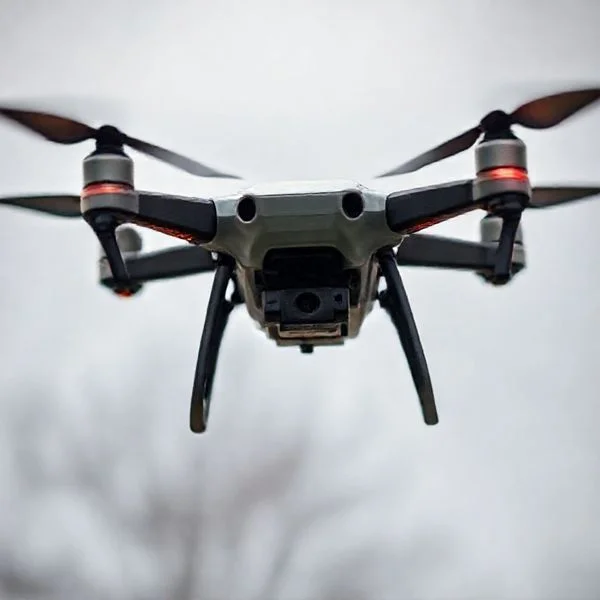
A professional drone light show typically costs between $15,000 and $150,000+ depending on the scale and complexity. Most providers charge a base production fee plus $150 to $300 per drone, which covers choreography, FAA authorizations, and insurance.
🎯 Key Takeaways
- Small entry-level shows (50 drones) start at approximately $15,000.
- Mid-range displays (200 drones) usually cost between $40,000 and $60,000.
- Per-drone pricing decreases as the total fleet size increases.
- Regulatory permits and FAA waivers are typically included in the base fee.
- Logistical costs like travel and shipping can add 15% to the total budget.
If you are planning a high-impact event, you need to know that a professional drone light show typically starts at $15,000 for a entry-level package and can easily exceed $300,000 for world-class spectacles. For most commercial inquiries, the industry standard pricing settles between $200 and $500 per drone. Understanding these figures is essential because the price is not just about the “accessories” or the aircraft; it is a reflection of the complex synchronization, regulatory compliance, and creative labor required to paint the sky with light.
Prime for Young Adults — 6 Months Free
Exclusive Offer Amazon Prime for Young Adults, Students and 18–24s get six months of Prime free, then half price.
Start 6 Months Free As an Amazon Associate I earn from qualifying purchases.
Budgeting accurately allows you to choose between a modest display that replaces a traditional fireworks show or a massive promotional stunt that goes viral on social media. Because drone technology involves high-end hardware, specialized software, and certified pilots, the floor for pricing is much higher than other forms of event entertainment. This guide breaks down exactly where your money goes so you can determine which tier of drone display fits your specific project needs.
Tiered Pricing Models: From Local Events to Super Bowls
Recommended Best Deal Products

Drone light show providers generally categorize their offerings based on the “fleet size.” The more drones you put in the air, the higher the resolution of the images and the greater the visual impact. However, as the fleet grows, the price per drone usually decreases slightly due to the economies of scale regarding logistics and pilot fees.
Small-Scale and Private Displays (50 to 100 Drones)
Small-scale shows are the entry point for drone entertainment, typically costing between $15,000 and $30,000. These displays are ideal for private weddings, small corporate retreats, or local municipal celebrations. At this level, you can expect 3 to 5 simple formations, such as hearts, logos, or basic geometric shapes. While 50 drones can create recognizable outlines, the “resolution” is low, meaning the images will look more like dot-to-dot drawings than fluid 3D animations.
- Price Range: $15,000 – $30,000
- Best for: Intimate gatherings and small brand activations.
- Key Limitation: Limited detail in complex logos; shorter flight durations to conserve battery for a smaller fleet.
Mid-Tier Corporate and Festival Shows (200 to 500 Drones)
This is the most popular tier for significant brand launches and music festivals, with costs ranging from $40,000 to $120,000. With 200 or more drones, the imagery becomes significantly sharper. You can achieve fluid transitions, 3D rotations, and much more intricate branding. A 500-drone show is often the “sweet spot” for capturing high-quality video content for marketing purposes, as the density of light allows for complex storytelling and vibrant color gradients in the sky.
- Price Range: $40,000 – $120,000
- Best for: Product launches, stadium half-time shows, and city-wide festivals.
- Key Advantage: High-resolution imagery and the ability to tell a cohesive narrative through animation.
Large-Scale Spectacles (1,000+ Drones)
When you see drone displays at the Olympics, the Super Bowl, or major national holidays, you are looking at fleets of 1,000 to 5,000+ drones. These shows start at $200,000 and can climb into the millions. The cost here covers massive logistical operations, including multiple flight crews, redundant ground control stations, and bespoke animation sequences developed over months. These shows are designed to be viewed from miles away and often set world records.
- Price Range: $200,000+
- Best for: Global broadcast events and national celebrations.
- Key Advantage: Unmatched visual density and “wow” factor that dominates social media.
Drone Show Budgeting Made Easy: Your Essential Action Plan
Calculating the cost of a drone light show is more complex than simply checking a price tag on a retail website. It involves a sophisticated interplay of hardware logistics, creative software engineering, and strict regulatory compliance. This guide provides a comprehensive breakdown of the financial components involved in producing an aerial spectacle, helping you navigate the various tiers of pricing—from small private gatherings to massive city-wide festivals. By following these steps, you will be able to build an accurate budget, avoid hidden “gotchas,” and understand exactly what you are paying for when you hire a professional drone display company.
Step 1: Determine Your Fleet Size and Resolution Requirements
What you need: Event dimensions, audience distance measurements, and a clear vision of the visual complexity required.
Prime for Young Adults — 6 Months Free
Exclusive Offer Amazon Prime for Young Adults, Students and 18–24s get six months of Prime free, then half price.
Start 6 Months Free As an Amazon Associate I earn from qualifying purchases.Instructions: The primary driver of drone show costs is the “pixel count,” or the number of drones in the air. For a small wedding or a private party where the audience is less than 100 meters away, a fleet of 50 to 100 drones is often sufficient, with costs typically ranging from $15,000 to $25,000. For mid-scale corporate brandings or festivals, 200 to 500 drones are required to render complex 3D shapes and legible logos, pushing costs into the $40,000 to $100,000 range. Large-scale global events (like the Olympics or Super Bowl) utilize 1,000+ drones, where pricing exceeds $250,000. You must assess the “minimum resolution” needed for your specific designs to ensure the show doesn’t look like a blurry cluster of lights.
Pro Tip: If your budget is tight, focus on “geometric” shows rather than “storytelling” shows. Simple geometric patterns require fewer drones to look impressive compared to complex 3D character animations.
Step 2: Budget for Custom Animation and Choreography
What you need: Vector files of your logos, a storyboard of the desired 8-12 minute sequence, and music sync requirements.
Instructions: Professional drone shows are not “plug-and-play.” Every movement must be programmed in 3D animation software (like Blender or Maya) and then processed through specialized swarm flight controllers to ensure collision avoidance. Most companies include one “stock” show in their base price, but custom animations for a specific brand or theme will add between $2,000 and $10,000 to the bill. This fee covers the labor of digital artists and flight safety engineers who must simulate the flight thousands of times in a virtual environment before a single drone leaves the ground. If you require the drones to move in perfect synchronization with a specific musical track, expect an additional “Timecode Sync” fee.
Pro Tip: Request a 3D digital preview (pre-visualization) of the show before it’s finalized. It is much cheaper to make changes in the software than it is to reschedule a flight in the field.
Step 3: Account for Logistics and Hazmat Transportation
What you need: The physical address of the launch site and the distance from the provider’s headquarters.
Instructions: Logistics are a major “hidden” cost in drone displays. Drone batteries are high-capacity Lithium Polymer (LiPo) cells, which are classified as Class 9 Hazardous Materials. They cannot be shipped on standard passenger planes and often require dedicated climate-controlled ground transport or specialized cargo flights. For a show involving 200 drones, you are looking at nearly 1,000 pounds of equipment including the drones, ground control stations, RTK (Real-Time Kinematic) GPS base stations, and spare parts. Expect logistics fees to range from $1,500 for local events to $15,000+ for international shows requiring customs brokerage and specialized shipping containers.
Prime for Young Adults — 6 Months Free
Exclusive Offer Amazon Prime for Young Adults, Students and 18–24s get six months of Prime free, then half price.
Start 6 Months Free As an Amazon Associate I earn from qualifying purchases.Pro Tip: Look for a drone provider with a regional hub near your event location. Reducing the “miles traveled” for the heavy battery crates is the easiest way to shave thousands off the total invoice.
Step 4: Factor in Permitting and FAA Regulatory Compliance
What you need: Precise GPS coordinates of the takeoff zone and the “flight box,” and local fire marshal contact information.
Instructions: In the United States, drone shows require an FAA Part 107 waiver for “swarming” (waiving the rule that one pilot can only fly one drone). Professional companies handle this paperwork, but the complexity of your location affects the cost. Flying near an airport, over a harbor, or in restricted Class B airspace requires additional authorization that can take 30 to 90 days to secure. Additionally, local municipalities often require a fire marshal permit or a “Special Event” permit. These administrative and legal fees usually range from $500 to $3,000 depending on the jurisdiction. If the show is over water, you may also need to budget for US Coast Guard coordination and barge rentals.
Pro Tip: Start the permitting process at least three months in advance. Rushing an FAA waiver or a local permit often incurs “expedite fees” or results in a flat-out denial.
Step 5: Secure the Launch Site and On-Site Infrastructure
What you need: A flat, clear area of at least 100×100 feet (for 100-200 drones), perimeter fencing, and a dedicated power source.
Instructions: The “Launch Pad” must be a sterile environment. You cannot have spectators wandering through the drone array. This means you must budget for physical security (personnel) and barricades. Furthermore, the drones and ground control stations require significant power for charging and operation. If the site does not have high-amperage electrical outlets, you will need to rent a whisper-quiet industrial generator (around $500-$1,000 per day). You also need to account for “Geofencing” setup time; engineers will spend 4-6 hours on-site before the show mapping the area to ensure the drones automatically shut down if they drift toward the audience.
Pro Tip: Use existing natural barriers like water or fenced-off parking lots to reduce your rental costs for temporary fencing and security personnel.
Step 6: Evaluate Insurance and Liability Premiums
What you need: A Certificate of Insurance (COI) from the provider and an understanding of your venue’s requirements.
Instructions: Standard general liability insurance does not cover “aviation activities.” A drone show provider must carry specialized aviation liability insurance, usually with a minimum coverage of $5 million to $10 million. This insurance covers equipment failure, property damage, and personal injury. While this is usually “included” in the quote, check the fine print. If your venue requires being named as an “Additionally Insured” party with high-limit requirements, there may be a pass-through cost of $500 to $1,500. Never work with a provider who cannot produce an active aviation COI; the financial risk of a “flyaway” or a lithium battery fire is too great to ignore.
Pro Tip: Ask if the policy includes “Ground Product Liability.” This protects you if a drone falls and damages the venue surface or existing infrastructure, not just people.
Step 7: Negotiate the Weather Policy and Contingency Fund
What you need: A clear “Force Majeure” and “Weather Delay” clause in your contract.
Instructions: Drones cannot fly in heavy rain or winds exceeding 15-20 mph. Because the provider has already spent 90% of the budget on prep, logistics, and travel by the time they arrive on site, most contracts state that the full fee is due even if the show is canceled due to weather. You should budget for a “Contingency Day” (an extra day of crew per diem and equipment rental) which usually costs 20% to 30% of the total show price. This allows you to push the show to the next night if the weather is poor. Without this budget buffer, a single rainstorm could result in a total loss of your investment.
Pro Tip: Some providers offer “Weather Insurance” through third-party underwriters. It typically costs 10% of the show’s value but can refund your entire investment if the wind exceeds a specific threshold.
✅ Final Checklist
- Verify that the drone count is sufficient for the audience viewing distance and logo resolution.
- Confirm the FAA Part 107 waiver specifically allows for “Multiple Small Unmanned Aircraft” operations.
- Check that the logistics quote includes “Hazmat” shipping for lithium batteries.
- Ensure the takeoff area is a minimum of 100 feet away from the closest spectator for safety.
- Review the weather clause and confirm you have a “Rain Date” scheduled in the contract.
Important Notes:
- Safety First: Never prioritize cost over safety; a cheap provider who skips geofencing or uses non-certified batteries is a massive legal liability.
- When to Seek Professional Help: Always use a full-service production company for shows over 50 drones; DIY solutions for swarms are technically prohibited for commercial entertainment.
- Estimated Time and Cost: Planning takes 2-4 months. Costs range from $15,000 (small/private) to $500,000+ (major televised spectacles).
Core Cost Drivers: Animation, Hardware, and Personnel
The price of a drone display is rarely just about the number of drones. Several “behind-the-scenes” variables can swing the final quote by thousands of dollars. When you receive a proposal, it is important to look beyond the fleet count and examine the operational requirements.
Custom 3D Animation and Choreography
Every second of a drone show is choreographed using specialized software. This is not a manual flight; it is a pre-programmed “dance” where each drone has a specific XYZ coordinate and color code for every millisecond of the performance. If you want a custom 3D logo or a specific mascot animated in the sky, you will pay a premium for creative labor. Standard “off-the-shelf” animations are cheaper, but custom work typically adds $2,000 to $10,000 to the total project cost depending on the complexity and length of the show.
Logistics and Hazardous Material Shipping
One of the most overlooked costs is transport. Drone light show fleets use high-capacity Lithium Polymer (LiPo) batteries, which are classified as hazardous materials (HAZMAT). Shipping hundreds of these batteries via air or specialized ground freight is incredibly expensive. Additionally, the service provider must fly in a crew of certified pilots and technicians. If your event is in a remote location or a different country, expect travel and shipping costs to account for 10% to 20% of your total budget.
Site Surveys and Regulatory Compliance
You cannot simply show up and fly 500 drones. Professional companies must perform a site survey to check for radio frequency (RF) interference, which can disrupt the drones’ GPS signals. Furthermore, they must secure FAA (or local aviation authority) waivers for night flight and flight over people. If your event is near an airport or in a restricted “Class B” airspace, the legal work required to get approval can increase the lead time and the administrative fees associated with the display.
- Insurance: Most professional shows carry $5M to $10M in aviation liability insurance.
- Safety Personnel: Large shows require “visual observers” to monitor the airspace for intruding aircraft.
- Redundancy: High-end providers bring “spare” drones (usually 10% extra) to ensure the formation remains perfect even if one unit has a technical glitch.
Regulatory and Logistical Fees: FAA Permits and Insurance
When you look at a drone show quote, the number of drones isn’t the only factor driving the price. A significant portion of your investment goes toward the legal and safety framework required to put dozens or hundreds of aircraft into the sky simultaneously. These “invisible” costs are what separate professional displays from hobbyist experiments.
FAA Waivers and Airspace Authorization
In the United States, flying multiple drones under a single pilot’s control requires specific waivers from the Federal Aviation Administration (FAA). Specifically, operators must secure a waiver for Section 107.35 (Operation of Multiple Small Unmanned Aircraft). Depending on the location, they may also need authorization to fly in controlled airspace or over people.
- Complexity Fees: If your event is near a major airport or in a restricted “No Fly Zone,” the administrative work to secure permission increases.
- Lead Time: Most vendors include the cost of filing these permits in their package, but rush fees can apply if you book less than 60–90 days in advance.
- Site Surveys: Professional teams will charge for a physical or remote site survey to ensure the GPS signals are strong and there are no magnetic interferences.
Liability Insurance and Safety Logistics
Safety is the highest priority for drone displays. High-end shows typically carry aviation liability insurance ranging from $5 million to $10 million in coverage. This protects the event organizer, the venue, and the audience. Additionally, you must account for ground logistics, such as securing a “buffer zone” where spectators are not allowed to enter during the flight.
Comparative Analysis: Drone Displays vs. Traditional Fireworks
For decades, fireworks have been the go-to for grand finales. However, as drone technology matures, the pricing and value proposition are being compared more frequently. While the entry-level price for a drone show is often higher than a small fireworks display, the benefits are vastly different.
The “Burn Rate” and Branding Potential
Fireworks are essentially “one-and-done.” Once the fuse is lit, the money literally goes up in smoke. Drones, while expensive to deploy, offer a level of precision and storytelling that fireworks cannot match. For brands, this is a massive advantage. Drones can form 3D logos, QR codes that lead to websites, or specific shapes related to a product launch.
- Customization: Fireworks are limited to colors and bursts; drones provide high-resolution “pixels in the sky.”
- Duration: A typical drone show lasts 8 to 12 minutes, which is comparable to a mid-range fireworks display, but the engagement level is often higher due to the novelty.
- Repeatability: For multi-night festivals, drones can be recharged and flown again, potentially lowering the per-show cost over a long-term contract.
Environmental Impact and Local Restrictions
One of the hidden “costs” of fireworks is the environmental cleanup and the risk of cancellation due to dry weather. In many regions, drones are becoming the more cost-effective choice because they don’t carry the same fire hazard risks. They are also silent, making them ideal for venues with noise ordinances or events involving animals (like state fairs or pet-friendly festivals).
Conclusion
Planning a drone display in 2026 is an exciting investment that combines cutting-edge technology with pure artistic expression. While base prices for professional shows typically start between $10,000 and $15,000, the final cost will depend on your drone count, the complexity of your custom animation, and the regulatory requirements of your specific location. Remember that you aren’t just paying for the drones; you are paying for the pilots, the permits, and the peace of mind that comes with a safe, insured performance.
If you are ready to elevate your next event, your next steps should be to verify your venue’s airspace and reach out to a certified drone show provider for a tailored quote. Start your planning at least three months in advance to ensure all FAA paperwork is in order. Are you ready to light up the sky? Contact a vendor today to see what’s possible for your budget!
❓ Frequently Asked Questions
Why is there such a large price range for drone displays?
Pricing varies based on the number of drones, the complexity of the custom 3D animation, and the location’s regulatory environment. A 50-drone local show requires much less logistics and insurance than a 1,000-drone show in a major city center.
What ‘hidden costs’ should I budget for?
Expect to pay extra for site surveys, specialized security to guard the ‘landing zone,’ and local permits that fall outside of standard FAA waivers. Additionally, custom music synchronization or live broadcast integration may incur extra production fees.
Is insurance included in the quoted price?
Reputable drone show companies include aviation liability insurance (typically $5M to $10M) in their base price. Always confirm that the policy covers both the audience and property damage specific to light show operations.
How much does custom choreography cost?
Standard packages often include a few stock animations; however, custom-designed 3D storytelling and logo recreations can add $2,500 to $10,000 to the initial production fee depending on the detail level.
Do drone shows cost more than fireworks?
Initially, yes. While a firework shell is a one-time consumable, drone shows involve high-tech equipment and specialized labor. However, drone shows are reusable, environmentally friendly, and offer better branding opportunities, making them more cost-effective for recurring events.
What is the lead time required for a show?
You should budget for 4 to 12 weeks. This time is necessary for FAA or CAA permit filings, site inspections, and the custom animation process, all of which contribute to the administrative portion of the cost.