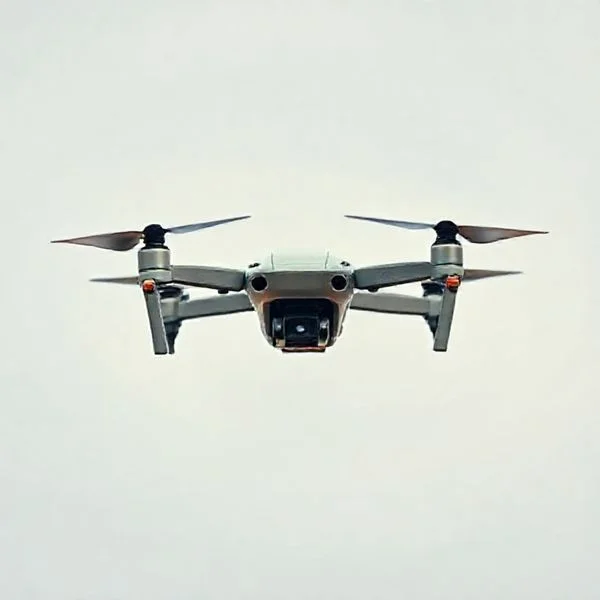
A drone at night is primarily identified by its red and green navigation lights and high-intensity white strobes. Unlike planes or satellites, drones have the unique ability to hover in place or change direction instantly at relatively low altitudes.
🎯 Key Takeaways
- Navigation lights use red and green LEDs to indicate the drone’s orientation.
- Anti-collision strobes are usually bright white and flash 40-100 times per minute.
- Drones move erratically or hover, unlike the linear paths of planes.
- At a distance, a drone may appear as a blinking or steady ‘star’ that moves.
- Sound is a factor; drones produce a high-pitched buzz at lower altitudes.
Identifying a drone at night boils down to two specific indicators: standardized light patterns and “unnatural” flight movement. Unlike stars or high-altitude airplanes, drones typically display a combination of steady or blinking red, green, and white LEDs. If you see a point of light that hovers perfectly still and then suddenly darts in a different direction at a relatively low altitude, you are almost certainly looking at a multirotor drone rather than a celestial body or a commercial aircraft.
Prime for Young Adults — 6 Months Free
Exclusive Offer Amazon Prime for Young Adults, Students and 18–24s get six months of Prime free, then half price.
Start 6 Months Free As an Amazon Associate I earn from qualifying purchases.
Understanding these visual cues is essential for privacy, safety, and general curiosity. Because drones are much smaller and quieter than traditional aircraft, their lighting systems are the primary way they signal their position and orientation to both the pilot and people on the ground. By learning to decode these colors and flash frequencies, you can quickly differentiate a neighbor’s hobbyist drone from a passing airplane, a satellite, or a distant star.
Decoding Light Patterns: Red, Green, and White LED Meanings
Recommended Best Deal Products


Most consumer and professional drones use a standardized set of “navigation lights” similar to those found on maritime vessels and traditional aircraft. These lights serve a dual purpose: they help the pilot identify the drone’s orientation (which way the “nose” is pointing) and ensure the craft is visible to other pilots. Generally, you will see solid or slow-blinking red and green lights located on the drone’s arms or motor housings.
Standard Navigation Colors
- Red Lights: Most commonly located on the front arms of the drone to indicate the forward direction. In some manufacturer setups, red may also pulse on the rear to indicate a recording status or a low battery, but it is primarily used to mark the “face” of the craft.
- Green Lights: Typically found on the rear arms of the drone. If you see two steady green lights moving away from you, the drone is flying in the direction it is facing. If you see red on the left and green on the right, the drone is likely flying toward you.
- White Lights: These are usually located on the belly of the drone or integrated into the main gimbal camera area. White LEDs are often the brightest and are used for “downward vision” during landing or as high-intensity beacons.
Anti-Collision Strobes and Flash Frequency
Under FAA regulations for night flying, many drones are equipped with an anti-collision strobe light. This is distinct from the standard navigation LEDs. A strobe light is an extremely bright white or red light that flashes rapidly to be seen from great distances. If you are looking at a drone equipped for professional night work, it will likely feature a strobe that meets these specific criteria:
- Visibility: The light must be visible for at least three statute miles.
- Flash Rate: These lights typically pulse between 40 and 100 times per minute.
- Intensity: Unlike the soft glow of a navigation LED, a strobe will “pierce” the darkness and may create a localized “halo” effect in humid or foggy conditions.
Distinguishing Drone Flight Behavior from Aircraft and Stars
Even if the lights are dim, the way an object moves through the night sky is a dead giveaway. Commercial aircraft follow predictable, linear paths at high altitudes, usually maintaining a steady speed and a wide turning radius. Drones, however, operate in the “Low Altitude” airspace, usually below 400 feet. This proximity makes their movements feel much faster, more agile, and more “intimate” compared to the slow crawl of a distant Boeing 747 or a satellite.
Precision Hovering and Instant Directional Shifts
The most unique characteristic of drone behavior is the ability to dead-stop in mid-air. While helicopters can hover, they are exceptionally loud and create significant downwash. A drone can hang silently in the sky, appearing like a stationary star, before suddenly zipping 90 degrees to the left or right without any banking or turning radius. This “robotic” movement is physically impossible for fixed-wing planes, satellites, or meteors.
Common Movement Differences and Comparisons
- Satellites: These look like steady, non-blinking white dots moving in a perfectly straight line at a constant speed. They never stop, change direction, or blink.
- Stars and Planets: These remain fixed in the sky. While they may “twinkle” due to atmospheric interference, they do not change position relative to other stars over short periods.
- Drones: They often “bob” or tilt slightly in the wind even when hovering in a fixed GPS position. They can also descend vertically at high speeds, a maneuver you will almost never see from any other lighted aerial object.
- Airplanes: Aircraft have very specific blinking cadences and move across the entire horizon in a rhythmic fashion. They cannot stop, reverse, or hover.
The altitude also plays a major role in identification. If the light source appears to be “just above the trees” or lower than a standard city skyscraper, it is almost certainly a drone. At this height, you may also be able to hear a faint, high-pitched “buzzing” or “whirring” sound, which is a definitive confirmation of a drone’s presence.
The Role of Anti-Collision Strobes in Night Visibility
Recommended Best Deal Products


While standard status LEDs help you see which way your drone is facing, anti-collision strobes are what make a drone truly visible from miles away. These high-intensity lights are often added as accessories to meet aviation regulations, such as the FAA’s requirement for lighting to be visible for at least three statute miles. If you see a light in the sky that is significantly brighter than the surrounding stars and pulses with a sharp, rhythmic flash, you are likely looking at a drone equipped with a strobe.
Prime for Young Adults — 6 Months Free
Exclusive Offer Amazon Prime for Young Adults, Students and 18–24s get six months of Prime free, then half price.
Start 6 Months Free As an Amazon Associate I earn from qualifying purchases.Why Strobes Look Different from Stars
Strobes are designed to be “eye-catching” to prevent mid-air collisions with manned aircraft. Unlike the steady twinkle of a star or the soft glow of a distant streetlamp, a drone strobe delivers a fast, intense burst of light. These flashes usually occur at a rate of 40 to 100 cycles per minute. Because they are so bright, they often create a “halo” effect in humid or misty night air, making the drone appear larger than it actually is.
Common Strobe Characteristics
- Intensity: Much higher Lumens than standard navigation lights, often visible even in light-polluted urban areas.
- Flash Patterns: Can be single, double, or triple flashes depending on the brand (like Firehouse or Lume Cube).
- Color Variety: While white is the most common for maximum distance, many pilots use green or red strobes to differentiate their craft from others in a crowded sky.
- Mounting Location: Usually mounted on the top or bottom of the fuselage to ensure 360-degree visibility.
Drone vs. Satellite: Comparison of Speed, Altitude, and Light
One of the most common mistakes people make when looking at the night sky is confusing a high-altitude drone with a satellite. However, once you know what to look for, the differences are quite obvious. Drones operate within the low-altitude airspace (typically below 400 feet), whereas satellites are orbiting hundreds of miles above the Earth. This difference in altitude fundamentally changes how we perceive their movement and light.
Movement and Trajectory
The biggest giveaway is the flight path. A satellite moves in a perfectly straight, unwavering line at a constant speed, taking several minutes to cross the horizon. It will never stop, reverse, or hover. A drone, conversely, is highly maneuverable. If the light source stops moving, changes altitude suddenly, or zips back and forth, it is definitely a drone. Drones also tend to “bob” slightly in the wind, a movement that is absent in the vacuum of space.
Light Behavior and Color
Satellites do not have lights of their own; they reflect sunlight. This makes them appear as steady, white or yellowish dots that slowly fade away as they enter the Earth’s shadow. Drones carry their own power source, allowing for a variety of behaviors:
- Steady vs. Blinking: Satellites almost never blink (unless they are tumbling debris), while drones almost always have a blinking component.
- Color Palettes: Drones display red, green, and white. Satellites are limited to the “sunlight” spectrum.
- Angular Velocity: Because drones are closer, they appear to move much faster across your field of vision than a satellite does.
- Sound: At closer ranges, drones emit a distinct high-pitched buzz, whereas satellites are, of course, completely silent.
Conclusion
Recommended Best Deal Products

Identifying a drone at night doesn’t have to be a guessing game. By focusing on the rhythmic blinking of navigation lights, the intense pulse of anti-collision strobes, and the unique ability to hover or change direction, you can easily distinguish a drone from stars, planes, or satellites. Remember that most drones will feature a combination of red and green lights to indicate orientation, making them look like miniature, agile versions of traditional aircraft.
If you are a pilot, your next step should be ensuring your own craft is visible by investing in high-quality anti-collision lighting. Not only does this keep you legal, but it also protects your investment. Keep your eyes on the skies, stay aware of your surroundings, and enjoy the unique perspective that night flying provides! Happy flying!
❓ Frequently Asked Questions
How can I tell the difference between a drone and a plane at night?
Planes follow a steady, linear flight path and have specific strobe patterns on their wingtips. Drones are unique because they can stop mid-air, hover for long periods, or execute sharp turns that are impossible for airplanes.
Prime for Young Adults — 6 Months Free
Exclusive Offer Amazon Prime for Young Adults, Students and 18–24s get six months of Prime free, then half price.
Start 6 Months Free As an Amazon Associate I earn from qualifying purchases.Why are some drone lights red and others green?
These are standard aviation colors used for orientation. Typically, red lights indicate the left side or front, while green indicates the right side or rear, helping the pilot determine which direction the drone is facing from a distance.
How far away can you see a drone’s lights at night?
Standard navigation lights are visible for a few hundred yards, but FAA-compliant anti-collision strobes are designed to be visible for at least three statute miles to prevent mid-air collisions.
Do drones make noise at night?
Yes, they produce a distinct high-pitched buzzing or whining sound. However, if the drone is flying above 200-300 feet, the ambient night noise may drown out the sound entirely, leaving only the lights visible.
What does a satellite look like compared to a drone?
A satellite looks like a steady, non-blinking point of light moving in a straight line at a constant speed across the entire sky. Drones are much lower, usually blink, and often change speed or direction.
Can drones fly at night without any lights?
While technically possible, it is illegal in most regions for drones to fly at night without anti-collision lighting. Stealth flight usually indicates a specialized military craft or a pilot violating safety regulations.