What Drone Has the Longest Range? Top 2024 Long-Distance Models
The DJI Air 3 and DJI Mini 4 Pro currently lead the consumer market with a maximum theoretical range of 20km (12.4 miles) using O4 transmission technology. While these distances are achievable in ideal conditions, real-world range is typically limited by signal interference, battery life, and legal Visual Line of Sight (VLOS) requirements.
🎯 Key Takeaways
- DJI’s O4 system currently offers the longest consumer range at 20 kilometers.
- Advertised ranges are theoretical maximums measured in interference-free FCC environments.
- Signal boosters and Yagi antennas can help stabilize long-range connections.
- Battery flight time is often the true limiting factor for distance.
- Legal regulations generally require pilots to maintain visual contact with the drone.
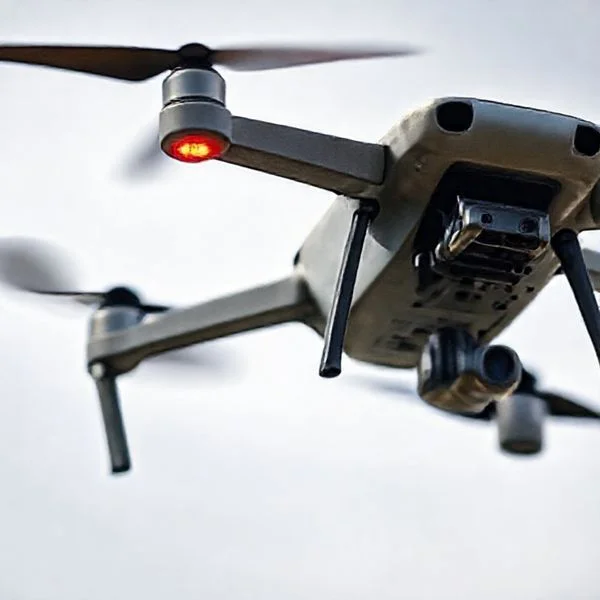
Currently, the DJI Air 3 and the DJI Mini 4 Pro hold the crown for the longest theoretical range in the consumer market, boasting a massive 20-kilometer (12.4 miles) transmission distance. Close behind are the DJI Mavic 3 Pro and the Autel EVO II Pro V3, both offering a robust 15-kilometer reach. These specs represent the cutting edge of signal technology, allowing you to maintain a crystal-clear HD video feed even when the drone is miles away from your controller.


Understanding these distances is critical because range isn’t just about how far you can fly. It is about signal penetration and link stability. A drone with a 20km maximum range provides a much safer buffer when flying at a 2km distance in an area with high signal interference. For photographers, environmental researchers, and search-and-rescue teams, this extra headroom ensures the drone won’t lose its connection the moment a tree or building comes between the pilot and the aircraft.
Top-Rated Long-Range Drones: 2024 Rankings and Specs
To find the best performer, you need to look at the transmission system integrated into the drone’s hardware. Here are the top models currently dominating the long-distance category:


The Range Kings: DJI Air 3 and Mini 4 Pro (20km)
Both the DJI Air 3 and the Mini 4 Pro utilize the DJI O4 transmission system. This is currently the most advanced protocol available to the public. It uses a hardware array of six antennas to maintain a stable 1080p/60fps live feed over distances that were previously impossible. While the Mini 4 Pro is smaller, it shares the same high-end transmission tech as its larger sibling.
- Max Range: 20 km (FCC)
- Transmission System: DJI O4
- Max Flight Time: 46 minutes (Air 3) / 34-45 minutes (Mini 4 Pro)
- Best For: Maximum signal stability in complex, high-interference environments.
The Professional Standard: DJI Mavic 3 Pro (15km)
The Mavic 3 Pro remains the flagship choice for filmmakers. While its 15km range is numerically lower than the O4 models, its O3+ system is incredibly refined. It transmits at a higher bitrate of 15MB/s, prioritizing image quality and low latency. This ensures that the pilot sees every detail of the shot, even at the edge of the signal’s reach.
- Max Range: 15 km (FCC)
- Transmission System: DJI O3+
- Max Flight Time: 43 minutes
- Best For: High-end cinematography where visual clarity is as important as distance.
The Enterprise Alternative: Autel EVO II Pro V3 (15km)
Autel’s flagship model uses SkyLink 2.0 technology. It competes directly with DJI by offering a 15km range and 6K video capabilities. Many pilots choose the EVO II because it does not use the same restrictive “Geofencing” software as DJI, providing more flexibility for long-range missions in remote areas where software locks might otherwise hinder takeoff.


- Max Range: 15 km (FCC)
- Transmission System: SkyLink 2.0
- Max Flight Time: 40 minutes
Transmission Technology: How DJI O4, O3+, and Autel SkyLink Compare
The hardware inside your controller and drone determines how well your signal cuts through electromagnetic noise. Not all “long range” systems are created equal when you get out into the field.
O4 vs. O3+: Why the Protocol Matters
The leap from DJI’s O3+ to O4 isn’t just about the extra 5 kilometers of distance. O4 introduces an additional frequency band in certain regions (5.1GHz) and significantly improves latency. When you are flying miles away, a delay in your video feed can be dangerous. O4 maintains a higher frame rate for the pilot’s view, meaning what you see on your screen is happening in near-real-time, allowing for much more precise control at long distances.
Frequency Hopping and Signal Resilience
Modern long-range drones don’t stay on one frequency. Systems like SkyLink 2.0 and O4 use intelligent frequency hopping. They constantly scan for interference from Wi-Fi routers and cell towers, switching between 2.4GHz, 5.1GHz, and 5.8GHz bands in milliseconds. This is why a 2024 model drone can maintain a signal in a city, whereas an older drone would lose connection within a few hundred meters.
Theoretical vs. Real-World Range
You must distinguish between the “FCC Range” on the box and your actual experience. Manufacturers test these drones in ideal conditions: flat deserts with zero radio interference and a perfect line of sight. In reality, several factors will limit your reach:
- Urban Interference: Local Wi-Fi signals can slash your effective range by as much as 70%.
- Physical Obstructions: Radio waves at these frequencies cannot pass through solid rock or thick concrete. If you fly behind a hill, you will lose connection instantly.
- Signal Polarity: The orientation of your controller antennas matters. If they aren’t parallel to the drone’s antennas, your range drops significantly.
- Battery Health: A drone may have a 20km signal, but it won’t have the battery to fly 20km out and 20km back. Always account for the “point of no return.”
Theoretical vs. Real-World Range: Factors That Impact Signal Strength
When you see a drone advertised with a 15km or 20km range, it is important to remember that these figures are generated in optimal laboratory conditions. Manufacturers test their flight ranges in wide-open spaces with zero radio interference and perfect weather. In the real world, your experience will likely differ based on several environmental factors that can “eat” your signal.

Environmental and Electronic Interference
Signal quality depends heavily on how “clean” the air is from a radio perspective. In urban environments, your drone is competing with thousands of Wi-Fi routers, cell towers, and power lines. This electronic noise significantly reduces the effective range of your controller’s signal.
- Urban vs. Rural: You might get 12km of range in a desert but struggle to maintain a stable connection at 2km in a dense city.
- Frequency Hopping: Modern systems like DJI’s O4 or Autel’s SkyLink use multiple bands (2.4GHz, 5.8GHz, and sometimes 5.1GHz) to automatically switch to the clearest channel.
- Antenna Alignment: Always ensure your controller antennas are oriented correctly according to the manufacturer’s manual to maximize the signal “cone.”
Physical Obstacles and Signal Propagation
Radio waves, especially the higher frequencies used by 4K video transmissions, do not like traveling through solid objects. If you fly your drone behind a hill, a thick forest, or a concrete building, you will likely experience a signal “blackout” long before you hit the theoretical distance limit.
- Line of Sight: The best range is achieved when there is a literal, unobstructed line of sight between the controller and the drone.
- Signal Reflection: Large bodies of water can sometimes cause signal multipathing, where the radio waves bounce off the surface and interfere with the direct signal.
- Weather Conditions: High humidity, rain, and heavy wind don’t just drain the battery; they can also degrade the quality of the transmission.
Legal and Safety Constraints for Long-Distance Drone Operations
Just because your drone is technically capable of flying five miles away doesn’t mean you are legally allowed to do so. Long-range flying carries significant responsibilities and risks that every pilot must manage to keep the skies safe and the hobby legal.
The Visual Line of Sight (VLOS) Rule
In most countries, including under the FAA in the United States and CAA in the UK, the law requires pilots to maintain Visual Line of Sight (VLOS) at all times. This means you must be able to see your drone with your own eyes (without binoculars) to monitor its position and check for other aircraft.
- The Limit: For most people, a drone becomes a tiny speck at about 500 to 800 meters. Flying beyond this without a special waiver is generally a regulatory violation.
- Visual Observers: If you are performing a long-distance mission for commercial purposes, you can sometimes use “Visual Observers” who stay in radio contact with the pilot to extend the legal range.
- Remote ID: Ensure your drone is compliant with Remote ID regulations, which allow authorities to identify the drone’s position and the pilot’s location during flight.
Battery Management and Safety Buffers
The biggest risk of long-range flight isn’t just losing the signal—it’s running out of “juice” before the drone can make it back. Wind is the most common culprit here; a drone might fly 5km away very quickly with a tailwind, but struggle to return against a headwind, leading to a forced landing in an inaccessible area.
- The 30% Rule: Always aim to have your drone back on the landing pad with at least 30% battery remaining. This provides a safety buffer for unexpected wind or landing delays.
- Fail-Safe Settings: Ensure your “Return to Home” (RTH) altitude is set higher than the tallest obstacle in the area so the drone doesn’t hit a tree on its automatic flight back.
- App Alerts: Pay close attention to “low voltage” or “strong wind” warnings on your flight screen; these are your cues to turn around immediately.
Conclusion
Finding the drone with the longest range in 2024 is about more than just looking at the number on the box. While flagship models from DJI and Autel offer staggering theoretical distances of up to 20km, your real-world performance will always be dictated by interference, physical obstacles, and strict legal regulations. Choosing the right drone means balancing that high-end transmission technology with a clear understanding of your local flight environment.
Next Steps: Before you push your drone to its limits, check your local aviation authority’s maps for restricted airspace and perform a short-distance “stress test” in your typical flying area. Ready to upgrade your gear? Check out our latest reviews on high-gain antenna boosters to get the most out of your current setup!
Safe flying, and always keep your eyes on the horizon!
❓ Frequently Asked Questions
What is the difference between FCC and CE range ratings?
FCC ratings (used in the US) allow for higher power output and longer range, while CE ratings (Europe) are more restrictive, often cutting the effective range by half or more.
How does signal interference affect a drone’s maximum distance?
Physical obstacles like buildings or trees and electromagnetic interference from Wi-Fi routers and cell towers significantly reduce signal penetration and total flight distance.
Is battery life more important than signal range for long-distance flights?
Yes, because even if a drone has a 20km signal range, the battery must have enough capacity for the round trip plus a safety margin for wind and landing.
What are the best accessories for increasing drone range?
Range extenders such as parabolic signal boosters, Yagi-Uda antennas, and high-quality tablets for better monitoring are the most effective accessory upgrades.
How does DJI O4 transmission improve over O3+?
O4 transmission introduces an additional frequency band and a more robust signal processing algorithm, increasing the max distance from 15km to 20km with better latency.
What are the legal risks of flying a drone beyond its rated range?
Flying beyond Visual Line of Sight (BVLOS) without a waiver can result in heavy fines from the FAA or CAA and poses a significant risk to manned aircraft safety.

Similar Posts