Why Is It Illegal to Shoot Down a Drone? Federal Laws & Risks
Shooting down a drone is a federal felony because the FAA classifies all Unmanned Aircraft Systems (UAS) as protected aircraft, equivalent to manned planes. Under 18 U.S.C. § 32, damaging or destroying an aircraft carries severe prison time and massive fines, regardless of whether the drone is over private property.
🎯 Key Takeaways
- Drones are legally classified as aircraft by the FAA, granting them federal protection.
- 18 U.S.C. § 32 makes damaging or destroying any aircraft a federal felony offense.
- Private property rights do not extend to the navigable airspace above your home.
- The Castle Doctrine does not apply to drones flying in public or navigable airspace.
- Perpetrators face felony charges, prison time, and significant civil lawsuits from drone owners.
It is a federal felony to shoot down a drone because the Federal Aviation Administration (FAA) classifies every drone as an “aircraft.” Whether it is a twenty-dollar toy or a professional cinema rig, the law treats it with the same legal protections as a commercial Boeing 747. If you pull the trigger, you aren’t just damaging personal property; you are committing a crime against the United States’ National Airspace System.
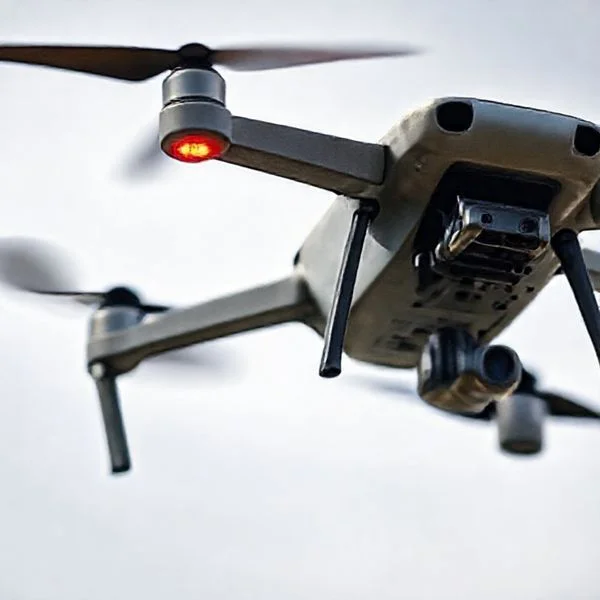
Understanding this distinction is critical for property owners and drone pilots alike. Many people mistakenly believe their property rights extend into the sky, giving them the authority to “defend” their privacy with a firearm. However, federal jurisdiction over the air begins the moment a drone leaves the ground. Discharging a weapon at a drone can lead to mandatory prison time, massive fines, and a permanent criminal record that outweighs any temporary privacy concern.
The FAA Legal Definition: Why Drones are Classified as Aircraft
The core reason you cannot shoot a drone is found in the legal definition of what a drone actually is. Under 49 U.S.C. § 40102, the term “aircraft” is defined as “any contrivance invented, used, or designed to navigate, or fly in, the air.” In 2016, the FAA solidified this by officially categorizing Unmanned Aircraft Systems (UAS) as aircraft. This classification moved drones out of the category of “toys” and into the same regulatory sphere as helicopters and private jets.

Federal Jurisdiction from the Grass Up
Unlike roads or sidewalks, which are governed by local and state municipalities, the airspace is strictly federal territory. The FAA has exclusive sovereignty over all “navigable airspace” in the United States. While “navigable” used to imply altitudes where manned planes fly, the drone era has pushed that definition down to the surface. Practical implications include:
- Universal Protection: Every drone, regardless of size or weight, is protected under the same federal statutes.
- No Local Opt-Outs: A city or HOA cannot pass a law that legalizes shooting drones, as federal law preempts local rules.
- Strict Liability: Ignorance of the drone’s classification is not a legal defense in federal court.
Why the FAA Values Drones Like Airplanes
The FAA’s primary mission is safety. If people were allowed to shoot drones, the resulting debris, falling bullets, and lithium-polymer battery fires would pose a massive risk to the public. By classifying drones as aircraft, the FAA ensures that any interference with their flight is treated with the highest level of legal severity to deter dangerous behavior in the National Airspace System (NAS).
Federal Law 18 U.S.C. § 32 and the Consequences of Aircraft Destruction
The specific statute that makes shooting a drone a federal crime is 18 U.S.C. § 32, titled “Destruction of Aircraft or Aircraft Facilities.” This law was originally designed to prevent the sabotage and hijacking of commercial planes, but because drones are legally aircraft, it applies to them as well. Specifically, the law makes it a felony to willfully damage, destroy, or disable any aircraft in the special aircraft jurisdiction of the United States.
Felony Charges and Mandatory Sentencing
Violating 18 U.S.C. § 32 is not a “slap on the wrist” offense. Because it is a federal felony, the prosecution is handled by the Department of Justice (DOJ) rather than a local district attorney. If convicted of shooting down a drone, you face:
- Prison Time: A sentence of up to 20 years in federal prison.
- Massive Fines: Criminal fines can reach $250,000 per occurrence.
- Civil Penalties: The FAA can levy separate administrative fines exceeding $37,000 per violation.
- Loss of Rights: As a convicted felon, you would lose your right to own firearms or vote.
The Myth of the “Castle Doctrine” in the Air
A common misconception is that the “Castle Doctrine”—which allows for the defense of your home—extends to the airspace above your roof. Legally, it does not. While you own the land, you do not own the “navigable airspace” above it. Most courts have ruled that property owners only have rights to the immediate reaches of the atmosphere that they can actually occupy or use (like the space occupied by a tree or a chimney).
When a drone flies over your yard at 100 feet, it is technically in “public” space, similar to a car driving on a public street in front of your house. Shooting it is considered an act of violence against a vehicle in transit. Even if you believe the drone is trespassing or invading your privacy, federal law dictates that you must use legal channels—such as calling local law enforcement or filing an FAA report—rather than taking kinetic action with a firearm.
Navigable Airspace vs. Property Rights: Why Trespassing Laws Rarely Apply
One of the most common misconceptions homeowners have is that they own the air directly above their land “to the heavens.” While this was a traditional legal concept centuries ago, modern aviation changed everything. Today, the federal government maintains exclusive sovereignty over the National Airspace System (NAS), which includes the space where drones operate.

The “Column of Air” and the FAA
The Federal Aviation Administration (FAA) considers the airspace above your home to be navigable territory. Unlike a stranger walking across your lawn, a drone flying 50 or 100 feet above your backyard is technically traveling through public space regulated by the federal government. Because drones are categorized as aircraft, they have a legal right to transit through this space, provided they are following FAA safety guidelines.
Why “Get Off My Lawn” Doesn’t Work for Drones
In most jurisdictions, trespassing laws apply to the physical ground and any permanent structures. While there are burgeoning “privacy” laws regarding drones, typical trespassing statutes rarely apply to the air. If you attempt to stop a drone because it is “on your property,” you are actually interfering with an aircraft in federal airspace.
- Public Transit: Think of the air above your house like a public sidewalk that happens to be vertical; you can’t block people from using it legally.
- Low Altitude Limits: Even if a drone is hovering low, the FAA still maintains jurisdiction over that flight path.
- No Self-Help: Using force (like a shotgun or a jammer) to solve a perceived trespass is considered an illegal escalation of a civil dispute.
Criminal and Civil Penalties for Disabling a Drone
Taking matters into your own hands doesn’t just result in a slap on the wrist. Because drones are legally protected under 18 U.S.C. § 32, the same laws that apply to someone sabotaging a commercial airliner apply to you if you shoot down a drone. The consequences can be life-altering, ranging from massive fines to significant time behind bars.
Federal Felony Charges and Prison Time
The “Aircraft Sabotage Act” is a serious federal statute. Discharging a firearm at a drone, or even using an electronic jammer to force it to crash, can lead to felony charges. Federal prosecutors take these cases seriously to deter others from endangering the National Airspace System. If convicted, an individual could face up to 20 years in federal prison and fines reaching $250,000.
Civil Liability and Damage Recovery
Beyond criminal charges, you are also wide open to civil lawsuits. High-end photography and industrial drones can cost anywhere from $2,000 to $20,000. If you destroy one, the owner can sue you for the full replacement value, lost income (if the drone was used for business), and legal fees.
- Restitution: Courts often order “restitution,” forcing you to pay the owner for the destroyed equipment immediately.
- Third-Party Damage: If you shoot a drone and it falls onto a neighbor’s roof or hits a pedestrian, you are legally liable for those injuries and damages as well.
- Firearm Violations: Discharging a weapon in a residential area often leads to local “reckless endangerment” charges and the permanent loss of your firearm permits.
Conclusion
While a drone hovering near your property can feel like an invasion of privacy, the legal reality is clear: shooting it down is a federal crime. Between the strict FAA regulations governing the National Airspace and the severe criminal penalties of the Aircraft Sabotage Act, the risks of “self-help” far outweigh any perceived benefit. Taking a shot at a drone doesn’t just destroy a piece of plastic; it puts your freedom and your finances at major risk.
If you are concerned about a drone in your area, the best next step is to document the flight and contact local law enforcement or the FAA directly. Protecting your privacy is important, but doing it legally is the only way to ensure you don’t end up with a felony record. Stay informed about your local drone ordinances and always prioritize safety over confrontation!
❓ Frequently Asked Questions
Why does the FAA classify small drones as aircraft?
To maintain a unified safety standard in the national airspace, the FAA treats any flight-capable device as an aircraft. This ensures federal authorities can regulate safety and prosecute any interference that could lead to ground injuries or mid-air collisions.
What are the specific penalties for shooting down a drone?
A conviction under 18 U.S.C. § 32 can result in up to 20 years in federal prison and substantial fines. Additionally, the shooter is often liable for the replacement cost of the drone and any high-end camera equipment attached to it.
If a drone is filming me, can I legally disable it?
No, privacy concerns do not grant the right to destroy an aircraft; you should document the incident and contact law enforcement. Taking physical action usually results in the property owner facing felony charges rather than the drone pilot.
At what altitude does my property right end and FAA jurisdiction begin?
While property rights cover the surface and immediate structures, the FAA claims jurisdiction over all ‘navigable airspace’ from the ground up. There is no legal ‘safe’ height at which a private citizen can legally shoot a drone.
Are there any exceptions for shooting a drone on my land?
There are virtually no legal exceptions for private citizens to disable a drone. Only specific federal agencies have the authorized technology and legal clearance to use counter-UAS measures under strict security protocols.
Can local police arrest me even if the FAA doesn’t?
Yes, you can be charged locally with reckless endangerment, felony discharge of a firearm, and criminal mischief. State and local laws regarding weapon discharge often apply even if federal aircraft destruction charges aren’t immediately pursued.

Similar Posts