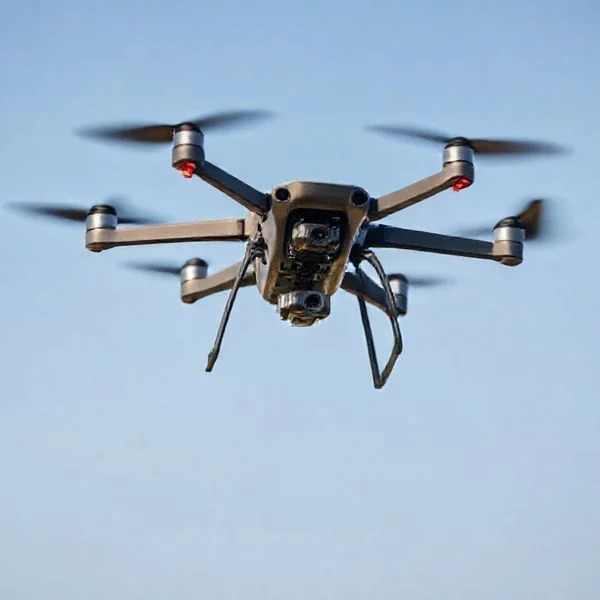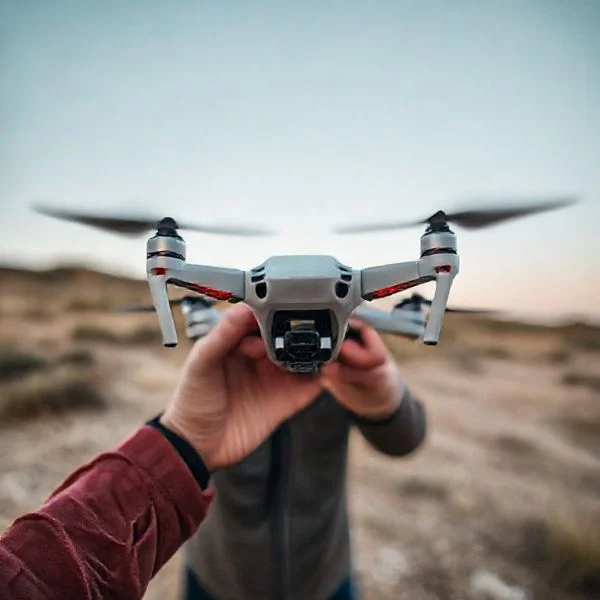
A UAP drone is an Unmanned Aerial Vehicle (UAV) that displays flight characteristics—such as instant acceleration or low-observable stealth—making it difficult for traditional systems to identify. The Pentagon’s AARO office now categorizes many former ‘UFO’ sightings as sophisticated foreign surveillance platforms or experimental domestic technologies.
🎯 Key Takeaways
- UAP stands for Unidentified Aerial Phenomena, often referring to advanced, non-traditional drone platforms.
- AARO investigates these objects to distinguish between foreign surveillance and domestic flight testing.
- Advanced drones use stealth coatings and unconventional propulsion to bypass standard radar detection.
- Transmedium capabilities allow some UAP drones to operate in both air and water seamlessly.
- Geopolitical rivals use low-signature drones for intelligence gathering in restricted military airspaces.
A UAP drone is an Unidentified Aerial Phenomenon that, upon investigation by defense agencies, is identified as a highly sophisticated unmanned aerial vehicle (UAV). Unlike the science fiction tropes of the past, modern UAP sightings are increasingly being classified by the Pentagon as advanced drone platforms operated by foreign adversaries or private entities using “signature management” to evade detection. When you hear the term UAP drone, you are looking at the intersection of aerospace engineering and electronic warfare.
Prime for Young Adults — 6 Months Free
Exclusive Offer Amazon Prime for Young Adults, Students and 18–24s get six months of Prime free, then half price.
Start 6 Months Free As an Amazon Associate I earn from qualifying purchases.
Understanding this distinction is vital because it shifts the focus from “aliens” to actionable national security data. For drone enthusiasts and professionals, “UAP” represents the bleeding edge of what is possible in flight. These objects often display capabilities that challenge traditional physics, such as instant acceleration or transmedium travel. By studying UAP drones, we gain a glimpse into the next generation of stealth, propulsion, and autonomous swarm intelligence that will eventually trickle down into the broader drone industry.
Decoding UAP Terminology: From UFOs to Advanced UAVs
Recommended Best Deal Products


The transition from the term “UFO” to “UAP” was not just a branding exercise by the Department of Defense. It was a strategic shift designed to treat unidentified objects as serious sensor data rather than pop-culture mysteries. The All-domain Anomaly Resolution Office (AARO) now categorizes a significant majority of reported sightings as “prosaic” objects, with advanced drone platforms topping the list of explanations. When an object is labeled a UAP drone, it means the system is flying in a way that traditional radar or visual observation cannot immediately identify.
The AARO Classification Framework
The Pentagon’s latest reports emphasize that “unidentified” does not mean “unexplainable.” Instead, it refers to a lack of sufficient data to pinpoint the specific model or origin of a drone. Most UAP reports are now filtered through a rigorous technological lens to identify specific “adversary platforms.” These are drones designed specifically to test the limits of domestic airspace defense. Key indicators used for classification include:
- Radio Frequency (RF) Signatures: Signals that suggest a remote operator or autonomous data link.
- Flight Geometry: Fixed-wing or multi-rotor configurations that are obscured by distance or lighting.
- Adversarial Intent: Patterns of loitering over sensitive military installations or restricted flight paths.
Why “UAP” Replaced “UFO” for Drone Identification
The term “UAP” encompasses more than just aerial flight; it includes objects that move between the air and the ocean (transmedium). Modern drones are no longer limited to the sky. By using the UAP moniker, the government can track advanced “spherical” drones or “transmedium” craft that would have been ignored under the old UFO definition. This terminology allows engineers to discuss low-observable technology and electronic countermeasures without the stigma associated with 1950s-era saucer sightings. It focuses strictly on the hardware and the sensor data it leaves behind.
Technological Signatures: Stealth, Swarms, and Transmedium Travel
What makes a drone a “UAP” is often its ability to spoof or bypass standard detection systems. Traditional radar is tuned to look for large, metal-reflective surfaces moving at specific speeds. Advanced UAP drones utilize low-observable (LO) technology to shrink their radar cross-section. This makes a six-foot-wide surveillance drone appear no larger than a bird on a sensor screen. When you see a report of a “shapeless” or “glowing” UAP, you are often looking at a drone utilizing active camouflage or plasma-based stealth techniques.
Low-Observable Tech and Radar Defiance
Modern UAP drones utilize materials that absorb rather than reflect radar waves. This is often combined with Electronic Warfare (EW) suites that can “jam” or provide false location data to an observer’s sensors. If a drone can manipulate how it appears on your monitor, it becomes “unidentified” by default. This isn’t magic; it is the application of carbon-fiber composites and radar-absorbent paint. These drones often lack visible control surfaces (like rudders or elevators), using internal mass-shifting or directional thrust to maneuver, which confuses pilots who are looking for traditional aircraft silhouettes.
Swarm Intelligence and Coordinated Maneuvers
One of the most common “UAP” sightings involves groups of lights moving in perfect synchronization. In the past, this was seen as a single, massive craft. Today, we know this is autonomous swarm intelligence. A single operator can control hundreds of small drones that communicate with each other in real-time to maintain formation. This tech allows for:
Prime for Young Adults — 6 Months Free
Exclusive Offer Amazon Prime for Young Adults, Students and 18–24s get six months of Prime free, then half price.
Start 6 Months Free As an Amazon Associate I earn from qualifying purchases.- Distraction Tactics: Using a swarm to overwhelm an observer’s visual and digital sensors.
- Multi-Static Sensing: The drones work together as a single, giant sensor array to map an area.
- Resilience: If one “UAP” in the cluster is shot down, the rest of the swarm maintains its mission profile.
The confusion arises because these swarms can change shape instantly, giving the illusion of a single object accelerating at impossible speeds. In reality, it is simply the individual drones in the swarm turning their lights on and off in a coordinated sequence.
Geopolitical Implications of High-Altitude Surveillance Drones
Recommended Best Deal Products


The rise of UAP-style drones isn’t just a matter of scientific curiosity; it represents a massive shift in global intelligence gathering. High-altitude platforms can linger in the stratosphere for days or even weeks, capturing data that traditional orbital satellites might overlook due to their fixed flight paths and distance.
National Security and Border Monitoring
When an unidentified object enters restricted airspace, it triggers immediate diplomatic and military friction. Modern “UAP drones” are often sophisticated surveillance tools designed to test the response times and radar capabilities of foreign defense systems. These craft operate in a “gray zone” where they are difficult to identify but carry significant risks to national sovereignty.
- Signal Interception: Advanced drones can capture localized cellular and encrypted radio traffic that satellites cannot reach.
- Long-Endurance Persistence: Solar-powered wings allow these craft to hover over sensitive sites indefinitely without refueling.
- Psychological Impact: The presence of an “unidentifiable” craft can create confusion and hesitation within a military chain of command.
The Race for Stealth and Signature Management
Global powers are currently investing heavily in “signature management.” This involves making a drone look like something else—or like nothing at all—on a radar screen. To a civilian observer or a pilot, a drone with active camouflage or a non-reflective radar profile might easily be classified as a UAP because it lacks the traditional features of an airplane.
Example: The 2023 high-altitude balloon incidents demonstrated how unconventional shapes can bypass radar filters designed only to detect fast-moving fighter jets. This has forced a complete recalibration of how countries monitor their own borders.
The Role of AARO in Identifying Unconventional Aerial Threats
The All-domain Anomaly Resolution Office (AARO) was established by the U.S. government to bring scientific rigor to the UAP conversation. Their primary mission is to determine if a sighting is a secret “black budget” project, a foreign adversary’s drone, or something truly unexplained that requires further investigation.
Separating Sensor Data from Subjective Stories
AARO utilizes multi-sensor data to analyze sightings. They don’t just rely on eyewitness accounts; they cross-reference radar, infrared, and optical footage to build a precise 3D profile of the object. For drone enthusiasts, this highlights the growing importance of high-quality telemetry data in our own aerial photography.
Prime for Young Adults — 6 Months Free
Exclusive Offer Amazon Prime for Young Adults, Students and 18–24s get six months of Prime free, then half price.
Start 6 Months Free As an Amazon Associate I earn from qualifying purchases.- Remote ID and Transponders: AARO checks if the object is broadcasting identification signals required for civilian drones.
- Kinematic Analysis: Experts calculate if the object’s speed, acceleration, and maneuverability exceed the physical limits of known propulsion systems.
- Environmental Context: They rule out natural phenomena like ball lightning, temperature inversions, or “clutter” like rogue weather balloons.
Public Transparency and Official Reporting
While much of their data remains classified for security reasons, AARO provides a formalized way for military and commercial pilots to report objects that don’t fit the standard mold. This helps create a massive database that can eventually help civilian drone operators understand the “oddities” they might catch on their own cameras during a flight.
Practical Tip: If you ever spot something unusual while flying your own rig, immediately record your drone’s GPS coordinates, altitude, and the direction of your camera. This data is essential for correlating your footage with known flight paths or weather events later on.
Conclusion: Navigating the New Era of Aerial Tech
Recommended Best Deal Products

Understanding what a UAP drone is requires looking past the mystery and focusing on the rapid evolution of technology. Whether these objects are high-altitude surveillance tools, secret military prototypes, or something more exotic, they represent a new frontier in aviation. By staying informed about geopolitical shifts and the work of agencies like AARO, you can better navigate the increasingly crowded and complex landscape of our skies.
Next Steps: To stay ahead of the curve, keep your drone’s firmware updated to ensure your sensors provide the most accurate data possible. Additionally, consider following the official AARO reports to learn more about the common “misidentifications” that often turn out to be everyday drone tech. If you’re looking to upgrade your gear, explore infrared or multispectral cameras that can see what the naked eye misses.
Ready to explore the limits of drone technology? Stay curious, fly responsibly, and always keep your eyes on the horizon!
❓ Frequently Asked Questions
What is the difference between a UAV and a UAP?
A UAV is a known Unmanned Aerial Vehicle, whereas a UAP is an Unidentified Aerial Phenomenon that remains unclassified. Once a UAP is identified as a drone, it technically transitions from a UAP to a UAV or specialized surveillance platform.
Why is the military changing the terminology from UFO to UAP?
The shift to ‘Unidentified Aerial Phenomena’ aims to reduce the stigma associated with the term UFO and encourage professional reporting. This allows intelligence agencies to more effectively track advanced foreign drone technology that might have been dismissed in the past.
What flight characteristics define a UAP drone?
Common traits include ‘instantaneous acceleration,’ the ability to hover in high winds without visible control surfaces, and ‘transmedium’ travel between air and water. These drones often utilize advanced electronic warfare to appear as anomalies on radar systems.
Are these drones originating from foreign adversaries?
Many UAP reports near military training ranges are suspected to be sophisticated surveillance drones from countries like China or Russia. These platforms are designed to gather intelligence on U.S. military capabilities and radar responses.
How do stealth technologies contribute to UAP sightings?
Low-observable shapes and radar-absorbent materials (RAM) make drones appear as ‘ghosts’ or glitches on radar. When combined with unconventional propulsion, they become extremely difficult for pilots to identify visually or electronically.
Is swarm intelligence a factor in UAP reports?
Yes, several high-profile UAP sightings involve multiple objects moving in a coordinated fashion that defies individual manual control. This suggests the use of advanced AI-driven ‘drone swarms’ designed to overwhelm traditional defense systems.