Drones at night appear as small, moving lights featuring specific FAA-mandated colors like red, green, and white strobe flashes. Unlike stars or airplanes, drones exhibit unique flight behaviors such as hovering, vertical movement, and making instant 90-degree turns that distinguish them from other objects.
🎯 Key Takeaways
- Identify drones by their red and green navigation lights and white strobes.
- Drones can hover perfectly still, unlike airplanes or satellites.
- Look for sharp, non-linear flight paths and rapid changes in altitude.
- Listen for a distinct high-pitched buzzing sound if the drone is close.
- Anti-collision strobes are often visible from up to three miles away.
A drone in the night sky typically appears as a small, blinking point of light that moves with more agility and variability than any conventional aircraft or celestial body. Unlike stars, which twinkle in a fixed position, or satellites, which move in a steady, unyielding line, a drone often exhibits a specific combination of red, green, and white lights that can hover, change direction abruptly, or pulse rapidly. To the naked eye, these lights are the “fingerprint” of a small unmanned aerial system (sUAS), making them identifiable once you know what to look for.

Correctly identifying these lights is essential for safety, privacy, and general situational awareness. Whether you are a fellow pilot trying to avoid a mid-air collision or a curious observer wondering about an object overhead, understanding the difference between a distant planet and a nearby quadcopter prevents unnecessary confusion. This guide breaks down the visual cues of night-flying drones so you can confidently tell them apart from the rest of the night sky.
Prime for Young Adults — 6 Months Free
Exclusive Offer Amazon Prime for Young Adults, Students and 18–24s get six months of Prime free, then half price.
Start 6 Months Free As an Amazon Associate I earn from qualifying purchases.Decoding Drone Light Patterns: Red, Green, and White Strobes
Recommended Best Deal Products



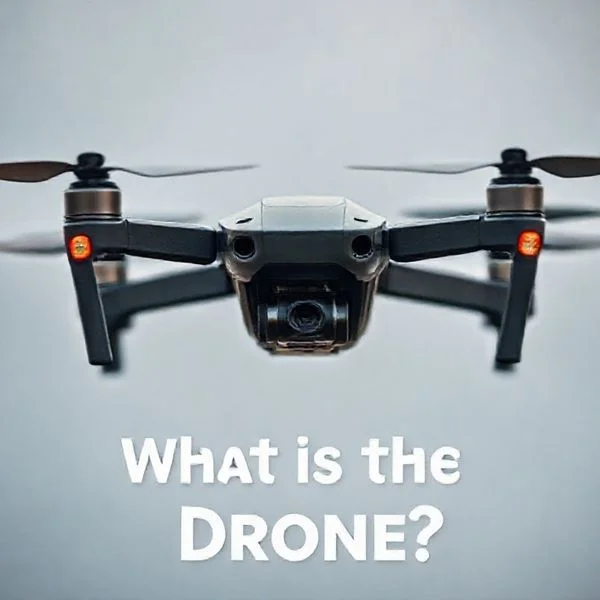
The most reliable way to identify a drone at night is by its lighting configuration. Most consumer and professional drones follow standard aviation lighting conventions to help pilots determine the aircraft’s orientation. If you see a combination of red and green lights, you are likely looking at a drone’s navigation system. These lights are usually located on the arms or the underbelly of the craft, providing a clear signal of which way the drone is facing.
The Standard Navigation Colors
In accordance with standard aviation practices, drones are often equipped with specific colors to indicate their direction of travel. These lights allow you to tell if the drone is flying toward you, away from you, or across your field of vision. This color-coding is borrowed from maritime and traditional aircraft standards to ensure consistency across the airspace:
- Red Light: Typically located on the left side (port) or the front of the drone. If you see a solid red light, you are likely looking at the drone’s left side or its “nose.”
- Green Light: Typically located on the right side (starboard) or the rear of the drone. Seeing green usually means the drone is moving past you to the right or is facing away from you.
- Solid vs. Pulsing: Navigation lights usually stay solid or pulse at a slow, rhythmic rate. This distinguishes them from the faster, more aggressive flashing of safety strobes.
Understanding the High-Intensity Anti-Collision Strobe
While navigation lights help with orientation, the most visible feature of a drone at night is the anti-collision strobe. Under FAA regulations for nighttime operations, drones must be equipped with anti-collision lighting visible for at least three statute miles. These are typically high-intensity white or red LEDs that flash at a specific frequency to distinguish the craft from background stars or distant streetlights.
- Brightness: These strobes are significantly brighter than standard navigation lights and can be seen even in light-polluted urban environments.
- Flash Rate: Expect to see between 40 and 100 cycles per minute. If the light is flashing rapidly and appears exceptionally bright, it is almost certainly a drone or a low-flying helicopter.
- Color Variation: White is the most common strobe color because it offers the highest visibility. However, some professional drones use high-intensity red strobes to help the pilot maintain better night vision while operating the craft.
Differentiating Drone Movement from Planes and Satellites
Beyond the lights themselves, the way an object moves through the sky is a dead giveaway of its identity. Drones occupy a unique altitude and have flight physics that differ vastly from commercial airplanes, helicopters, or orbiting satellites. While a plane moves with heavy momentum, a drone is light, nimble, and capable of maneuvers that seem to defy standard aerodynamics to the casual observer.
Hovering vs. Constant Trajectory
The easiest way to tell a drone from a plane or satellite is to watch it for thirty seconds. Commercial aircraft and satellites move on a fixed, predictable path. A satellite will appear as a steady, non-blinking white dot that crosses the entire sky in a straight line at a constant speed before fading out. An airplane will follow a similarly linear path, though it will have the blinking lights of a traditional cockpit and tail setup.
Drones, however, are the only objects that will hover perfectly still for extended periods. If the light stays in one spot and then suddenly “zips” to a new location, it is a drone. Drones can also make 90-degree turns or reverse their direction instantly. These are maneuvers that would be physically impossible for a manned aircraft or a satellite in orbit.
Speed and Altitude Perceptions
Drones usually fly at or below 400 feet, which is much lower than most manned aircraft. This proximity makes their movement appear much faster across your field of vision than a high-altitude plane. Because they are closer to the ground, drones also interact differently with your immediate environment:
Prime for Young Adults — 6 Months Free
Exclusive Offer Amazon Prime for Young Adults, Students and 18–24s get six months of Prime free, then half price.
Start 6 Months Free As an Amazon Associate I earn from qualifying purchases.- Erratic Vertical Movement: Drones can drop or gain altitude rapidly. You will rarely see a standard airplane change altitude so abruptly unless it is in an emergency or during a final landing approach.
- Interaction with Terrain: You might see a drone dip behind a tree line, a house, or a building and then reappear. Planes stay well above such obstacles.
- Sound Correlation: At a distance, drones are silent. However, if the object is close enough for you to see the red and green lights clearly, you will often hear a high-pitched “buzz” or “hum” that is distinct from the low, heavy rumble of a jet engine.
The Role of Anti-Collision Lighting and FAA Regulations
Recommended Best Deal Products


When you spot a bright, flashing light high in the sky that doesn’t quite match a plane’s rhythm, you are likely seeing a drone complying with federal safety standards. In the United States, the FAA (Federal Aviation Administration) has specific rules for flying after sunset. These regulations aren’t just for show; they are critical for “see and avoid” safety in shared airspace.
The 3-Statute-Mile Rule
According to FAA Part 107 regulations, any drone flown at night must be equipped with anti-collision lighting that is visible for at least three statute miles. This means the light is significantly more powerful than the standard internal LEDs that come “out of the box” on many consumer models. These high-intensity strobes are usually mounted on the top or bottom of the drone to ensure they can be seen from above by manned aircraft and from below by people on the ground.
Strobe Patterns and Identification
Unlike the steady glow of a distant planet or the slow, rhythmic blink of a commercial airliner, drone anti-collision lights often have a very rapid “strobe” effect. Here is what you should look for:
- High-Intensity White Strobes: These are the most common for night flight because white light travels the furthest and is easiest to spot against a dark background.
- Rapid Pulsing: Drone strobes often flash at a rate of 40 to 100 cycles per minute.
- Color Variations: While white is standard, some pilots use red or green strobes to help determine the drone’s orientation (front vs. back) from a distance.
- External Attachments: Because many consumer drones don’t come with 3-mile visibility lights, pilots often velcro small, battery-powered strobe cubes to the frame.
Visibility Factors: Altitude, Distance, and Stealth Drones
How a drone looks at night depends heavily on its proximity to you and the atmospheric conditions. A drone hovering at 50 feet looks like a high-tech gadget, but at the legal ceiling of 400 feet, it transforms into a mysterious celestial object. Understanding these perspective shifts helps you distinguish a drone from other aerial phenomena.
How Altitude and Weather Change the View
At lower altitudes, you can usually hear the distinct “hum” or “buzz” of the propellers, which confirms the visual. However, as the drone climbs, the sound fades quickly, leaving only the lights. On a clear night, a drone’s LED can look remarkably sharp. On a foggy or humid night, that same light will have a “halo” effect, appearing larger and more blurred as the moisture in the air scatters the beam. If a drone is moving directly toward you, you might only see a single point of light; if it turns, you may suddenly see a wide array of red and green navigation lights.
Are There “Stealth” Drones in the Civilian Sky?
You might wonder if a drone can fly completely dark. While some hobbyist drones allow the pilot to turn off the “arm” LEDs through a mobile app, doing so at night is generally a violation of flight safety rules in most regions. “Stealth” drones are typically the domain of the military and are designed with matte finishes to avoid moon reflection and silent propulsion systems. For the average person looking at the sky:
- Light Pollution: In bright cities, a drone without high-intensity strobes is almost impossible to see against the background glow.
- Silhouette: On a very bright moonlit night, you might see the dark, angular silhouette of a drone moving across the moon’s face, even if its lights are dim.
- Movement Style: Drones move with “robotic” precision—stopping instantly and changing direction at 90-degree angles—which no bird or plane can do.
Conclusion
Recommended Best Deal Products

Identifying a drone at night is all about recognizing the combination of rapid strobe patterns, specific navigation colors, and unique flight maneuvers. While they can occasionally be mistaken for stars or distant planes, the high-intensity anti-collision lights required by the FAA usually give them away. By keeping an eye out for flickering white or red lights that hover or zip in non-linear patterns, you can quickly become an expert at spotting these modern marvels in the dark.
Prime for Young Adults — 6 Months Free
Exclusive Offer Amazon Prime for Young Adults, Students and 18–24s get six months of Prime free, then half price.
Start 6 Months Free As an Amazon Associate I earn from qualifying purchases.If you are a drone pilot yourself, the best next step is to ensure your craft is visible and legal by investing in a high-quality, FAA-compliant strobe light. Not only does it keep you on the right side of the law, but it also protects your equipment and others in the sky. Happy spotting, and fly safe!
❓ Frequently Asked Questions
How can I tell the difference between a drone and an airplane?
Airplanes move in a steady, linear path and cannot hover or change direction instantly. Drones frequently hover, move vertically, or make jerky, non-linear movements that manned aircraft cannot replicate.
Why are some drone lights green and others red?
These are navigation lights used to determine the drone’s orientation; typically, red is on the left (port) and green is on the right (starboard), mirroring traditional aviation and maritime standards.
How far away can you see a drone’s lights at night?
High-intensity anti-collision strobes are designed to be visible from up to 3 statute miles away, though smaller status LEDs may only be visible to the naked eye within a few hundred feet.
Do all drones have lights at night?
Most consumer drones have built-in status LEDs, but legal night flight requires the attachment of specialized high-visibility strobes that are visible from all angles above the horizon.
Is it a drone or a satellite moving across the sky?
Satellites appear as steady, non-blinking points of light moving at a constant, high speed across the entire sky, whereas drones usually blink, change speed, or alter their course.
Can drones fly silently at night?
While some specialized propellers can reduce noise, most drones emit a ‘bee-like’ buzzing sound that becomes very distinct as they descend or hover at lower altitudes.