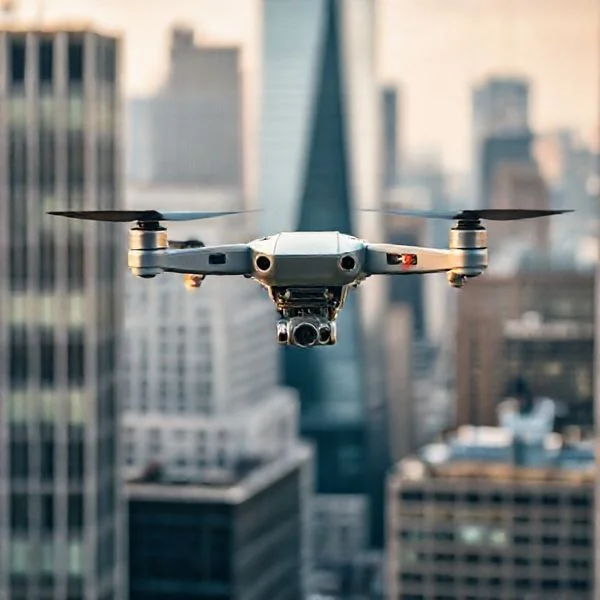
The Peregrine 2 holds the official Guinness World Record for the fastest drone, reaching a staggering 300.3 mph (480.23 km/h). For consumers, the DJI FPV remains the fastest ready-to-fly option at 87 mph, though custom FPV racing drones can easily exceed 150 mph using specialized 6S battery setups.
🎯 Key Takeaways
- The current official Guinness World Record speed is 300.3 mph.
- Custom-built FPV drones significantly outperform all mass-market consumer models.
- The DJI FPV is the fastest mainstream ready-to-fly consumer drone.
- High-speed performance requires specialized 6S+ LiPo batteries and high-KV motors.
- Aerodynamics and thrust-to-weight ratios are the primary factors in breaking speed records.
The fastest drone in existence today is the Peregrine 2, a custom-built quadcopter that shattered the Guinness World Record with a mind-bending top speed of 298.47 mph (480.23 km/h). To give you some perspective, that is faster than a Bugatti Chiron and approaches the cruising speed of many light aircraft. This isn’t a machine meant for scenic photography or casual hovering; it is a specialized projectile designed to push the absolute limits of battery discharge technology and aerodynamic stability.
Prime for Young Adults — 6 Months Free
Exclusive Offer Amazon Prime for Young Adults, Students and 18–24s get six months of Prime free, then half price.
Start 6 Months Free As an Amazon Associate I earn from qualifying purchases.
Knowing which drone is the fastest isn’t just about bragging rights. It matters because the innovations required to reach these speeds—such as ultra-high-output ESCs (Electronic Speed Controllers) and streamlined carbon fiber frames—directly influence the performance of the drones you can actually buy. When a record-breaking drone survives the massive G-forces of a 300-mph turn, it paves the way for more durable, agile, and efficient components in the consumer FPV (First Person View) market.
The Ultimate Speed Limit: Analyzing the 300+ MPH Guinness World Record
Recommended Best Deal Products


The journey to the 300-mph mark has been a technical arms race between independent engineers and high-budget racing teams. While many enthusiasts claimed high speeds in the past, the Peregrine 2, developed by Luke Bell and his father, officially moved the needle by focusing on power-to-weight ratios that seem impossible. To achieve the record, the drone had to perform two back-to-back runs in opposite directions to account for wind speed, maintaining an average that defied previous aerodynamic theories for quadcopters.
Engineering for Mach 0.4
At nearly 300 mph, a standard drone would literally rip itself apart. The Peregrine 2 uses a “bullet” or “torpedo” shape rather than the flat “X” frame you see on retail models. This vertical orientation minimizes the surface area facing the wind, reducing drag significantly. The internal components are pushed to their absolute thermal limits, often requiring the pilots to launch immediately to prevent the motors from overheating while sitting still. Here are the core stats that make this record possible:
- Top Speed: 298.47 mph (Official average); peak speeds clocked even higher.
- Acceleration: 0 to 186 mph (300 km/h) in roughly 2 seconds.
- Frame Material: Custom 3D-printed aerodynamic shell with a reinforced carbon fiber spine.
- Power System: High-discharge LiPo batteries paired with motors spinning at over 40,000 RPM.
Another notable mention is the Red Bull Drone 1, developed by the Dutch Drone Gods. While it doesn’t hold the “fastest” title for raw speed, it is arguably the fastest functional drone. It was designed to keep up with Max Verstappen’s Formula 1 car during a full lap at Silverstone. It can sustain speeds of over 217 mph (350 km/h) while carrying a high-end camera, proving that extreme speed is finally becoming a practical tool for high-speed cinematography.
Everything You Need to Know About the World’s Fastest Drones
The quest for speed in the unmanned aerial vehicle (UAV) world has transitioned from hobbyist experiments to high-stakes engineering marvels. This guide covers the essential steps to identifying, understanding, and even building or operating high-speed drones. Whether you are looking for a ready-to-fly consumer model or a custom-built racing beast capable of exceeding 200 miles per hour, following these steps ensures you understand the hardware, software, and physics required to push these machines to their absolute limits safely and effectively.
Step 1: Distinguish Between Category Classes
What you need: Access to manufacturer spec sheets, racing league websites (like DRL), and a basic understanding of FPV (First Person View) technology.
Instructions: To find the fastest drone, you must first categorize what “fast” means to you. Consumer drones, like the DJI FPV or DJI Avata, generally top out around 87–97 mph (140–155 km/h). Purpose-built racing drones used in professional leagues often hit 120+ mph. However, “speed run” drones—custom prototypes like the Red Bull Drone 1—have been clocked at over 217 mph (350 km/h). Start by defining your goal: are you looking for a retail product you can buy today, or are you researching the cutting edge of aeronautics? Look for drones categorized as “6S” (six-cell battery) or “8S” for maximum power output.
Prime for Young Adults — 6 Months Free
Exclusive Offer Amazon Prime for Young Adults, Students and 18–24s get six months of Prime free, then half price.
Start 6 Months Free As an Amazon Associate I earn from qualifying purchases.Pro Tip: Don’t be fooled by “max speed” labels on standard photography drones; these are often electronically limited to save battery and motor life. Real speed lives in the FPV manual-manual-mode category.
Step 2: Analyze the Power-to-Weight Ratio
What you need: Digital gram scale, motor thrust data (found on manufacturer websites like T-Motor or BrotherHobby), and a calculator.
Instructions: The secret to the fastest drones is not just big motors, but a high power-to-weight ratio. A world-class speed drone usually has a ratio of at least 10:1 or even 15:1. This means if the drone weighs 500 grams, the motors must produce 7,500 grams of total thrust. Evaluate the motor “KV” rating—higher KV motors (2500KV+) paired with smaller props offer high RPMs for speed, while lower KV motors with larger props offer more torque. For absolute speed, look for high-voltage setups (6S or 8S LiPo batteries) which provide the massive current draw required to sustain high-velocity flight without “sagging” or losing voltage mid-run.
Pro Tip: Every gram counts. Professional speed pilots often remove unnecessary components like GoPro mounts or heavy plastic shells to shave off 10–20 grams, which can translate to a 5-10 mph increase at the top end.
Step 3: Evaluate Aerodynamics and Frame Geometry
What you need: Knowledge of drag coefficients, carbon fiber frame specs, and a basic understanding of “Stretched X” vs. “True X” frame configurations.
Instructions: At speeds over 100 mph, air resistance becomes the primary obstacle. Examine the frame design of the drone. Standard “True X” frames are great for agility, but “Stretched X” frames—where the front and rear motors are further apart—are better for speed because they provide cleaner air to the rear propellers. Furthermore, the fastest drones use “vertical” or “thin” arms made of high-quality 5mm or 6mm carbon fiber to minimize the surface area facing the wind. Look for streamlined canopies or “pods” that cover the electronics, reducing the drag coefficient. If the drone looks like a brick, it won’t break any speed records regardless of the motor size.
Pro Tip: Tilt your camera angle. For high-speed flight, you need a camera tilt of 45 to 60 degrees. If the camera is flat, you will be looking at the ground when the drone tilts forward to accelerate.
Prime for Young Adults — 6 Months Free
Exclusive Offer Amazon Prime for Young Adults, Students and 18–24s get six months of Prime free, then half price.
Start 6 Months Free As an Amazon Associate I earn from qualifying purchases.Step 4: Select High-Pitch Propellers
What you need: Various propeller sets (e.g., 5×4.5×3, 5x5x2), a prop tool (8mm wrench), and a safe testing area.
Instructions: Propellers act like the gears of a car. A “high pitch” propeller (represented by the second number in 5x5x3, where 5 is the pitch) moves more air per rotation, resulting in higher top speeds but slower initial acceleration. For maximum speed, pilots often switch from three-blade props to two-blade (biblade) props. While biblades are less “grippy” in corners, they have less surface area and lower drag, allowing the motor to reach its maximum possible RPM. Ensure the propellers are made of stiff materials like polycarbonate or glass-fiber reinforced plastic to prevent “prop flutter” (bending) at high speeds, which causes a loss of efficiency and potential vibration issues.
Pro Tip: Check your motor temperatures after a 30-second speed burst. If the motors are too hot to touch, your propeller pitch is too high for your motor/battery combo, and you risk burning out an ESC.
Step 5: Optimize Electronic Speed Controllers (ESCs) and Firmware
What you need: BLHeli_32 or AM32 configurator software, a USB data cable, and a computer.
Instructions: The ESC is the brain that tells the motors how fast to spin. To achieve maximum speed, you must use 32-bit ESCs (BLHeli_32) that can handle high burst currents—usually 60A to 80A per motor. Within the software configurator, you should adjust the “Motor Timing.” Setting timing to “Auto” or a higher fixed degree (24-30 degrees) can squeeze more top-end RPM out of the motors at the cost of efficiency. You should also increase the PWM (Pulse Width Modulation) frequency to 48kHz or 96kHz to ensure smooth power delivery at the extreme end of the throttle curve. Disable “Current Limiting” in the firmware if you are performing a dedicated speed run, but be aware this removes a vital safety net for your hardware.
Pro Tip: Use a high-quality capacitor (e.g., 1000uF 35V) soldered to the battery leads. This smooths out voltage spikes caused by the ESCs, preventing “noise” from triggering failsafes during high-speed maneuvers.
Step 6: Execute a Calibrated Speed Run
What you need: A GPS data logger (like the SkyRC GSM020), a wide-open field (at least 500 meters of clearance), and a spotter.
Instructions: To determine the actual speed, do not rely on “visual estimates” or FPV camera feeds. Mount a dedicated GPS speed logger to the drone using secure straps. Power on the drone and wait for a “3D Lock” (at least 8-10 satellites). Take off and perform a “pass” by flying level at full throttle for at least 3-5 seconds to allow the drone to reach terminal velocity. To account for wind, you must perform a “two-way average”: fly one pass with the wind and one pass against the wind, then average the two speeds. This is the only way to get a scientifically accurate measurement of your drone’s true performance.
Pro Tip: Fly low but not too low. Ground effect can slightly assist speed, but a tiny gust of wind at 150 mph can push the drone into the grass before you can react. Aim for an altitude of 15-20 feet for speed passes.
✅ Final Checklist
- Verify that all motor screws are tightened and secured with blue Loctite to prevent vibration-induced loosening.
- Ensure the LiPo battery is pre-warmed to roughly 30°C-35°C; cold batteries cannot provide the high discharge current needed for top speed.
- Check that the GPS logger is securely fastened and has a clear view of the sky for accurate satellite tracking.
- Confirm that the FPV antenna is oriented correctly to maintain a clear signal at long distances during the speed pass.
- Inspect propellers for any nicks or cracks that could cause a catastrophic failure (delamination) at high RPMs.
Important Notes:
- Safety: A drone moving at 100+ mph has the kinetic energy of a fired projectile. Never fly near people, animals, or property. Always use a spotter to watch for aircraft or obstacles.
- Legal: Check local FAA (or regional equivalent) regulations. Many regions have a 100 mph limit for recreational UAS flight, and speed runs may require a specific waiver or a sanctioned racing location.
- Professional Help: If you are new to soldering or high-voltage electronics, seek help from an experienced FPV builder. 6S batteries can cause significant sparks and fire hazards if shorted.
- Estimated Time and Cost: Researching takes 2-4 hours. Building/Tuning takes 5-10 hours. Cost ranges from $400 (mid-range racing drone) to $2,000+ for custom-engineered speed rigs.
Consumer Speed Rankings: Comparing DJI FPV to Professional Racing Models
Recommended Best Deal Products


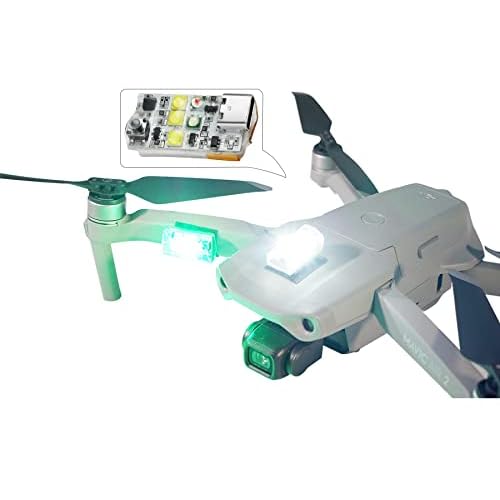
While the world record holders are impressive, you cannot simply go to a website and add a 300-mph drone to your cart. For most pilots, “speed” is defined by what is available in the “Ready-to-Fly” (RTF) or “Bind-and-Fly” (BNF) markets. The gap between a world record drone and a top-tier consumer drone is massive, but the gap between a standard photography drone and a racing FPV drone is even wider.
DJI FPV vs. Professional Custom Builds
If you want speed out of the box, the DJI FPV is the current benchmark for the average consumer. In Manual Mode, it can reach speeds of 87 mph (140 km/h) and hit 0-60 mph in just 2 seconds. While the newer DJI Avata 2 is more agile in tight spaces, it actually tops out around 60 mph, making the older DJI FPV the king of the “big brand” speed category. However, if you move into specialized racing brands like iFlight or Lumenier, the numbers jump significantly.
- DJI FPV: 87 mph – The fastest “all-in-one” system with GPS and safety features.
- iFlight Nazgul5 V3: 100+ mph – A professional-grade FPV “freestyle” drone that requires separate goggles and a controller.
- Lumenier QAV-S: 120+ mph – Often used by professional racers; highly customizable for even higher bursts.
- DJI Avata 2: 60 mph – Fast for a “cinewhoop,” but not a contender for top-speed honors.
The main difference you will encounter is sustained speed versus burst speed. A DJI FPV can hit its top speed relatively safely thanks to its onboard flight controller. In contrast, a custom-built racing drone from a brand like iFlight can easily exceed 100 mph, but it requires much more skill to handle the “prop wash” and air turbulence that occurs at those velocities. For most users, the 100-mph mark is the “sweet spot” where the drone is still controllable but feels significantly faster than any standard consumer product.
The Engineering of Velocity: Essential Motors, Props, and Power Systems
Achieving record-breaking speeds isn’t just about pushing the throttle; it is a delicate balance of physics and high-end hardware. To break the 100 mph barrier, every gram of weight must be justified, and every component must be optimized for maximum efficiency under extreme stress.
High-KV Motors and Aggressive Propellers
The heart of a fast drone lies in its motor-propeller combination. For speed, pilots typically look for brushless motors with high KV ratings, which indicate higher revolutions per minute (RPM) per volt. However, raw RPM isn’t enough; you need the right “bite” on the air.
- High-Pitch Props: Unlike standard cinematic props, speed-focused propellers have a steep pitch (like a 5×5 or 5×4.8). This moves more air per rotation, though it requires significantly more torque from the motor.
- Stator Size: Larger stators provide the torque necessary to spin heavy-pitch props without overheating the motor.
- Weight-to-Thrust Ratio: Top-tier racing drones often aim for a ratio of 10:1 or higher, meaning the drone can pull ten times its own weight in thrust.
Advanced Power Systems and Aerodynamics
To feed power-hungry motors, the battery and Electronic Speed Controller (ESC) must be capable of handling massive current draws. A standard battery will “sag” or lose voltage instantly under the load of a 200 mph sprint. This is why high-speed enthusiasts prioritize 6S or even 8S LiPo batteries with high C-ratings (discharge rates).
Furthermore, the frame design shifts from a wide “bus” style to a “stretched X” or a “pod” shape. These designs minimize the surface area facing the wind, reducing drag. Pro Tip: Using a specialized aerodynamic canopy can increase top speeds by 5-10% simply by cleaning up the airflow over the electronics.
Practical Limitations and Safety Regulations for High-Speed Drone Flight
Recommended Best Deal Products


While the tech exists to fly at incredible velocities, practical reality often slows things down. Flying a drone at speeds exceeding 100 mph presents unique challenges that can lead to catastrophic “unscheduled disassemblies” if not managed correctly.
The Physical Wall: Air Resistance and Battery Heat
As a drone speeds up, air resistance increases exponentially, not linearly. Doubling your speed requires significantly more than double the power. This creates a massive amount of heat in the motors and batteries.
- Battery Sag: At full throttle, voltage can drop so low that the flight controller reboots mid-air.
- Signal Latency: At 150 mph, a drone travels 220 feet per second. A 20ms delay in your video feed means the drone has moved several feet before you even see the obstacle on your screen.
- Structural Stress: Vibrations at high RPM can literally shake a carbon fiber frame apart if the PID tuning isn’t perfect.
Safety Compliance and Legal Speed Limits
Before you attempt a world record in your backyard, you must understand the legal landscape. In many regions, including the United States under FAA regulations, there are strict rules regarding how and where you can fly high-speed aircraft.
Most recreational drone regulations set a speed limit of 100 mph. Going beyond this often requires specific waivers or flying at sanctioned AMA (Academy of Model Aeronautics) fields. Additionally, maintaining a Visual Line of Sight (VLOS) becomes nearly impossible at high speeds, as the drone can exit your field of vision in a matter of seconds. Always ensure you have a spotter and fly in wide-open spaces far from people, animals, or property to mitigate the risk of a high-velocity impact.
Conclusion: The Future of Drone Speed
The quest for the world’s fastest drone has evolved from a hobbyist’s dream into a high-stakes engineering challenge. From the streamlined custom builds of independent pilots to the professional-grade engineering of the Red Bull Drone 1, we are seeing the boundaries of flight pushed further every year. Speed is a combination of the right high-KV motors, aerodynamic frames, and the nerve to push your hardware to its absolute breaking point.
If you are ready to start your own journey into high-speed flight, your next steps should be to practice on a high-quality FPV simulator to sharpen your reflexes and then look into upgrading your current build with high-pitch propellers and 6S power systems. Stay safe, stay legal, and keep chasing that next personal best. Ready to upgrade your gear? Check out our latest selection of high-performance motors and props today!
❓ Frequently Asked Questions
Who holds the Guinness World Record for the fastest drone?
The record is held by Luke and Mike Bell with their custom-built Peregrine 2, which clocked a top speed of 300.3 mph (480.23 km/h) in 2024. This quadcopter uses a highly aerodynamic carbon fiber shell and specialized propulsion to minimize drag at extreme velocities.
How does the Red Bull Dutch Drone Gods drone compare?
While not the official world record holder for top speed, the Red Bull drone was specifically engineered to sustain 200+ mph while filming an F1 car. It prioritizes the ability to maintain high speeds over a full lap rather than just a short straight-line speed trap.
What technical components make a drone fast?
Speed is driven by a combination of high-KV brushless motors, aggressive propeller pitch, and high-voltage (6S or 8S) batteries. Additionally, the Electronic Speed Controller (ESC) must be capable of handling massive current draws without overheating during high-throttle bursts.
Is the DJI Avata 2 faster than the DJI FPV?
No, the DJI Avata 2 is a CineWhoop designed for agility and safety, topping out at around 60 mph. The original DJI FPV remains significantly faster, with a top speed of 87 mph in its unrestricted Manual Mode.
What are the legal speed limits for flying drones?
In many regions, including the US under FAA Part 107 regulations, drones are legally limited to a ground speed of 100 mph (87 knots). Operators must ensure they are flying in authorized areas, especially when testing high-speed custom builds.
Why does aerodynamic drag matter for fast drones?
As a drone’s speed doubles, the aerodynamic drag quadruples, meaning the motors have to work exponentially harder to push through the air. This is why record-breaking drones use bullet-shaped fairings rather than the standard flat-plate designs seen on typical quadcopters.