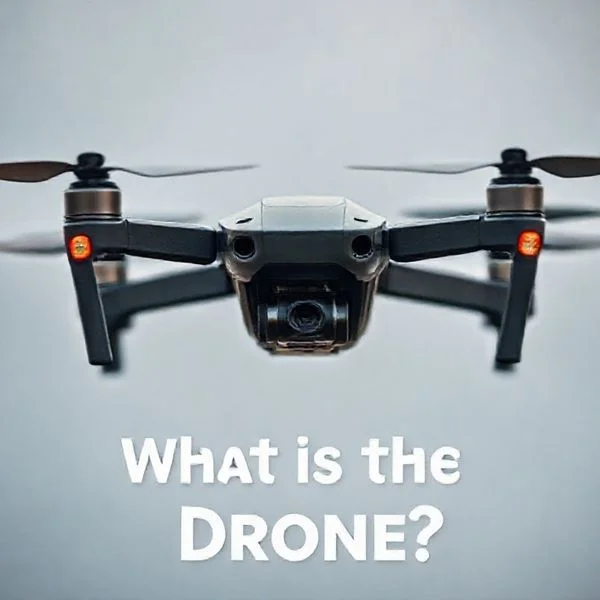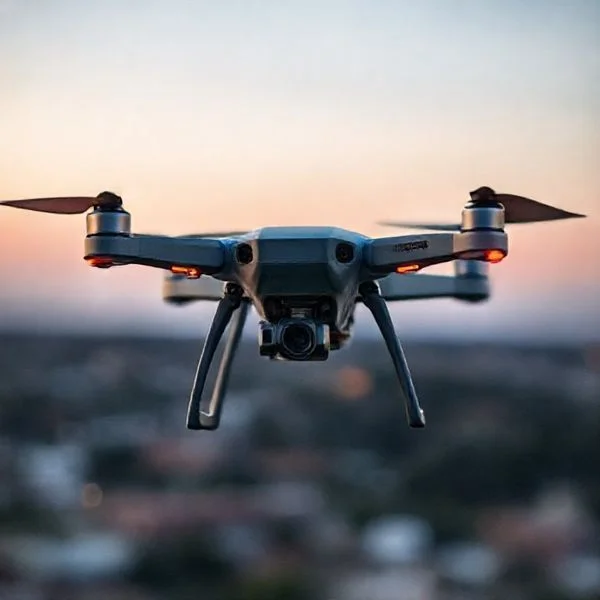
The DJI FPV is the fastest drone in the current lineup, reaching a blistering top speed of 87 mph (140 kph). It offers unmatched performance with an acceleration of 0 to 100 kph in just 2 seconds when flown in Manual Mode.
🎯 Key Takeaways
- The DJI FPV hits 87 mph in full Manual Mode.
- Acceleration is elite, reaching 100 kph in 2 seconds.
- Sport Mode is significantly slower than Manual Mode for safety.
- High-speed flight drastically reduces battery life to 3-5 minutes.
- Standard camera drones like the Mavic 3 cap at 47 mph.
If you are looking for the absolute speed limit of the DJI ecosystem, the answer is the DJI FPV. This hybrid powerhouse dominates the current lineup with a blistering top speed of 87 mph (140 kph). While most consumer drones are built for steady cinematic shots, the DJI FPV was engineered for raw velocity and aggressive maneuvers. It can accelerate from 0 to 100 kph (62 mph) in just 2.0 seconds, a stat that rivals high-end supercars and professional racing drones.
Prime for Young Adults — 6 Months Free
Exclusive Offer Amazon Prime for Young Adults, Students and 18–24s get six months of Prime free, then half price.
Start 6 Months Free As an Amazon Associate I earn from qualifying purchases.
Understanding these speed capabilities is critical for more than just bragging rights. If you are filming high-speed subjects like drift cars, downhill mountain bikers, or motorboats, you need a drone that can keep pace without struggling against the wind. The DJI FPV doesn’t just reach these speeds; it maintains them with a level of stability that allows you to capture usable footage while pushing the physical limits of flight. In the world of ready-to-fly drones, no other DJI model currently comes close to this level of kinetic energy.
The Reigning Speed King: DJI FPV Performance Specs
Recommended Best Deal Products


The DJI FPV stands in a category of its own because it combines the user-friendliness of the Mavic series with the high-voltage performance of a custom-built racing quad. To achieve its record-breaking 87 mph top speed, the drone utilizes a 6S propulsion system. This high-voltage battery setup provides the immediate “punch” needed to overcome inertia and fight air resistance at high velocities. Unlike standard drones that tilt slightly to move, the DJI FPV can tilt to extreme angles, converting almost all its motor thrust into forward momentum.
Unlocking Maximum Velocity in Manual Mode
It is important to note that you won’t hit 87 mph straight out of the box using standard settings. The DJI FPV has three distinct flight modes that act as speed tiers. In Normal (N) Mode, the drone is capped at roughly 33 mph (15 m/s) to ensure safety and obstacle sensing. Sport (S) Mode bumps this up to 60 mph (27 m/s), which is already faster than most other DJI drones. However, the legendary 87 mph speed is only accessible in Manual (M) Mode. This mode disables all flight assistance and leveling, giving you full control over the motors and allowing the drone to reach its aerodynamic potential.
- Top Speed: 87 mph (140 kph) in Manual Mode.
- Acceleration: 0-100 kph (62 mph) in 2.0 seconds.
- Max Descent Speed: Unlimited in Manual Mode (limited by physics).
- Wind Resistance: 31-39 mph (50-70 kph), allowing it to stay fast even in heavy gusts.
Propulsion and Aerodynamics
The DJI FPV’s speed isn’t just about motor power; it’s about efficiency. The drone features high-cycle 5328S propellers specifically pitched to handle high RPMs without cavitating. Because the drone is significantly heavier than a standard racing quad, it uses its weight as momentum once it hits top speed. To see where you are going at 87 mph, the gimbal can tilt upward at a much steeper angle than a Mavic, ensuring your view isn’t just a screen full of grass while the drone is pitched 60 degrees forward.
Everything You Need to Know About the Fastest DJI Drones
Finding the fastest DJI drone involves more than just looking at a single number; it requires understanding the engineering differences between cinematic platforms, consumer foldable units, and dedicated FPV racers. Whether you are looking to capture high-speed automotive chases or simply want the thrill of 140 kph flight, following this guide will help you identify the hardware, understand the settings required to reach maximum velocity, and manage the physics of high-speed drone operation. By the end of this walkthrough, you will know exactly which drone holds the crown and how to push it to its absolute limits safely.
Step 1: Distinguish Between FPV and Standard Flight Platforms
What you need: A basic understanding of DJI’s product lines, specifically the difference between the “Mavic/Air” series and the “FPV/Avata” series.
Instructions: To find the fastest drone, you must first categorize DJI drones into two camps: GPS-stabilized camera drones and FPV (First-Person View) drones. Standard drones like the Mavic 3 are designed for stability and “tripod-like” shots, meaning their software intentionally limits pitch and tilt to keep the horizon level. Conversely, DJI’s FPV line is designed for raw agility. If your goal is pure speed, you must look at the FPV category. The current champion in the DJI lineup is the original DJI FPV drone, which can reach speeds that nearly double those of the standard Mavic or Air series. Recognizing this distinction prevents you from purchasing a high-end photography drone and being disappointed by its governed speed limits.
Prime for Young Adults — 6 Months Free
Exclusive Offer Amazon Prime for Young Adults, Students and 18–24s get six months of Prime free, then half price.
Start 6 Months Free As an Amazon Associate I earn from qualifying purchases.Pro Tip: Don’t confuse the DJI Avata 2 with the DJI FPV; while newer, the Avata 2 is a “cinewhoop” designed for tight spaces and is significantly slower (roughly 60 mph) than the original DJI FPV.
Step 2: Evaluate the DJI FPV for Maximum Velocity
What you need: Technical specifications for the DJI FPV drone and a DJI Remote Controller 2.
Instructions: The DJI FPV remains the fastest consumer drone DJI has ever produced. In “Manual Mode” (M Mode), this drone can reach a staggering 87 mph (140 kph). It features a 0-100 kph acceleration time of just 2.0 seconds, rivaling high-performance supercars. To achieve this, you must analyze the propulsion system: it uses 5328S propellers and high-KV motors designed to draw massive amounts of current from the 6S Intelligent Flight Battery. When investigating this drone, pay attention to the aerodynamic tilt of the chassis; it is built to fly at an aggressive angle, slicing through the air with minimal drag compared to the boxier “Cinewhoop” designs.
Pro Tip: To hit the 87 mph mark, you must disable the speed limiters in the Goggles’ menu and fly in a completely manual “Acro” style, which requires significant simulator practice.
Step 3: Analyze Professional Cinematic Alternatives (Inspire 3)
What you need: Specifications for the DJI Inspire 3 and an understanding of “Level Flight” speed.
Instructions: If you need speed combined with professional Hollywood-grade imaging, the DJI Inspire 3 is your target. While it cannot match the 87 mph of the FPV drone, it is remarkably fast for its size, topping out at 58 mph (94 kph). Unlike consumer drones, the Inspire 3 is designed to maintain this speed while carrying a full-frame 8K gimbal. This step involves looking at the “Max Dive Speed” and “Max Ascent Speed” as well, which are 10 m/s and 8 m/s respectively. The Inspire 3 is the fastest “standard” configuration drone (dual-operator capable) in the fleet, making it the choice for filming high-speed pursuits where a crash would be catastrophic.
Pro Tip: The Inspire 3’s landing gear retracts to improve aerodynamics, which is essential for reaching its 94 kph top speed without catching wind resistance.
Prime for Young Adults — 6 Months Free
Exclusive Offer Amazon Prime for Young Adults, Students and 18–24s get six months of Prime free, then half price.
Start 6 Months Free As an Amazon Associate I earn from qualifying purchases.Step 4: Understand the Capabilities of Consumer Foldables
What you need: Performance data for the DJI Mavic 3 Pro, Mavic 3 Classic, and DJI Air 3.
Instructions: For most users, the “fastest” drone needs to be portable. In this category, the Mavic 3 series and the Air 3 are the leaders. Both can reach approximately 47 mph (21 meters per second) in Sport Mode. When evaluating these, look at the wind resistance rating. The Mavic 3 can withstand 12 m/s winds, which is crucial because your “ground speed” is a combination of the drone’s thrust and the wind speed. If you are flying with a tailwind, these drones can often indicate speeds over 55 mph on the controller, but their governed airspeed remains 47 mph to protect the motors from overheating and to ensure the gimbal can still stabilize the image.
Pro Tip: High-altitude propellers are available for some models to help maintain speed in thinner air, though they are usually specialized for the Matrice or Inspire series.
Step 5: Master “Sport Mode” vs. “Manual Mode”
What you need: A DJI drone with a physical flight mode switch on the remote controller.
Instructions: To reach the top advertised speeds of any DJI drone, you must physically toggle the flight mode switch. “Normal” (N) mode is typically capped at 15-30 mph for safety. “Sport” (S) mode tilts the drone further, allowing for maximum motor output, but it disables most obstacle avoidance sensors. On the DJI FPV, there is a third option: “Manual” (M) mode. In M mode, the drone does not self-level. This is where the 87 mph top speed lives. You must learn to manage the throttle manually, as the drone will not hover in place if you let go of the sticks. This step is about understanding that “Fast” is a software-unlocked state that requires higher pilot skill.
Pro Tip: Always gain at least 100 feet of altitude before switching to Manual or Sport mode to give yourself a “buffer zone” for recovery if you lose control.
Step 6: Factor in Battery Temperature and Voltage Sag
What you need: A fully charged DJI Intelligent Flight Battery (LiPo or Li-ion).
Instructions: Speed is directly tied to the battery’s ability to discharge current. To hit the maximum rated speed, your battery should be between 20°C and 35°C (68°F – 95°F). Cold batteries have higher internal resistance, which causes “voltage sag.” When the voltage drops, the RPM of the motors drops, and your top speed will suffer. Furthermore, DJI drones reach their peak speeds during the first 50% of the battery charge. As the voltage of the cells drops from 4.2V toward 3.5V, the drone’s top-end power will diminish. For a record speed run, always use a fresh battery that has been slightly warmed in your pocket or a battery heater.
Pro Tip: Avoid full-throttle “speed runs” when your battery is below 25%, as the high current draw could trigger an emergency low-voltage landing or a power cutoff.
Step 7: Optimize Environmental Conditions for Speed
What you need: An anemometer (wind speed meter) or a localized weather app like UAV Forecast.
Instructions: To experience or record the fastest speeds, you must account for density altitude. Drones are actually faster at sea level because the air is denser, providing the propellers with more “bite” to generate thrust. However, they face more drag. Conversely, at high altitudes, the air is thin; the drone might be able to tilt further, but the motors have to work harder to maintain lift. For the absolute highest ground speed, you should perform a “downwind” run. If the DJI FPV is flying at its 87 mph limit with a 20 mph tailwind, your GPS ground speed will register as 107 mph. This is how many “speed test” videos achieve their record-breaking numbers.
Pro Tip: Never fly for speed in high-humidity or foggy conditions, as the moisture increases drag and can potentially short-circuit high-KV motors during high-amperage draws.
✅ Final Checklist
- Verified the drone is in “Sport” or “Manual” mode via the physical switch on the controller.
- Ensured the battery is 100% charged and within the optimal temperature range (above 20°C).
- Checked that obstacle avoidance is disabled (required for top speed) and the flight path is clear.
- Confirmed that the firmware is updated to the latest version to ensure motor ESC (Electronic Speed Controller) efficiency.
- Calibrated the IMU and Compass to ensure the drone maintains a straight line during high-velocity pitch.
Important Notes:
- Safety Warning: At speeds over 80 mph, a collision will result in the total destruction of the drone and could cause serious injury or property damage. Always fly in wide-open, unpopulated areas.
- Legal Compliance: Check your local aviation authority (like the FAA in the US) regarding speed limits; for example, Part 107 pilots are limited to a ground speed of 100 mph.
- Professional Help: If your drone is not reaching its rated speed, do not attempt to modify the motors or propellers yourself. Contact DJI support as it may be a calibration or battery health issue.
- Estimated Cost: The DJI FPV (fastest) usually ranges from $899 to $1,299, while the Inspire 3 (fastest cinema) costs approximately $16,499.
Comparing Speeds Across the DJI Product Lineup
Recommended Best Deal Products


While the DJI FPV is the undisputed champion, you might be surprised at how the rest of the fleet stacks up. Most modern DJI drones are electronically limited to 47 mph (21 m/s) in Sport Mode. This is a deliberate design choice by DJI to balance battery life, motor longevity, and the structural integrity of the airframe. When you move away from the dedicated FPV line, the “fastest” drones are the ones designed for professional cinematography, which requires high-speed chasing capabilities.
Consumer and Prosumer Speed Rankings
The Mavic 3 series (including the Pro and Classic) and the Air 3 share the same top speed. They are built for efficiency and long-range flight, but they can move surprisingly quickly when you toggle the switch to Sport Mode. These drones are excellent for chasing cyclists or cars traveling at highway speeds, though they lack the instantaneous acceleration of the FPV models. Below them sits the Mini 4 Pro, which is limited by its ultra-lightweight frame and smaller motors, making it less ideal for high-speed pursuits.
- Mavic 3 Pro / Air 3: 47 mph (21 m/s) – The standard for high-end consumer speed.
- DJI Avata 2: 60 mph (27 m/s) – Faster than a Mavic, but built for agility rather than raw top speed.
- DJI Mini 4 Pro: 36 mph (16 m/s) – Optimized for portability over velocity.
- DJI Inspire 3: 58 mph (94 kph) – A professional cinema drone that balances high speed with heavy payloads.
The “Cinewhoop” Exception: Avata 2
The DJI Avata 2 occupies an interesting middle ground. As an FPV drone, you might expect it to challenge the original DJI FPV for the crown. However, the Avata 2 is a “Cinewhoop” style drone with ducted propellers. Those ducts create significant drag at high speeds. While it is incredibly nimble and can hit 60 mph in Manual Mode, it is not designed for straight-line drag racing. It is built for diving through gaps and flying close to obstacles, where its smaller size and protected blades are more valuable than an extra 20 mph of top-end speed.
Understanding Flight Modes: Manual vs. Sport vs. Normal
Achieving the advertised top speed of a DJI drone isn’t as simple as pushing a joystick forward. DJI builds software limiters into their aircraft to ensure safety and stability, which are categorized into specific flight modes. Depending on the mode you select, your drone might behave like a steady cinematic tool or a high-velocity racing machine.
The Raw Power of Manual (Acro) Mode
If you are flying the DJI FPV or the DJI Avata series, Manual mode is the only way to unlock the drone’s true potential. In this mode, the flight controller stops auto-leveling the aircraft, allowing the pilot to tilt the drone to extreme angles. By pitching the nose down aggressively, you minimize drag and maximize forward thrust. This is exactly how the DJI FPV reaches its legendary 87 mph.
- Pro Tip: Manual mode requires a specific controller (like the Remote Controller 3) rather than the Motion Controller, and it is generally not available on the Mavic or Mini series.
- Speed Benefit: It removes all software “governors,” allowing for the maximum kinetic output the motors can provide.
- Warning: There is no “auto-brake” in this mode; if you let go of the sticks, the drone continues its trajectory.
Sport Mode: The Consumer Peak
For most pilots using the Mavic 3 Pro, Air 3, or Mini 4 Pro, Sport mode (S-mode) is the highest speed setting available. This mode increases the maximum tilt angle and motor responsiveness while keeping GPS stabilization and auto-leveling active. It is the perfect middle ground for chasing fast-moving subjects like cars or boats without losing the safety net of the drone staying level when you release the controls.
- Quick Fact: Obstacle avoidance sensors are typically disabled in Sport mode to allow for higher speeds and steeper pitch angles.
- Practical Example: Use Sport mode when you need to travel a long distance quickly to reach a point of interest before the “golden hour” light fades.
Critical Factors Affecting Drone Top Speed and Stability
Recommended Best Deal Products


On paper, your DJI drone has a fixed top speed. In the real world, physics and environmental conditions often dictate the actual performance. Understanding these variables will help you manage expectations and fly more safely when pushing the limits of your hardware.
Wind Resistance and Aerodynamics
Wind is the most significant external factor affecting your ground speed. A strong tailwind can actually push your drone beyond its rated top speed, while a headwind acts as an invisible wall. DJI drones are designed with aerodynamic shells to slice through the air, but their “wind speed resistance” rating tells you how much force they can fight before the flight controller prioritizes stability over speed.
- Example: The Mavic 3 has a wind resistance of 12 m/s. If you fly into a 15 m/s gust, your ground speed will drop significantly as the motors work overtime just to maintain a hover.
- Temperature Matters: Cold air is denser, which can provide more lift but also places a higher strain on battery chemistry, sometimes limiting peak power output.
- Tip: Always check high-altitude wind speeds using apps like UAV Forecast, as wind at 200 feet is often much stronger than at ground level.
Battery Health and Payload Impact
High speed requires massive amounts of current. As your battery percentage drops, the voltage also drops, which can lead to “voltage sag.” DJI’s Intelligent Flight Batteries often throttle the maximum power output when the charge is low to prevent a critical power failure. Furthermore, any extra weight you add to the drone will directly impact its agility and top-end velocity.
- Payload Drag: Adding heavy accessories like oversized landing gear, external LED lights, or heavy-duty ND filters increases mass and aerodynamic drag.
- Battery Peak: For maximum speed runs, perform your sprints during the first 50% of your battery life when the voltage is highest.
- Propeller Care: Even small chips or bends in your propellers create turbulence, reducing efficiency and shaving several miles per hour off your top speed.
Conclusion
Finding the fastest DJI drone depends entirely on your specific needs as a pilot. If you want pure, adrenaline-pumping velocity, the DJI FPV remains the undisputed champion with its 87 mph top speed. However, for those who need a blend of professional imaging and impressive agility, the Mavic 3 series and Inspire 3 offer incredible high-speed performance without sacrificing stability. Remember that speed is nothing without control; always ensure you are flying in an open area and are familiar with your drone’s braking distances in Sport mode before pushing the throttle.
Ready to see what your aircraft can really do? Start by practicing in a wide-open field to get a feel for how your drone handles at high velocity. If you’re looking to optimize your flight experience, check out our latest selection of aerodynamic accessories and high-performance SD cards to capture every high-speed moment!
❓ Frequently Asked Questions
Why is the DJI FPV faster than the Mavic series?
The DJI FPV is built for racing and high-speed cinematography, featuring powerful motors and an aerodynamic tilt. Unlike the Mavic series, which prioritizes gimbal stability, the FPV allows for unrestricted motor output in Manual Mode.
Can I reach the top speed of 87 mph in Sport Mode?
No, Sport Mode on the DJI FPV is electronically limited to roughly 60 mph for added safety. You must unlock and fly in full Manual Mode to reach the 87 mph threshold.
How does speed impact the total battery life?
Flying at maximum throttle causes the battery to drain exponentially faster due to high voltage demand. While a battery may last 20 minutes hovering, it will likely only last 3 to 6 minutes during high-speed maneuvers.
Is the DJI Inspire 3 faster than the DJI FPV?
No, the DJI Inspire 3 has a top speed of 58 mph (94 kph). While it is DJI’s fastest professional cinema drone, it cannot match the raw velocity of the FPV model.
Does the DJI Avata 2 prioritize speed over the original FPV?
The Avata 2 is a ‘cinewhoop’ designed for agility and safety in tight spaces. It is actually slower than the original DJI FPV, with a top speed cap near 60 mph compared to the FPV’s 87 mph.
What are the legal speed limits for drones in the US?
Under FAA Part 107 regulations, the maximum allowable ground speed for a small UAS is 100 mph (87 knots). The DJI FPV operates just under this legal limit at its peak performance.