FAA Part 107 Drone Test Study Guide: Master the Exam
Commercial UAV Pilot & Aerial Cinematography Specialist at Drone Nestle · FAA Part 107 Remote Pilot Certification, Commercial UAS Operations · 10+ Years in Commercial UAV Operations, Flight Hardware Benchmarking & 4K Aerial Cinematography
To pass the FAA Part 107 exam, you must master sectional chart reading and airspace classifications, which constitute nearly half of the test material. This guide prioritizes regulatory compliance, weather reporting, and emergency protocols to ensure you pass on your first attempt.
🎯 Key Takeaways
- Airspace mastery is the most critical factor for passing the Part 107 exam.
- Learn to differentiate between AGL and MSL altitudes on sectional charts correctly.
- Memorize specific visibility and cloud clearance requirements for legal commercial operations.
- Remote ID and night flight regulations are now core components of the exam.
- Deciphering METAR and TAF reports requires understanding specific weather shorthand and coding.
To pass the FAA Part 107 exam, you must demonstrate mastery of three core areas: sectional charts, airspace classifications, and federal operating regulations. The exam focuses heavily on your ability to interpret aviation data and apply it to real-world flight scenarios. Unlike hobbyist flying, commercial certification requires you to understand the “why” behind the rules, specifically how to navigate the National Airspace System (NAS) safely without interfering with manned aircraft.


Mastering these technical concepts is the difference between a passing grade and a retake fee. This guide breaks down the most difficult portions of the test, specifically targeting the complex maps and regulatory updates that trip up most applicants. By focusing on the data points the FAA prioritizes—such as altitude limits, weather minimums, and airspace boundaries—you will build the technical foundation needed to operate as a professional remote pilot.
Decoding Sectional Charts and Airspace Classifications


The VFR (Visual Flight Rules) Sectional Chart is the most critical tool you will use during the Part 107 exam. You will be provided with a Supplement Book containing various charts, and you must know how to identify specific locations using latitude and longitude. The exam often asks you to find a specific airport or obstacle and determine what type of airspace surrounds it. Understanding the “wedding cake” structure of controlled airspace is essential for these questions.


Mastering Airspace Classes B, C, D, E, and G
Airspace is divided into controlled and uncontrolled categories. As a drone pilot, you primarily operate in Class G (uncontrolled) without prior authorization, but most commercial work happens near cities where controlled airspace (Classes B, C, D, and E) begins. You must memorize the visual markers for these zones on a sectional chart:
- Class B (Solid Blue Line): Surrounds the busiest airports. It looks like an upside-down wedding cake. You always need LAANC or FAA authorization to enter.
- Class C (Solid Magenta Line): Found around medium-sized airports with a control tower. Usually consists of a 5 nautical mile (NM) inner core and a 10 NM outer shelf.
- Class D (Dashed Blue Line): Surrounds smaller airports with a control tower. It typically extends from the surface to 2,500 feet AGL.
- Class E (Dashed Magenta or Shaded Magenta): Controlled airspace that is not B, C, or D. A dashed magenta line means Class E starts at the surface. A shaded magenta vignette means it starts at 700 feet AGL.
- Class G (Unshaded): Uncontrolled airspace. This is where you can typically fly up to 400 feet AGL without asking for permission.
Reading Chart Symbols and Altitudes


Sectional charts use a specific shorthand for altitudes that you must interpret correctly. Altitudes are listed in Mean Sea Level (MSL) unless they are in parentheses, which indicates Above Ground Level (AGL). When looking at a “slice” of airspace, the numbers are shown as a fraction. For example, “110/SFC” means the airspace extends from the surface up to 11,000 feet MSL. If you see “110/20,” the airspace exists between 2,000 feet and 11,000 feet MSL.



Pay close attention to these specific chart icons:
- Maximum Elevation Figures (MEF): The large bold numbers in each grid quadrangle. They tell you the highest obstacle or terrain feature in that area.
- Isogonic Lines: Dashed magenta lines that indicate the magnetic variation between true north and magnetic north.
- Obstructions: Symbols like small “tepees” represent obstacles under 1,000 feet AGL. Larger symbols represent obstacles 1,000 feet AGL or higher.
- Frequencies: Look for the “C” symbol to identify the Common Traffic Advisory Frequency (CTAF) for monitoring manned aircraft communications.
The Ultimate Part 107 Drone Pilot Walkthrough
Preparing for the FAA Part 107 Remote Pilot Certificate exam can feel like a daunting task, as it requires you to understand complex aeronautical concepts traditionally reserved for manned aircraft pilots. This guide is designed to navigate you through the intricacies of airspace, weather, regulations, and flight operations. Following these steps is vital because commercial drone flight is strictly regulated; passing this test not only keeps you legal but ensures the safety of the National Airspace System (NAS). Whether you are looking to start a roof inspection business or capture cinematic real estate shots, this comprehensive study guide will provide the structure you need to pass on your first attempt.
Step 1: Establish Your IACRA Identity
What you need: A computer with internet access, your government-issued photo ID (driver’s license or passport), and your social security number.
Instructions: Before you even open a textbook, you must register with the Integrated Airman Certification and Rating Application (IACRA) system. This is the FAA’s official portal for pilot applications. Visit the IACRA website and create a profile as an “Applicant.” Once registered, you will be assigned an FAA Tracking Number (FTN). This unique 10-digit identifier is permanent and will follow you throughout your aviation career. You must have this number ready when you eventually schedule your exam at a testing center. Ensure the name on your IACRA profile matches your legal ID exactly, down to the middle name or suffix, to avoid being turned away on test day.
Pro Tip: Write your FTN down in multiple places. You will need it for every interaction with the FAA, and the recovery process for a lost account can be surprisingly tedious.
Step 2: Decode Sectional Charts and Symbology
What you need: A digital or physical copy of the FAA Airman Knowledge Testing Supplement for Sport, Recreational, and Remote Pilot (FAA-CT-8080-2H).
Instructions: Sectional charts are the “maps” of the sky, and they represent the bulk of the exam’s difficulty. You must learn to identify symbols for airports, obstructions (like radio towers), and restricted areas. Pay close attention to the numbers indicating “Mean Sea Level” (MSL) versus “Above Ground Level” (AGL). For example, a tower might be listed as 1254 (1002), meaning it is 1,254 feet above sea level but only 1,002 feet off the ground. Practice finding specific coordinates using latitude and longitude. You will likely be asked to find a specific landmark based on coordinates and then identify the airspace surrounding it or the frequency used for communication at that location.
Pro Tip: Always look for the legend (the “Chart Users Guide”) in your supplement. Many answers regarding symbols are hidden right there in the reference materials provided during the test.
Step 3: Master the Airspace “Wedding Cake”
What you need: A notebook and colored pens to draw airspace diagrams.
Instructions: You must understand the different classes of airspace: A, B, C, D, E, and G. Class A is for high-altitude jets, while Class G is uncontrolled and generally where drones fly freely. Classes B, C, and D surround airports and are shaped like upside-down wedding cakes. You need to know which classes require prior ATC authorization (B, C, D, and E-surface) and which do not (G). Study the specific altitudes where one class ends and another begins. For instance, Class B is often depicted with blue solid lines, while Class C uses solid magenta lines. Memorizing these visual cues on the sectional chart is the difference between a passing and failing grade.
Pro Tip: Remember the acronym “B-C-D: Blue-Cyan-Dash” to help remember line colors and types, though note that “Cyan” here refers to the magenta/blue distinctions used for different controlled zones.
Step 4: Interpret METARs and TAFs
What you need: Practice weather reports from aviation weather websites (like AviationWeather.gov).
Instructions: Aviation weather reports use a highly condensed shorthand. A METAR (Meteorological Aerodrome Report) might read: “KBOS 121854Z 21015G25KT 1/2SM TSRA BR OVC005 18/16 A2992.” You must be able to translate this instantly. In this example, “21015G25KT” means wind from 210 degrees at 15 knots, gusting to 25 knots. “OVC005” means an overcast ceiling at only 500 feet. The exam will ask you to identify conditions like wind shear, stable vs. unstable air, and the effects of high density altitude on drone performance. Since drones are lighter and more susceptible to wind, understanding these reports is a critical safety skill for any commercial pilot.
Pro Tip: If you see “A2992,” it refers to the altimeter setting. If the numbers at the end of the string (temperature and dew point) are close together (e.g., 18/16), expect fog or visible moisture.
Step 5: Study Loading and Performance Mechanics
What you need: A basic calculator (non-programmable) and a fundamental understanding of physics.
Instructions: This step covers how a drone flies and what limits its performance. You must understand the “Center of Gravity” (CG) and how adding a heavy camera or payload affects flight stability. The test will cover “Load Factor,” which increases during steep turns. For example, in a 60-degree banked turn, the load factor doubles, effectively making your drone feel twice as heavy to its motors. You also need to know about “Stalls”—not the engine stopping, but the wings/blades losing lift due to an excessive angle of attack. Ensure you can calculate the total weight of a drone plus payload to stay under the 55-pound legal limit for Part 107 operations.
Pro Tip: Always remember that any modification to your drone (like prop guards or landing gear) changes its flight characteristics and battery life. The FAA expects you to calculate this before takeoff.
Step 6: Learn Operating Rules and Regulations
What you need: The current 14 CFR Part 107 Small Unmanned Aircraft Systems federal regulations text.
Instructions: You must memorize the “law of the land” for drones. Key rules include: staying below 400 feet AGL (unless within 400 feet of a structure), maintaining a maximum groundspeed of 100 mph, and ensuring a minimum visibility of 3 statute miles from your control station. You must also study the “Night Operations” rules, which require anti-collision lighting visible for 3 miles, and the rules regarding flying over people or moving vehicles. Understand the “Remote ID” requirements and when you are required to report an accident to the FAA (within 10 days if damage exceeds $500 or results in serious injury). This section is often the easiest to study but requires precise memorization of numbers.
Pro Tip: The FAA frequently updates rules regarding “Operations Over People.” Make sure your study material is from the current year to reflect the latest categories (Category 1-4).
Step 7: Master Crew Resource Management (CRM)
What you need: Scenarios or case studies regarding drone flight teams.
Instructions: CRM involves the effective use of all available resources: equipment, people, and information. The FAA places a high value on “Hazardous Attitudes” (Anti-authority, Impulsivity, Invulnerability, Macho, and Resignation). You will be tested on how to recognize these in yourself or your crew. You should also understand the roles of the Remote Pilot in Command (RPIC), the Visual Observer (VO), and the person manipulating the controls. Learn how to conduct a “Pre-flight Inspection” and how to manage “In-flight Emergencies” like a lost link or a lithium-polymer (LiPo) battery fire. Safety culture is a major theme, emphasizing that the RPIC is ultimately responsible for everything that happens during a flight.
Pro Tip: When answering CRM questions, always choose the most “conservative” and safety-oriented answer. If a question asks what to do if you’re tired, the answer is always to cancel the flight, not to drink coffee.
Step 8: Schedule and Take the Exam
What you need: Approximately $175 USD for the testing fee and your government ID.
Instructions: Once you are consistently scoring 85% or higher on practice exams, it is time to book. Use the PSI True Talent website to find a Knowledge Testing Center near you. On the day of the exam, arrive 30 minutes early. You will be given a supplement book (the same one you studied in Step 2), a pencil, and some scratch paper. You have 120 minutes to answer 60 multiple-choice questions. A passing grade is 70%. Take your time to read every question twice; the FAA is known for “trick” wording where two answers seem correct, but one is technically more accurate based on the regulations.
Pro Tip: Use the “Mark for Review” feature. Answer the easy questions first to build confidence, then circle back to the difficult airspace or math-heavy questions at the end.
✅ Final Checklist
- I have registered with IACRA and have my 10-digit FTN number.
- I can identify Class B, C, D, E, and G airspace on a sectional chart.
- I can read a METAR string and identify the ceiling and visibility.
- I know the specific legal limits (400ft altitude, 100mph speed, 3mi visibility).
- I have taken at least three full-length practice exams and passed them.
Important Notes:
- Safety First: Never fly under the influence of any substance or when fatigued. The FAA considers drone pilots to be “airmen,” and the same physical standards for sobriety apply.
- Professional Help: If you struggle with the technical airspace charts, consider an online ground school (like Pilot Institute or Remote Pilot 101) which offers video walkthroughs.
- Estimated Time: Most students require 15 to 30 hours of focused study over 2 weeks.
- Estimated Cost: The exam fee is currently $175. Study materials range from free (FAA website) to $150 (premium courses).
Essential FAA Regulations, Remote ID, and Night Operations

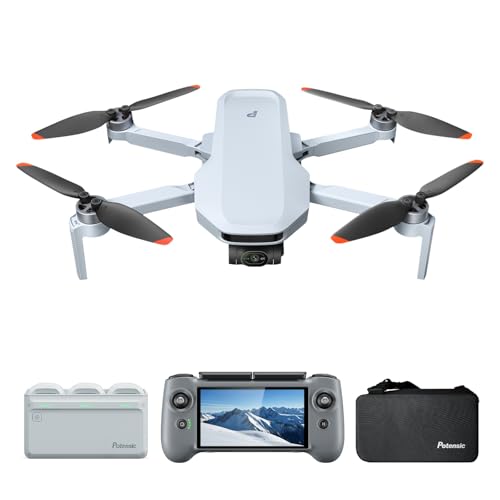

The FAA updated Part 107 regulations recently to simplify commercial operations, but these changes added new technical requirements you must know for the test. You no longer need a specific waiver for night flying, but you must meet strict equipment standards. Additionally, Remote ID is now a mandatory hardware requirement for almost all drones weighing over 0.55 pounds. The exam will test your knowledge of these thresholds and the legal responsibilities of the Remote Pilot in Command (RPIC).
Remote ID and Registration Requirements


Remote ID is essentially a “digital license plate” for your drone. It broadcasts your flight location and the location of your ground station. On the exam, you need to know that there are three ways to comply: flying a drone with Standard Remote ID built-in, using a Remote ID broadcast module, or flying in a designated FAA-Recognized Identification Area (FRIA).


- Weight Threshold: Any drone weighing more than 0.55 lbs (250g) must be registered and comply with Remote ID rules.
- Registration: Your FAA registration number must be displayed on the exterior of the aircraft. Registration is valid for three years.
- Documentation: You must have your Remote Pilot Certificate and proof of registration available during every flight operation.
Night Operations and Visibility Rules


Under the updated 107.29 rule, you can fly at night without a waiver if you have completed the updated initial exam or the online recurrent training. However, the hardware requirements are specific. Your drone must be equipped with anti-collision lights that are visible for at least 3 statute miles. These lights must have a flash rate sufficient to avoid a collision.
The exam also focuses on “Civil Twilight,” which is the 30-minute period before sunrise and the 30-minute period after sunset. If you fly during these windows, your drone must still have the 3-mile anti-collision lighting. You also need to understand “night illusions,” such as autokinesis, where a stationary light appears to move because you stare at it for too long. Understanding how the human eye adapts to darkness (taking approximately 30 minutes) is a common question on the technical portion of the exam.
Operational Limits and Right-of-Way
The FAA is very strict about where and how fast you can fly. You must memorize these specific data points for the exam:
- Maximum Speed: 100 mph (87 knots).
- Maximum Altitude: 400 feet AGL, or within 400 feet of a structure (allowing you to fly 400 feet above the top of a tower).
- Minimum Visibility: 3 statute miles from your control station.
- Cloud Clearance: You must stay 500 feet below clouds and 2,000 feet horizontally away from them.
- Right of Way: You must always yield to all manned aircraft, including gliders and balloons.
Interpreting Aviation Weather Reports (METAR and TAF)


Weather is one of the most significant factors in safe drone operations, and the FAA expects you to read weather data exactly like a manned aircraft pilot. While apps provide pretty icons and temperature graphs, the Part 107 exam requires you to decode METAR (Meteorological Aerodrome Reports) and TAF (Terminal Aerodrome Forecasts). These text-based strings of data provide the most accurate snapshots of current and predicted conditions at specific airports.
Cracking the Code of METAR Reports
A METAR report might look like a random string of letters and numbers, but it follows a strict sequence. You will likely be asked to identify specific elements like wind direction, visibility, or cloud cover height. Remember that wind direction is always reported in degrees from true north, and velocity is in knots.
- Identifying Key Abbreviations: “BR” stands for mist (think “baby rain”), “TS” for thunderstorms, and “RA” for rain.
- The Temperature/Dew Point Spread: If the temperature and dew point are within a few degrees of each other, expect fog or low clouds. This is a common “trick” question on the exam.
- Cloud Coverage: Learn the difference between FEW (few), SCT (scattered), BKN (broken), and OVC (overcast). A “ceiling” only exists when the coverage is BKN or OVC.
Predicting the Future with TAFs
While a METAR tells you what is happening now, a TAF tells you what is expected over the next 24 to 30 hours within a five-statute-mile radius of an airport. On the test, pay close attention to the FM (From) and TEMPO (Temporary) indicators. These tell you when a specific weather change is expected to occur, which is vital for planning a legal flight within your drone’s operational limits.


Drone Loading, Performance, and Emergency Response Protocols


Your drone’s performance isn’t static; it changes based on how you load it and the environment you fly in. The FAA wants to ensure you understand the physics of flight and how to react when things go wrong. Mastering the relationship between weight, balance, and atmospheric density is essential for both the test and your longevity as a pilot.
How Weight and Density Altitude Affect Flight
Every drone has a maximum takeoff weight specified by the manufacturer. Exceeding this limit doesn’t just make the drone heavy; it drastically reduces battery life, maneuverability, and climb rates. You should also be aware of density altitude. On hot, humid days at high elevations, the air is “thin,” meaning your propellers are less efficient, and your motor has to work much harder to maintain lift.
- The Load Factor: When you bank a drone in a steep turn, the “load factor” increases. This means the drone feels heavier than it actually is, which can lead to an unexpected stall or crash.
- Center of Gravity (CG): If you attach a heavy camera or accessory to the front or back of the drone, you shift the CG. This forces some motors to work harder than others, leading to overheating or stability issues.
Navigating Emergency Situations
The exam will test your knowledge of emergency protocols, specifically regarding lost link events and lithium battery fires. As a Remote Pilot in Command (RPIC), you are responsible for the safety of the National Airspace System. If a collision occurs that results in a serious injury or property damage exceeding $500 (not including the drone), you must report the accident to the FAA within 10 days.
- Lost Link Procedures: Always have a pre-programmed “Return to Home” (RTH) altitude that clears the tallest obstacles in your area.
- Battery Safety: Lithium Polymer (LiPo) batteries are volatile. If a battery is damaged or begins to swell, it should be removed and stored in a fireproof container immediately.
- Giving Way: You must always yield the right of way to any manned aircraft, regardless of the circumstances.
Conclusion: Your Path to Certification
Mastering the FAA Part 107 exam is about more than just memorizing facts; it is about adopting a professional mindset as a remote pilot. By understanding sectional charts, airspace classifications, weather reports, and the physics of drone performance, you are building a foundation for a safe and successful career in the sky. These topics represent the “heavy hitters” of the exam, and proficiency here will significantly boost your confidence on test day.
Your next step is to take the knowledge you’ve gained and apply it to a series of practice exams. Consistent testing will help you identify your weak spots and get comfortable with the FAA’s specific phrasing. Once you are consistently scoring above 80% on practice tests, head over to the PSI website and schedule your exam. You’ve got this—the sky is waiting!
❓ Frequently Asked Questions
What are the most difficult topics on the drone test?
Most applicants find sectional charts and airspace boundaries the most challenging. Specifically, understanding the floor and ceiling of Class E airspace and interpreting latitude/longitude coordinates requires significant study time.
What documents am I allowed to bring to the testing center?
You cannot bring your own study materials. The testing center provides the Airman Knowledge Testing Supplement, a calculator, a pencil, and scrap paper for your use during the exam.
How do I interpret METAR weather reports for the exam?
You must learn to read the standardized sequence: station identifier, date/time, wind, visibility, weather phenomena, sky cover, temperature/dewpoint, and altimeter setting. Practice decoding the shorthand for rain (RA), mist (BR), and thunderstorms (TS).
What are the specific night flying rules under Part 107?
As of 2021, pilots can fly at night without a waiver if they have completed the updated exam or training and the drone is equipped with anti-collision lights visible for at least 3 statute miles.
How does the FAA test drone loading and performance?
Questions typically focus on how weight and balance affect flight endurance and stability. You will likely face questions about ‘load factor’ during turns and how high density altitude decreases drone performance.
Where can I find the official FAA Remote Pilot Study Guide?
The FAA provides a free PDF version of the Remote Pilot – Small Unmanned Aircraft Systems Study Guide (FAA-G-8082-22) on their official website, which serves as the primary reference for the exam.

Similar Posts