How High Can a DJI Drone Fly? Max Altitude Limits Explained
Commercial UAV Pilot & Aerial Cinematography Specialist at Drone Nestle · FAA Part 107 Remote Pilot Certification, Commercial UAS Operations · 10+ Years in Commercial UAV Operations, Flight Hardware Benchmarking & 4K Aerial Cinematography
Most DJI drones are restricted by a software hard-cap of 500 meters, though legal regulations in most countries limit flight to 120 meters (400 feet) above ground level. Understanding the difference between takeoff altitude and mean sea level is essential for safe operation in mountainous terrain.
🎯 Key Takeaways
- The standard legal height limit is 400ft (120m) above ground level.
- DJI firmware imposes a maximum technical ceiling of 500 meters.
- Max Service Ceiling determines how high the drone can fly above sea level.
- Air density at high altitudes significantly reduces battery life and lift.
- Local geofencing may automatically restrict height in sensitive or restricted airspace.
Most DJI drones are software-locked to a maximum drone flyers”>altitude of 500 meters (approximately 1,640 feet). However, the legal limit in the United States (FAA), Europe (EASA), and many other regions is capped at 120 meters (400 feet) above ground level. While your drone has the motor power and battery life to climb significantly higher than 500 meters, DJI implements these software hard-caps to prevent pilots from entering restricted airspace occupied by manned aircraft.


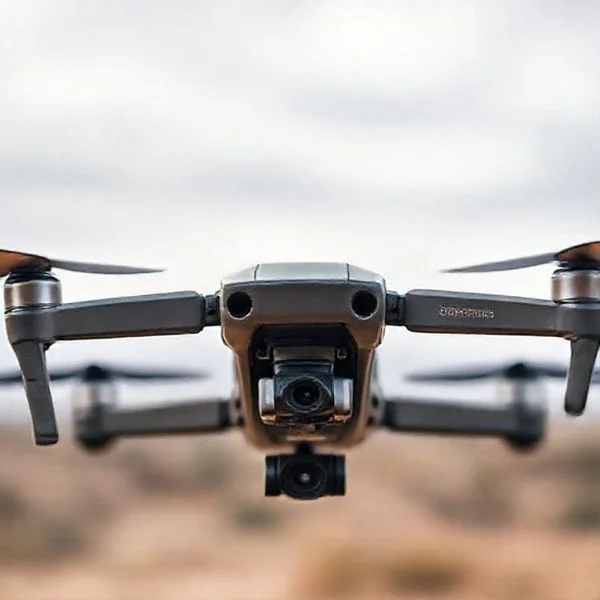
Understanding the layers of these altitude restrictions is vital for both legal compliance and flight safety. If you encounter a “Max Altitude Reached” warning at 120m, you are likely hitting a user-defined safety setting. If the drone stops ascending at 500m, you have hit the manufacturer’s firmware ceiling. Knowing how to navigate these settings allows you to capture vertical perspectives safely without your drone unexpectedly halting its ascent mid-climb.
Legal vs. Technical: Understanding the 120m and 500m Limits


The primary confusion for new pilots is the difference between what the law allows and what the drone is capable of doing. DJI drones use a combination of GPS and barometric sensors to track their height relative to the takeoff point. By default, many DJI drones are shipped with a 120m limit enabled in the settings to help pilots stay compliant with local aviation laws.


The 120-Meter Regulatory Buffer
The 120m (400ft) rule is not a random number; it is designed to create a 100-foot safety buffer between drones and the lowest altitude usually occupied by manned aircraft (500 feet). In most jurisdictions, flying above this height requires specific waivers or professional certifications. If you are flying a drone like the Mini 4 Pro or Air 3, the software may prompt you to acknowledge these regulations before it allows you to slide the limit higher than 120m.
- AGL (Above Ground Level): Your altitude is measured from the ground directly beneath the drone, not from where you are standing.
- Takeoff Point: DJI drones measure altitude from the specific spot where the motors started, which can lead to discrepancies when flying over valleys or hills.
- Legal Responsibility: Even if the DJI Fly app allows you to set a 500m limit, you are legally responsible for staying below the 120m ceiling unless you have specific permission.
The 500-Meter DJI Software Cap


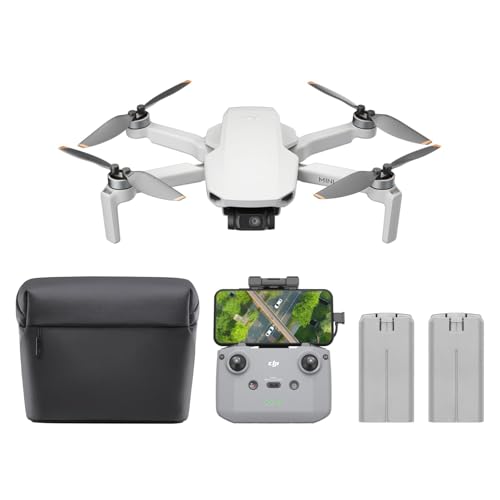
For most of the DJI lineup, including the Mavic 3, Air 2S, and Mini series, 500 meters is the absolute technical ceiling written into the firmware. Even if you are in a region with no flight restrictions, the drone will physically stop ascending once it reaches 500 meters above the takeoff point. This is a safety measure to prevent signal loss and to ensure the drone has enough battery power to descend safely before the cells are depleted.

How to Adjust the Altitude Limit in DJI Fly


If you have a legal reason to fly higher—such as inspecting a tall structure or flying in a mountainous region—you can adjust the limit within the app. Follow these steps while your drone and controller are powered on and connected:
- Open the DJI Fly app and enter the Camera View.
- Tap the three dots (…) in the top right corner to access the settings menu.
- Tap on the Safety tab (the shield icon).
- Scroll down to the Flight Protection section.
- Find Max Altitude and use the slider or tap the number to enter your desired height (up to 500m).
Note: If you are flying a “C0” classified drone in the European Union, this limit may be permanently locked at 120m due to recent EASA regulations.


Max Service Ceiling: Navigating High-Altitude and Mountainous Terrain


There is a major distinction between how high a drone can fly above you and how high it can fly above sea level. This is known as the “Max Service Ceiling.” This figure represents the highest elevation where the drone’s propellers can still generate enough lift to maintain a hover and maneuver effectively in thin air.
AGL vs. MSL (Mean Sea Level)


When you read a DJI spec sheet and see a “Max Service Ceiling” of 6,000 meters (for the Mavic 3 Pro), it does not mean you can fly 6,000 meters into the air from your backyard. It means the drone can take off from a mountain peak that is 6,000 meters above sea level. However, once it takes off from that peak, the 500m software cap relative to that takeoff point still applies.
Environmental Impact on High-Altitude Flight
As altitude increases, the air becomes less dense. This has three direct impacts on your DJI drone’s performance:
- Reduced Lift: The propellers must spin significantly faster to move the same amount of air, which puts extra strain on the motors.
- Battery Drain: Because the motors are working harder to maintain altitude in thin air, your total flight time will drop by 20% to 30% at high elevations.
- Propeller Efficiency: In extreme altitudes (above 4,000 meters), you may need “High Altitude Propellers” (available for some enterprise models) to maintain stability.
Service Ceilings by Popular DJI Models
Different drones have different power-to-weight ratios, which determines how high they can safely operate above sea level:
- DJI Mini 4 Pro: 4,000 meters (approx. 13,123 feet)
- DJI Air 3: 6,000 meters (approx. 19,685 feet)
- DJI Mavic 3 Pro: 6,000 meters (approx. 19,685 feet)
If you attempt to fly at a mountain resort located at 5,000 meters with a Mini 4 Pro, you may receive a “Motor Overload” or “Propeller Speed Limit” warning because the drone is struggling to stay airborne in the thin atmosphere.
Technical Specs: Altitude Performance Comparison of DJI Models


While most DJI drones are software-locked to a 500-meter ceiling relative to the takeoff point, their physical capabilities vary significantly based on their power-to-weight ratio and motor efficiency. Understanding the Service Ceiling—the maximum altitude above sea level where the drone can still maintain lift—is crucial for pilots operating in mountainous regions. Even if you are only flying 100 feet above the ground, if that ground is at the top of a 14,000-foot peak, your drone’s performance will be drastically different than at the beach.


Consumer vs. Enterprise Takeoff Limits
The DJI Mini series, designed for portability and lightweight flight, typically has a service ceiling of around 4,000 meters (approx. 13,123 feet). In contrast, the Mavic 3 Pro and the Air 3 are built with more robust propulsion systems, pushing that physical limit to 6,000 meters. If you are filming at high elevations, larger models offer much better stability and “bite” into the air than the sub-250g alternatives.
- DJI Mini 4 Pro: Max Takeoff Altitude of 4,000m. Best for casual travel but can struggle in thin, high-mountain air.
- DJI Air 3: Max Takeoff Altitude of 6,000m. A great middle-ground for hikers and high-altitude adventurers.
- DJI Mavic 3 Series: Max Takeoff Altitude of 6,000m. Professional-grade motors provide the best resistance to high-altitude “wobble.”
- DJI Matrice 350 RTK: Can reach up to 7,000m with specialized high-altitude propellers designed for industrial inspections in extreme terrain.
The Impact of High-Altitude Propellers
For professional-grade drones like the Matrice or Inspire series, DJI offers specialized High-Altitude Propellers. These blades are designed with a more aggressive pitch to “grab” the thinner air found at high elevations. Without these, the motors would have to spin at dangerously high RPMs to maintain a hover, which can lead to overheating and premature motor failure. Using the correct accessories ensures that the drone remains responsive to your controller inputs even when the air density is low.
Atmospheric Factors and Risks of Extreme Altitude Flight


Pushing your DJI drone to its vertical limits isn’t just a legal concern; it’s a technical challenge that involves physics. The atmosphere changes rapidly as you climb, affecting everything from battery life to structural integrity and signal reliability.
Air Density, Battery Efficiency, and Icing
As you ascend, the air becomes thinner. To maintain lift, your drone’s motors must spin significantly faster than they would at sea level. This puts an immense strain on your Intelligent Flight Battery. You may notice your remaining flight time dropping twice as fast when hovering at high altitudes compared to low-level flights. Furthermore, cold temperatures at these heights can cause “icing” on the propellers, which disrupts the airflow and can lead to a sudden loss of lift.
- Battery Voltage Drops: Thinner air requires more power, which can lead to sudden voltage drops and emergency landings.
- Propeller Efficiency: In thin air, propellers must work harder to generate the same amount of thrust, reducing overall agility.
- Temperature Sensitivity: High-altitude air is often much colder, which slows the chemical reactions inside your LiPo batteries.
Wind Shear and Signal Interference
Surface winds are rarely an accurate indicator of what is happening 400 feet in the air. Wind shear—a sudden change in wind speed or direction—is much more common at higher altitudes. Your DJI drone might struggle to return to the home point if it encounters a strong headwind aloft that exceeds its maximum speed. Additionally, the higher you fly, the more likely you are to encounter radio frequency interference from distant cellular towers or other localized transmission sources. This can lead to a “Signal Lost” warning on your controller, triggering an automatic Return to Home (RTH) sequence that you may not want if there are obstacles nearby.
Conclusion
Understanding how high a DJI drone can fly requires looking at both the software limits and the physical reality of the environment. While your hardware might be capable of reaching thousands of feet, local regulations and physical constraints like air density and wind shear generally keep us closer to the ground for safety. Staying within the 400-foot legal limit ensures you avoid manned aircraft and keep your drone in peak condition for years to come.
Before your next flight, take a moment to check your DJI Fly app settings to ensure your Max Altitude and RTH Altitude are set correctly for your specific location. If you plan to fly in high-elevation areas, consider pre-warming your batteries and checking local wind reports at different altitudes. Fly safe, stay within the rules, and enjoy the incredible perspectives that only a drone can provide!
❓ Frequently Asked Questions
Why is 120 meters (400 feet) the standard legal limit for drones?
This limit is established by aviation authorities like the FAA and EASA to ensure a safety buffer between drones and manned aircraft, which typically fly at a minimum of 500 feet.
How does the DJI 500m limit work relative to the ground?
The 500-meter limit is calculated from the point of takeoff. If you take off from a mountain peak, you can fly 500 meters above that peak, even if the ground drops away below you.
What happens if I try to fly past the software altitude limit?
The drone will reach a virtual ceiling and stop ascending. You will receive a notification in the DJI Fly app stating the ‘Maximum Flight Altitude Reached.’
Can high-altitude flying damage my DJI drone?
While it won’t cause immediate damage, the motors must spin much faster in thinner air to create lift, leading to increased heat and faster battery depletion.
Are there DJI drones that can fly higher than 500 meters?
Most consumer models are capped at 500m via firmware, but certain enterprise or agricultural models may have different limits depending on their specific use case and regional regulations.
Does wind speed increase at higher altitudes for drones?
Yes, wind speeds generally increase with altitude. A drone may be stable at ground level but can encounter ‘High Wind Velocity’ warnings and potential flyaways as it climbs higher.