How Much Does a US Military Drone Cost? Full Price Guide
Commercial UAV Pilot & Aerial Cinematography Specialist at Drone Nestle · FAA Part 107 Remote Pilot Certification, Commercial UAS Operations · 10+ Years in Commercial UAV Operations, Flight Hardware Benchmarking & 4K Aerial Cinematography
The cost of a U.S. military drone varies significantly based on its mission profile, ranging from $6,000 for small tactical units like the RQ-11 Raven to over $200 million for strategic HALE platforms. Beyond the airframe, total expenses are driven by advanced sensor suites, ground control stations, and secure satellite links.
🎯 Key Takeaways
- Small tactical drones like the RQ-11 Raven cost approximately $30,000 per complete system.
- The MQ-9 Reaper airframe costs roughly $30 million, excluding specialized sensor payloads.
- Strategic platforms like the RQ-4 Global Hawk can exceed $220 million per unit.
- Flyaway cost differs from total program cost, which includes infrastructure and maintenance.
- High-end sensors and encrypted satellite communication account for the bulk of expenses.
The price tag for a U.S. military drone ranges from $6,000 for a hand-launched scout to over $220 million for a strategic surveillance platform. When you ask what a drone costs, you are really asking about its mission. A disposable “suicide” drone costs about as much as a luxury SUV, while a high-altitude RQ-4 Global Hawk costs more than a standard F-35 fighter jet.


Understanding these figures is essential for grasping how the Department of Defense allocates its multi-billion dollar budget. Because military drones aren’t just “flying cameras,” their costs include advanced sensors, encrypted satellite links, and weapon systems. Knowing the specific unit costs helps you see why losing a single Reaper drone is a massive financial blow, while losing a swarm of smaller units is simply the cost of doing business.
Breakdown of Costs by Drone Classification: Micro to HALE


The U.S. military categorizes its unmanned aerial systems (UAS) into five distinct groups based on weight, speed, and altitude. This classification is the biggest driver of the price you see on the invoice. As you move from Group 1 to Group 5, the technology transitions from short-range optics to global satellite communication and heavy strike capabilities, causing prices to skyrocket.


Tactical and Small Unit Drones (Group 1-3)
Small drones are often considered “attritable,” meaning the military expects to lose them in combat. These units are portable and used by ground troops for immediate situational awareness. While they are the cheapest in the inventory, they still cost significantly more than any high-end consumer drone you can buy at a retail store.
- RQ-11B Raven: This hand-launched drone is the most common in the world. A single air vehicle costs roughly $35,000, though a full system including the ground controller and three aircraft costs about $250,000.
- Switchblade 300: Often called a “loitering munition,” this is essentially a flying bomb. Each unit costs approximately $6,000 to $10,000. It is a one-way trip, making it a high-cost bullet rather than a long-term asset.
- RQ-7B Shadow: As a Group 3 tactical drone, the Shadow is much larger and requires a launcher. A single Shadow air vehicle costs around $750,000, but a full system with four aircraft and ground equipment totals over $15 million.
Strategic and Strike Platforms (Group 4-5)


These are the iconic drones often featured in news reports. They are roughly the size of traditional piloted aircraft and carry the highest price tags in the fleet. These platforms are designed for long-endurance missions and carry heavy payloads like Hellfire missiles or advanced SIGINT (Signals Intelligence) suites.


- MQ-1C Gray Eagle: Used primarily by the Army for extended range and multi-purpose missions, a single Gray Eagle costs roughly $21 million.
- MQ-9 Reaper: The backbone of U.S. drone strike capabilities. The “flyaway” unit cost for a single Reaper is approximately $32 million. This includes the sensors and the airframe but does not include the ground control station or the munitions.
- RQ-4B Global Hawk: This is a high-altitude, long-endurance (HALE) platform used for intelligence gathering. It is the most expensive drone in the inventory. Depending on the sensor suite, a single Global Hawk can cost between $130 million and $220 million.
Everything You Need to Know About US Military Drone Costs
Determining the price of a United States military drone is significantly more complex than checking a sticker price at a local dealership. Because these systems range from hand-launched surveillance tools to massive, high-altitude strategic assets, the costs vary by hundreds of millions of dollars. This guide provides a comprehensive, step-by-step methodology for breaking down these astronomical figures, helping you understand where the taxpayer money goes, from initial research and development to the final “flyaway” cost and long-term maintenance. Following these steps is essential for anyone analyzing defense budgets, participating in aerospace journalism, or simply seeking a deep understanding of modern warfare economics.
Step 1: Categorize the Drone by Department of Defense (DoD) Groups
What you need: Access to the DoD UAS (Unmanned Aircraft Systems) classification chart and basic knowledge of drone wingspans and weights.
Instructions: Before you can estimate a cost, you must identify which of the five DoD groups the drone falls into. Group 1 drones, like the AeroVironment RQ-11 Raven, are small, hand-launched, and typically cost between $30,000 and $50,000 per unit. Group 3 drones, such as the RQ-7 Shadow, are larger and cost roughly $750,000. Finally, Group 5 drones represent the “heavy hitters” like the MQ-9 Reaper or the RQ-4 Global Hawk. These are the size of traditional aircraft and cost tens of millions of dollars. By categorizing the drone first, you set a baseline price range that prevents you from comparing a “toy-sized” scout to a “jet-sized” strategic platform.
Pro Tip: Always look at the maximum takeoff weight (MTOW). If it is over 1,320 pounds, you are looking at a Group 4 or 5 drone, which will almost always have a price tag exceeding $10 million per unit.
Step 2: Differentiate Between Flyaway Cost and Total Program Cost
What you need: Financial reports from the Government Accountability Office (GAO) or Department of Defense budget justifications.
Instructions: This is the most common area of confusion. The “Flyaway Cost” refers strictly to the cost of the airframe, engine, and basic electronics—essentially what it costs to roll one unit off the assembly line. For an MQ-9 Reaper, this is often cited around $15 million to $20 million. However, the “Total Program Cost” includes the massive Research, Development, Test, and Evaluation (RDT&E) expenses divided by the number of units produced. When you include the R&D, the cost per unit for a drone like the Global Hawk can jump from a $130 million flyaway cost to over $220 million per unit in total program terms.
Pro Tip: When reading news articles, check if they are quoting “Procurement” costs (the buy price) or “Program” costs (which include the billions spent on designing the drone years ago).
Step 3: Analyze the Sensor Suite and Modular Payloads
What you need: Technical specifications for electro-optical/infrared (EO/IR) sensors, Synthetic Aperture Radar (SAR), and signals intelligence (SIGINT) packages.
Instructions: In many cases, the drone itself is the cheapest part of the system; the “brain” and “eyes” are where the real money is spent. High-end drones like the MQ-4C Triton carry Multi-Intelligence sensor suites that can cost $50 million or more on their own. You must research whether the drone uses a standard AN/DAS-1 MTS-B sensor or if it has been upgraded with specialized equipment like the Gorgon Stare (a wide-area motion imagery system). Adding a specialized radar or an electronic warfare jamming pod can easily double the cost of a baseline airframe.
Pro Tip: If a drone is described as “Multi-Int” or “SIGINT-capable,” expect the electronic payload to account for 40% to 60% of the total unit cost.
Step 4: Factor in the Ground Control Station (GCS) and Satellite Links
What you need: Information on the drone’s communication architecture (Line-of-Sight vs. SATCOM).
Instructions: A drone cannot fly without its ground components. For large-scale drones, a Ground Control Station (GCS) often looks like a high-tech shipping container filled with servers, workstations, and encrypted satellite links. These stations often cost between $2 million and $5 million each. Furthermore, because long-distance drones rely on Ku-band or Ka-band satellite communication (SATCOM) to operate from across the globe, the cost of the satellite hardware integrated into the drone’s nose must be factored in. This hardware alone can add $1 million to $3 million to the procurement cost.
Pro Tip: Remember that one GCS can sometimes control multiple drones. When calculating costs for a “squadron,” make sure you aren’t accidentally multiplying the GCS cost by every single airframe.
Step 5: Evaluate Munitions and Armed Capability Expenses
What you need: Current pricing for AGM-114 Hellfire missiles, GBU-12 Paveway II bombs, or AGM-179 JAGM.
Instructions: If the drone is a “UCAV” (Unmanned Combat Aerial Vehicle), its operational cost includes its lethality. An armed MQ-9 Reaper can carry up to four Hellfire missiles and two 500lb bombs. A single Hellfire missile costs approximately $150,000. Therefore, a drone returning from a single mission where it expended all munitions has effectively “spent” nearly $700,000 in expendable hardware. Furthermore, the wing hardpoints and firing circuits required to make a drone “weapon-ready” increase the initial procurement cost compared to a “clean” surveillance-only version.
Pro Tip: Check if the drone is “Combat-Coded.” Some drones are built only for training and lack the expensive wiring and software for weapons, making them significantly cheaper than their frontline counterparts.
Step 6: Account for Operations and Maintenance (O&M) Life-Cycle Costs
What you need: “Cost Per Flight Hour” (CPFH) data, often found in Air Force Magazine or Congressional Research Service (CRS) reports.
Instructions: Buying the drone is only the down payment. The real expense lies in keeping it in the air. For example, the MQ-9 Reaper has a cost per flight hour of roughly $3,500 to $5,000. This covers fuel, spare parts, and the logistical tail. In contrast, the sophisticated RQ-4 Global Hawk can cost over $15,000 to $25,000 per flight hour due to its complex high-altitude engines and sensitive sensors. To get a true sense of the cost, multiply the expected 20-year lifespan of the drone by its annual flight hours. Often, the lifetime maintenance cost is 3 to 4 times higher than the original purchase price.
Pro Tip: High-altitude drones require more specialized maintenance crews. A Global Hawk requires a much larger “footprint” of technicians than a Raven, which a single soldier can repair with a basic kit.
Step 7: Cross-Reference with the “P-1” Procurement Budget Document
What you need: Access to the “US Department of Defense Budget Materials” website, specifically the “P-1 Exhibit” (Procurement Programs).
Instructions: To get the most accurate, real-world data, you must go to the source. Each year, the DoD releases the P-1 document, which lists exactly how much they are requesting for each drone system. Look for the “Line Item” for the specific drone (e.g., “MQ-9 Reaper”). This document will show you the total quantity being purchased and the total dollar amount allocated. Divide the total dollars by the quantity to get the current year’s “Unit Cost.” This is the most “official” number available and accounts for recent inflation and manufacturing changes.
Pro Tip: Look for “Advance Procurement” funds in the P-1. These are payments made a year in advance for long-lead items (like engines), which can give you a hint about future drone price increases.
✅ Final Checklist
- Verified if the price is for a single airframe (Flyaway) or the entire system (Program).
- Accounted for the specific sensor payload (EO/IR, Radar, or SIGINT).
- Included the cost of the Ground Control Station (GCS) and satellite link hardware.
- Factored in the cost of munitions for armed variants.
- Identified the “Cost Per Flight Hour” to understand long-term sustainability.
- Cross-referenced figures with the most recent DoD P-1 or R-1 budget exhibits.
Important Notes:
- Classified Programs: Costs for “Black Budget” drones (like the RQ-170 Sentinel or RQ-180) are not publicly disclosed and any figures found online are estimates.
- Export Pricing: Drones sold to foreign allies (FMS – Foreign Military Sales) are often much more expensive than those sold to the US military because they include training, spare parts, and base construction.
- Estimated Time: Conducting a thorough cost analysis of a single drone system typically takes 2-4 hours of research.
- Cost Range: US military drones range from $30,000 (Raven) to over $200,000,000 (Global Hawk) per unit.
Comparing Procurement Unit Costs vs. Total Program Lifecycle Expenses


When you see a price tag for a drone, you are usually looking at the “Unit Flyaway Cost.” This is the price for the aircraft as it leaves the factory. However, the U.S. military rarely buys just an aircraft. To understand the real cost, you have to look at the “Gross Weapon System Cost,” which includes everything needed to make that drone functional in a war zone.
The Sticker Price vs. The Full Package


For a drone like the MQ-9 Reaper, the $32 million unit cost is just the beginning. You cannot fly a Reaper without a Ground Control Station (GCS). A single GCS can cost several million dollars on its own. Furthermore, the satellite bandwidth required to operate these drones globally is a massive recurring expense. When you add up the aircraft, the control centers, the initial spare parts, and the specialized maintenance tools, the “total system cost” for a four-drone Reaper set often exceeds $100 million.

- Ground Control Stations: These are often housed in shipping containers and can cost $3 million to $5 million each.
- Sensor Balls (MTS): The Multi-Spectral Targeting System (the “eye” of the drone) is often priced separately and can cost $1 million to $4 million depending on the infrared and laser capabilities.
- Initial Training: Training a single drone pilot and sensor operator team can cost the military upwards of $100,000 before they ever fly a real mission.
Operational Costs and Flight Hours

Your investment in a drone doesn’t end after the purchase. You have to consider the cost per flight hour (CPFH). This metric tracks fuel, maintenance, and the salaries of the crews required to keep the bird in the air. For example, while a Reaper is cheaper to buy than an F-16, its operational costs are also significantly lower, which is why the military prefers them for long-duration patrols.
- MQ-9 Reaper: Costs approximately $3,500 to $5,000 per flight hour.
- RQ-4 Global Hawk: Costs roughly $18,000 to $25,000 per flight hour due to its complex high-altitude engines and sensitive spy equipment.
- Small Drones (Raven/Puma): These have negligible flight hour costs, often costing less than $50 in battery wear and minor maintenance per mission.
Key Factors Driving the High Price of Military-Grade Drones


When you see a price tag in the tens of millions, it is natural to wonder where that money actually goes. Unlike a high-end consumer drone that relies on a single GPS module and a 4K camera, a military UAV is a flying supercomputer. The “hidden” costs are what truly drive the budget, and they are rarely visible from the ground.
Cutting-Edge Sensors and Encrypted Avionics
The airframe itself is often the cheapest part of the package. The real value lies in the Multi-Spectral Targeting Systems (MTS) and advanced radar arrays. These sensors allow operators to identify targets from miles away in total darkness or through thick smoke. Furthermore, the communication systems must be hardened against electronic warfare. Encrypted satellite links and anti-jamming technology ensure the drone stays connected in hostile environments, but these components cost significantly more than standard Wi-Fi or radio frequencies.
- Synthetic Aperture Radar (SAR): Enables the drone to “see” through clouds and dust, a feature costing millions per unit.
- Secure Datalinks: Preventing hackers from intercepting feeds requires proprietary, high-security hardware.
- Redundant Systems: Military drones often feature triple-redundant flight controls to ensure the craft doesn’t crash if one system fails.
Research, Development, and Life-Cycle Logistics
You aren’t just paying for the physical drone; you are paying for the years of testing that came before it. The Department of Defense invests billions into Research and Development (R&D) before a single unit is deployed. Additionally, the “flyaway cost” is only the beginning. These systems require a massive tail of logistics, including specialized transport containers, ground control stations, and a dedicated team of technicians for every hour of flight time.
Price Analysis of Major Platforms: Reaper, Gray Eagle, and Global Hawk


To get a clear picture of the spending, we have to look at the “Big Three” of the U.S. drone fleet. These platforms represent the peak of modern aerial surveillance and strike capabilities, and their prices reflect their strategic importance.


The Workhorses: MQ-9 Reaper and MQ-1C Gray Eagle
The MQ-9 Reaper is perhaps the most famous drone in the world. While an individual aircraft might be quoted at around $30 million, a full “system” (which includes four aircraft and a ground control station) usually costs closer to $100 million. Its cousin, the MQ-1C Gray Eagle, used primarily by the Army, comes in at a slightly lower price point but remains a multi-million dollar investment due to its long-endurance engines and specialized internal payloads.
- MQ-9 Reaper: Roughly $32 million per unit (depending on the sensor package).
- MQ-1C Gray Eagle: Approximately $21 million per unit, optimized for tactical army support.
- Operational Tip: When reading budget reports, always check if the price includes the Ground Control Station (GCS), as this can double the perceived cost.
The High-Altitude Giant: The RQ-4 Global Hawk
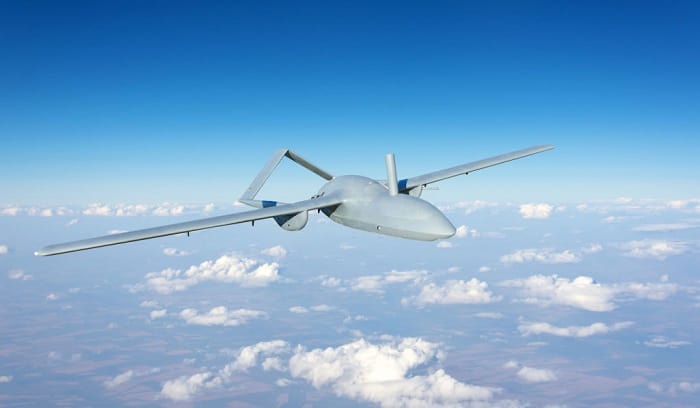
At the top of the pricing tier is the RQ-4 Global Hawk. This is not a drone you launch from a field; it has a wingspan comparable to a Boeing 737. It is designed for high-altitude, long-endurance reconnaissance. Because it carries some of the most sophisticated intelligence-gathering equipment in the world, the price tag is staggering. A single Global Hawk can cost upwards of $130 million to $200 million, making it more expensive than many manned fighter jets like the F-35.
Example: The sensors on a Global Hawk are so powerful they can map an entire geographic region in a single day with sub-meter accuracy, justifying the cost for strategic intelligence agencies.
Conclusion
The cost of a U.S. military drone varies wildly, from the “disposable” $10,000 reconnaissance units used by infantry to the $200 million Global Hawks that patrol the stratosphere. While the hardware is impressive, the majority of your tax dollars are invested in advanced sensor technology, secure communications, and the massive logistical infrastructure required to keep these machines in the air. Understanding these costs highlights the shift in modern warfare toward precision and remote surveillance.
Next Steps: If you are interested in how this tech trickles down to the civilian market, start by researching Long Range FPV systems or thermal imaging accessories for prosumer drones. You can find high-quality tech that mimics military functionality without the multi-million dollar price tag. Have thoughts on drone spending? Leave a comment below and let’s discuss!
💬 Quick Questions & Answers
What is the cheapest drone used by the US military?
The RQ-11 Raven is among the most affordable, costing around $6,000 for a single airframe.
How much does a single MQ-9 Reaper cost?
A single MQ-9 Reaper airframe costs approximately $30 million, depending on the configuration.
What is the most expensive drone in the US arsenal?
The RQ-4 Global Hawk is the most expensive, with a unit cost often exceeding $200 million.
Does the price include the remote control station?
Usually, ‘unit cost’ refers only to the aircraft, while ‘system cost’ includes the ground control equipment.
Why are military drones more expensive than commercial ones?
They require hardened encryption, specialized sensors, and long-range satellite communication capabilities.
❓ Frequently Asked Questions
What is the difference between flyaway cost and total program cost?
Flyaway cost covers only the airframe and basic equipment, while total program cost includes research, development, ground stations, and long-term support. For major platforms, the total program cost per unit is significantly higher than the individual flyaway price.
How much does it cost to operate a military drone per hour?
Operating costs vary; the MQ-9 Reaper costs roughly $3,500 to $5,000 per flight hour. Larger strategic drones like the Global Hawk can cost over $15,000 per hour due to complex maintenance needs.
Are there low-cost ‘suicide’ drones in the US inventory?
Yes, loitering munitions like the AeroVironment Switchblade are designed for one-time use and cost between $6,000 and $70,000. These are considered consumable assets compared to multi-use platforms like the Reaper.
What makes the RQ-4 Global Hawk so expensive?
Its high cost is driven by its massive size, high-altitude endurance, and a sophisticated suite of synthetic aperture radar and signals intelligence sensors. It is essentially a high-tech spy plane without a human pilot.
How many drones are included in a standard MQ-9 Reaper system?
A standard MQ-9 Reaper system typically consists of four aircraft, a ground control station, and a satellite link. The total system procurement cost for this configuration is approximately $64 million.
Do drone accessories like cameras and missiles add significantly to the cost?
Absolutely; high-definition thermal sensors and Hellfire missiles can add millions to the operational cost. A single Hellfire missile alone costs approximately $150,000 per unit.