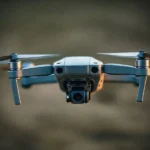
Fiber Optic Drones: How the Spooling and Signal Tech Works
Commercial UAV Pilot & Aerial Cinematography Specialist at Drone Nestle · FAA Part 107 Remote Pilot Certification, Commercial UAS Operations · 10+ Years in Commercial UAV Operations, Flight Hardware Benchmarking & 4K Aerial Cinematography
Fiber optic drones utilize a high-speed micro-tether spooling system that deploys a hair-thin cable during flight to maintain a physical data link. This technology allows for instantaneous signal transmission through light pulses, making the drone immune to electronic jamming and signal interference.
🎯 Key Takeaways
- Micro-spools deploy ultra-thin glass fiber to prevent tension during high-speed maneuvers.
- Optical transceivers convert drone electrical signals into light pulses for zero latency.
- Physical tethers provide complete immunity to RF jamming and electronic warfare tactics.
- Modern fiber tethers balance high tensile strength with negligible weight for flight efficiency.
- Range is strictly limited by the physical length of the onboard cable spool.
A fiber optic drone operates using a physical micro-tether made of hair-thin glass, allowing for a 100% secure, unjammable connection between the operator and the aircraft. Unlike traditional drones that rely on radio frequencies (RF), these systems physically unspool a high-tensile cable as they fly. This link transmits gigabits of data per second with virtually zero electromagnetic footprint, making the drone invisible to RF scanners.

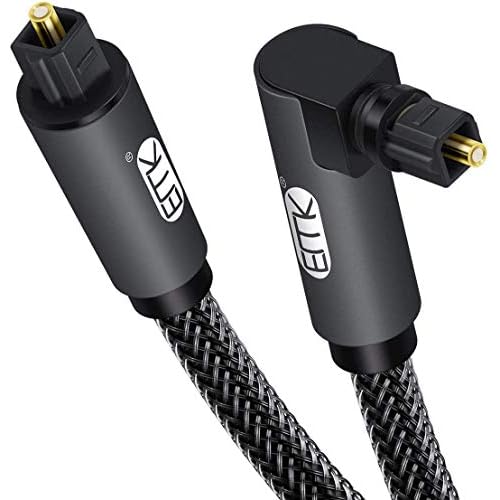

This technology matters because it solves the two biggest weaknesses of modern UAVs: signal interference and electronic jamming. By using a physical link, you can fly through dense urban environments, deep into tunnels, or across active electronic warfare zones without losing your video feed. The mechanical secret lies in how the drone manages kilometers of cable without the weight or tension causing a crash.
The Mechanics of Micro-Fiber Spooling and Deployment
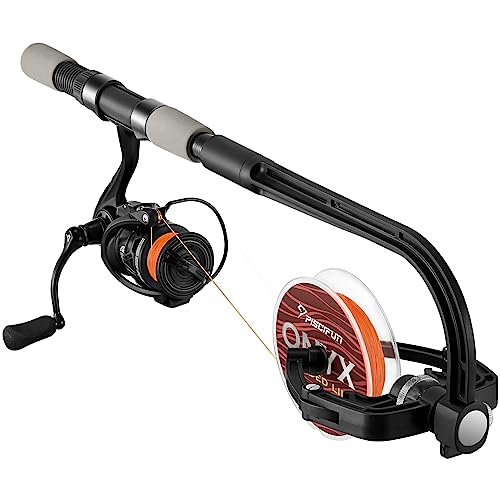


The core of a fiber optic drone is the onboard spooling mechanism, often referred to as a “payout” system. Unlike a fishing reel that pulls line against a drag system, a drone’s fiber spool must release the cable with near-zero resistance. If the drone had to “pull” the weight of the cable from a ground station, the tension would quickly exceed the drone’s motor thrust or snap the fragile glass core. Instead, the spool is typically mounted directly to the drone, allowing the cable to “drop” into place as the aircraft moves forward.


Inside-Out Payout Technology
Most high-end fiber optic drones use a stationary “inside-out” winding technique. The fiber optic cable is wound into a precision coil inside a canister. As the drone flies, the cable pulls away from the center of the coil rather than the outside. This eliminates the need for a heavy, motorized spinning drum which would create gyroscopic effects and drain battery life. Because the spool itself doesn’t move, there is no mechanical inertia to overcome, allowing for instant changes in flight speed without snapping the line.
- Precision Cross-Winding: The fiber is wound in a specific diamond pattern to prevent “tuck-under,” where the exiting line gets caught under the next layer.
- Low-Friction Coating: The micro-fiber is coated in a specialized acrylate or silicone layer to ensure it slides out of the canister without generating static or heat.
- Active Tension Monitoring: Sensors at the exit point of the spool monitor the “exit angle.” If the drone turns sharply, the guide ensures the fiber doesn’t rub against the housing.
Managing Cable Weight and Aerodynamics


You might wonder how a drone can carry 5 or 10 kilometers of cable. The answer is the extreme miniaturization of the fiber. A standard 20-kilometer spool of military-grade micro-fiber weighs less than 2 kilograms. The cable diameter is usually around 200 to 250 microns—roughly the thickness of two human hairs. This thin profile minimizes wind resistance (drag), allowing the drone to maintain high speeds even when several kilometers of tether are trailing behind it.


Signal Conversion: From Electrical Data to Optical Pulses


Since drones operate on electrical circuits and fiber optics operate on light, the system requires instantaneous signal conversion at both ends. This process happens through an onboard Optical Network Terminal (ONT) or a miniaturized media converter. Your control inputs and the 4K video feed are converted from electrical electrons into photons (light pulses) that travel through the glass core at nearly the speed of light.
SFP Modules and Light Transmission


The drone uses Small Form-factor Pluggable (SFP) transceivers that have been stripped down for weight. These modules use a laser diode to “fire” data through the fiber. Because the medium is glass, the signal does not degrade like it does over copper wire or through the air. You get the same 100ms latency whether the drone is 10 meters away or 10 kilometers away.


- Single-Mode Fiber (SMF): Most drones use SMF to allow light to travel in a single path, which prevents signal blurring over long distances.
- Wavelength Division Multiplexing (WDM): This allows the drone to send high-definition video “up” the fiber while simultaneously receiving control commands “down” the fiber on different light frequencies.
- RF Isolation: Because the data is light, it is physically impossible for a radio jammer to interfere with the command link.
Near-Zero Latency and EW Resistance


In a standard drone, your video feed is compressed, turned into a radio packet, sent through the air, and then decompressed. This creates “latency,” or lag. In a fiber optic setup, the conversion to light happens in microseconds. This provides a “hard-wired” feel to the flight controls. More importantly, in Electronic Warfare (EW) scenarios, there is no “leakage.” A radio-frequency drone acts like a flare in the dark for signal detectors; a fiber optic drone is completely silent, emitting no detectable signal into the atmosphere.
Material Science of Drone Fiber: Weight vs. Durability


When you imagine a drone trailing a wire, you might picture a heavy, clunky cable dragging the aircraft down. However, the material science behind modern drone fiber is nothing short of incredible. To work effectively, the fiber must be as thin as a human hair yet strong enough to withstand high-speed deployment without snapping.

The Micro-Cabling Miracle
Unlike the thick, armored fiber optic cables used in underground internet infrastructure, drone fiber uses bend-insensitive glass (often meeting G.657 standards). This allows the fiber to be coiled tightly without losing signal quality. The glass core is typically protected by a specialized polymer coating rather than heavy plastic jackets. This design ensures the cable remains flexible and extremely lightweight.
- Weight Efficiency: A 10-kilometer spool of specialized drone fiber can weigh as little as 1.5 to 2 kilograms, making it manageable for medium-sized UAVs.
- Tensile Strength: Despite its thinness, many drone fibers are reinforced with aramid fibers (like Kevlar) to provide high “break strength” during rapid maneuvers.
- Bend Radius: Specialized coatings allow the fiber to survive sharp turns and snag points that would shatter standard glass fiber.
Managing Tension and Drag
The real challenge isn’t just carrying the fiber; it’s deploying it. If the tension is too high, the drone’s motors will overwork; if it’s too low, the fiber might tangle in the props. Precision-wound spools are engineered to pay out the line with almost zero resistance. For example, in high-end reconnaissance drones, the fiber is often wound in a “center-pull” configuration, similar to a sewing machine bobbin, to ensure it exits the spool smoothly at speeds exceeding 100 km/h.
Operational Advantages: EW Resistance and Bandwidth


While the physical spooling tech is impressive, the strategic advantages of using light instead of radio waves are why this technology is seeing a massive resurgence. In environments where the airwaves are crowded or contested, fiber optics provide a “invisible” and unbreakable link.


Ghosting the Electronic Spectrum
Traditional drones rely on 2.4GHz or 5.8GHz radio frequencies. These are easy to detect, track, and jam. Because a fiber optic drone transmits data through pulses of light inside a glass core, it emits zero electromagnetic interference (EMI). This makes the drone effectively invisible to electronic warfare (EW) sensors that scan for radio control signals.
- Jam-Proof Connectivity: Signal jammers that drop standard FPV drones out of the sky have no effect on a physical glass line.
- LPI (Low Probability of Intercept): Since there is no radio signal radiating into the air, an adversary cannot “triangulate” the pilot’s location.
- Security: The data link cannot be hijacked or “spoofed” remotely because the physical connection is direct and closed.
Zero-Latency 4K Feeds
Radio signals are often compressed to fit within available bandwidth, leading to lag (latency) or pixelated video. Fiber optics offer virtually unlimited bandwidth. This allows pilots to stream uncompressed, ultra-high-definition video back to the GCS (Ground Control Station) with zero millisecond delay. This is a game-changer for industrial inspectors checking for hairline cracks in bridges or search-and-rescue teams operating in dense forests where radio signals struggle to penetrate.
Practical Tip: If you are operating in a “noisy” RF environment like a dense urban center or a power plant, a fiber-tethered system can provide a crystal-clear feed that a wireless drone simply cannot match.
Conclusion
Fiber optic drone technology represents a fascinating blend of high-speed spooling mechanics and advanced material science. By trading the freedom of wireless flight for the security and bandwidth of a physical connection, these drones solve some of the most difficult challenges in modern aviation. From avoiding electronic jamming to providing lag-free 4K video, the “wire” is proving to be a powerful asset rather than a limitation. As fiber materials become even lighter and stronger, expect to see these “tethered ghosts” appearing in more professional and specialized kits.
Next Steps: If you’re interested in exploring this tech, start by researching micro-spooler attachments for existing enterprise drones. Always ensure your flight controller supports “tethered mode” to account for the unique physics of trailing a line. Ready to upgrade your signal? Stay tuned for our deep dives into the latest drone accessories!
💬 Quick Questions & Answers
Does the cable pull the drone back during flight?
No, the spool releases cable freely at the drone’s speed so it feels minimal tension.
Can fiber optic drones be jammed by radio signals?
No, because data travels via light through a physical cable, RF jamming is ineffective.
How thin is the fiber optic cable used?
Most drone tethers are roughly the thickness of a human hair or light fishing line.
What happens if the fiber cable snaps?
The drone will lose its data link and typically initiates an autonomous landing or RTH sequence.
Is the fiber cable used to power the drone?
Generally no; these cables are for data only, while the drone relies on onboard batteries.
❓ Frequently Asked Questions
How does the spool prevent the fiber from tangling during flight?
The spooling mechanism is precision-engineered to unwind from a stationary mandrel or specialized bobbin. This ensures the micro-fiber releases smoothly at speeds matching the drone’s velocity, preventing snags or snap-back during rapid turns.
What kind of transceivers are used for signal conversion?
Miniaturized optical transceivers on the drone and ground station convert digital electrical signals into laser light pulses. These pulses travel through the glass core of the fiber and are decoded back into data in microseconds, ensuring zero-latency control.
How much weight does a 10km fiber spool add to a drone?
Specialized micro-fiber is extremely lightweight, with a 10km spool often weighing between 1 and 2 kilograms. Interestingly, the drone’s payload lightens as it flies and deposits the cable onto the terrain below.
Can the fiber optic cable be reused after a mission?
In most tactical or high-speed applications, the micro-fiber is considered a consumable and is not reused. While technically possible to rewind, the risk of micro-fractures in the glass makes it unreliable for subsequent flights.
Why use fiber optics instead of standard radio frequencies?
Fiber optics provide a ‘hardwired’ connection that is impossible to intercept, spoof, or jam remotely. It also supports massive bandwidth for uncompressed high-definition video feeds without the lag associated with digital radio compression.
What are the primary physical risks to the fiber tether?
The main risks include snagging on sharp obstacles like jagged rocks or building edges and being severed by physical interference. To mitigate this, pilots must plan flight paths that avoid ‘wrapping’ the cable around environmental objects.