How Far Can a Drone Fly? Max Range and Legal Limits Explained
Commercial UAV Pilot & Aerial Cinematography Specialist at Drone Nestle · FAA Part 107 Remote Pilot Certification, Commercial UAS Operations · 10+ Years in Commercial UAV Operations, Flight Hardware Benchmarking & 4K Aerial Cinematography
While modern consumer drones can technically reach distances of 5 to 15 kilometers (3-9 miles), legal regulations generally require pilots to maintain Visual Line of Sight (VLOS) at all times. The actual flight distance is limited by signal technology, battery capacity, and environmental interference.
🎯 Key Takeaways
- Toy drones are limited to a range of 20-100 meters.
- Consumer drones like DJI models reach 5-15km via OcuSync tech.
- Legal VLOS requirements usually supersede a drone’s technical range capabilities.
- Signal interference and physical obstacles significantly reduce real-world flight distance.
- Battery life is the ultimate limiting factor for total flight distance.
The distance your drone can fly depends on its transmission system, but most high-end consumer drones can travel between 5km and 15km (3 to 9 miles) from the controller. However, there is a major difference between how far a drone can fly technically and how far you are legally allowed to fly it. In most countries, including the US and UK, regulations require you to keep your drone within your “visual line of sight” (VLOS) at all times, which usually limits you to about 500 meters or less depending on weather conditions.


Understanding these limits is vital for your flight safety and the longevity of your equipment. If you push your drone beyond its signal capacity or battery life, you risk a “flyaway” or a total loss of the aircraft. This guide breaks down the technical range benchmarks for different drone categories and explains the hardware that makes these long-distance flights possible.
Range Benchmarks: Toy vs. Prosumer vs. Enterprise Drones


Every drone is not built for distance. The range you can expect varies wildly based on the price point and the intended use of the aircraft. Manufacturers often list a “maximum range” in their specs, but these numbers are achieved in perfect conditions with zero interference.
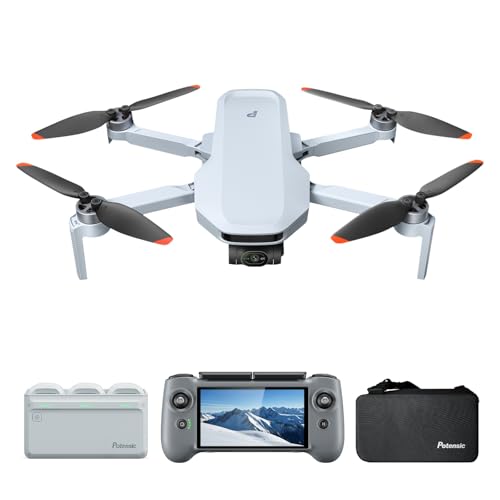


Toy and Entry-Level Drones (20m to 100m)
If you are flying a drone that costs under $100, you are likely using a basic Wi-Fi or Bluetooth connection. These drones are designed for backyard use or indoor flight. Because they lack sophisticated antennas, the signal usually drops out once you get about 50 to 100 meters away. You should never attempt to fly these drones out of your immediate vicinity, as they often lack “Return to Home” (RTH) features that rely on GPS to bring the drone back if the signal snaps.
Consumer and Prosumer Drones (5km to 15km)


This is the most popular category, featuring brands like DJI, Autel, and Parrot. These drones use proprietary transmission technologies that are significantly more powerful than standard Wi-Fi. For example:
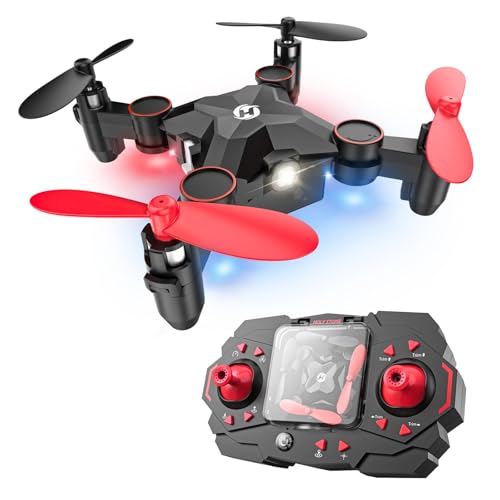

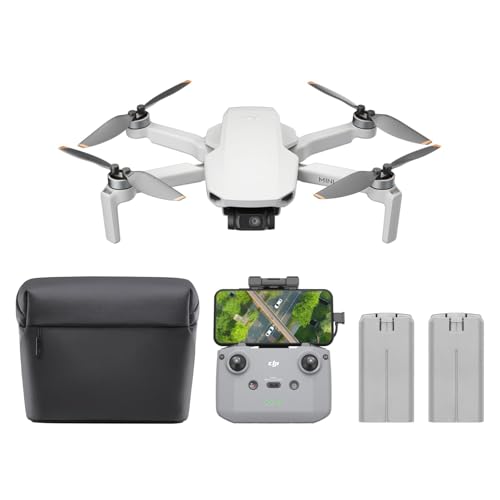
- DJI Mini 4 Pro / Air 3: These use the O4 transmission system, which advertises a range of up to 20km in FCC-compliant regions, though 10-12km is more realistic in typical environments.
- Autel EVO Lite+: This model offers a range of approximately 12km using their Autel SkyLink system.
- Mid-Range FPV Drones: These often reach 3-7km depending on the power of the video transmitter (VTX) installed.
Enterprise and Custom Long-Range Drones (20km+)


Enterprise-grade drones, such as the DJI Matrice series, are built for industrial inspections and search-and-rescue. They utilize heavy-duty external antennas and specialized frequencies to maintain 1080p video feeds over massive distances. Similarly, custom-built long-range FPV (First Person View) drones can be equipped with Crossfire or ELRS (ExpressLRS) radio links. When paired with high-gain directional antennas, these custom setups can successfully fly 20km to 30km away and back, provided the battery capacity allows for the round trip.
Understanding Signal Technologies: OcuSync, Wi-Fi, and Radio Links


The “leash” that connects your controller to your drone is made of radio waves. The quality of this technology determines whether your video feed stays crystal clear or turns into a stuttering mess as you fly further away. If you want maximum range, you need to understand what is happening under the hood of your remote controller.


The Difference Between Wi-Fi and Proprietary Links


Cheap drones use standard 2.4GHz Wi-Fi. This is the same frequency your home router uses. It is incredibly crowded, meaning your neighbor’s router or a nearby cell tower can easily knock your drone offline. Professional drones use proprietary protocols like DJI OcuSync or Autel SkyLink. These systems are much more “aggressive.” They use frequency hopping, which means the drone and controller constantly switch between dozens of different channels to find the one with the least interference. This allows for a stable HD video feed even when the drone is miles away.
Frequency Bands: 2.4GHz vs. 5.8GHz
Most modern drones are “dual-band,” meaning they can flip between 2.4GHz and 5.8GHz automatically. You need to know which one does what:
- 2.4GHz: This frequency travels further and penetrates obstacles (like trees or light buildings) better. However, it is much more prone to interference because so many other devices use it.
- 5.8GHz: This provides a much faster data rate, which means your video feed will look sharper and have less “lag” (latency). The downside is that it has a shorter range and is easily blocked by physical objects.
Radio Link Reliability (ELRS and Crossfire)
For pilots who prioritize range above all else, specialized radio links like ExpressLRS (ELRS) or TBS Crossfire are the industry standards. These systems operate on lower frequencies (like 900MHz in the US), which can travel significantly further than the standard 2.4GHz band. While a standard consumer drone might lose its control signal at 10km, a drone equipped with Crossfire can theoretically maintain a control link for 40km or more. However, the limitation then becomes the video signal, which usually fails long before the control link does.
It is important to remember that these technical maximums are calculated in “clean” environments. In the next section, we will look at the real-world factors—like signal interference and battery physics—that can cut your maximum range in half within seconds.
Environmental Factors and Interference Affecting Maximum Distance


You might see a drone box boasting a 10-mile range, but that figure is calculated in a “perfect world” scenario—usually over a flat desert or a calm ocean with zero radio noise. In the real world, your actual distance is heavily dictated by your surroundings. Physical barriers are the most common range-killers. Unlike cell signals that can bounce around corners, high-frequency drone signals (2.4GHz and 5.8GHz) rely heavily on a clear line of sight between the controller and the aircraft.


The Impact of Physical Obstacles and Signal Noise
If you fly behind a thick cluster of trees, a concrete building, or a hill, your signal strength will drop dramatically. Even in an open field, “invisible” interference can shorten your flight path. High-voltage power lines, cell towers, and even dense residential Wi-Fi networks create radio frequency (RF) noise that competes with your drone’s signal. For example, a drone that flies 5 miles in the countryside might struggle to maintain a connection at just 1 mile in a congested suburban neighborhood.
- Trees and Foliage: Water inside leaves absorbs radio signals, making summer forests harder to penetrate than winter ones.
- Urban Density: Steel and concrete reflect signals, causing “multipath interference” which confuses your receiver.
- Magnetic Interference: Large metal structures can interfere with your drone’s internal compass, often forcing the software to limit distance for safety.
How Weather and Battery Status Limit Your Reach
Environmental conditions extend beyond just signal strength; they affect the drone’s physical ability to return. A strong headwind can turn a 2-mile return trip into a power-draining struggle. Furthermore, extreme cold significantly reduces battery chemistry efficiency. If your battery percentage drops faster than expected due to low temperatures, your drone’s “Smart Return to Home” feature will trigger much earlier, effectively cutting your maximum range in half to ensure the craft doesn’t fall out of the sky.
Legal Frameworks and Visual Line of Sight (VLOS) Regulations


Just because your drone is technically capable of flying five miles away doesn’t mean you are legally allowed to do so. In almost every country, aviation authorities like the FAA (USA), CAA (UK), or CASA (Australia) have strict rules regarding how far a pilot can venture. These laws aren’t just suggestions; they are in place to prevent mid-air collisions with manned aircraft, such as medical helicopters or crop dusters, which often fly at low altitudes.
Understanding Visual Line of Sight (VLOS)
The most important rule for any drone pilot to understand is Visual Line of Sight (VLOS). This regulation dictates that the pilot must be able to see the drone with their own eyes (without the aid of binoculars or telescopes) at all times during the flight. For most people, a medium-sized drone becomes a tiny, invisible speck at about 1,500 to 2,000 feet. Even if your remote screen shows a crystal-clear 4K feed from three miles away, if you cannot look up and physically locate the aircraft in the sky, you are likely operating illegally.
- First-Person View (FPV): If you are flying with goggles, you typically need a visual observer standing next to you who maintains VLOS with the drone.
- Altitude Caps: Most regions limit drone height to 400 feet above ground level, which also limits how far you can see the craft against the horizon.
- Public Safety: Keeping the drone in sight ensures you can see approaching hazards that your drone’s camera might miss.
Beyond Visual Line of Sight (BVLOS)
There is a category known as BVLOS (Beyond Visual Line of Sight), but this is generally reserved for commercial enterprises with special waivers. Companies using drones for long-range pipeline inspection or search and rescue missions must go through rigorous certification processes to fly miles away from the operator. For the average hobbyist or professional photographer, sticking to the visual limit is the best way to keep your pilot’s license in good standing and avoid heavy fines.
Conclusion
Determining how far a drone can fly is a balance between hardware capability, environmental reality, and legal responsibility. While modern transmission systems like DJI’s OcuSync or Autel’s SkyLink offer incredible range potential, factors like signal interference and battery health often dictate a shorter “real-world” limit. Most importantly, local aviation laws and VLOS requirements provide the ultimate boundary for your flight distance. To get the most out of your gear, always check your local airspace using apps like B4UFLY and ensure your firmware is updated for the best signal stability.
Ready to push your limits safely? Start by testing your range in wide-open, low-interference areas to understand your drone’s unique behavior. Safe flying!
💬 Quick Questions & Answers
What is the average range of a standard consumer drone?
Most high-quality consumer drones have a technical range between 3 to 9 miles (5-15km).
Can I legally fly my drone as far as the signal reaches?
No, FAA and other aviation laws usually require you to keep the drone within your physical sight.
What happens if my drone flies out of signal range?
Most modern drones will automatically trigger a ‘Return to Home’ (RTH) sequence using GPS.
Does weather affect how far a drone can fly?
Yes, high winds and cold temperatures drain batteries faster, reducing the safe return distance.
What technology offers the longest drone range?
Proprietary transmission systems like DJI’s OcuSync or Autel’s SkyLink offer the best long-distance performance.
❓ Frequently Asked Questions
How does OcuSync technology differ from standard Wi-Fi transmission?
OcuSync uses a more robust radio frequency system that provides higher bandwidth and lower latency than standard Wi-Fi. This allows for stable HD video transmission over much longer distances, often exceeding 10 kilometers in ideal conditions.
Why does my drone lose signal in urban areas faster than in the countryside?
Urban environments are filled with electromagnetic interference from Wi-Fi routers, cell towers, and power lines. Additionally, physical obstacles like buildings block the line-of-sight signal, causing the connection to drop much sooner than in open fields.
Is it legal to use a range extender to fly further?
While range extenders are legal to own and can stabilize your connection, they do not grant legal permission to fly beyond the Visual Line of Sight (VLOS). You must still follow local aviation authority distance limits regardless of your hardware’s capability.
What is the maximum distance for toy or budget drones?
Toy drones usually rely on basic Wi-Fi or low-power 2.4GHz signals, limiting their effective range to between 20 and 100 meters. These are designed for indoor use or very close-range backyard flying.
How does battery life impact the ‘real-world’ maximum range?
A drone might have a 10-mile signal range, but if the battery only lasts 20 minutes, you cannot safely fly 10 miles out and back. Pilots must calculate ‘point of no return’ based on wind and battery percentage to ensure a safe landing.
Can enterprise drones fly further than consumer models?
Yes, enterprise drones often use high-gain antennas and specialized frequencies or even 4G/5G LTE links to maintain control over massive distances, though these still require specific legal waivers for Beyond Visual Line of Sight (BVLOS) operations.

Similar Posts