How Much for a Good Drone? 2024 Price & Feature Guide
Commercial UAV Pilot & Aerial Cinematography Specialist at Drone Nestle · FAA Part 107 Remote Pilot Certification, Commercial UAS Operations · 10+ Years in Commercial UAV Operations, Flight Hardware Benchmarking & 4K Aerial Cinematography
A high-quality drone typically starts at $300 to $500 for reliable entry-level models, while prosumer versions with advanced sensors range from $800 to $1,500. To be considered ‘good,’ a drone must feature GPS stability, a mechanical gimbal, and at least 4K resolution to ensure usable footage.
🎯 Key Takeaways
- Expect to spend $400+ for a drone with a 3-axis gimbal.
- The $600 to $900 range is the hobbyist sweet spot.
- Avoid drones under $200 if you want stable cinematic video.
- Budget an extra $200 for batteries and essential flight accessories.
- Weight under 250g reduces regulatory hurdles for new pilots.
A “good” drone that takes stable, high-definition video and won’t fly away in a light breeze starts at roughly $300. While the market is flooded with $50 options, these are toys that lack the sensors required for a reliable experience. If you are looking for a professional-grade tool for cinematography or high-end photography, your budget should realistically sit between $700 and $1,500. For most enthusiasts, the sweet spot for a modern, feature-rich drone currently lands right around the $800 mark.


Understanding these price brackets is critical because the “drone” label covers everything from indoor toys to professional filmmaking rigs. If you spend too little, you get a frustrating device that crashes easily. If you spend too much without a plan, you end up with expensive industrial features that add weight but no practical value to your hobby. This guide focuses on the 2024 pricing landscape for drones that offer genuine utility and high-quality results.
Defining the ‘Good’ Drone: Essential Specs vs. Toy Features
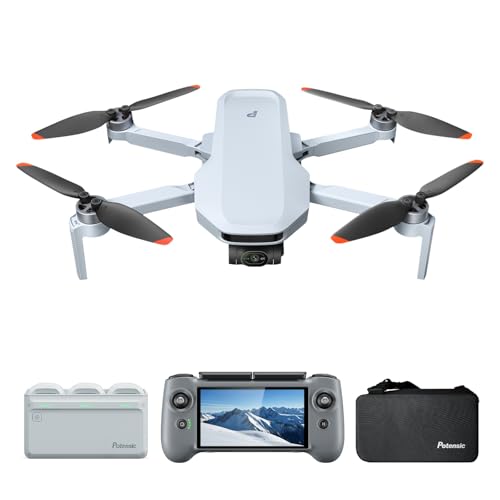

Before looking at the price tags, you must distinguish between a “camera drone” and a “flying toy.” The primary differentiator is the mechanical gimbal. Cheap drones use electronic image stabilization (EIS) or fixed cameras, which result in shaky, nauseating footage. A “good” drone uses a 3-axis mechanical gimbal to keep the camera perfectly level, even when the drone is tilting or fighting wind. If the drone doesn’t have a 3-axis gimbal, it isn’t a serious photography tool.


The “Deal-Breaker” Feature Set
To be considered a modern, reliable drone in 2024, the aircraft must meet a specific baseline of technology. Without these features, your investment is at a much higher risk of being lost or broken during its first few flights. Look for these four pillars in any drone costing over $300:
- GPS Stabilization: This allows the drone to hover in place perfectly without input. It also enables “Return to Home” (RTH), which automatically flies the drone back to you if the signal is lost.
- Dedicated Transmission Systems: “Good” drones use proprietary radio signals (like DJI’s OcuSync) rather than standard Wi-Fi. This ensures a clear video feed from miles away rather than hundreds of feet.
- Intelligent Flight Batteries: These batteries communicate their health and remaining juice to your controller, landing the drone automatically before the power hits zero.
- Sub-250g Weight: In many regions, drones under 249 grams avoid the most restrictive registration and bureaucratic hurdles, making them much more practical for casual use.
From Start to Finish: Drone Budgeting and Selection Explained
Navigating the drone market can be an overwhelming experience, with prices ranging from the cost of a dinner out to the price of a used sedan. This guide is designed to demystify the “how much” question by breaking down the costs based on technology, use cases, and the often-overlooked secondary expenses. Following these steps will ensure you don’t overpay for features you don’t need, while avoiding the frustration of buying a “cheap” drone that fails to meet your expectations.
Step 1: Define Your Specific Mission Profile
What you need: A notepad or digital document and five minutes of honest reflection on your goals.
Instructions: Before looking at price tags, you must categorize your needs. Are you a “Casual Recreationalist” looking for a backyard toy, a “Content Creator” needing stable 4K video for YouTube, or a “Professional Pilot” requiring thermal imaging or mapping capabilities? For a good hobbyist drone with a camera, you are looking at a starting point of $300. If you just want to learn the mechanics of flight without a camera, $50 is sufficient. By defining your mission now, you prevent “feature creep,” which is the primary reason buyers overspend by hundreds of dollars on enterprise-grade features they will never actually deploy.
Pro Tip: If your primary goal is travel photography, prioritize weight (under 249g) over maximum speed to save money on international registration fees and restrictive regulations.
Step 2: Research the Entry-Level Value Tier ($50 – $250)
What you need: Access to online marketplaces and a list of “must-have” basic flight specs.
Instructions: In this price bracket, a “good” drone is defined by its durability and ease of flight rather than its camera quality. Between $50 and $150, you are buying “toy-grade” drones which typically use brushed motors that wear out after 20-30 hours of flight. If you can stretch your budget to the $200-$250 range, you enter the “GPS-beginner” tier. Here, you should look for features like “Return to Home” (RTH) and brushless motors. These drones are excellent for learning the muscle memory of flight without the high financial risk of crashing a $1,000 unit.
Pro Tip: Avoid any drone under $100 that claims to have “4K Video”—at this price point, it is almost always upscaled 720p footage that will look blurry and shaky.
Step 3: Analyze the “Sweet Spot” Mid-Range ($400 – $900)
What you need: Comparison charts for brands like DJI, Autel, and Potensic.
Instructions: This is where the majority of consumers find the best “bang for their buck.” For $400 to $900, you are buying a drone with a 3-axis mechanical gimbal. This is the single most important component for “good” aerial video; without it, your footage will tilt every time the drone moves. In this range, you should expect a minimum of 30 minutes of flight time per battery, a 1/2.3-inch or 1/1.3-inch sensor, and a transmission range of at least 3-5 miles. These drones are reliable enough for semi-professional work and are significantly easier to fly due to advanced downward vision sensors that hold the drone steady even without GPS.
Pro Tip: Always check if a “Fly More Combo” is available; purchasing the extra batteries and charging hub bundled together usually saves you 20% compared to buying them individually later.
Step 4: Factor in Professional and Cinematic Requirements ($1,200+)
What you need: A business plan or a specific technical requirement list (e.g., ProRes encoding, 1-inch sensor).
Instructions: If your definition of a “good” drone involves professional cinematography or industrial inspection, the price floor jumps to approximately $1,200. In this category, you are paying for larger camera sensors that perform well in low light, omnidirectional obstacle avoidance (sensors on all sides of the aircraft), and redundant systems. For example, drones like the DJI Mavic 3 series offer dual-camera setups and 10-bit color profiles. If you are looking for FPV (First Person View) drones for high-speed racing or cinematic dives, a complete kit including goggles and a controller will typically land between $900 and $1,500.
Pro Tip: For professional use, the “cost” includes the drone’s ecosystem; ensure the manufacturer provides easy access to propellers and repair centers to minimize downtime.
Step 5: Calculate Mandatory “Hidden” Accessories
What you need: A calculator and an itemized list of peripheral gear.
Instructions: The sticker price of the drone is rarely the total cost of ownership. To actually use your drone effectively, you must budget for accessories. First, a high-speed microSD card (UHS-I Speed Class 3/V30) is required to record 4K video without frame drops, costing about $20-$40. Second, extra batteries are essential, as one battery rarely provides enough airtime; budget $60-$160 per additional battery. Third, consider a carrying case ($30-$70) and a landing pad ($15) for taking off in tall grass or sand. These “hidden” costs typically add $150 to $300 to your initial purchase price.
Pro Tip: Do not buy third-party batteries to save money; they often lack the sophisticated battery management systems (BMS) of the originals and can lead to mid-air power failures.
Step 6: Account for Insurance and Compliance Costs
What you need: Local aviation authority website (e.g., FAA in the US, CAA in the UK).
Instructions: A “good” drone experience includes staying legal and protected. In the United States, if your drone weighs 250g or more, you must register it with the FAA ($5 for three years). If you intend to make any money with your drone, you need a Part 107 certificate, which costs approximately $175 for the exam. Furthermore, highly recommended is “hull insurance” or a replacement plan like DJI Care Refresh. These plans usually cost 10-15% of the drone’s value ($50-$200) and allow for low-cost replacements if you crash the drone, which is a common occurrence for new pilots.
Pro Tip: Check if your homeowner’s insurance covers drone liability; if not, apps like SkyWatch or Meeker allow you to buy on-demand flight insurance for as little as $10 an hour.
Step 7: Evaluate the Certified Refurbished Market
What you need:Official manufacturer “outlet” or “refurbished” web pages.
Instructions: You can often get a “better” drone for a lower price by looking at certified refurbished units. Manufacturers like DJI and major retailers like B&H Photo often sell returned units that have been factory-tested and come with a full warranty. This can save you anywhere from 15% to 25% off the MSRP. For instance, a drone that normally costs $800 might be available for $640 as a refurbished unit. This is often a smarter financial move than buying a brand-new, lower-model drone for the same price, as it gives you access to better camera sensors and safety features.
Pro Tip: Only buy “Certified Refurbished” from the actual manufacturer or an authorized dealer; avoid “Used” listings on marketplaces unless you can perform a test flight to check for gimbal vibration and battery cell health.
✅ Final Checklist
- Verified that the drone has a 3-axis gimbal if smooth video is a priority.
- Confirmed the total price includes at least two extra batteries and a high-speed SD card.
- Checked if the drone’s weight (under or over 249g) fits within your local registration laws.
- Factored in the cost of a replacement plan or insurance for the first year.
- Ensured your smartphone or tablet is compatible with the drone’s flight control app.
Important Notes:
- Safety first: Never fly near airports, wildfires, or large crowds. Use apps like B4UFLY to check for restricted airspace.
- Seek Professional Help: If you are buying a drone for specialized work like thermal roof inspections or high-precision mapping, consult with a dedicated enterprise drone dealer rather than a big-box retailer.
- Estimated Time and Cost: Research takes 3-5 hours. Total cost ranges: $350-$600 for a solid hobbyist setup; $1,200-$2,000 for a prosumer/professional setup.
Price Tier Breakdown: From Budget Entry to Professional Grade


The drone market has matured significantly, and pricing has stabilized into three distinct tiers. Each jump in price generally buys you better camera sensors, more safety sensors (to avoid hitting trees), and more intelligent flight modes that allow the drone to follow you autonomously.



The Entry-Level “Gateway” Drones ($300 – $500)


This is the starting point for anyone serious about aerial photography. In this bracket, you are typically buying a sub-250-gram drone that is portable enough to fit in a jacket pocket. These drones are perfect for family vacations, hiking, and learning the basics of flight without high financial stakes.
At this price point, you should expect 4K video at 30fps or 2.7K video. The sensors are usually smaller (1/2.3-inch), which means they perform well in daylight but struggle at sunset or in low light. You will get a reliable 25 to 30 minutes of flight time per battery. However, you will likely sacrifice “obstacle avoidance” sensors, meaning the drone cannot “see” trees or walls; it is entirely up to you to keep it clear of obstacles.



The Mid-Range “Sweet Spot” ($600 – $1,100)


This is where the most value lives for 90% of users. When you move into the $800 range, you aren’t just buying a better camera; you are buying peace of mind. Drones in this tier usually feature 360-degree obstacle avoidance. This means if you try to fly the drone into a branch, it will simply stop or fly around it automatically.
- Superior Camera Quality: You move up to 1-inch sensors or larger, allowing for 4K video at 60fps and 10-bit color profiles for serious editing.
- Advanced Tracking: These drones feature “ActiveTrack” technology, allowing them to follow a mountain biker, car, or runner through complex environments without human input.
- Increased Stability: Heavier frames and more powerful motors mean these drones can stay steady in much higher wind speeds than the entry-level models.
In this tier, you are no longer just “flying a camera”; you are using a sophisticated robot that handles the flying for you so you can focus entirely on the art of the shot. If you plan on using your drone more than once a month, this is the investment level you should aim for.
Value Analysis: Finding the Best Features-to-Price Ratio


When you are looking for a “good” drone, you aren’t just looking for the lowest price; you are looking for the sweet spot where every dollar spent translates into a tangible performance boost. For most hobbyists, this value peak currently sits between $500 and $900. In this range, you stop paying for “novelty” and start paying for reliable flight controllers, high-quality gimbal stabilization, and decent sensor sizes that can handle low-light conditions.
The “Sweet Spot” Strategy


To get the best bang for your buck, look for models that are one generation old but were flagship releases. Manufacturers often discount these “last-gen” models when a new version drops, yet the hardware remains incredibly capable for 4K filming. If you can find a drone that includes OcuSync or similar high-end transmission technology, it is usually worth the extra $100 compared to a drone that relies on standard Wi-Fi, which frequently suffers from signal drops.
- Prioritize the Gimbal: Never compromise on a 3-axis mechanical gimbal. Electronic stabilization is cheaper but looks shaky and “digital.”
- Sensor Size Matters: A 1-inch sensor is the “gold standard” for value, providing much better dynamic range than the smaller 1/2.3-inch sensors found in budget drones.
- Avoid Over-Specifying: Unless you are a professional, you probably don’t need 5.4K resolution or ProRes encoding, which can add $1,000 to the price tag without improving your social media clips.
Total Cost of Ownership: Hidden Expenses Beyond the Drone


The sticker price on the box is rarely the final amount you will spend. To actually enjoy your flight experience, you need to budget for the “extras” that make the drone functional and safe. It is a common mistake to spend 100% of your budget on the aircraft, only to realize you can’t record footage because you don’t have a high-speed memory card or you can only fly for 20 minutes because you only have one battery.


Power and Storage Essentials
Most “good” drones have a flight time of about 25 to 34 minutes. In reality, with takeoff, landing, and the “low battery” return-to-home buffer, you only get about 20 minutes of actual filming time. Extra batteries are expensive, typically ranging from $65 to $160 each. Most pilots find that three batteries are the minimum for a satisfying afternoon of flying. Additionally, 4K video requires U3-rated V30 micro SD cards, which can cost another $20 to $50 depending on the capacity.
Compliance, Safety, and Protection
Don’t forget the legal and protective side of the hobby. If your drone weighs over 250g, you must register it with the FAA (in the US), which is a small but necessary $5 fee. More importantly, consider crash insurance like DJI Care Refresh. For an upfront cost of roughly 10-15% of the drone’s price, you get peace of mind that a pilot error won’t result in a total financial loss.
- Propeller Guards: Essential for indoor flying or beginners ($20–$30).
- Carrying Case: Many mid-range drones don’t include a padded bag; a decent one costs around $40.
- ND Filters: If you want that “cinematic” motion blur in bright sunlight, a set of filters is a must-have accessory ($50–$100).
Conclusion
Finding a good drone in 2024 is easier than ever, but it requires a realistic look at your needs versus your budget. While you can find “toys” for under $100, a truly good drone that offers stable 4K video, GPS safety features, and a reliable transmission signal typically starts around the $400 to $500 mark. Remember to factor in the hidden costs of extra batteries and memory cards so you aren’t grounded on your first day out.
Your next steps are simple: identify your primary use case—whether it’s travel photography or casual fun—and set a hard ceiling for your total investment including accessories. Once you have your budget, look for the best “Fly More” bundle within that range to maximize your airtime. Ready to take to the skies? Start by comparing the latest sub-250g models to save on registration and maximize portability!
💬 Quick Questions & Answers
Is a $100 drone worth buying?
Generally no, as sub-$100 drones lack the GPS and mechanical gimbals required for stable, high-quality filming.
What is the best budget brand for quality drones?
DJI remains the industry leader for quality entry-level drones, specifically within their Mini series.
How much is a drone with a 4K camera?
Reliable 4K drones with actual mechanical stabilization usually start around $350 to $450.
Do I need a license for an expensive drone?
In the US, any drone over 250g requires FAA registration, regardless of the purchase price.
What is the most important feature to pay for?
A 3-axis mechanical gimbal is the most critical feature for capturing smooth, professional-looking video footage.
❓ Frequently Asked Questions
What is the difference between a $300 drone and a $1,000 drone?
Higher-priced drones offer larger camera sensors for better low-light performance, 360-degree obstacle avoidance, and significantly longer transmission ranges. While a $300 drone captures decent daytime video, a $1,000 model provides professional-grade 10-bit color and smarter autonomous flight modes.
Are refurbished drones a safe way to save money?
Yes, buying manufacturer-refurbished drones can save you 15-20% while typically offering the same warranty as a new unit. This is an excellent way to move up a price tier without increasing your actual spend.
How much should I budget for drone accessories?
You should set aside an additional $150 to $300 for a ‘Fly More’ style kit that includes extra batteries, a multi-charger, and a carrying case. Because most drones only fly for 25-30 minutes, extra batteries are considered a necessity for any serious session.
Why are gimbals so important for the drone’s price?
A mechanical gimbal physically stabilizes the camera against wind and tilt, which electronic stabilization cannot fully replicate. Without a 3-axis gimbal, your footage will likely appear shaky and unprofessional, no matter how high the camera resolution is.
Is it better to buy an older pro model or a new entry-level model?
New entry-level models often feature superior transmission technology and better software integration. Unless you specifically need the larger sensor of an older pro model, newer ‘budget’ drones are usually safer and more user-friendly.
Does drone weight affect the price or quality?
Many high-end drones are engineered to stay under 250g to bypass certain regulations, which actually increases engineering costs. You are often paying a premium for the miniaturization of high-end sensors and safety features into a lightweight frame.

Similar Posts