How Far Can a Fiber Optic Drone Fly? Max Range & Limits
Commercial UAV Pilot & Aerial Cinematography Specialist at Drone Nestle · FAA Part 107 Remote Pilot Certification, Commercial UAS Operations · 10+ Years in Commercial UAV Operations, Flight Hardware Benchmarking & 4K Aerial Cinematography
Modern fiber optic drones typically achieve operational ranges between 5km and 20km, with cutting-edge military systems reaching up to 30km. The primary limiting factor is the physical weight of the cable and the drone’s ability to manage spool tension without sacrificing lift.
🎯 Key Takeaways
- Maximum range currently tops out at approximately 20-30 kilometers.
- Cable weight is the primary constraint on total flight distance.
- Drone-mounted spools are preferred to reduce ground-drag friction.
- Fiber optics provide total immunity to signal jamming and interference.
- Signal attenuation is minimal compared to the physical limits of weight.
The maximum fiber-optic-drones-in-ukraine/” target=”_blank” rel=”noopener noreferrer” title=”operational range of fiber-optic guided drones”>operational range of a fiber optic drone currently tops out between 20km and 30km. Unlike standard tethered drones that rely on a ground-based power cable—limiting them to a few hundred feet—fiber-tethered drones carry their own spool of micro-fiber. This allows the drone to fly miles away while remaining physically connected to the operator. The range isn’t limited by radio interference or battery life alone, but by the physical length and weight of the fiber optic line stored on the drone’s reel.


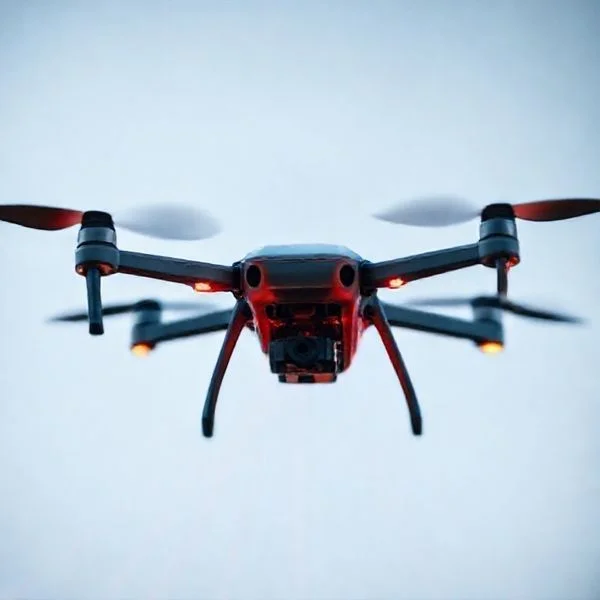
Understanding these limits is critical because fiber optic drones serve a very specific niche: operating in “zero-signal” environments. Whether you are flying through a heavy electronic warfare (EW) zone where GPS and radio are jammed, or navigating deep underground tunnels where waves cannot penetrate, the fiber optic cable is your only lifeline. However, as you push toward that 30km mark, the laws of physics begin to fight back against the drone’s ability to stay airborne.
Breaking Down the Distance: Current Range Benchmarks


In the world of specialized UAVs, the 20km mark is considered the standard “long-range” benchmark for fiber optic systems. Reaching this distance is only possible because of how the cable is deployed. Instead of the drone pulling a heavy cable behind it (which would create impossible amounts of drag), the drone “pays out” the fiber from an onboard spool. It essentially leaves a microscopic trail of glass behind it as it moves, meaning the drone feels zero tension from the cable already laid on the ground.


Commercial vs. Tactical Range Limits
Most commercial-grade fiber optic kits designed for shorter missions typically offer ranges between 5km and 10km. These are used for inspecting long pipelines or high-security perimeters where signal “leakage” is a security risk. However, tactical and military-grade systems utilize ultra-thin, high-tensile fiber that allows for the 20km to 30km range. At these distances, the fiber is often thinner than a human hair to maximize the amount of line that can fit on a single spool.
- Short Range (1km – 5km): Ideal for urban “around-the-corner” reconnaissance and indoor/outdoor transitions.
- Medium Range (5km – 15km): Used for secure border patrol and monitoring areas with high electromagnetic interference.
- Maximum Range (20km – 30km): The current limit for specialized tactical units operating in contested airspaces.
The 30km Hard Ceiling


Why don’t we see 100km fiber optic drones? The primary reason is spool volume. Even with the thinnest fiber available, a 30km spool is a significant physical object. As the length increases, the diameter of the spool grows, eventually becoming too bulky for the drone’s frame to carry without compromising its flight stability. Additionally, signal attenuation—the weakening of light signals over distance—starts to become a factor after 30km, requiring heavier, more complex optical transceivers to maintain the high-speed data link.


Physics vs. Fiber: How Cable Weight Impacts Thrust


The biggest challenge in extending the range of a fiber optic drone is the Weight-to-Thrust ratio. When you take off with a 20km spool, your drone is at its heaviest. Every meter of fiber added to the reel requires more lift from the motors, which in turn consumes more battery power. This creates a paradox: to fly further, you need more cable, but more cable makes the drone heavier and less efficient, reducing the total flight time available to reach that distance.
The “Vanishing Weight” Phenomenon


One unique aspect of fiber optic flight is that the drone’s weight changes mid-flight. As you fly away from your starting point, the drone becomes lighter because it is literally dropping weight (the fiber) onto the ground.


- At Launch: The drone is at its maximum payload capacity. High thrust is required, and battery consumption is at its peak.
- At Mid-Point: With half the spool deployed, the drone becomes more agile and efficient.
- At Max Range: The drone is at its lightest, but its battery is often reaching the “return home” threshold.
This dynamic weight shift must be factored into the flight controller’s algorithms to prevent the drone from becoming over-responsive or unstable as the payload lightens.
Cable Drag and Tensile Strength


Even though the drone isn’t “pulling” the cable in a traditional sense, physics still exerts force on the line. If you are flying in high winds, the wind pushes against the miles of thin fiber trailing behind the drone. This creates lateral drag. If the fiber is too thin, the force of the wind can snap the line, resulting in an immediate loss of control. To counter this, manufacturers must find a “Goldilocks” zone: a cable thick enough to withstand wind and snagging, yet thin enough to allow for a 20km+ payload.
Thrust Compensation for Spool Bulk
To carry a 25km or 30km spool, a drone typically needs 15-20% more thrust than a standard wireless drone of the same size. This usually means larger props and higher-voltage power systems. Because the spool is often mounted on the underside or center of the craft, it can also affect the drone’s center of gravity. If the payout mechanism isn’t perfectly centered, the drone will tilt, forcing the motors on one side to work harder, which further reduces the effective range by draining the battery faster.
Spooling Technology: Drone-Mounted vs. Ground-Based Systems


The maximum distance a fiber optic drone can fly is heavily dictated by where the spool of cable is located. Unlike a standard drone that only carries its battery and sensors, a tethered fiber drone must manage the physical weight and tension of a micro-thin glass thread. This management happens through two primary configurations: drone-mounted or ground-based spooling.

Drone-Mounted Spools: The High-Mobility Choice
In a drone-mounted setup, the spool of fiber optic cable is attached directly to the underside of the aircraft. As the drone flies forward, it “lays” the cable behind it, much like a spider spinning a web. This is generally considered the superior method for maximizing range in complex environments.


- Reduced Drag: Because the cable is stationary once it hits the ground, the drone doesn’t have to pull the entire weight of the remaining line through the air.
- Snag Prevention: Since the line is laid vertically or dropped, there is less risk of the cable getting caught on trees or buildings compared to being dragged horizontally.
- Payload Impact: The downside is that the drone starts its flight at its maximum weight, which can limit initial climb rates and overall flight time.
Ground-Based Spools: Simplified Light-Weight Flight
Ground-based systems keep the heavy spooling mechanism with the pilot. As the drone flies away, it pulls the cable out from the ground station. While this makes the drone lighter and more agile at takeoff, it introduces “line drag” as the distance increases. Every meter of cable trailing through the air adds friction and weight, which eventually acts as an anchor, limiting the effective operational radius.
Practical Tip: If your mission involves navigating through dense forests or around sharp corners, a drone-mounted spool is essential. It prevents the “clothesline” effect where the cable might get caught on an obstacle and snap.
Operational Benefits: Range Security in Denied Environments


The primary reason operators push the limits of fiber optic range isn’t just for distance—it is for signal integrity. In many high-stakes environments, radio frequency (RF) signals are either unreliable or completely blocked. Fiber optics provide a physical “pipe” for data that is immune to the common limitations of wireless flight.
Immunity to Jamming and Interference
In “denied environments”—areas where GPS is blocked or signal jammers are active—a standard drone becomes a paperweight. Fiber optic drones thrive here. Because the control signals and video feed travel through pulses of light inside a cable, they cannot be jammed, intercepted, or spoofed by external radio sources.
- Zero Latency: You get a crystal-clear 4K video feed with zero lag, which is critical when flying at the edge of a 10km range.
- Radio Silence: Since the drone isn’t emitting a loud RF signal to communicate with the controller, it is nearly impossible to detect using electronic warfare equipment.
- Industrial Reliability: Perfect for inspecting massive steel structures or underground mines where thick concrete and metal would shred a standard Wi-Fi or OcuSync signal.
Enhanced Data Security
For sensitive missions, range security also means data security. When you fly over several kilometers via radio, your signal is “broadcast” for anyone with the right equipment to see. With fiber, the data is contained entirely within the physical line. This makes fiber optic drones the gold standard for high-security inspections and tactical reconnaissance where “stealth” is measured by electronic footprint rather than just noise.
Real-World Example: Imagine inspecting a 5km stretch of utility piping inside a concrete tunnel. A wireless drone would lose signal within the first 100 meters. A fiber-optic drone, however, can maintain a perfect high-definition link for the entire duration of the spool’s length.
Conclusion
Determining how far a fiber optic drone can fly is a balance between cable weight, spool capacity, and the drone’s power. While most commercial kits offer ranges between 5km and 20km, the true value of this technology lies in its reliability. By removing the risks of signal jamming and environmental interference, fiber optics allow drones to operate in “dead zones” that were previously unreachable.
If you are planning to expand your fleet’s capabilities, start by assessing your typical flight environment. If you deal with heavy RF interference or require high-security data transmission, a fiber optic upgrade is a logical next step. Explore our latest range of high-tensile fiber spools today to see how you can push your flight boundaries further than ever before!
❓ Frequently Asked Questions
How does cable weight specifically affect the drone’s battery life?
The extra weight of the fiber spool requires the motors to run at higher RPMs to maintain lift, which significantly increases power consumption and reduces total flight time compared to untethered flight.
Is there a risk of the fiber optic cable snapping at long distances?
Yes, manufacturers use high-tensile strength fibers (often reinforced with Kevlar) and active tension-management systems to prevent snapping due to wind or sudden maneuvers.
What is the maximum recorded distance for a fiber-tethered drone?
While experimental military units have pushed toward 50km, current high-end commercial and tactical systems generally cap out at a 20km to 30km operational radius.
Why would someone choose a 10km fiber drone over a long-range wireless one?
Fiber optic drones are used in ‘contested’ environments where electronic warfare (jamming) would instantly crash a wireless drone, providing a secure, unhackable data link.
Does the cable drag on the ground as the drone flies?
To reach maximum distances, the cable is usually paid out from the drone itself rather than pulled from the ground, which minimizes friction and prevents the cable from snagging on terrain.
How does wind resistance impact a 20km fiber flight?
At extreme lengths, the ‘sail effect’ or wind drag on the thin cable can pull the drone off course, requiring advanced flight controllers to compensate for the lateral tension.

Similar Posts