What DJI Drone Has the Longest Range? Top Models Compared
Commercial UAV Pilot & Aerial Cinematography Specialist at Drone Nestle · FAA Part 107 Remote Pilot Certification, Commercial UAS Operations · 10+ Years in Commercial UAV Operations, Flight Hardware Benchmarking & 4K Aerial Cinematography
The DJI Air 3 and DJI Mini 4 Pro currently offer the longest manufacturer-rated range at 20km (12.4 miles) thanks to the advanced O4 transmission system. While the flagship Mavic 3 Pro is a powerhouse, its O3+ system is rated for 15km, making newer mid-range models the current ‘Range Kings.’
🎯 Key Takeaways
- The DJI Air 3 and Mini 4 Pro lead with a 20km maximum range.
- DJI’s O4 transmission system provides better signal stability than previous generations.
- Battery life is the primary limiting factor for practical long-distance flights.
- Transmission range varies significantly between FCC (US) and CE (Europe) regions.
- Obstacles and interference significantly reduce real-world range compared to laboratory specs.
If you are looking for the absolute maximum distance possible in a consumer drone, the answer is a tie between the DJI Air 3 and the DJI Mini 4 Pro. Both of these models feature DJI’s latest O4 transmission system, which boasts a manufacturer-rated range of up to 20 kilometers (12.4 miles). This marks a massive leap over previous generations, offering a more robust signal that maintains a high-quality video feed even when you are miles away from the home point.


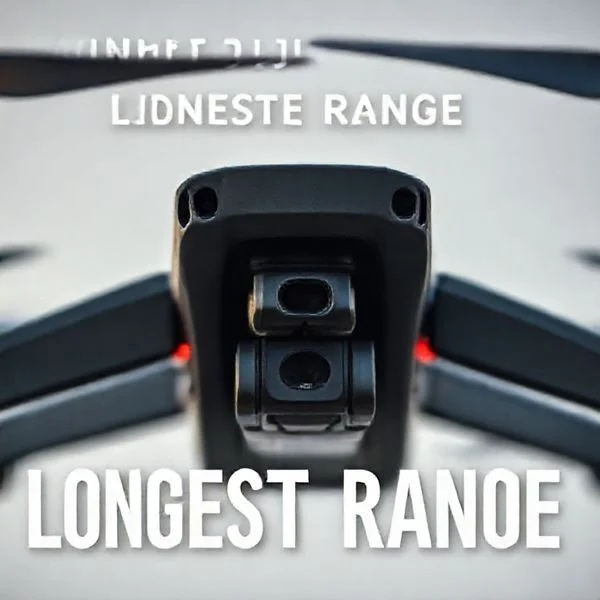
While you will rarely need to fly your drone 12 miles away—and in most regions, you are legally required to keep the aircraft within your visual line of sight—this high rating is incredibly important for practical use. A drone with a 20km range provides a much more stable connection at shorter distances. It ensures your signal can penetrate through trees, buildings, and electromagnetic interference in urban environments without the video feed stuttering or cutting out.
Top-Rated DJI Drones for Long-Distance Transmission


The current landscape of DJI drones is dominated by the O4 (OcuSync 4.0) protocol. Before this technology arrived, the industry standard was 15km. By pushing the limit to 20km, DJI has not just increased the distance; they have increased the “link margin.” This means the drone has more “power” to maintain a connection when conditions are less than ideal. If you want the best range currently available, you must look for models compatible with the O4 hardware.


The 20km Powerhouses: DJI Air 3 and Mini 4 Pro
The DJI Air 3 is arguably the most capable “range king” because of its physical size and antenna array. It utilizes a six-antenna system—featuring two transmitters and four receivers—to maximize signal reception. This hardware allows the drone to switch between antennas dynamically to find the clearest path back to your controller. This is especially useful when the drone is banking or turning, which can sometimes cause signal blocks on smaller models.
The DJI Mini 4 Pro is equally impressive because it packs this same 20km O4 capability into a frame that weighs less than 249 grams. For hikers and travelers, this provides professional-grade transmission without the need for a larger gear bag. However, because it is smaller, it has a slightly less complex antenna configuration than the Air 3, though it still hits that 20km maximum rating in FCC-compliant areas.


- DJI Air 3: 20km range (FCC), O4 System, 1080p/60fps live feed.
- DJI Mini 4 Pro: 20km range (FCC), O4 System, ultra-lightweight.
- DJI Mavic 3 Pro: 15km range (FCC), O3+ System, the former range leader.
- DJI Air 2S: 12km range (FCC), O3 System, still very reliable for hobbyists.
Real-World Performance vs. Manufacturer Specs


It is vital to understand that the 20km rating is achieved in a controlled, interference-free environment. In your everyday flights, you should expect different results based on your region. For example, in the United States, DJI uses the FCC standard, which allows for higher power output and the full 20km rating. In Europe and other regions using CE or SRRC standards, the range is often hardware-limited to 10km or less to comply with local radio frequency laws. Always check which standard applies to your current location to manage your expectations for signal strength.
Comparing O4, O3+, and O3 Transmission Technologies


The secret behind DJI’s range isn’t just bigger batteries; it is the proprietary “OcuSync” technology. This is the wireless link that connects your remote controller to the drone. As DJI has iterated from O3 to O4, they have fundamentally changed how data is packaged and sent through the air. Each generation offers better resistance to “noise” from Wi-Fi routers, cell towers, and other drones.


Why the O4 Protocol Leads the Pack


The jump from O3+ (15km) to O4 (20km) involved more than just boosting the radio’s volume. O4 introduced an additional frequency band. While O3 systems typically use 2.4GHz and 5.8GHz, O4 adds a 5.1GHz band in compatible regions. This provides a “cleaner” lane for the data to travel. Think of it like adding an express lane to a crowded highway; when the 2.4GHz band is crowded with Bluetooth and Wi-Fi signals, the drone can hop to 5.1GHz to keep your video feed crystal clear.
- O4 System: Uses 2.4GHz, 5.1GHz, and 5.8GHz bands. It offers a 1080p/60fps live feed with extremely low latency.
- O3+ System: Uses 2.4GHz and 5.8GHz. It supports a high-bitrate 1080p/60fps feed and is found on professional models like the Mavic 3 Pro.
- O3 System: The standard for the Mini 3 Pro and Air 2S. It offers a 1080p/30fps feed and is limited to 12km.
The Impact of Controller Hardware


You cannot achieve these record-breaking ranges with the drone alone; the remote controller is 50% of the equation. To use the O4 system, you must use the DJI RC 2 (with external antennas) or the DJI RC-N2. These controllers have upgraded processors specifically designed to handle the increased data throughput of the O4 signal. These remotes feature improved cooling and antenna placement to ensure that even at the edge of your range, the connection remains “sticky” and responsive to your inputs.
The O4 system also improves latency, which is the delay between you moving the stick and the drone reacting. With O4, this delay is reduced to milliseconds, making long-distance flying feel much more precise. When you are flying far away, a laggy video feed is dangerous; O4 minimizes this risk by prioritizing a high-frame-rate stream that keeps you in total control regardless of the distance.
Environmental and Regulatory Factors Influencing Flight Distance


When you see a DJI drone advertised with a 20km range, it is important to remember that these figures are achieved in laboratory conditions with zero interference. In the real world, your “practical” range is often a fraction of the maximum theoretical distance. Understanding the environment is the key to maintaining a crisp video feed and avoiding the dreaded “Signal Lost” warning.

Signal Interference and Physical Obstacles
The biggest enemy of a long-range flight is signal noise. In urban environments, thousands of Wi-Fi routers, cell towers, and electronic devices compete for the same frequencies your drone uses to talk to the controller. Conversely, in wide-open rural areas, you are much more likely to hit those record-breaking distances. Physical barriers also play a massive role in performance.


- Line of Sight: Transmission signals travel best in a straight line. Large buildings, hills, or even dense forests can block the signal and cause an immediate disconnect.
- Radio Frequency (RF) Noise: Flying near high-voltage power lines or industrial communication hubs can significantly degrade your OcuSync connection.
- Atmospheric Conditions: High humidity, thick fog, or heavy rain can scatter the radio waves, reducing the effective range of even the most powerful DJI models.
Legal Limits and Geographic Regulations
Before pushing your drone to its limits, you must understand that “possible” does not always mean “legal.” Most aviation authorities require pilots to maintain Visual Line of Sight (VLOS) at all times. This means you should be able to see your drone with your own eyes without the aid of binoculars or a zoom lens.
- FCC vs. CE Standards: DJI drones automatically switch power modes based on your GPS location. The FCC (USA) standards allow for higher transmission power, while CE (Europe) standards are much more restrictive, often cutting your effective range by more than half.
- Remote ID Requirements: Modern DJI drones must broadcast their location data, ensuring that even at long distances, your flight remains compliant with local safety regulations.
Battery Capacity vs. Signal Range: Finding the Practical Limit


A common mistake for new pilots is focusing solely on the transmission range while ignoring the battery’s limitations. It does not matter if your DJI Air 3 can maintain a signal at 15km if it only has enough power to travel 10km and return safely. The practical limit is always dictated by the “Point of No Return.”
The Impact of Wind and Flight Speed
The battery life advertised by DJI is usually calculated based on hovering in windless conditions or flying at a consistent, moderate speed. In the real world, wind resistance is a silent battery killer. If you fly 5km away with a tailwind, you will face a grueling headwind on the way back, which consumes significantly more power and can lead to an emergency landing before you reach home.
- Sport Mode vs. Normal Mode: While Sport Mode allows you to reach your destination faster, it drains the battery exponentially quicker, often reducing your total travel distance.
- Safety Buffers: Professional pilots always plan to land with at least 20-25% battery remaining. This accounts for unexpected wind gusts or the need to hover while finding a safe landing spot.
Enhancing Range with Accessories
If you find that your signal is dropping before your battery is low, certain drone accessories can help bridge the gap. While you cannot change the internal hardware of the drone, you can optimize how the signal is sent and received through your controller.
- Signal Boosters and Yagi Antennas: These affordable, slip-on accessories help direct the radio signal toward the drone, reducing “leakage” in other directions and stabilizing the video link.
- High-Gain Controller Antennas: For advanced users, replacing stock antennas with high-gain alternatives can provide a more robust connection in areas with heavy signal interference.
- Parabolic Reflectors: These simple tools focus the radio waves from your remote, ensuring the maximum amount of energy is aimed directly at your aircraft for a more reliable long-distance connection.
Conclusion
Finding the DJI drone with the longest range involves looking beyond the spec sheet. While the DJI Mavic 3 Pro and DJI Air 3 currently lead the market with the cutting-edge O4 transmission system, your real-world experience will depend on your environment, local laws, and battery management. High-end range is fantastic for signal stability and peace of mind, but it should always be used responsibly and within your legal boundaries.
To get the most out of your flights, start by testing your signal limits in open, interference-free areas. If you frequently fly in “noisy” RF environments, consider investing in signal-boosting accessories to maintain a clear feed. Always keep a close eye on your battery levels and local wind speeds to ensure every mission ends with a safe landing. Ready to explore the horizon? Pick your model, check your surroundings, and enjoy the incredible view!
❓ Frequently Asked Questions
Why does the DJI Air 3 have more range than the flagship Mavic 3 Pro?
Transmission technology is updated in cycles. The Air 3 was released later and features the newer O4 system (20km), while the Mavic 3 Pro uses the older, though still highly capable, O3+ system (15km).
How does the FCC vs. CE rating affect DJI drone range?
FCC (US) regulations allow for higher power output and longer range (up to 20km), whereas CE (Europe) regulations are stricter, often limiting the same drone to roughly 6-10km.
Can a DJI drone actually fly 20km and back on one battery?
No. While the signal might reach 20km, most DJI drones have a total flight distance capability of 25-32km. Flying 20km away would leave insufficient battery to return home safely.
What role does the controller play in maximizing range?
Using an O4-compatible controller like the DJI RC 2 or RC-N2 is essential for achieving the 20km range, as they feature upgraded antennas and processors to handle the higher data throughput.
Are there accessories to increase a DJI drone’s range?
Signal boosters and Yagi antennas can help focus the signal in a specific direction, but they cannot bypass the hardware limitations of the drone’s internal transmission system.
Does the DJI Avata 2 have a long range?
The DJI Avata 2 also features the O4 system with a 13km range (FCC), which is impressive for an FPV drone but shorter than the Air 3 due to its different antenna configuration.

Similar Posts