How Much Is a Drone Pilot License? Total Costs Explained
Commercial UAV Pilot & Aerial Cinematography Specialist at Drone Nestle · FAA Part 107 Remote Pilot Certification, Commercial UAS Operations · 10+ Years in Commercial UAV Operations, Flight Hardware Benchmarking & 4K Aerial Cinematography
The mandatory cost for an FAA drone pilot license is $175 for the initial knowledge test fee. Total financial investment typically ranges from $180 to $500 depending on your choice of professional study courses and drone registration needs.
🎯 Key Takeaways
- The FAA knowledge test carries a mandatory $175 flat fee.
- Professional online ground schools typically cost between $100 and $300.
- Drone registration for commercial use is a mandatory $5 fee.
- Bi-annual recurrent training is now free via the FAA portal.
- Failing the exam requires paying the $175 fee again for retakes.
The total cost to earn your FAA Part 107 drone pilot license starts at exactly $175. This is the mandatory fee paid to a testing center to sit for the Remote Pilot Knowledge Test. However, very few pilots spend only that amount. Most professionals invest between $325 and $550 to cover both the exam and a comprehensive study program that ensures they pass on their first try.


Understanding these costs upfront prevents financial surprises as you transition from a hobbyist to a commercial operator. Since the FAA requires you to retake the test and pay the full fee again if you fail, choosing the right investment in your education is just as important as the exam fee itself. This guide breaks down every dollar required to get you legal and in the air.
Breakdown of Mandatory FAA Testing and Administrative Fees


The only truly unavoidable cost in the licensing process is the fee for the Unmanned Aircraft General – Small (UAG) exam. The FAA does not administer this test directly. Instead, they use a third-party testing vendor called PSI Services. Regardless of which testing center location you choose across the United States, the price remains standardized and non-negotiable.

The Knowledge Testing Center Fee
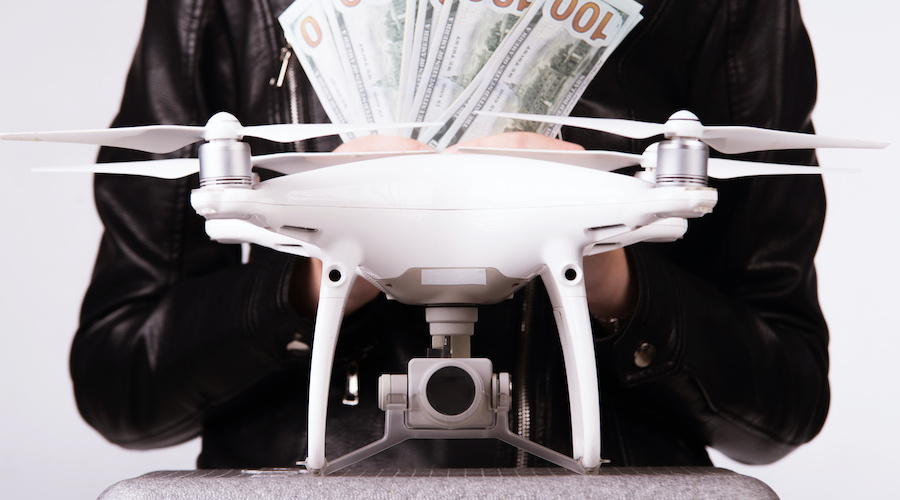
As of 2024, the cost to register for the Part 107 exam is $175 per attempt. This fee is paid directly to PSI when you schedule your appointment through their online portal. This is a flat fee for the service of proctoring the exam in a controlled environment. It is vital to understand that this payment does not include any “re-dos” or “safety nets.” If you do not achieve a passing score of at least 70%, the FAA requires you to wait 14 calendar days before you are eligible to test again. Most importantly, you must pay the full $175 fee again for every subsequent attempt.
- Standard Exam Fee: $175
- Retake Fee: $175 per attempt
- Booking Requirement: You must create an FAA Tracking Number (FTN) via the IACRA website before scheduling with PSI.
- Rescheduling: PSI generally allows you to reschedule at no cost if done at least 24 to 48 hours in advance, but “no-shows” will forfeit the entire $175.
Zero-Cost Administrative Steps and Renewals


One of the few financial reliefs in the drone licensing process is that the FAA does not charge for the actual issuance of your hard-copy license. Once you pass your exam at the testing center, you will log into the Integrated Airman Certification and Rating Application (IACRA) system to complete your application. This administrative step is entirely free. The TSA background check, which is a requirement for all commercial drone pilots, is also included in the process without an additional “vetting fee” passed down to the pilot.


Furthermore, maintaining your license is now significantly cheaper than it used to be. In the past, pilots had to pay the $175 testing fee every two years to stay current. The FAA has since replaced the in-person recurrent exam with a free online training course. Every 24 months, you simply log into the FAA Safety Team (FAASTeam) website and complete the “Part 107 Small UAS Recurrent” training. This means your ongoing maintenance cost is $0, making the initial $175 investment a one-time hurdle for the lifetime of your career, provided you stay current with the free online modules.
From Start to Finish: Drone Pilot Licensing Costs Explained
Navigating the financial landscape of obtaining a commercial drone pilot license—specifically the FAA Part 107 Remote Pilot Certificate—requires more than just looking up a single exam fee. This guide breaks down every financial layer, from initial study materials and testing fees to the hidden costs of registration and insurance. By following these steps, you will gain a clear understanding of the total investment required to fly drones professionally, ensuring you budget correctly and avoid unnecessary expenses during your certification journey.
Step 1: Assess Eligibility and Initial Prerequisites
What you need: Access to the FAA website, a valid government-issued photo ID, and an assessment of your English language proficiency.
Instructions: Before spending a dime, you must ensure you meet the legal requirements set by the Federal Aviation Administration (FAA). You must be at least 16 years old, be able to read, speak, write, and understand English, and be in a physical and mental condition that allows for the safe operation of a Small Unmanned Aircraft System (sUAS). While this step technically costs $0, it is the most critical checkpoint. If you do not meet these criteria, any money spent on study materials or exam scheduling will be forfeited, as the FAA does not offer refunds for eligibility failures discovered late in the process.
Pro Tip: If you have any past alcohol or drug-related convictions, consult with an aviation attorney first, as these can delay or disqualify your application during the TSA background check phase.
Step 2: Invest in Training and Study Materials
What you need: A computer, internet access, and a budget ranging from $0 to $300 depending on your learning style.
Instructions: You have two paths: self-study or a paid prep course. Self-studying is the cheapest option ($0), utilizing free resources like the FAA Remote Pilot Study Guide (FAA-G-8082-22) and YouTube tutorials. However, if you prefer structured learning, a paid online course (averaging $150 to $250) often includes money-back guarantees if you fail the exam. These courses provide practice tests, video lessons on sectional charts, and weather theory. When budgeting, decide if the time saved by a structured course outweighs the cash saved by hunting for free materials across various websites.
Pro Tip: Look for courses that offer “lifetime access,” as you will need to refresh your knowledge every 24 months to maintain your currency through the FAA’s free online recurrent training.
Step 3: Create an IACRA Account and Obtain an FTN
What you need: A stable internet connection and your personal identification details.
Instructions: Visit the Integrated Airman Certification and Rating Application (IACRA) website to create a profile. This is the FAA’s official portal for pilot applications. Once registered, you will be assigned an FAA Tracking Number (FTN). This number is unique to you and stays with you throughout your aviation career. There is no fee to register for an FTN, but it is a mandatory prerequisite before you can schedule your exam with a testing provider. Ensure the name on your IACRA account matches your government ID exactly, including middle names, to avoid being turned away at the testing center.
Pro Tip: Keep your FTN and IACRA login credentials in a secure password manager; you will need them every time you interact with the FAA for the rest of your piloting career.
Step 4: Schedule and Pay for the Aeronautical Knowledge Test
What you need: Your FTN, a credit card for payment, and a chosen testing date.
Instructions: The FAA does not administer the test directly; instead, they use a third-party company called PSI Services. You must create an account on the PSI website using your FTN. As of late 2023, the standard fee for the Unmanned Aircraft General – Small (UAG) exam is $175. This is a flat rate regardless of which testing center you choose. You will select a physical testing location (usually at a local airport or flight school), choose a time slot, and pay the fee upfront. Be aware that this fee is per attempt; if you fail, you must wait 14 days and pay another $175 to retake it.
Pro Tip: Schedule your exam at least two weeks in advance to give yourself a hard deadline, which helps maintain study motivation and ensures your preferred time slot is available.
Step 5: Budget for Travel and Test Day Logistics
What you need: Transportation to the testing center and approximately 3 hours of your time.
Instructions: Many people overlook the “hidden” cost of actually getting to the test. Depending on your location, the nearest PSI testing center could be 50 or 100 miles away. Factor in the cost of fuel, potential tolls, and the value of your time if you need to take a half-day off from work. On the day of the exam, arrive 30 minutes early. You will spend about 20 minutes on check-in procedures and up to 120 minutes on the 60-question exam. Ensure you bring your valid ID and a basic calculator (non-programmable) if the center allows, though most provide one digitally or physically.
Pro Tip: Bring a magnifying glass if you have poor eyesight; the sectional charts provided in the FAA Airman Knowledge Testing Supplement can be notoriously small and difficult to read.
Step 6: Complete the Application Post-Exam
What you need: Your Exam Score Report and your IACRA login.
Instructions: Once you pass the exam (70% or higher), the testing center will give you a printed score report. You must wait about 48 to 72 hours for the data to sync with the FAA’s systems. Log back into IACRA, click “Start New Application,” and select “Remote Pilot.” You will enter your 17-digit Exam ID from your score report. This initiates the TSA background check. There is no additional fee for this application or the background check. Once cleared, you will receive a temporary digital certificate via email, and your permanent hard-plastic card will arrive by mail a few weeks later.
Pro Tip: Print out your temporary certificate and keep it with you whenever you fly; it is legally valid for 120 days until your permanent card arrives.
Step 7: Register Your Drone for Commercial Use
What you need: $5 per drone and the serial number of your aircraft.
Instructions: Now that you are a licensed pilot, you must register your drone under Part 107 rules through the FAA DroneZone website. Unlike recreational registration, where one $5 fee covers all your drones, commercial registration requires a separate $5 fee for every individual aircraft you own. You will need to provide the make, model, and serial number (including the Remote ID serial number if applicable). This registration is valid for three years. Once registered, you must physically label your drone with its unique registration number on an exterior surface of the aircraft using a permanent marker or sticker.
Pro Tip: Avoid “scam” websites that look like the FAA but charge $50 or $100 for registration; only use the official FAA DroneZone portal to pay the standard $5 fee.
Step 8: Account for Commercial Liability Insurance
What you need: A budget for on-demand or annual insurance coverage.
Instructions: While the FAA does not legally require insurance for Part 107 pilots, most commercial clients and many local laws do. Operating without insurance is a massive financial risk. On-demand insurance (via apps like SkyWatch or Verifly) allows you to purchase $1M in liability coverage for as little as $10 per hour or $40 per day. If you plan on flying regularly, an annual policy typically costs between $500 and $1,200 depending on your equipment value and flight history. This is a recurring cost that should be factored into your business’s overhead or your personal hobby budget if you plan to film commercially.
Pro Tip: When starting out, use on-demand insurance for your first few gigs to keep upfront costs low, then transition to an annual policy once your revenue becomes consistent.
✅ Final Checklist
- Verified FAA tracking number (FTN) is active and matches identification.
- Confirmed passing score of 70% or higher on the aeronautical knowledge test.
- Submitted the final Part 107 application through the IACRA portal.
- Registered each commercial aircraft for $5 through the FAA DroneZone.
- Printed the temporary certificate and secured drone insurance for the first flight.
Important Notes:
- Safety First: Having a license does not grant immunity from local laws or No-Fly Zones; always check the B4UFLY app before takeoff.
- Seeking Help: If you struggle with the technical airspace charts, consider joining a local flight club or hiring a Part 107 instructor for a one-hour tutoring session.
- Estimated Total Cost: $180 (minimum) to $600 (including high-end prep and insurance).
- Time Range: 2 to 4 weeks for study and testing, plus 6 to 8 weeks for the physical card to arrive.
Comparing Study Options: Free Resources vs. Paid Ground Schools


While the exam fee is fixed, your spending on education is entirely variable. The Part 107 exam covers complex topics like sectional charts, weather METARs, and radio communications. Most pilots choose a study method based on their prior aviation knowledge and their personal learning style to avoid wasting $175 on a failed attempt.


The Self-Study Route (Free to $50)


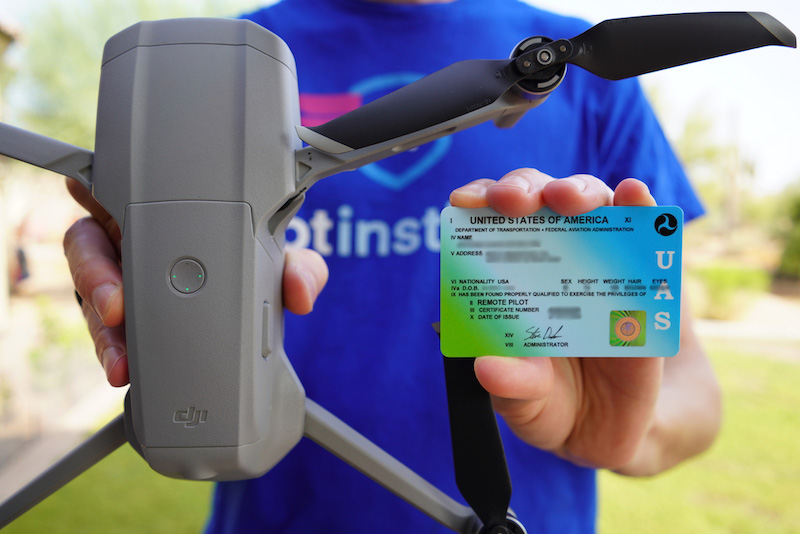
If you have a disciplined mindset, you can prepare for the exam for very little money. The FAA provides the “Remote Pilot – Small Unmanned Aircraft Systems Study Guide” for free as a PDF. You can supplement this with YouTube tutorials and practice tests found on various drone forums. The main physical cost here is often the Airman Knowledge Testing Supplement. This book of maps and charts costs about $15 on Amazon. Since this is the exact book you will use during the proctored test, practicing with a physical copy is a smart move for those avoiding paid courses.
Paid Online Ground Schools ($100 – $300)


The most popular option for aspiring professionals is an online ground school. These courses typically offer lifetime access, money-back guarantees, and structured video lessons. The value proposition here is efficiency; they distill hundreds of pages of FAA manuals into 10-15 hours of focused content. Many of these schools also provide “pass guarantees,” where they will reimburse your $175 testing fee if you fail the exam after completing their course. For many, this “insurance policy” justifies the $150 average price tag of the course itself.
- Average Online Course Cost: $150 – $250
- Physical Materials: $0 – $30 (Often included as digital downloads)
- In-Person Bootcamps: $500+ (For those who need hands-on classroom instruction)
Hidden Costs: Registration, Insurance, and Equipment Expenses


Obtaining your Part 107 certificate is a significant milestone, but the financial commitment doesn’t end when you walk out of the testing center. To operate legally and professionally, you must account for several “hidden” costs that often surprise new pilots. These expenses ensure your aircraft is compliant with federal law and that your business is protected from liability.
FAA Registration and Remote ID Compliance
Every drone used for commercial purposes must be registered with the FAA via the DroneZone portal. While the cost is minimal, it is a non-negotiable legal requirement. Additionally, the recent implementation of Remote ID rules may require extra hardware if you are flying an older aircraft.
- Drone Registration: $5 per aircraft, valid for three years.
- Remote ID Broadcast Modules: $100–$220 for pilots using older drones that do not have built-in Remote ID capabilities.
- Safety Gear: $50–$100 for essentials like high-visibility vests, landing pads, and strobe lights for night operations.
Insurance: Protecting Your Investment and Liability
While the FAA does not strictly require hull or liability insurance for all flights, most commercial clients will refuse to hire you without it. In fact, many job sites require a minimum of $1 million in liability coverage before you can even unpack your gear. You can choose between “on-demand” policies or annual coverage depending on your flight frequency.


- On-Demand Insurance: Approximately $10–$25 per hour through apps like SkyWatch or Verifly. This is perfect for part-time pilots or those just starting out.
- Annual Liability Policies: $500–$900 per year, offering continuous coverage for high-volume operators.
- Hull Insurance: Typically 5% to 10% of the drone’s total value, covering accidental damage or “fly-aways.”
Long-Term Financial Planning for Commercial Drone Pilots


A drone pilot license is an investment in a career, not just a one-time purchase. To remain competitive and profitable, you need to budget for the ongoing costs of staying current and keeping your technology up to date. The drone industry moves fast, and your financial planning should reflect the need for regular upgrades and recurring overhead.
Recurrent Training and License Maintenance
Fortunately, the FAA has made maintaining your license much more affordable than it used to be. You no longer have to pay the testing center fee every two years. However, professional development remains a cost factor if you want to specialize in high-paying niches like thermal imaging or LIDAR mapping.
- FAA Recurrent Training: $0 (The online renewal course is currently free through the FAA Safety Team website).
- Specialized Certifications: $500–$2,000 for advanced courses in thermography, 3D modeling, or agricultural spraying.
- Industry Memberships: $100–$300 annually for professional organizations that provide networking and advocacy.
Software Subscriptions and Hardware Maintenance
Your drone is only as good as the data it produces. For many commercial pilots, the cost of processing software is actually higher than the cost of the drone license itself. Furthermore, hardware degrades over time; batteries, specifically, are “consumable” items that must be replaced every 150-200 cycles to ensure flight safety.
- Data Processing Software: $150–$350 per month for platforms like DroneDeploy, Pix4D, or Adobe Creative Cloud for photo and video editing.
- Battery Replacement: $150–$200 per battery. Professional pilots usually carry at least four to five batteries per aircraft.
- Propellers and Maintenance: $50–$100 annually for routine part swaps and firmware-related hardware checks.
Conclusion
Calculating the total cost of a drone pilot license involves looking beyond the $175 testing fee. When you include study materials, FAA registration, and essential liability insurance, the realistic entry price for a professional pilot ranges from $400 to $900. While this may seem like a steep initial investment, the ability to legally earn money in a high-growth industry makes it one of the most cost-effective professional certifications available today.
Your next steps are simple: establish a budget for your study materials and equipment, then create an account on the FAA’s IACRA website to begin the application process. The sky is literally the limit for your new career—start your journey today and turn your passion for flight into a profitable venture!
❓ Frequently Asked Questions
What is the total minimum cost to get a Part 107 license?
The absolute minimum cost is $180. This covers the $175 exam fee and the $5 drone registration, assuming you utilize free online study materials and YouTube videos.
Does the license cost include the drone itself?
No, the license cost only covers the legal certification to fly. Equipment, accessories, and maintenance are separate capital investments for your business.
Are there any hidden fees during the application process?
Aside from the $175 test fee, there are no additional government fees for the TSA background check or the processing of your physical certificate via IACRA.
How much should I budget for professional study materials?
Quality online courses generally range from $100 to $299. Many of these offer ‘pass guarantees’ where they refund the course fee if you fail the exam.
What happens financially if I fail the test and need to retake it?
If you fail, you must wait 14 days and pay the full $175 testing fee again. This is why many pilots invest in a study course to pass on the first try.
Is it worth paying for a ground school course?
Most professionals consider the $150 average course fee a wise investment, as it provides structured learning and reduces the risk of wasting $175 on a failed exam attempt.

Similar Posts