What Is the Quietest Drone? Top Models & Decibel Rankings
Commercial UAV Pilot & Aerial Cinematography Specialist at Drone Nestle · FAA Part 107 Remote Pilot Certification, Commercial UAS Operations · 10+ Years in Commercial UAV Operations, Flight Hardware Benchmarking & 4K Aerial Cinematography
The DJI Mini 4 Pro and Mavic 3 Pro are currently the quietest consumer drones, producing between 60 and 70 decibels at close range. Achieving a ‘silent’ flight depends more on low-frequency sound profiles and aerodynamic propeller design than raw decibel numbers alone.
🎯 Key Takeaways
- The DJI Mini 4 Pro is the quietest sub-250g drone on the market.
- Low-frequency pitches are less intrusive than high-pitched whining sounds.
- Sine-wave Electronic Speed Controllers (ESCs) significantly reduce motor noise.
- Noise levels typically become negligible once a drone reaches 100 feet altitude.
- Upgrading to ‘stealth’ propellers can reduce sound by 2-4 decibels.
The quietest consumer drones on the market currently hover between 65 and 72 decibels (dB) at a distance of about 3 feet. If you are looking for the absolute leader in stealth, the DJI Mini 4 Pro and the DJI Mavic 3 Pro are the industry benchmarks. These drones utilize specific aerodynamic profiles that shift sound away from the piercing, high-pitched whine typical of older models, making them much less noticeable in public spaces.


Reducing your noise footprint is about more than just being polite. For wildlife photographers, a quiet drone is the difference between a natural shot and a panicked animal fleeing the scene. In suburban environments, a lower decibel output helps you stay under the radar and avoids the common “angry neighbor” syndrome. Choosing a drone with a focused sound profile ensures your presence remains unobtrusive while you capture high-quality cinematic footage.
Top 5 Quietest Drones: A Comparative Decibel Ranking


When measuring drone noise, it is important to distinguish between “hover noise” and “full-throttle noise.” The following models have been selected based on their average operating noise levels during standard flight. These rankings represent the current peak of silent propulsion technology in the consumer market.

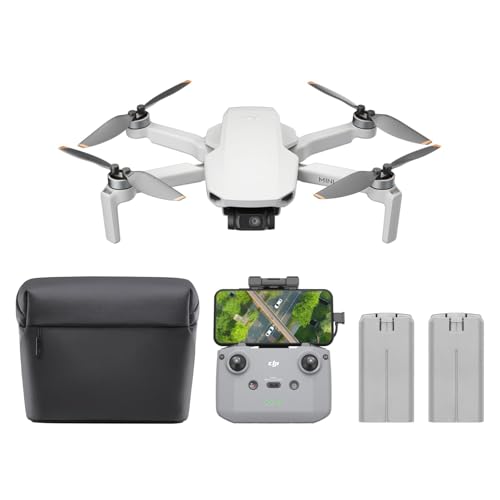
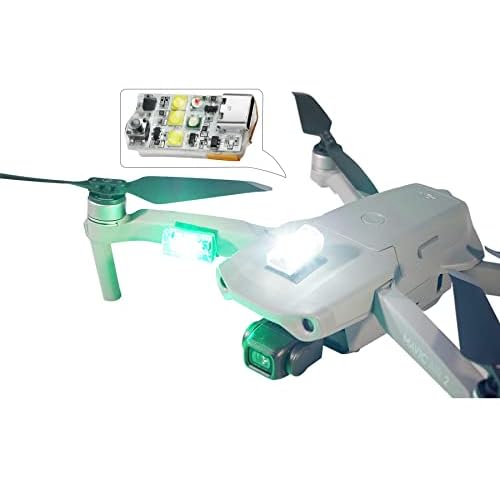

1. DJI Mini 4 Pro (67-69 dB)
The DJI Mini 4 Pro is arguably the quietest drone ever produced for the mass market. Because it weighs under 249 grams, the motors do not have to work as hard to maintain lift. The lower the “disc loading” (the weight of the drone relative to the area of its propellers), the less noise it generates. You can fly this drone 50 feet away and it becomes virtually inaudible against standard city ambient noise.
- Key Feature: Ultra-lightweight frame reduces motor strain.
- Sound Profile: A soft, low-frequency hum rather than a high-pitched buzz.
- Best For: Stealthy urban filming and close-quarters photography.
2. DJI Mavic 3 Pro (68-71 dB)


While larger than the Mini series, the Mavic 3 Pro is surprisingly quiet due to its massive propellers. Larger props can move the same amount of air at lower RPMs (rotations per minute) than small props. This lower RPM creates a much deeper, less intrusive sound that dissipates quickly over distance. It is widely considered the quietest “prosumer” drone available today.


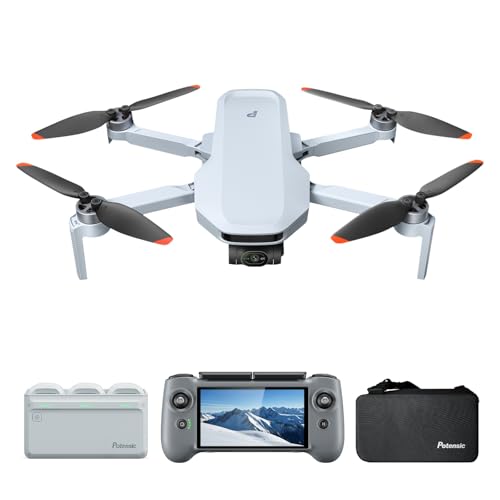
3. Autel EVO Nano+ (69-70 dB)


Autel’s flagship sub-250g drone is a direct competitor to the DJI Mini series in terms of noise. It features a streamlined body and specifically shaped prop tips that reduce turbulence. In real-world testing, it matches the Mini 4 Pro in decibel output, though the sound is slightly higher in pitch.
4. Potensic Atom (69-71 dB)


For those on a budget, the Potensic Atom provides an impressively low noise floor. It utilizes brushless motors that are highly efficient, ensuring that very little energy is wasted as sound. It maintains a consistent 69 dB during hover, making it one of the most neighbor-friendly drones in the mid-range category.


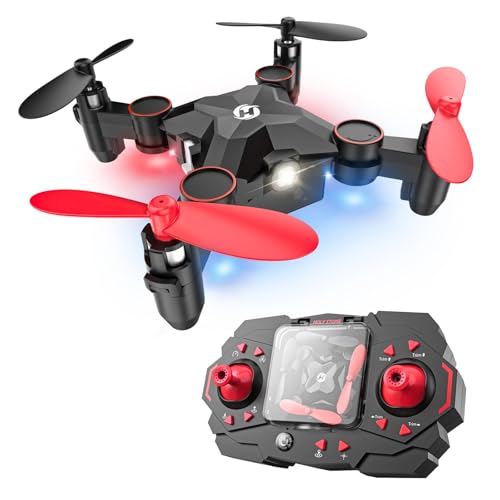
5. DJI Air 3 (71-73 dB)
The Air 3 is slightly louder than the Mini 4 Pro but significantly quieter than its predecessor, the Air 2S. DJI redesigned the propeller geometry for this model to include “low-noise” tips. These curved tips manage the vortices created at the end of the blades, which is where most drone noise originates.
- DJI Mini 4 Pro: 67 dB
- Autel EVO Nano+: 69 dB
- Potensic Atom: 69 dB
- DJI Mavic 3 Pro: 70 dB
- DJI Air 3: 72 dB
Master Quiet Drone Selection in 7 Simple Steps
Finding the quietest drone is not just about looking at a single number on a box; it involves understanding the complex relationship between aerodynamics, motor efficiency, and acoustic frequency. Whether you are a wildlife photographer trying not to startle animals, a surveillance professional needing stealth, or a hobbyist wanting to fly without disturbing the neighbors, this guide provides a technical and practical walkthrough on how to identify, modify, and operate the quietest drones on the market today. Following these steps ensures you don’t just buy a “quiet” drone, but that you optimize its performance for the lowest possible decibel output.
Step 1: Analyze Decibel Ratings and Sound Frequency Profiles
What you need: A smartphone with a calibrated Sound Pressure Level (SPL) meter app (such as NIOSH SLM) or a dedicated digital decibel meter.
Instructions: Start by researching drones with a factory decibel rating of 65 dB to 72 dB. However, do not rely solely on the volume (decibels). You must analyze the frequency. High-pitched “whining” sounds (high frequency) carry further and are more irritating to the human ear than low-pitched “hums.” Look for drones that utilize “Field Oriented Control” (FOC) Sine Wave ESCs (Electronic Speed Controllers). These controllers smooth out the electrical pulses to the motors, significantly reducing that signature electronic “buzz” that many cheaper drones produce.
Pro Tip: When comparing models like the DJI Mavic 3 Pro or the Autel EVO Lite, look for reviews that show a “spectrogram” of the noise. A flatter line in the high-frequency range (above 5kHz) indicates a much “stealthier” sound profile in real-world environments.
Step 2: Scrutinize Propeller Geometry and Tip Design
What you need: Access to manufacturer technical specifications or high-resolution images of the propeller blades.
Instructions: The propeller is the primary source of noise. Quiet drones use “low-noise” propellers which are characterized by a “scimitar” or swept-back tip. These tips are designed to reduce the “vortex” or air turbulence created at the end of the blade as it slices through the air at high speeds. Measure the length and pitch; generally, a larger propeller with a lower pitch allows the motor to spin at a lower RPM (revolutions per minute) to generate the same amount of lift. Slower-spinning blades are exponentially quieter than small, high-RPM blades found on racing drones.
Pro Tip: Check if the propellers are “raked.” Propellers with a slight upward or downward curve at the very tip help to channel air more efficiently, reducing the “slapping” sound associated with traditional flat blades.
Step 3: Evaluate the Motor KV Rating and Weight-to-Lift Ratio
What you need: The drone’s technical spec sheet, specifically looking for “Motor KV” and “Takeoff Weight.”
Instructions: The KV rating of a motor indicates how many RPMs it turns per volt. For a quiet drone, you want a “Low KV” motor (typically under 900KV for mid-sized drones). Low KV motors have more torque, allowing them to swing larger, quieter propellers slowly. Compare this against the takeoff weight. A drone that is too heavy for its motors will force them to work harder, increasing the noise floor. The ideal “quiet” drone should have a thrust-to-weight ratio of at least 2:1 at hover, meaning it only needs to use 50% of its power to stay in the air.
Pro Tip: If you are building a custom drone, pairing a 2212 920KV motor with 10-inch propellers is a classic “silent” configuration that provides a deep, muffled sound rather than a shrill scream.
Step 4: Assess Airframe Aerodynamics and Arm Resonance
What you need: Visual inspection of the drone’s body; a set of small rubber O-rings or vibration-dampening foam (optional).
Instructions: A drone’s body can act like a speaker cabinet, amplifying the vibrations of the motors. Look for drones with thin, aerodynamic arms that allow air from the propellers to pass through with minimal resistance. Thick, flat arms cause “air-slap” as the prop wash hits the frame. Furthermore, check for “vibration isolation” in the design. High-end quiet drones often have the motor mounts slightly decoupled from the main frame using rubber dampeners to prevent the entire shell from vibrating and generating secondary noise.
Pro Tip: You can often reduce the noise of a “noisy” drone by 1-2 dB just by placing tiny rubber gaskets between the motor base and the frame to absorb high-frequency micro-vibrations.
Step 5: Compare Sub-250g Drones vs. Professional Platforms
What you need: A digital scale and a comparison chart of current market leaders (e.g., DJI Mini 4 Pro vs. DJI Mavic 3).
Instructions: Generally, the quietest drones for casual use are the “Sub-250 gram” category. Because they are so light, they require very little thrust to hover. The DJI Mini 4 Pro, for instance, is widely considered one of the quietest consumer drones ever made, often becoming inaudible at a distance of just 30 to 40 meters. However, if you need a professional camera, you must look at the “Mavic” class, which uses sophisticated aerodynamic engineering to mask the noise of its larger, heavier frame. Determine if your priority is “absolute silence at 20 meters” (Mini class) or “low-frequency stealth at 100 meters” (Mavic class).
Pro Tip: While small drones are quieter up close, their sound is higher pitched. If you are flying high in the sky, a larger drone with a deep hum might actually be less noticeable to people on the ground.
Step 6: Optimize Flight Controller Software Settings
What you need: The drone’s companion app (DJI Fly, Autel Sky, or Betaflight for DIY users).
Instructions: Once you have the drone, you must tune it for silence. In your flight settings, switch to “Cine” or “Tripod” mode. These modes soften the “PIDs” (Proportional, Integral, Derivative gains), meaning the motors won’t “snap” or over-correct violently during flight. Rapid changes in motor RPM are what create the “chirping” or “barking” sounds during aggressive maneuvers. Smooth, slow transitions in power are the key to maintaining a low acoustic profile. If using a DIY drone, increase your PWM frequency to 48kHz or 96kHz in the ESC settings to eliminate “coil whine.”
Pro Tip: Avoid flying in high wind. In windy conditions, the drone must constantly vary its motor speeds to stay level, which creates significantly more noise than flying in calm air.
Step 7: Conduct a Field Acoustic Verification Test
What you need: An outdoor open space, your drone, and your decibel meter.
Instructions: Place your decibel meter on a tripod 1.5 meters above the ground. Hover the drone at exactly 1 meter away from the meter and record the result. Then, move the drone to 10 meters, 30 meters, and 50 meters. Note the distance at which the sound blends into the ambient background noise (usually around 40-50 dB in a quiet neighborhood). This “dissipation distance” is the most important metric for stealth. If your drone is still clearly audible at 100 meters, you may need to investigate aftermarket “Stealth” propellers from brands like Master Airscrew.
Pro Tip: Perform this test at dawn when ambient noise is lowest (around 30-35 dB) to get the most accurate “pure” noise reading of your drone’s propulsion system.
✅ Final Checklist
- Verified the drone uses FOC (Field Oriented Control) Sine Wave ESCs.
- Installed low-noise, swept-wing, or “scimitar” style propellers.
- Confirmed the motor KV is optimized for slow, high-torque rotation.
- Ensured the drone is in “Cine” or “Smooth” flight mode for software-level noise reduction.
- Conducted a field test to determine the “inaudibility distance” in a quiet environment.
Important Notes:
- Safety Warning: Never sacrifice flight stability for noise reduction. Some aftermarket “silent” propellers may reduce noise but can also decrease the drone’s ability to handle heavy wind or sudden maneuvers.
- Professional Help: If you are looking to modify the internal electronics (ESCs) of a drone for noise reduction, seek a professional technician familiar with soldering and firmware flashing to avoid bricking your flight controller.
- Estimated Time and Cost: Researching and purchasing a quiet drone takes 2-5 hours. Aftermarket propeller upgrades usually cost $20-$50. Professional silent drone platforms range from $300 (Mini class) to $2,500+ (Professional class).
Decibels vs. Frequency: Understanding Why ‘Quiet’ Drones Still Buzz



A decibel rating only tells half the story. You might have two drones that both register at 70 dB, but one sounds like a swarm of angry bees while the other sounds like a distant ceiling fan. The difference lies in the frequency, or the pitch, of the sound. Humans find high-pitched noises much more irritating and “loud” than low-pitched noises, even if the measured decibel level is identical.

The Science of Propeller Tip Speed
The primary source of drone noise is the air displacement at the tips of the propellers. When propellers spin, the tips move much faster than the center. In some older drones, these tips approach the speed of sound, creating tiny sonic shocks that manifest as a high-pitched scream. Modern quiet drones, like the Mavic 3 Pro, use longer blades that spin slower. This reduces the “tip speed,” shifting the noise from a high-frequency whine to a low-frequency thrum that doesn’t travel as far.
The Role of Electronic Speed Controllers (ESCs)
Beyond the propellers, the internal electronics play a huge role in noise reduction. Modern drones use Field Oriented Control (FOC) in their Electronic Speed Controllers. Old ESCs sent “square waves” of power to the motors, which caused them to vibrate and buzz. FOC ESCs send smooth, sine-wave power, making the motor rotation significantly smoother and quieter. This technology is the “secret sauce” behind why a DJI or Autel drone sounds more refined than a DIY racing drone.
- FOC Sinusoidal Drives: Smooths out motor vibrations to eliminate “electrical” whining.
- Propeller Geometry: Raked winglets on prop tips reduce air turbulence and “drag” noise.
- Motor Stator Quality: Higher quality magnets and tighter tolerances prevent mechanical rattling.
When shopping for a quiet drone, you should always look for models that mention “Low-Noise Propellers” and “FOC ESCs” in their technical specifications. These two technologies work together to ensure that the sound produced is not only lower in volume but also more pleasant to the ear.


The Technology of Stealth: Propeller Design and Motor Efficiency


The secret to a silent flight isn’t just about the size of the drone; it is deeply rooted in the engineering of the propulsion system. Manufacturers have spent years refining how air moves around a drone to minimize that distinctive high-pitched whine. When you look at the quietest drones on the market, two major technological factors are at play: aerodynamic propeller shaping and electronic motor control.
Low-Noise Propellers: Managing the Tip Vortices
Most of the noise a drone generates comes from the tips of the propellers slicing through the air. Standard blades create “vortices” or mini-whirlwinds at the tips, which result in turbulent, noisy air. Stealth propellers, like those seen on the DJI Mavic 3 series, feature a specific raked-wingtip design. These curved tips smooth out the airflow, significantly lowering the frequency of the sound. Instead of a sharp buzz, you get a lower-pitched hum that is much less intrusive to the human ear.
- Increased Blade Surface: Longer, wider blades can spin at lower RPMs (rotations per minute) while generating the same amount of lift, leading to quieter operation.
- Material Density: High-quality carbon fiber or specialized plastic composites vibrate less than cheap, flimsy props, further reducing acoustic resonance.
- Pitch Tuning: Propellers with a steeper pitch can move more air with fewer rotations, though this requires a more powerful motor to maintain efficiency.
Advanced ESCs and Sinusoidal Drives
Beyond the blades, the motors themselves contribute to the noise profile. Modern quiet drones use Field Oriented Control (FOC) Sinusoidal Drive ESCs (Electronic Speed Controllers). Older drones used “square wave” signals to pulse the motors, which caused a mechanical “chirping” sound. FOC technology provides a smooth, continuous flow of power to the brushless motors. This results in a motor that runs cooler, lasts longer, and—most importantly—operates with a whisper-quiet electric signature.
Distance and Environment: How Sound Perception Changes During Flight


A drone’s decibel rating is only part of the story. In the real world, where and how high you fly determines whether anyone actually hears your craft. Sound follows the inverse square law, meaning the perceived volume drops off rapidly as the drone gains altitude. A drone that registers 70 dB at one meter might be virtually inaudible to someone on the ground once it reaches a height of 30 or 40 meters.
The Masking Effect of Ambient Noise
Sound perception is relative. If you are flying in a dead-silent forest, even a Mini 4 Pro will sound noticeable. However, in an urban environment or near a beach with crashing waves, the “noise floor” is much higher. This ambient sound acts as a natural mask, making even moderately loud drones seem silent. Professional cinematographers often use this to their advantage, timing their flights near traffic or running water to hide the drone’s presence.
- Altitude is Your Friend: Increasing your hover height by just 10 meters can often be the difference between being noticed and staying invisible.
- Wind Direction: Sound waves travel with the wind. If you are flying upwind of your subject, the sound of the propellers will be carried away from them.
- Obstacles and Absorption: Soft surfaces like thick grass, leaves, and moss absorb sound, while hard surfaces like concrete and glass reflect it, making the drone sound louder than it actually is.
Payload and Flight Style
How you fly also impacts the noise level. Aggressive maneuvers, fast climbs, and heavy payloads force the motors to work harder and the propellers to spin faster. To keep your flight as quiet as possible, use a smooth, cinematic flight mode. Carrying unnecessary accessories, such as heavy landing gear or large strobe lights, increases the weight and forces the propulsion system into a higher, noisier RPM range.
Conclusion
Finding the quietest drone is a balance between choosing the right hardware and understanding the physics of sound. From the aerodynamic “stealth” tips of modern propellers to the sophisticated FOC motor controllers, technology has made it possible to capture stunning footage without disturbing the peace. While models like the DJI Mavic 3 Pro and the Mini 4 Pro currently lead the pack in decibel rankings, remember that your environment and flight habits play a massive role in how “silent” your drone truly is.
If you are looking to quiet down your current setup, consider upgrading to official low-noise propellers or practicing smoother flight transitions. Ready to take your aerial photography to the next level of stealth? Check out our latest reviews on the best noise-reducing accessories and start flying under the radar today!
❓ Frequently Asked Questions
Why is the sound frequency more important than decibels?
High-pitched sounds travel further and are more irritating to the human ear. A drone might have a high decibel rating but a lower pitch, making it sound more like a dull hum than a sharp ‘mosquito’ buzz.
How do ‘Low-Noise’ propellers actually work?
These propellers feature a specific aerodynamic rake and thinner tips that minimize the wing-tip vortices. This smoother air displacement reduces the ‘chopping’ sound associated with drone flight.
What is the quietest drone for professional cinematography?
The DJI Mavic 3 series is the best professional option. It uses large, slow-spinning propellers and advanced ESCs to maintain a very unobtrusive sound profile despite its larger size.
Does weather affect how much noise a drone makes?
Yes, in high winds, the drone’s motors must work harder and vary their RPM rapidly to stay stable. This creates a fluctuating, noticeable sound compared to a steady hover in calm air.
Is there such a thing as a completely silent drone?
Currently, no drone is completely silent due to the physics of air displacement required for lift. However, many models become inaudible to people on the ground once they reach 100-150 feet in altitude.
Do prop guards make a drone louder?
Generally, yes. Prop guards can create additional air resistance and turbulence, which often increases the noise level and creates a more noticeable ‘drilling’ sound during flight.

Similar Posts