How to Get Your Commercial Drone License: FAA Part 107 Guide
Commercial UAV Pilot & Aerial Cinematography Specialist at Drone Nestle · FAA Part 107 Remote Pilot Certification, Commercial UAS Operations · 10+ Years in Commercial UAV Operations, Flight Hardware Benchmarking & 4K Aerial Cinematography
To legally fly for business, you must obtain an FAA Part 107 Remote Pilot Certificate by passing a 60-question aeronautical knowledge exam. This license is mandatory for any commercial operation, requiring applicants to be at least 16 years old and pass a TSA background check.
🎯 Key Takeaways
- Takeaway 1:Register for an FTN via IACRA before scheduling your exam.
- Takeaway 2:Study airspace classifications and weather patterns for the test.
- Takeaway 3:Budget approximately $175 for the initial FAA testing fee.
- Takeaway 4:Complete the mandatory TSA security vetting through your application.
- Takeaway 5:Renew your certification every 24 months via free training.
To operate a drone for any commercial purpose in the United States, you must hold a Remote Pilot Certificate issued by the FAA under Part 107. This certificate is the legal requirement for anyone “flying for hire,” which includes everything from selling real estate photography to performing industrial inspections or mapping farmland. The process is straightforward but rigorous, requiring you to pass a 60-question proctored exam and undergo a TSA background check. If you are caught flying commercially without this license, you risk significant federal fines and will be unable to obtain professional liability insurance.


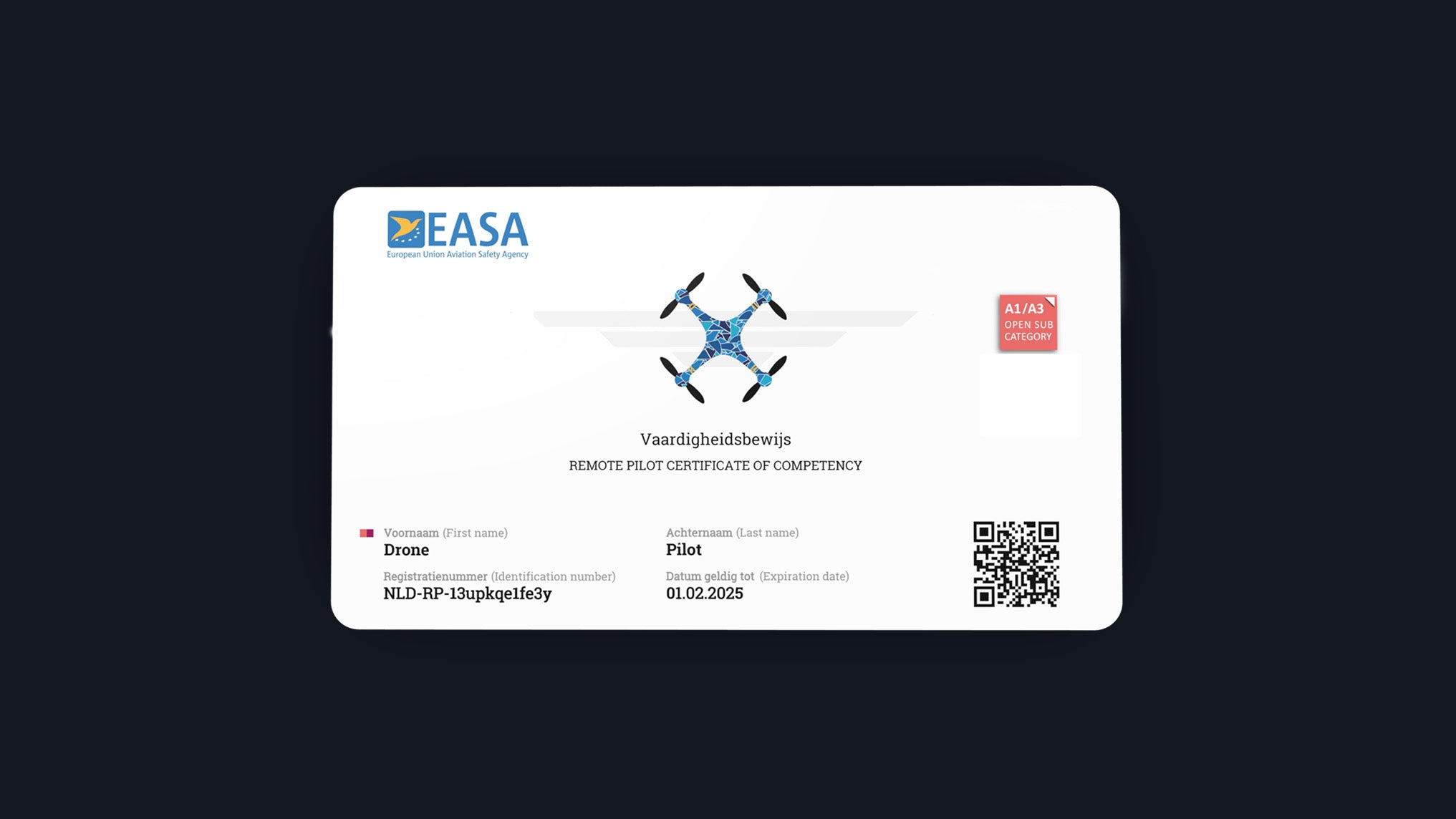
The license serves as proof that you understand the safety protocols, weather limitations, and airspace restrictions governing the National Airspace System. Unlike a driver’s license, the Part 107 certificate does not require a practical flight test; instead, it focuses entirely on aeronautical knowledge. Once you earn the certificate, it is valid for two years. To maintain your currency, you simply need to take a free online recurrent training course through the FAA website every 24 months. There is no longer a requirement to pay for a re-test every two years, making the initial certification your primary hurdle.
Core Requirements and Eligibility for Remote Pilots


Before you book your exam, you must ensure you meet the FAA’s baseline eligibility criteria. The FAA is strict about these prerequisites, as they form the legal foundation for your certification. You must be at least 16 years old to hold the license. You also need to be able to read, speak, write, and understand the English language, as all aviation communication and testing in the U.S. are conducted in English. Finally, you must be in a physical and mental condition that allows for the safe operation of a Small Unmanned Aircraft System (sUAS).


The Administrative First Steps
Your first technical step is to create a profile in the FAA’s Integrated Airman Certification and Rating Application (IACRA) system. This is the portal where all your official pilot records will live. Upon registration, you will be assigned an FAA Tracking Number (FTN). You cannot schedule your exam without an FTN. Keep this number safe, as it will stay with you for your entire aviation career, even if you eventually move on to manned aircraft.
- Step 1: Register on the IACRA website and obtain your FTN.
- Step 2: Create an account with PSI, the FAA’s official testing partner, using your FTN.
- Step 3: Schedule your “Unmanned Aircraft General – Small” (UAG) exam at a local testing center.
Costs and Time Commitment


Obtaining your license is an investment in your professional career. The most significant direct cost is the testing fee, which is currently $175 paid directly to the PSI testing center. This fee is non-refundable, so you should only schedule the test when you are confident you can pass. Most students spend between 15 and 20 hours studying the material. While the FAA provides free study guides, many commercial pilots opt for paid prep courses ranging from $100 to $300 to ensure they pass on the first attempt, as a failing grade requires paying the $175 fee again for a retake.


From Start to Finish: Commercial Drone Licensing Explained
Transitioning from a casual hobbyist to a professional drone pilot is an exciting leap that opens doors to lucrative industries like real estate photography, agricultural monitoring, and infrastructure inspection. However, the Federal Aviation Administration (FAA) requires all commercial operators in the United States to obtain a Remote Pilot Certificate under Part 107 regulations. This guide provides a comprehensive roadmap to navigating the legal requirements, studying for the rigorous exam, and finalizing your certification so you can fly for compensation legally and safely. Following these steps carefully ensures you don’t encounter delays in your TSA background check or administrative hurdles with the FAA’s Integrated Airman Certification and Rating Application (IACRA) system.
Step 1: Confirm Your Eligibility and Basic Requirements
What you need: A valid government-issued photo ID (driver’s license or passport), a functional computer with internet access, and proof that you are at least 16 years of age.
Instructions: Before spending money on exam fees, verify that you meet the FAA’s baseline criteria. You must be at least 16 years old and be able to read, speak, write, and understand the English language. This language requirement is safety-critical, as you must be able to communicate with Air Traffic Control (ATC) and understand aeronautical charts and weather reports written in English. Additionally, you must be in a physical and mental condition that allows for the safe operation of a Small Unmanned Aircraft System (sUAS). If you have any prior drug-related convictions, be aware that these can disqualify you or delay your application for several years depending on the offense. Take a moment to review the FAA’s Part 107 summary document to ensure you understand the basic operational limits you will soon be tested on.
Pro Tip: If you are already a manned aircraft pilot with a current flight review under Part 61, you have a much shorter path; you can simply take an online training course on the FAA Safety Team (FAASTeam) website rather than the full proctored exam.
Step 2: Obtain Your FAA Tracking Number (FTN)
What you need: Access to the IACRA (Integrated Airman Certification and Rating Application) website and your personal identification details.
Instructions: Your first administrative task is to create a profile in the FAA’s IACRA system. This system is the digital backbone for all pilot certifications in the United States. Visit the IACRA website and register as an “Applicant.” Fill out your legal name exactly as it appears on your government ID—any discrepancy can lead to being turned away at the testing center. Once you complete the registration, the system will generate an FAA Tracking Number (FTN). This 8-digit number is your permanent identifier within the FAA ecosystem. Write this number down and save it in a secure location; you will need it to schedule your exam, fill out your final application, and for any future renewals or drone registrations.
Pro Tip: Avoid using nicknames or shortened versions of your name. If your ID says “Robert” but you register as “Bob,” the testing center proctor is legally required to deny you entry to the exam, and you may lose your testing fee.
Step 3: Master the Part 107 Knowledge Areas
What you need: The FAA Remote Pilot Study Guide (FAA-G-8082-22), a sectional chart legend, and practice exams.
Instructions: The Part 107 Knowledge Test is a 60-question multiple-choice exam that covers five main areas: Regulations, Airspace Classification/Operating Requirements, Weather, Loading/Performance, and Operations. You should spend at least 15 to 20 hours studying. Focus heavily on reading sectional charts; you must be able to identify Class B, C, D, and E airspaces and understand what the various symbols (like MSL vs. AGL altitudes) mean. Learn how to decode METAR and TAF weather reports, which use specific abbreviations like “BR” for mist or “TSRA” for thunderstorms. You must also understand the “Privacy” and “Safety” culture the FAA expects, including how to handle lithium polymer (LiPo) battery fires and how to calculate a drone’s “Load Factor” during steep turns.
Pro Tip: Don’t just memorize answers; the FAA frequently updates the question bank. Focus on the “Remote Pilot Small Unmanned Aircraft Systems Study Guide” provided for free by the FAA, and use YouTube tutorials specifically for “Sectional Chart Reading” to visualize airspace.
Step 4: Schedule the Aeronautical Knowledge Test
What you need: Your FTN, a credit card for the $175 exam fee, and an account on the PSI Exams website.
Instructions: The FAA does not administer the test directly; instead, they use a third-party company called PSI Services. Navigate to the PSI FAA exam portal and create an account using your FTN. Search for “Unmanned Aircraft General – Small (UAG)” as the specific exam. You will be able to search for testing centers near your zip code. These are typically located at small airports, flight schools, or professional certification centers. Select a date and time that allows you a buffer for traffic. You will be required to pay the $175 fee upfront. Upon confirmation, you will receive an email with instructions on what you can and cannot bring into the testing room (usually, you are allowed a basic calculator, but nothing with a camera or programmable memory).
Pro Tip: Schedule your exam for a Tuesday or Wednesday morning. Testing centers are often less crowded mid-week, and your brain will be fresher than it would be after a full day of work.
Step 5: Pass the FAA Knowledge Exam
What you need: Your government ID, your FTN, and a clear head. The testing center provides the Airman Knowledge Testing Supplement book.
Instructions: Arrive at the testing center at least 15 minutes early. The proctor will verify your ID and provide you with the “Airman Knowledge Testing Supplement,” which contains the maps and charts you studied. You have 120 minutes to complete 60 questions. A passing score is 70% (at least 42 correct answers). Take your time to read each question carefully; the FAA often uses “distractor” answers that look correct but are technically wrong based on specific definitions. For example, pay close attention to whether a question asks about “Mean Sea Level” (MSL) or “Above Ground Level” (AGL). Once you finish, the proctor will print your “Airman Knowledge Test Report” (AKTR), which contains a raised seal and a 17-digit Knowledge Test Exam ID.
Pro Tip: If you encounter a difficult math question or a complex map, skip it and come back later. The digital testing interface allows you to “flag” questions for review, ensuring you don’t waste precious time on one difficult item.
Step 6: Submit FAA Form 8710-13 via IACRA
What you need: Your Knowledge Test Exam ID from your passed test and your IACRA login credentials.
Instructions: Passing the test does not automatically grant you a license. You must log back into the IACRA website to finalize the application. Click on “Start New Desktop Application,” select “Pilot” as the application type, and then choose “Remote Pilot.” You will need to enter the 17-digit Knowledge Test Exam ID from your passing report. This links your exam results to your profile. You will then sign the application electronically. This triggers the TSA background check. It usually takes about 7 to 10 days for the TSA to clear you. Once cleared, you will receive an email notification that your temporary certificate is available for download and printing. This temporary PDF is a legal license that allows you to fly commercially while you wait for your permanent plastic card to arrive by mail.
Pro Tip: Check your email’s spam folder frequently after submitting. The notification from the FAA sometimes gets filtered out, and you don’t want to delay your first professional gig while waiting for a piece of paper you already have access to.
Step 7: Register Your Aircraft and Apply Remote ID
What you need: $5 per drone, the drone’s serial number, and a credit card.
Instructions: To fly commercially, your drone must be registered under Part 107 (hobbyist registration is not valid for commercial work). Go to the “FAADroneZone” website and create an account. Register your specific aircraft by providing the make, model, and serial number. You must also provide the “Remote ID” serial number if your drone is equipped with it (which most modern drones are). The registration costs $5 and is valid for three years. Once registered, you will receive a registration number (e.g., FA1234567). You must physically mark this number on the outside of your drone using a permanent marker or a label maker. It must be visible without the use of tools (do not hide it inside the battery compartment).
Pro Tip: If you are using a custom-built drone that doesn’t have built-in Remote ID, you must purchase a Remote ID broadcast module and register that module’s serial number with your aircraft on the DroneZone portal.
Step 8: Maintain Your Recency and Documentation
What you need: A digital or physical logbook and access to the FAASTeam website.
Instructions: Your Remote Pilot Certificate never technically “expires,” but your “privilege to fly” does. To remain current, you must complete free online recurrent training every 24 calendar months. This training is available on the FAA Safety Team (FAASTeam) website and serves as a refresher on new regulations and safety protocols. Additionally, keep a logbook of your flights, including dates, locations, and any maintenance performed on the aircraft. While the FAA doesn’t strictly require a logbook for Part 107 pilots, it is considered a “best practice” and is often required by insurance companies before they will issue you a professional liability policy. Always carry your certificate (digital or physical) and your drone registration whenever you are on a job site.
Pro Tip: Download the “B4UFLY” app (or an FAA-approved LAANC provider like AirControl) to check airspace in real-time before every flight. This ensures you are always flying in authorized areas and are aware of any Temporary Flight Restrictions (TFRs).
✅ Final Checklist
- Verified age (16+) and English proficiency.
- Obtained FAA Tracking Number (FTN) from IACRA.
- Passed the Part 107 Aeronautical Knowledge Test with 70% or higher.
- Submitted Form 8710-13 in IACRA and received a Temporary Certificate.
- Registered the drone on FAADroneZone and applied the registration number to the hull.
- Ensured the drone is compliant with FAA Remote ID requirements.
Important Notes:
- Safety First: Never fly over people, moving vehicles, or at night unless you meet the specific “Category” requirements or have the necessary lighting/waivers.
- Professional Help: If you struggle with self-study, consider enrolling in a “Ground School” course. Many offer “pass guarantees” for a fee of $100-$300.
- Estimated Time: 2-4 weeks (including study time and TSA processing).
- Estimated Cost: $180 – $500 (Exam fee: $175, Registration: $5, plus optional study materials).
Breaking Down the Aeronautical Knowledge Test Syllabus


The Part 107 Knowledge Test is a 60-question, multiple-choice exam that you must complete within 120 minutes. To pass, you need a score of 70% or higher. The questions are not about how to move the joysticks on your controller; rather, they test your ability to act as a Pilot in Command (PIC) within a complex ecosystem of airplanes, helicopters, and restricted zones. You will be provided with a physical book called the “Airman Knowledge Testing Supplement” during the exam, which contains the charts and legends you must use to answer specific questions.

Mastering Airspace and Sectional Charts


Roughly 30% to 40% of the exam focuses on airspace classification and operating requirements. This is the most challenging section for most applicants. You must be able to read a Sectional Chart—a dense, topographical map used by pilots—to identify where you can and cannot fly. For example, you will need to distinguish between Class G (uncontrolled) airspace and Class B, C, or D (controlled) airspace surrounding airports.


- Vertical Limits: Understanding that the standard ceiling is 400 feet Above Ground Level (AGL).
- Restricted Areas: Identifying Prohibited Areas, Restricted Areas, and Military Operations Areas (MOAs) on a map.
- MSL vs. AGL: Knowing the difference between Mean Sea Level (used for altitude on charts) and Above Ground Level (used for drone height).
Weather, Loading, and Emergency Procedures

The FAA requires you to understand how weather affects flight performance and how to interpret official aviation weather reports. You will likely see questions asking you to decode a METAR (Meteorological Aerodrome Report) or a TAF (Terminal Aerodrome Forecast). These reports use coded abbreviations to describe cloud cover, visibility, and wind speeds. Additionally, you will be tested on “Load Factor,” which involves calculating how steep turns or extra equipment (like heavy cameras or sensors) affect the structural integrity and battery life of your drone. You must also know the mandatory reporting procedures for accidents; specifically, any injury or property damage exceeding $500 must be reported to the FAA within 10 days.
Cost Analysis: Exam Fees and Training Expenses


Becoming a certified remote pilot is a strategic investment in your professional future. While the FAA does not charge a direct fee for the actual issuance of your remote pilot certificate, there are unavoidable costs associated with the testing environment and the preparation required to pass. Understanding these expenses upfront allows you to budget effectively for your new commercial venture.
The Mandatory Fixed Costs
The most significant upfront expense is the FAA Knowledge Test fee. This fee is paid directly to the testing center (administered by PSI) and currently sits at $175 per attempt. Because this is a per-test fee, the financial stakes are high; failing the exam means paying another $175 to retake it. Beyond the exam, you must register every drone you intend to use commercially under Part 107 rules, which costs $5 per aircraft for a three-year period.
- Knowledge Test Fee: Approximately $175 per attempt.
- Drone Registration: $5 per drone (valid for 3 years).
- Hidden Costs: Consider the cost of transportation to a designated FAA testing center and the potential purchase of physical tools like a plotter or aeronautical charts if you prefer tactile study materials.
Variable Training and Study Resources
How much you spend on preparation depends largely on your learning style and previous aviation knowledge. Many pilots opt for “free” routes, utilizing the FAA’s own Remote Pilot Study Guide and YouTube tutorials. However, if you are new to concepts like METAR weather reports or airspace classifications, professional online ground schools are highly recommended. These courses generally range from $100 to $300 and often include pass guarantees. For example, a pilot focusing on high-end real estate photography might find that a $150 course pays for itself by preventing a costly exam retake.
Post-Certification Regulations and Renewal Compliance


Earning your Part 107 certificate is an impressive milestone, but the FAA requires you to maintain that knowledge through regular updates. Compliance does not end once the plastic card arrives in your mail; professional pilots must stay current with evolving regulations to keep their operations legal and insured.


Maintaining Your Recency of Knowledge
Your commercial drone license does not “expire” in the traditional sense, but your recency of knowledge must be refreshed every 24 calendar months. In the past, this required another paid in-person exam. Fortunately, the FAA has transitioned this to a free online recurrent training course via the FAA Safety Team (FAASTeam) website. This training covers the latest rules, such as operations over people and night flying, ensuring you remain a safe participant in the national airspace.
- Renewal Cycle: Every 24 months.
- Renewal Cost: Free (conducted online).
- Record Keeping: You are required to have your proof of recurrent training (the certificate of completion) available during all commercial operations.
Operational Rules for Commercial Pilots
Once you are flying under Part 107, you are held to a higher standard than recreational flyers. This includes maintaining a pre-flight inspection log and ensuring your drone is equipped with the necessary accessories for safety. For instance, if your mission requires flying during civil twilight, you must utilize anti-collision lighting that is visible for at least three statute miles. Professional pilots also need to stay informed about Remote ID requirements, ensuring their broadcast module is active and properly registered. Failing to follow these operational standards can lead to significant fines or the suspension of your hard-earned license.
Final Thoughts: Your Path to the Skies
Getting your commercial drone license is a manageable and rewarding process that transforms a hobby into a legitimate business asset. By navigating the costs of the Knowledge Test and committing to the long-term requirements of recency training, you establish yourself as a professional in a rapidly growing industry. The Part 107 certificate is more than just a piece of paper; it is a signal to clients that you prioritize safety, legality, and technical expertise.
Next Steps: Start by downloading the FAA’s free study materials to gauge your current knowledge level. Once you are comfortable with the basics, schedule your exam at a local testing center and begin assembling your professional flight kit, including essential accessories like high-visibility vests and prop guards. It is time to take your drone career to the next level!
💬 Quick Questions & Answers
How old do I need to be for a drone license?
You must be at least 16 years old to apply for a Part 107 certificate.
What is the passing score for the Part 107 exam?
You need to score at least 70% to pass the aeronautical knowledge test.
How much does the FAA drone test cost?
The testing fee is currently $175, paid directly to the authorized testing center.
How long is a commercial drone license valid?
The certificate doesn’t expire, but you must complete recurrent training every 24 months.
Do I need a license to fly drones for fun?
No, but recreational flyers must pass The Recreational UAS Safety Test (TRUST).
❓ Frequently Asked Questions
What specific topics are covered in the Part 107 exam?
The exam focuses heavily on FAA airspace classifications, operating requirements, and weather effects on performance. You will also be tested on emergency procedures, radio communications, and physiological factors affecting pilot performance.
Where can I physically take the FAA knowledge test?
You must schedule your exam at an FAA-approved Knowledge Testing Center, managed by PSI Services. There are hundreds of these locations across the United States, typically located at regional airports.
What happens if I fail the commercial drone exam?
If you do not pass, you must wait 14 days before you can retake the test. You will be required to pay the $175 testing fee again for each attempt.
Is a background check required for a drone license?
Yes, once you pass the exam and apply via IACRA, the TSA conducts a security threat assessment. You will receive your permanent card only after successfully clearing this background check.
Can I use my Part 107 license for both commercial and hobbyist flying?
Yes, once you have your Part 107 certificate, you can operate under commercial rules for any flight. However, you must still follow specific registration rules for the drone you are using.
What documents do I need to bring to the testing center?
You must bring a valid, government-issued photo ID that includes your current residential address and signature. If your ID doesn’t show your current address, you’ll need supplemental proof like a utility bill.