Most modern consumer drones offer a flight duration of 25 to 35 minutes, though high-end professional models can exceed 45 minutes. Real-world performance is often 15-20% lower than advertised due to environmental variables like wind and temperature.
🎯 Key Takeaways
- Toy drones usually fly for 5 to 10 minutes.
- Consumer drones average between 25 and 31 minutes.
- Professional-grade drones can achieve 40+ minutes of flight.
- Flight speed and payload weight drastically reduce battery life.
- Always land at 15-20% battery to preserve cell health.
Most modern drones offer flight times ranging from 20 to 45 minutes on a single charge. If you are flying a high-end consumer model, you can expect roughly 30 minutes of airtime, while specialized racing drones may only last 5 to 8 minutes. Enterprise-level machines designed for industrial inspections can occasionally push past the 50-minute mark, but these are the exception rather than the rule.
Prime for Young Adults — 6 Months Free
Exclusive Offer Amazon Prime for Young Adults, Students and 18–24s get six months of Prime free, then half price.
Start 6 Months Free As an Amazon Associate I earn from qualifying purchases.
Understanding these limits is vital for planning your missions and managing your gear effectively. Whether you are capturing a wedding or inspecting a cell tower, knowing exactly how much “gas” is in the tank ensures you get the shot and return your expensive equipment safely to the ground. You do not want to realize your battery is critical when your drone is half a mile away over water or stuck behind a treeline.
Average Flight Times for Different Drone Categories
Recommended Best Deal Products


Drone flight endurance varies wildly based on the size of the aircraft and its intended purpose. Manufacturers design batteries to balance weight against power capacity, which creates distinct “sweet spots” for different categories of drones. Generally, as the drone gets larger and the motors more efficient, the flight time increases—up to a point where the weight of the battery itself becomes a hindrance.

Consumer and Prosumer Camera Drones
This is the most popular category, including well-known series like the DJI Mavic, Mini, and Autel Evo. These drones are engineered for maximum efficiency to help you get the best cinematic shots without constant battery swaps. Because they are often used by hobbyists, manufacturers prioritize a “user-friendly” 30-minute window.
- Mini Drones (under 250g): 25–38 minutes. Modern sub-250g drones are surprisingly efficient. High-capacity “Plus” batteries often push these toward the 45-minute mark, though they may exceed weight regulations.
- Standard Consumer Drones: 28–34 minutes. These are the industry workhorses for hobbyists and YouTubers. They offer enough time to scout a location and record several minutes of 4K footage.
- Prosumer Models: 35–46 minutes. Larger frames allow for bigger batteries and more efficient motors, allowing professional photographers to stay in the air longer for complex shots.
FPV and Racing Drones
FPV (First Person View) drones prioritize speed and maneuverability over endurance. Because they use high-discharge batteries to perform acrobatic flips and reach speeds over 100 mph, their flight times are significantly shorter than standard camera drones. You are trading time for raw performance and thrill.
- Racing/Freestyle Drones: 3–7 minutes. Intense throttle usage drains cells rapidly. Most pilots carry 10 or more batteries for a single afternoon session.
- Cinewhoops: 5–10 minutes. These are usually used for short, planned indoor or proximity shots. Their ducted propellers provide safety but decrease aerodynamic efficiency.
- Long-Range FPV: 15–25 minutes. These use specific Lithium-Ion packs instead of LiPo packs. They are designed for steady cruising at lower speeds rather than bursts of power.
Industrial and Enterprise Drones
Enterprise drones are built for long-duration tasks like search and rescue, thermal mapping, or large-scale surveying. These machines often feature dual-battery systems to maximize time in the air while carrying heavy specialized sensors.
- Inspection Multi-rotors: 35–50 minutes. These are designed for stability and precision hovering near structures like wind turbines or bridges.
- Agriculture Drones: 10–20 minutes. While they have massive batteries, carrying heavy liquid payloads for crop spraying significantly reduces their total duration.
- Fixed-Wing Drones: 60–120+ minutes. By using wings for lift instead of relying solely on motors, these drones can cover massive distances on a single charge.
Why Real-World Flight Times Differ from Advertised Specs
The “max flight time” listed on a drone box is usually calculated under perfect laboratory conditions. Manufacturers often test in zero-wind environments, flying at a constant, low speed until the battery reaches 0%. In your daily flying, you will rarely see these numbers because you have to account for safety margins and external forces.
Environmental Variables: Wind and Temperature
Nature is the primary enemy of your drone’s battery life. Your drone has to work significantly harder to stay stable when the air is moving against it. Every adjustment the flight controller makes to maintain its position uses precious energy.
Prime for Young Adults — 6 Months Free
Exclusive Offer Amazon Prime for Young Adults, Students and 18–24s get six months of Prime free, then half price.
Start 6 Months Free As an Amazon Associate I earn from qualifying purchases.- High Winds: To fight drag and maintain a hover, the motors must spin at higher RPMs. Strong gusts or a constant headwind can shave 20-30% off your expected flight time.
- Cold Temperatures: Drone batteries rely on chemical reactions that slow down in the cold. Flying in sub-freezing weather causes the voltage to drop faster, which might trigger an early “low battery” return-to-home command.
- Air Density: Flying at high altitudes (like in the mountains) is less efficient. Thinner air provides less lift, forcing the motors to work harder to keep the aircraft airborne.
Operational Factors: Payload and Flight Style
How you fly and what you carry are just as important as where you fly. Every gram of extra weight and every sudden movement requires more energy from the battery pack. Understanding your “flight profile” helps you estimate how much time you actually have.
- Payload Weight: Adding propeller guards, external LED lights, or a heavier secondary camera will decrease flight time. Even small accessories change the power-to-weight ratio and increase motor strain.
- Aggressive Maneuvers: Flying in “Sport Mode” maximizes speed but drains the battery exponentially faster than a steady “Cine” mode. Frequent full-throttle climbs are the fastest way to empty a battery.
- The 20% Safety Rule: Most pilots land when the battery hits 20% to avoid damaging the cells or risking a crash. This means a “30-minute” battery only gives you about 24 minutes of usable mission time.
Comparing Popular Models: DJI Mini, Mavic, and Air Series
Recommended Best Deal Products

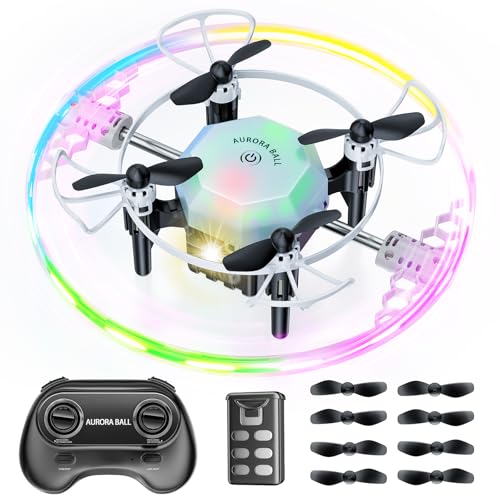

When evaluating flight times, DJI remains the industry benchmark. Their lineup offers a clear look at how different drone sizes and price points handle battery endurance. While many entry-level “toy” drones struggle to stay airborne for even 10 minutes, these consumer-grade models have pushed the boundaries significantly over the last few years.

The Lightweight Champions: Mini and Air Series
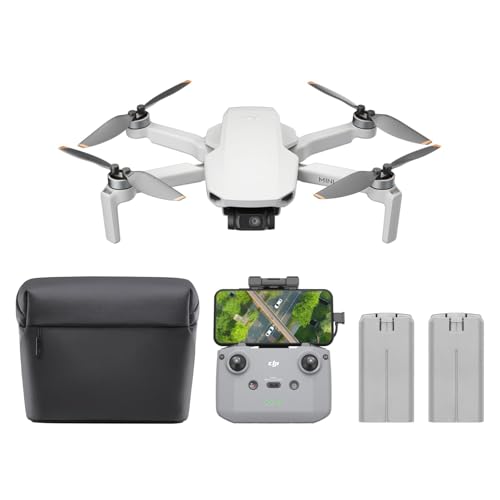
The DJI Mini Series (such as the Mini 3 and Mini 4 Pro) is a marvel of efficiency. Despite their small size, they are designed for maximum airtime. On a standard battery, you can expect roughly 30 to 34 minutes. However, DJI offers an “Intelligent Flight Battery Plus” for these models that can push flight times up to 45 or 47 minutes. Keep in mind that using the larger battery often pushes the drone over the 250g weight limit, which may change your local registration requirements.
The DJI Air 3 is currently one of the most impressive “all-arounders.” It features a dual-battery charging hub that allows for power accumulation, and it boasts an advertised flight time of 46 minutes. In real-world testing, this usually equates to about 38-40 minutes of active shooting before the low-battery warnings kick in.
The Professional Flagship: Mavic Series
- DJI Mavic 3 Pro: This is the go-to for professional creators, offering 43 minutes of flight time. Its larger props and more efficient motors allow it to carry a heavy triple-camera payload without sacrificing too much stamina.
- Mavic 3 Classic: Similar to the Pro, the Classic offers up to 46 minutes of flight time, making it one of the longest-lasting consumer drones currently on the market.
Critical Factors Influencing Battery Discharge Rates
It is important to remember that the flight times listed on the box are “ideal” figures. Manufacturers test these drones in windless conditions at a constant, moderate speed. In the real world, several environmental and pilot-controlled factors will eat into your battery life much faster than you might anticipate.
Environmental Challenges: Wind and Cold
The most common “battery killer” is wind resistance. If your drone is fighting a 15 mph headwind to stay stationary or move forward, the motors must spin at a much higher RPM, which causes a massive spike in power consumption. Similarly, temperature plays a huge role. Lithium-polymer (LiPo) batteries rely on chemical reactions that slow down in cold weather. If you are flying in temperatures near or below freezing, your battery life could drop by as much as 30-50%.
Payload, Accessories, and Flight Style
- Extra Weight: Every gram matters. Adding propeller guards, heavy ND filters, or even decorative stickers increases the weight, forcing the motors to work harder to maintain lift.
- Aggressive Maneuvering: Flying in “Sport Mode” is exhilarating, but it is the least efficient way to fly. Constant full-throttle acceleration and sharp turns will drain a battery in nearly half the time compared to “Cinematic” or “Normal” modes.
- Signal Strength: If you are flying at extreme distances where the drone has to boost its transmission power to maintain a link with the controller, you will see a marginal increase in battery drain.
Pro Tip: To get the most out of your flight, try to keep your drone in a steady hover or at a consistent cruising speed, and always keep your batteries in a warm pocket or “battery heater” before taking off in cold weather.
Prime for Young Adults — 6 Months Free
Exclusive Offer Amazon Prime for Young Adults, Students and 18–24s get six months of Prime free, then half price.
Start 6 Months Free As an Amazon Associate I earn from qualifying purchases.Conclusion
Recommended Best Deal Products

Understanding the limits of your drone’s flight time is the best way to ensure a successful and stress-free flight. While most modern consumer drones offer between 25 and 45 minutes of airtime, always remember that “real-world” conditions like wind and temperature will likely reduce those numbers. By choosing the right model for your needs and being mindful of how you fly, you can maximize every second of your time in the sky.
If you find yourself constantly wishing for more time, consider investing in a “Fly More” combo or extra batteries to keep your sessions going. Ready to take your aerial photography to the next level? Pick up a spare battery today and never miss that perfect sunset shot again! Happy flying!
❓ Frequently Asked Questions
Why does my drone fly for less time than the box says?
Manufacturers test drones in controlled, windless environments at optimal speeds. In the real world, fighting wind, recording 4K video, and frequent maneuvering all draw more power than a lab test.
What type of drone has the longest flight time?
Professional enterprise drones and high-end consumer models like the DJI Mavic 3 series currently lead the market, often reaching 43 to 46 minutes. Fixed-wing drones can fly even longer, sometimes for hours.
How do extra payloads like landing gear or lights impact flight?
Any added weight increases the lift required from the motors, which increases the current draw from the battery. Even a few extra grams can shave minutes off your total flight duration.
Is it safe to fly until the battery is at 0%?
No, you should aim to land with at least 15-20% battery remaining to prevent permanent damage to the LiPo cells. Most drones will initiate an automatic ‘Return to Home’ once the battery hits a critical threshold.
How can I double my total flying time for a session?
The most practical solution is purchasing a ‘Fly More’ combo or extra batteries and a multi-charger. This allows you to swap batteries quickly rather than waiting for a single unit to recharge in the field.
Does the age of the battery affect how long the drone stays in the air?
Yes, lithium-polymer batteries degrade over time and through charge cycles. An older battery with many cycles will generally provide less flight time and hold less capacity than a brand-new one.