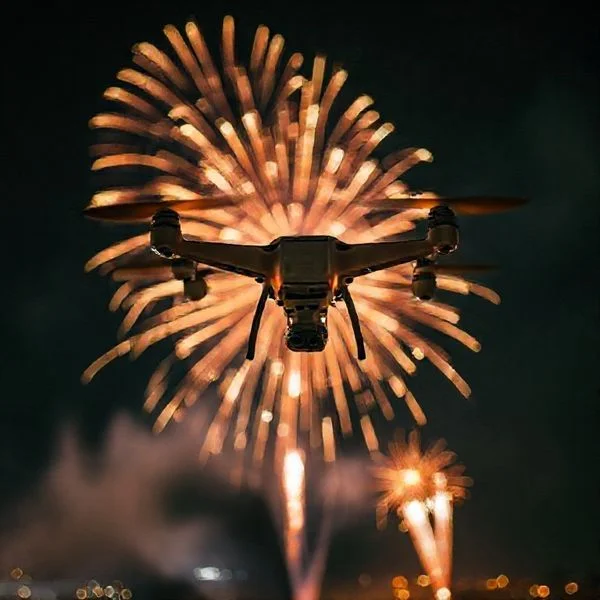
Drones at night are best identified by their FAA-mandated anti-collision strobe lights, which are typically white or red and visible for up to three miles. Unlike planes or stars, drones exhibit unique flight behaviors like hovering and rapid multi-directional movement while producing a distinct high-pitched buzzing sound.
🎯 Key Takeaways
- Identify drones by white or red strobes flashing 40-100 times per minute.
- Drones can hover perfectly still, unlike satellites or fixed-wing airplanes.
- Listen for a distinct high-pitched ‘mosquito’ buzzing sound that changes with altitude.
- Use Remote ID apps like DroneScanner to detect digital signals from nearby drones.
- Thermal optics can reveal heat signatures from drone motors and batteries at night.
To identify a drone at night, you must look for high-intensity blinking strobes paired with steady red and green lights. Unlike the fixed, linear paths of satellites or the high-altitude blinking of commercial jets, drones exhibit “erratic” movement. They can hover perfectly still, rotate on a central axis, and change direction instantly without following a curved arc. If you see a light that stops dead in the air or zips vertically, you are likely looking at a drone.
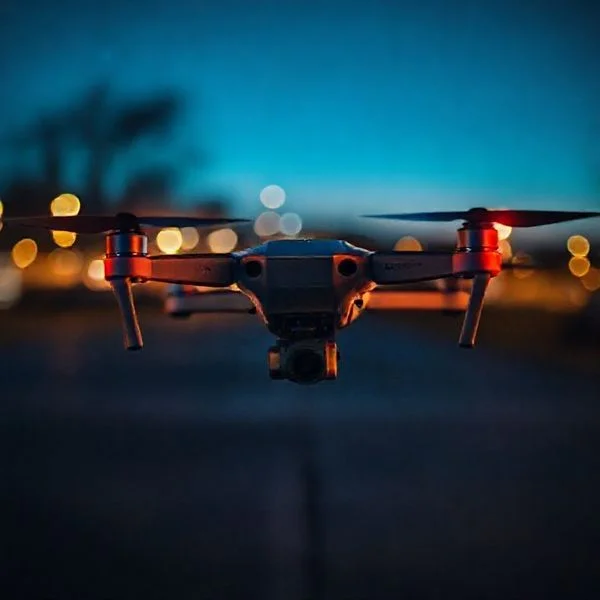
Distinguishing between these objects matters for your privacy and situational awareness. Seeing a blinking light in the sky is common, but knowing how to read the visual “language” of aircraft lighting allows you to filter out stars, planets, and planes immediately. By focusing on light patterns and flight physics, you can accurately identify a drone’s presence from over a mile away.
Prime for Young Adults — 6 Months Free
Exclusive Offer Amazon Prime for Young Adults, Students and 18–24s get six months of Prime free, then half price.
Start 6 Months Free As an Amazon Associate I earn from qualifying purchases.Visual Light Signatures: Navigation vs. Anti-Collision Strobes
Recommended Best Deal Products
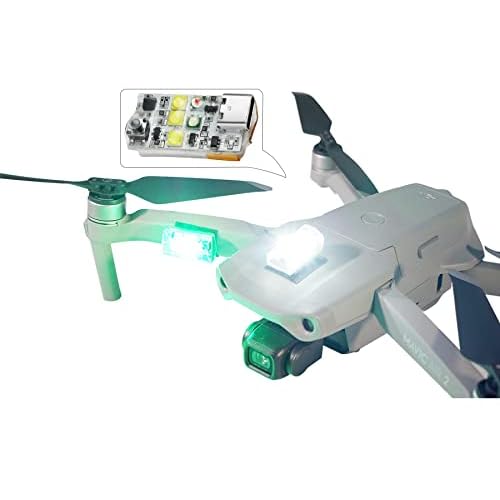

The most reliable way to identify a drone in the dark is by its specific lighting configuration. Most modern drones, especially those used for commercial or serious hobbyist purposes, are equipped with two distinct types of lights: navigation lights and anti-collision strobes. These systems serve different purposes but together create a unique visual footprint that differs significantly from stars or distant airplanes.
Decoding Strobe Patterns and Colors
Anti-collision strobes are high-intensity LEDs designed to be seen from at least three statute miles away. These are usually the first thing you will notice. While airplanes also use strobes, drone strobes have a different “tempo” and placement. Federal guidelines often require these lights to flash at a rate between 40 and 100 cycles per minute. Here is what to look for:
- White Strobes: These are the most common. They are often mounted on the top or bottom of the drone’s chassis to provide maximum visibility to other aircraft.
- Red or Green Strobes: Some operators use colored strobes to help with orientation. A rapid, high-intensity red blink often indicates a drone rather than a traditional aircraft, which usually uses white for its primary strobe.
- Multi-Directional Bursts: Unlike a plane, where strobes are fixed on wingtips, a drone’s strobe is often a single, powerful point of light that remains visible regardless of the drone’s bank angle.
Navigation Lights and Orientation
Navigation lights are smaller, steady-burn lights located on the arms or the underbelly of the drone. These help the pilot (and you) understand which way the drone is facing. Drone manufacturers generally follow standard aviation color protocols, which can help you determine the drone’s flight path relative to your position.
- Red Lights: Typically located on the front arms or the “port” (left) side. These indicate the forward-facing direction or the left side of the craft.
- Green Lights: Usually located on the “starboard” (right) side. If you see green on the left and red on the right, the drone is flying directly toward you.
- Customizable RGB LEDs: Many hobbyist drones (like the DJI Mavic series) allow users to change the color of the front LEDs. If you see unusual colors like blue, purple, or solid yellow, it is almost certainly a drone, as these colors are not used on standard manned aircraft.
- Light Intensity: Drone navigation lights are much dimmer than the strobes. If you see a faint red/green glow accompanied by a bright white flash, you are looking at a quadcopter at a relatively low altitude (under 400 feet).
Master Nighttime Drone Identification in 7 Simple Steps
With the rapid proliferation of unmanned aerial vehicles (UAVs) for both commercial and recreational use, seeing lights in the night sky has become a common occurrence. However, distinguishing a drone from a star, a planet, or a manned aircraft requires a specific set of observational skills and technical knowledge. This guide will walk you through the precise methodology for identifying a drone at night, covering lighting regulations, acoustic signatures, and digital tracking tools. Following these steps is essential for maintaining your privacy, ensuring local airspace safety, and satisfying your curiosity about the technology operating above your head.
Step 1: Analyze Navigation Light Color and Orientation
What you need: Clear line of sight to the aerial object and basic knowledge of FAA lighting standards.
Instructions: The first step in identification is observing the color and placement of the lights. Most consumer and professional drones follow maritime-inspired lighting protocols. Look for a solid or blinking green light on the right side (starboard) and a red light on the left side (port). Additionally, drones often feature a white light on the rear to indicate the direction of travel. If you see a steady red and green light combination that remains at a relatively low altitude, you are likely looking at a multirotor drone. Unlike stars which twinkle with a white or slightly blueish hue due to atmospheric refraction, drone lights are consistent, artificial, and multi-colored. Pay close attention to the “orientation” of these lights; if the red is to your right and the green is to your left, the drone is flying toward you.
Pro Tip: Do not confuse drones with “planets” like Mars or Jupiter, which can appear as steady, bright lights. Drones will almost always show at least two distinct colors simultaneously.
Prime for Young Adults — 6 Months Free
Exclusive Offer Amazon Prime for Young Adults, Students and 18–24s get six months of Prime free, then half price.
Start 6 Months Free As an Amazon Associate I earn from qualifying purchases.Step 2: Monitor Anti-Collision Strobe Patterns
What you need: 15-30 seconds of continuous observation.
Instructions: Under FAA Part 107 regulations, drones flown at night for commercial purposes must be equipped with anti-collision lighting visible for at least three statute miles. These strobes are significantly brighter than standard navigation lights and typically flash in white or red. Observe the frequency of the flashes; drone strobes generally pulse at a rate of 40 to 100 cycles per minute. If you see a high-intensity white light that flashes rapidly while the craft remains stationary or moves slowly, it is a definitive sign of a drone. Manned aircraft also use strobes, but their flight paths are much higher and follow predictable, linear trajectories at much higher speeds than a quadcopter or hexacopter.
Pro Tip: If the strobe light is so bright that it illuminates the body of the craft or nearby treetops, the drone is likely flying at an altitude of less than 200 feet, which is common for residential surveillance or photography.
Step 3: Conduct an Acoustic Fingerprint Test
What you need: A quiet environment and a few moments of silence.
Instructions: Sound is one of the most reliable ways to identify a drone at night when visual cues are obscured. Drones produce a very specific high-pitched “whirring” or “buzzing” sound, often compared to a swarm of angry bees. This sound is generated by the high RPM (rotations per minute) of the small plastic or carbon fiber propellers. At a distance of 100 feet, a standard consumer drone like a DJI Mavic produces about 65-70 decibels of sound. As the drone changes direction or fights the wind, you will hear the pitch of the motors fluctuate—this is the flight controller adjusting individual motor speeds to maintain stability. If you hear a low-frequency rumble or a steady roar, you are hearing a traditional airplane or helicopter engine, not a drone.
Pro Tip: Sound carries differently at night due to temperature inversions. A drone that is silent during a windy day might be clearly audible from 500 feet away on a calm, cold night.
Step 4: Evaluate Flight Dynamics and Behavior
What you need: A fixed reference point, such as a chimney, tree branch, or power line.
Prime for Young Adults — 6 Months Free
Exclusive Offer Amazon Prime for Young Adults, Students and 18–24s get six months of Prime free, then half price.
Start 6 Months Free As an Amazon Associate I earn from qualifying purchases.Instructions: Watch how the object moves relative to a stationary landmark. Drones possess unique flight capabilities that distinguish them from all other aircraft. Most notably, they can “loiter” or hover in a single spot with extreme precision using GPS-hold technology. If the light remains perfectly still for more than 30 seconds, it is almost certainly a drone or a star; if it then suddenly zips horizontally or vertically at high speed (up to 40-50 mph), it is confirmed as a drone. Drones can also perform “erratic” maneuvers, such as 90-degree turns without banking or rapid altitude drops, which would be physically impossible or highly dangerous for manned aircraft.
Pro Tip: Use the “thumb rule”—hold your thumb out at arm’s length against the light. If the light disappears behind your thumb and stays there, it is hovering. If it peeks out instantly after a small movement, it is a maneuvering craft.
Step 5: Utilize Remote ID Scanning Apps
What you need: A smartphone with Bluetooth and Wi-Fi enabled, and a specialized app like “Drone Scanner” or “OpenSky.”
Instructions: As of late 2026, the FAA requires most drones operating in U.S. airspace to broadcast “Remote ID” information. This is essentially a digital license plate that transmits via radio frequency. Download a Remote ID scanning app and open it while the drone is in the air nearby. If the drone is compliant with federal law, the app will display the drone’s serial number, its current altitude, its speed, and even the location of the pilot’s ground station (the remote control). This is the most “pro” way to identify a craft, as it provides hard data rather than visual estimates. If the drone is visible but does not appear on the scanner, it may be an older model, a home-built “FPV” drone, or a pilot operating illegally without a broadcast module.
Pro Tip: Remote ID signals usually have a range of about 500 to 1,500 feet depending on interference, so you need to be relatively close to the craft for the app to pick up the signal.
Step 6: Use Optical Aids and Thermal Imaging
What you need: Binoculars (7×50 is ideal for night) or a digital night vision/thermal monocular.
Instructions: If you have access to optics, use them to look for the silhouette of the frame. Under 7x or 10x magnification, you can often see the “X” or “H” shape of the drone’s arms against the moonlight or ambient light pollution. If you are using a thermal imaging device (like a FLIR attachment for a phone), look for heat signatures. Drones generate significant heat in three areas: the lithium-polymer (LiPo) battery pack, the four electronic speed controllers (ESCs) located on the arms, and the motors themselves. On a cool night, a drone will glow brightly on a thermal sensor, appearing as a distinct heat signature against the cold sky, whereas a star or planet will show no thermal footprint at all.
Pro Tip: When using binoculars, don’t look directly at the lights, as the glare will wash out the frame. Look slightly to the side of the lights to see if you can catch the silhouette of the propeller guards or landing gear.
✅ Final Checklist
- Confirmed the presence of multi-colored lights (Red, Green, and/or White) rather than a single color.
- Observed a hovering behavior followed by rapid, non-linear movement.
- Identified a high-pitched “buzzing” sound that fluctuates with movement.
- Successfully detected a signal on a Remote ID scanning application.
- Verified the object is flying below the typical 400-foot ceiling for consumer drones.
Important Notes:
- Safety Warning: Never shine a high-powered laser pointer at a drone. It is a federal crime, can permanent damage the drone’s camera sensors, and may inadvertently hit a manned aircraft if you have misidentified the target.
- Legal Action: If you believe a drone is being used for illegal surveillance of your private property, document the flight with your phone and contact local law enforcement rather than attempting to “ground” the drone yourself.
- Estimated Time: Identification usually takes 2-5 minutes of observation.
- Cost Range: $0 (visual) to $300+ (for entry-level thermal or night vision equipment).
Flight Physics: Contrasting Drone Maneuvers with Planes and Stars
Recommended Best Deal Products



Even if you cannot clearly see the light colors, the way the object moves through the sky is a dead giveaway. Drones operate under different physical constraints than fixed-wing aircraft or orbiting bodies. Because they rely on multi-rotor propulsion, their flight behavior is “mechanical” rather than “fluid.”
The “Dead Stop” and Hovering Indicator
The most obvious behavioral tell is the ability to hover. Satellites and airplanes are in constant forward motion. If a light in the sky remains perfectly stationary for more than thirty seconds, it is either a star, a planet, or a drone. You can distinguish a drone from a star by looking for “micro-movements.” Even in a steady hover, a drone will slightly drift or “bob” as its sensors make tiny motor adjustments to fight the wind.
- Linear vs. Non-Linear Pathing: A satellite will cross the sky in a perfectly straight line at a constant speed. A drone will often “zip” from one point to another, stop, rotate, and then return.
- Instantaneous Velocity Changes: Drones can go from 0 to 40 mph almost instantly. If you see a light that appears to “jump” or “twitch” across the sky, it is a drone reacting to pilot input.
Descent and Altitude Perception
Drones change altitude differently than planes. A plane must descend on a long, gradual slope. A drone can perform a vertical descent, dropping straight down toward the ground while maintaining its horizontal position. This “elevator-style” movement is a primary indicator of a drone. At night, this looks like a light getting progressively brighter and larger without moving left or right in your field of vision.
Furthermore, drones often tilt when they move. When a drone accelerates forward, its body pitches down. This causes the lights on the rear to appear higher than the lights on the front. If you notice the vertical alignment of the lights shifting as the object moves, you are seeing the physical pitch of a multi-rotor craft in transition.
Acoustic Profiles: Distinguishing Propeller Noise from Ambient Sound
At night, when the usual hustle and bustle of traffic and daily life dies down, sound travels much more effectively. Identifying a drone by its acoustic signature is often easier than spotting it visually. Unlike the steady, low-frequency hum of a distant airplane or the rhythmic pulsing of a helicopter, drones produce a unique high-frequency sound often described as a “digital buzz” or a swarm of bees.
The “Beehive” Effect and Pitch Variation
Small consumer drones, like the DJI Mini series, have high-RPM motors that create a shrill, whining noise. This sound is very distinct from natural night noises like crickets or rustling leaves. Because drones rely on constant micro-adjustments to stay level, the pitch of the sound will fluctuate slightly even when the drone is hovering. If you hear a mechanical buzzing that changes pitch as the wind blows, you are likely listening to a drone’s flight controller working to maintain stability.
- High Pitch: Usually indicates a smaller, lightweight consumer drone.
- Low Thrum: Suggests a larger professional or industrial drone with bigger propellers.
- Directional Shifts: Because drone propellers are open, the sound will become significantly louder or muffled as the drone tilts toward or away from you.
Environmental Echoes and Nighttime Carry
In urban environments, drone sounds can bounce off buildings, making it tricky to pinpoint the exact location. However, in open suburban or rural areas, the silence of the night acts as a megaphone. A drone that might be barely audible during the day can be heard from several hundred feet away at 2:00 AM. If the sound remains stationary for long periods, the drone is likely hovering; if the pitch rises and falls rapidly, it is likely in transit or performing maneuvers.
Advanced Detection Tools: Remote ID, Thermal, and Night Vision Optics
Recommended Best Deal Products


When your natural senses aren’t enough, technology can bridge the gap. As drone regulations evolve, identifying these aircraft has become more “high-tech,” allowing bystanders and security-conscious individuals to verify what is in the sky above them without relying solely on a flashlight or a lucky glance.
The Digital License Plate: Remote ID Apps
Most modern drones are now required to broadcast Remote ID signals. Think of this as a digital license plate that shares the drone’s position, serial number, and the pilot’s location. If you suspect a drone is nearby, you can use specialized smartphone apps to “see” the drone’s data. These apps use your phone’s Bluetooth and Wi-Fi receivers to pick up these broadcasts in real-time.
- Direct Identification: Apps can show you the drone’s altitude, speed, and exact path on a map.
- Legal Verification: This is the fastest way to determine if a drone is being operated legally in your area.
- Accessibility: Most of these apps are free to download and work on standard smartphones without extra hardware.
Thermal Imaging and Night Vision
Drones are mechanical devices that generate significant heat. The motors, electronic speed controllers (ESCs), and battery packs all warm up during flight. Through a thermal imaging camera, a drone appears as a bright white or orange “hot spot” against the cold night sky. This is often more effective than night vision, as night vision relies on ambient light and can sometimes be blinded by the drone’s own navigation LEDs. Thermal optics, however, can track a drone even if the pilot has turned off all the lights (a practice known as “flying dark”).
Conclusion
Identifying a drone at night is all about combining visual, acoustic, and technological clues. By looking for the specific strobe patterns of navigation lights, listening for that tell-tale high-pitched whine, and observing the “robotic” flight path of the craft, you can quickly distinguish a drone from a star, a plane, or a persistent insect. As drone technology becomes more common, understanding these signatures is a valuable skill for anyone interested in privacy or aviation safety.
If you are frequently seeing drones in your area, consider downloading a Remote ID scanner app to get a clearer picture of the local airspace. Staying informed is the best way to feel comfortable with the evolving world of drone technology. Do you have a story about a mysterious light in the sky? Leave a comment below and share your experience!
❓ Frequently Asked Questions
Why do drones have flashing lights at night?
The FAA requires anti-collision lighting visible for at least 3 statute miles to prevent mid-air collisions. These strobes typically flash between 40 and 100 times per minute to ensure high visibility.
How far away can you hear a drone at night?
In a quiet suburban environment, a consumer drone can typically be heard from 200 to 500 feet away, though wind direction significantly impacts sound travel.
What does a drone look like through night vision?
Through thermal night vision, a drone appears as a bright heat signature caused by the friction in the motors and the chemical reaction in the battery.
Are all drones required to have lights to fly at night?
Yes, for legal night operations in the U.S., drones must be equipped with anti-collision lights that allow the pilot to maintain situational awareness and be seen by others.
How do drone lights differ from airplane lights?
Airplane lights are positioned on wide wingtips and follow predictable linear paths at high altitudes, while drone lights are compact and move with agility at lower altitudes.
Can a drone hover silently?
No, multirotor drones require constant propeller rotation to maintain lift, which creates a continuous humming or buzzing sound that is impossible to eliminate entirely.