How to Start a Drone Roof Inspection Business: Pro Guide
Commercial UAV Pilot & Aerial Cinematography Specialist at Drone Nestle · FAA Part 107 Remote Pilot Certification, Commercial UAS Operations · 10+ Years in Commercial UAV Operations, Flight Hardware Benchmarking & 4K Aerial Cinematography
The foundation of a drone roof inspection business is FAA Part 107 certification combined with specialized commercial liability insurance. Success depends on utilizing high-resolution thermal imaging hardware and automated reporting software to deliver actionable data to insurance and construction clients.
🎯 Key Takeaways
- Obtain FAA Part 107 certification before offering any commercial drone services.
- Invest in thermal imaging drones to identify hidden moisture and insulation leaks.
- Secure drone-specific insurance including both hull and $1M+ liability coverage.
- Target insurance adjusters and solar installers for high-volume recurring revenue streams.
- Utilize automated photogrammetry software to generate precise 3D roof models.
Launching a successful drone roof inspection business hinges on mastering three pillars: FAA compliance, high-spec thermal hardware, and professional-grade reporting software. You aren’t just flying a camera; you are providing high-resolution structural data that allows adjusters and contractors to make multi-thousand-dollar decisions without leaving the ground. By following a strict legal and technical roadmap, you can transition from a hobbyist to a specialized inspector in as little as 30 days, positioning yourself in a market where a single afternoon of flight can yield significant service fees.


This guide cuts through the noise to focus on the specific regulatory hurdles and equipment investments required for professional-grade inspections. We skip the basic flight maneuvers and generic business advice to provide a technical blueprint for capturing hail damage, identifying thermal leaks, and generating automated reports that command premium prices in the roofing industry. If you want to scale beyond simple photography into high-stakes commercial inspections, these foundational steps are non-negotiable.
Essential Regulatory Requirements and Liability Insurance for Drone Inspectors


Before you ever deploy a landing gear on a client’s property, you must establish a bulletproof legal foundation. The Federal Aviation Administration (FAA) does not distinguish between a “quick look” at a neighbor’s shingles and a full-scale commercial audit. If money changes hands, or if the flight supports a business endeavor, you fall under Title 14 of the Code of Federal Regulations Part 107. Operating without this certification exposes you to tens of thousands of dollars in fines and ensures that no reputable insurance provider will cover your hull or liability claims.



Mastering FAA Part 107 and Airspace Authorization
Your first step is obtaining your Remote Pilot Certificate. This requires passing a 60-question knowledge test at an FAA-approved testing center. Beyond the initial exam, you must stay current through the FAA’s free online recurrent training every 24 months. Once certified, you must register every drone used for your business via the FAADroneZone portal. Each aircraft costs $5 to register for three years and must be labeled with its unique registration number on an exterior surface.
Roofing inspections often occur in controlled airspace, especially near suburban airports. You must utilize LAANC (Low Altitude Authorization and Notification Capability) to receive near-instant flight authorization. Professional inspectors use apps like AirControl or B4UFLY to check for Temporary Flight Restrictions (TFRs) and grid altitude limits before arriving at a job site. Documentation is key; always keep a digital log of your Part 107 certificate and airspace authorizations to present to property managers or law enforcement if requested.


Professional Insurance: Protecting Your Assets and Clients


General business insurance is insufficient for drone operations. You need specialized aviation insurance that includes two distinct components: Liability Insurance and Hull Insurance. Most commercial contracts, particularly with homeowner associations (HOAs) or industrial property managers, require a minimum of $1,000,000 in aviation liability coverage. This protects you if a signal interference causes your drone to crash into a client’s vehicle or, worse, injure a bystander.
- On-Demand Insurance: Services like SkyWatch or Verifly allow you to purchase hourly coverage if you are just starting. This is cost-effective for occasional inspections, costing roughly $10-$30 per flight.
- Annual Policies: Once you are performing more than two inspections per week, annual policies from providers like Global Aerospace or GAIC become more economical. These often include “Premises Liability,” which covers you while walking around the job site.
- Hull Coverage: While liability covers damage to others, hull coverage protects your investment. If your $6,000 thermal drone has a hardware failure and drops onto a concrete driveway, hull insurance pays for the replacement or repair minus your deductible.
Drone Roof Inspections Made Easy: Your Essential Action Plan
Launching a drone-based roof inspection business is one of the most effective ways to capitalize on the growing demand for safe, high-precision aerial data. Traditional roof inspections are dangerous, time-consuming, and often lack the detailed perspective that a 4K or thermal-equipped drone can provide. By following this guide, you will navigate the complex regulatory environment, select the right specialized hardware, and build a workflow that delivers professional-grade reports to insurance companies, roofing contractors, and homeowners. This step-by-step plan ensures you don’t just fly a drone, but operate a legitimate, profitable enterprise from day one.
Step 1: Obtain Your FAA Part 107 Certification
What you need: A government-issued photo ID, approximately $175 for the exam fee, and a comprehensive study course (like Pilot Institute or RemotePilot101).
Instructions: Before you can legally charge a single dollar for drone services in the United States, you must become a certified commercial drone pilot under the FAA’s Part 107 regulations. Start by studying the core concepts: airspace classifications, weather patterns, loading and performance, and emergency procedures. Once you feel confident, schedule an appointment at an FAA-approved knowledge testing center via the PSI website. The exam consists of 60 multiple-choice questions, and you need a score of 70% or higher to pass. After passing, you will register your results in the FAA’s Integrated Airman Certification and Rating Application (IACRA) system to receive your temporary certificate, followed by your permanent hard card in the mail.
Pro Tip: Focus heavily on learning how to read sectional charts; at least 25% of the exam questions involve identifying specific airspace boundaries and altitude restrictions on these maps.
Step 2: Select Specialized Hardware and Thermal Sensors
What you need: A professional-grade drone (DJI Mavic 3 Enterprise or Autel EVO II 640T), a high-speed microSD card (U3 rated), and at least three flight batteries.
Instructions: For roof inspections, a standard consumer drone often falls short. You need a platform with a high-resolution camera (at least 20MP) and, ideally, a thermal sensor. Thermal imaging is the “gold standard” in this industry because it identifies moisture trapped under roofing membranes—wet insulation retains heat differently than dry areas. Ensure your drone has a mechanical shutter if you plan on doing high-speed mapping, as electronic shutters can cause “rolling shutter” distortion when flying fast. Additionally, invest in a “smart controller” with a high-brightness screen, which is essential for seeing fine details like hairline shingle cracks while standing in direct sunlight during a mid-day inspection.
Pro Tip: Always carry a set of ND (Neutral Density) filters to manage light exposure, but for inspection work, clarity is more important than “cinematic motion blur,” so prioritize fast shutter speeds.
Step 3: Secure Commercial Drone Insurance
What you need: A dedicated drone insurance provider (such as SkyWatch.ai or Global Aerospace) and a list of your equipment serial numbers.
Instructions: General liability insurance for a standard business rarely covers “aviation activities.” You must obtain a specific UAV (Unmanned Aerial Vehicle) policy. Most commercial clients, especially large roofing firms and insurance adjusters, will require proof of at least $1,000,000 in liability coverage before allowing you on-site. You can choose between “on-demand” insurance, which allows you to buy coverage by the hour for about $10-$15, or an annual policy which usually costs between $600 and $900 per year. Beyond liability, consider adding “hull coverage” to protect your investment in the event of a bird strike, signal interference, or pilot error that results in a total loss of the aircraft.
Pro Tip: Keep a digital copy of your COI (Certificate of Insurance) on your phone at all times to show clients or property managers immediately upon arrival.
Step 4: Implement Professional Inspection Software
What you need: A subscription to drone mapping software (DroneDeploy, Pix4D, or RoofSnap) and a powerful computer for data processing.
Instructions: Simply taking photos isn’t enough; you need to provide actionable data. Use automated flight software to create a “grid mission” over the roof. The software will take dozens of overlapping photos that are then “stitched” together into a high-resolution 2D orthomosaic map and a 3D model. This allows the client to zoom in on any shingle or seam with millimeter precision. Furthermore, specialized roof inspection software can automatically calculate the “square” (100 sq ft units), the pitch (slope) of the roof, and the length of the eaves and ridges. This data is vital for roofing contractors to generate accurate material estimates without ever stepping foot on a ladder.
Pro Tip: Always capture “oblique” photos (45-degree angles) of the chimneys, vents, and flashings, as these are the most common areas for leaks but are often missed by straight-down 90-degree shots.
Step 5: Develop a Standard Operating Procedure (SOP)
What you need: A pre-flight checklist, a landing pad, and an anemometer (wind speed meter).
Instructions: Professionalism is defined by consistency. Your SOP should begin with a pre-flight site survey: check for power lines, overhanging trees, and “No Fly Zones” using apps like B4UFLY or Aloft. Before takeoff, check your drone’s firmware, calibrate the compass if prompted, and ensure your return-to-home (RTH) altitude is set higher than the tallest obstacle on the property. During the inspection, follow a set pattern: start with an overall “context” shot of the property, move to the top-down orthomosaic passes, and finish with manual close-ups of any damage found (hail bruising, wind-lifted shingles, or rusted flashing). Use a bright orange landing pad to keep dust out of the gimbal and to signal to neighbors that a professional operation is underway.
Pro Tip: Never fly if wind gusts exceed 20mph, as the drone’s battery will drain rapidly trying to maintain position, and the image quality will suffer from vibration.
Step 6: Build Your Portfolio and Market Your Services
What you need: A professional website, a business Google profile, and a sample “Inspection Report” PDF.
Instructions: Your first few flights should be for friends or family to build a portfolio. Create a sample report that showcases your 3D models, thermal findings, and high-res damage annotations. Reach out to three specific niches: Residential Roofing Contractors (who want to avoid ladder falls), Insurance Adjusters (who need proof of storm damage), and Solar Installers (who need roof measurements before design). Use LinkedIn to connect with local property managers and real estate developers. When pitching, don’t focus on the “cool drone technology”; instead, focus on the “value proposition”—saving them time, reducing their liability/workers’ comp risk, and providing more accurate data than their competitors.
Pro Tip: Offer a “free demo” to a local roofing company where you inspect a known “leaky roof.” Once they see the thermal moisture detection in action, they will likely sign a recurring contract.
✅ Final Checklist
- FAA Part 107 Remote Pilot Certificate is active and in your possession.
- Drone is registered with the FAA and the registration number is labeled on the exterior of the aircraft.
- $1M+ Liability Insurance policy is active and covers the current date.
- Subscription to mapping software (e.g., DroneDeploy) is tested and synced with your mobile device.
- At least three batteries are fully charged, and the microSD card is formatted and ready for data.
Important Notes:
- Safety First: Always maintain Visual Line of Sight (VLOS). Never fly directly over people without the proper FAA waivers or Category-specific equipment.
- Privacy: Be respectful of neighbors. Avoid pointing the camera at windows or into adjacent yards to prevent privacy complaints or legal issues.
- When to Seek Help: If you find structural damage beyond the roof surface (e.g., sagging rafters or foundation cracks), advise the client to hire a licensed structural engineer.
- Estimated Start-up Cost: $3,500 – $8,000 (Includes high-end drone, insurance, licensing, and first-year software subscriptions).
- Estimated Time: 4-6 weeks to get licensed, trained, and business-ready.
Hardware Comparison: Optical vs. Thermal Drones for Damage Detection


The “best” drone for roof inspections depends entirely on the type of damage you are looking for. While a standard consumer drone can spot a missing shingle, it cannot identify the sub-surface moisture trapped under a commercial TPO membrane or the microscopic fractures caused by hail. Professional inspectors generally utilize Enterprise-grade hardware because of the sensor size and the ability to integrate with RTK (Real-Time Kinematic) modules for centimeter-level mapping accuracy.


The Standard: High-Resolution Visual Inspection Drones


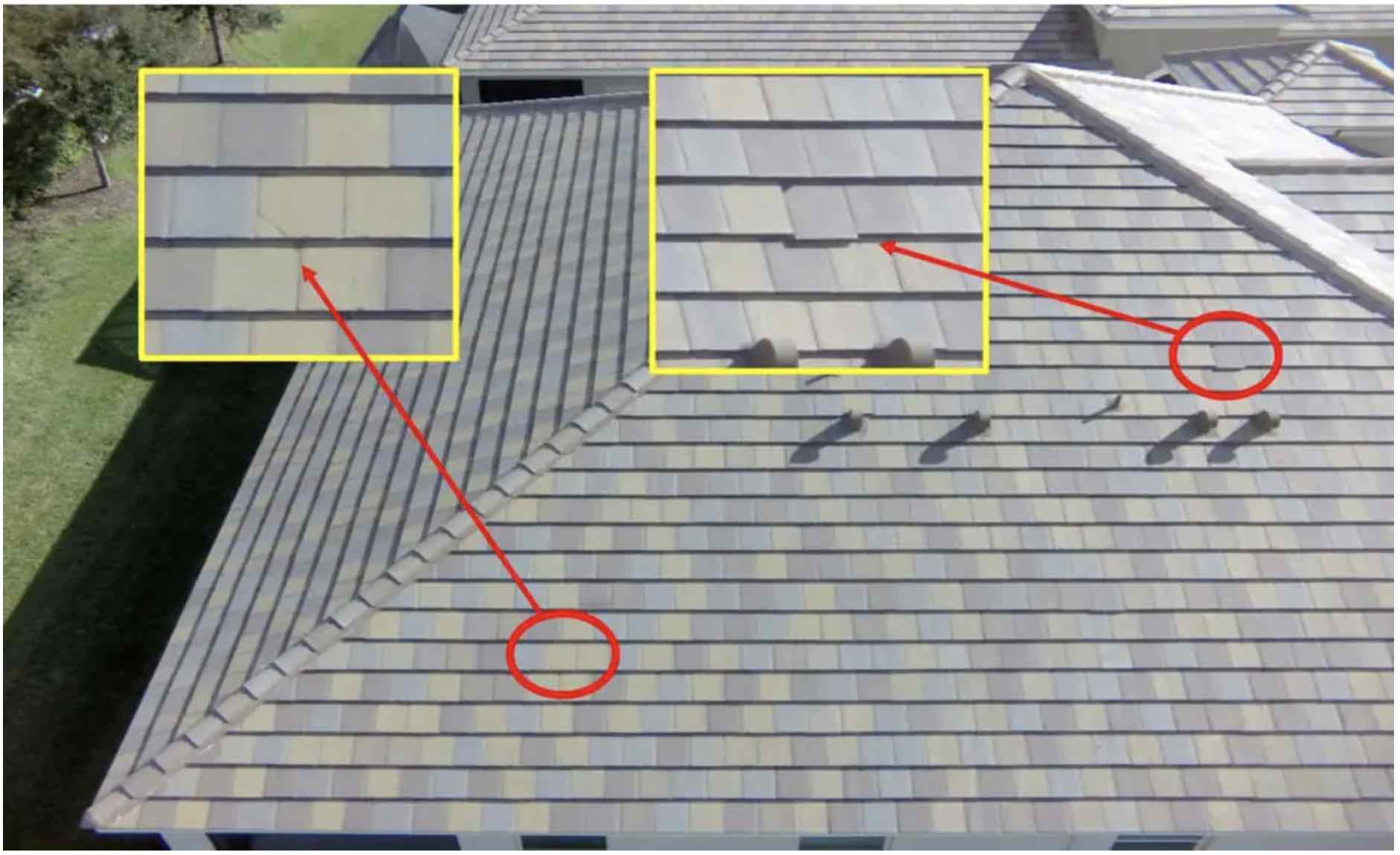
For residential asphalt shingles, high-resolution optical sensors are the priority. You need a camera capable of capturing 20MP to 45MP stills so you can zoom in on the “granule loss” that indicates hail impact. A mechanical shutter is a critical feature here; it eliminates the “rolling shutter” distortion that occurs when taking photos while the drone is in motion, ensuring every pixel of the roof is crisp and actionable.
- DJI Mavic 3 Enterprise (M3E): Currently the industry gold standard. It features a 4/3 CMOS sensor and a mechanical shutter, allowing for rapid mapping of large roofs without motion blur.
- DJI Mini 4 Pro: A viable “budget” entry point for simple residential visual checks, though it lacks the mapping efficiency and wind resistance of the Enterprise line.
- Autel EVO II Pro: A strong alternative for those avoiding DJI, offering 6K video and a 1-inch sensor that performs exceptionally well in the low-light conditions often found during early morning inspections.
Thermal Imaging: Detecting Sub-Surface Moisture Issues


If you intend to bid on commercial flat-roof contracts, a thermal (infrared) camera is mandatory. Thermal drones detect the “thermal bridge” created by water trapped under a roof’s surface. During the day, wet insulation absorbs more heat than dry insulation. As the sun sets, the dry areas cool quickly while the wet spots remain warm, showing up as “hot spots” on your controller. This allows you to tell a client exactly where their leak is located, even if the surface looks perfect.
When choosing a thermal drone, the sensor resolution is the most important metric. You should avoid anything lower than a 640×512 resolution. Lower resolution sensors (like 160×120) lack the clarity to distinguish between a puddle of water on top of the roof and moisture trapped inside the structure. The DJI Mavic 3 Thermal (M3T) and the Matrice 30T are the primary choices for this work, as they provide side-by-side visual and thermal feeds, allowing you to cross-reference heat signatures with physical roof features in real-time.
Analyzing Software Solutions for 3D Modeling and AI-Driven Reports


Capturing high-resolution images is only the first step of a professional inspection. To provide real value, you need to transform those images into actionable data. Modern software suites have evolved far beyond simple photo viewers, allowing you to create comprehensive digital twins of any structure.
Photogrammetry and Precision 3D Mapping
Tools like DroneDeploy, Pix4D, and RealityCapture are industry standards for a reason. These platforms use photogrammetry to stitch hundreds of images into a single, high-detail 3D model. For a roof inspector, this means you can provide clients with an interactive map where they can zoom in on specific shingles or flashing. Practical tip: Use software that offers built-in measurement tools. This allows you to calculate roof pitch, surface area, and gutter length with incredible accuracy without ever touching a ladder.


The Power of AI Damage Detection
The latest wave of inspection software utilizes Artificial Intelligence to automatically flag anomalies. Instead of manually scouring 500 photos for a hairline crack, AI algorithms can highlight potential hail damage, thermal leaks, or rust spots.
- Automated Reporting: Platforms like Loveland Innovations generate professional PDFs that categorize damage severity.
- Thermal Integration: Specialized software can overlay thermal data on visual maps to pinpoint moisture trapped under membranes.
- Cloud Collaboration: Look for solutions that allow you to share a secure link with insurance adjusters so they can view the findings in real-time.
Profitable Pricing Models and Market Strategies for Inspection Services


Setting your rates is often the hardest part of launching a drone business. You aren’t just charging for a “flight”; you are charging for specialized data that saves your client time and mitigates physical risk. Your pricing should reflect the technical expertise and the insurance liabilities you carry.

Choosing Your Pricing Structure
Most drone inspectors utilize one of three primary models depending on the project scope. Residential inspections are typically billed as a flat fee, often ranging from $150 to $400 depending on the roof’s complexity. Commercial projects, such as warehouses or apartment complexes, are better suited for a “per square” or “per building” rate. Practical example: If you are inspecting a massive industrial park, a daily rate (typically $800–$1,500) ensures you are compensated for the extensive data processing time required after the flight.
Identifying High-Value Target Markets
Success in this niche comes from consistent partnerships rather than one-off residential calls. Focus your marketing efforts where the demand for recurring data is highest:
- Insurance Adjusters: They need fast, safe evidence of storm damage to process claims.
- Solar Installers: Accurate 3D models help them design panel layouts without manual measurements.
- Property Management Groups: They require annual “health checks” for large portfolios to plan for long-term maintenance.
- Real Estate Professionals: High-end listings benefit from detailed roof reports to satisfy picky buyers and speed up the closing process.
Conclusion
Starting a drone roof inspection business is an excellent way to turn your passion for UAV technology into a high-demand professional service. By investing in the right accessories, mastering 3D modeling software, and targeting high-value markets like insurance and commercial property management, you position yourself as a vital data provider rather than just a hobbyist. Remember, your value lies in the clarity of your reports and the safety you provide by keeping boots off the roof.
Your next steps are clear: ensure your Part 107 certification is current, choose a software platform to master, and build a small portfolio of local inspections to showcase your reporting style. The sky is literally the limit—go out there and start scaling your business today!
❓ Frequently Asked Questions
What specific insurance policies are required for a drone inspection business?
You need commercial general liability insurance, typically with a $1 million limit, and hull insurance to protect your hardware investment. Many enterprise clients also require Professional Liability (Errors and Omissions) insurance to cover potential reporting inaccuracies.
How do thermal drones improve roof inspection accuracy?
Thermal sensors detect temperature variances on a roof’s surface, which can indicate moisture trapped under membranes or cooling/heating leaks. This allows inspectors to identify structural issues that are completely invisible to standard optical cameras.
What software is best for processing drone roof data?
Platforms like DroneDeploy, Roof.ai, and EagleView are industry leaders for turning aerial imagery into detailed 3D models and damage reports. These tools automate measurements and use AI to tag potential defects, saving hours of manual review.
Can I operate a drone for roof inspections in residential neighborhoods?
Yes, as long as you follow FAA Part 107 regulations regarding flight over people and maintain a visual line of sight. It is also essential to check local privacy ordinances and obtain clear permission from the property owner.
What is the ROI on specialized drone accessories like RTK modules?
RTK (Real-Time Kinematic) modules provide centimeter-level GPS accuracy, which is vital for high-precision 3D mapping and solar site surveys. While expensive, they allow you to bid on lucrative enterprise-level construction and engineering contracts.
How do I market drone services to local roofing companies?
Focus on the safety and speed benefits, highlighting how drones eliminate the need for ladders and reduce workplace injury risks. Offering a ‘free trial’ inspection for a complex roof can demonstrate the superior detail of your automated reports compared to manual checks.

Similar Posts