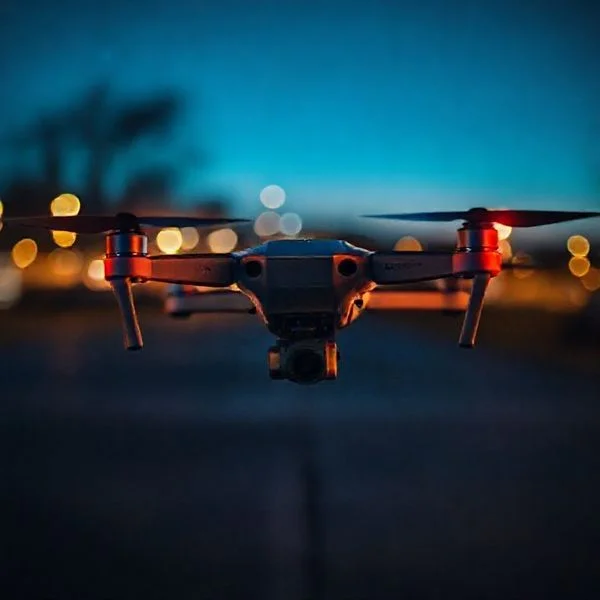
A UAV (Unmanned Aerial Vehicle) is an aircraft that operates without an onboard human pilot, functioning via remote control or autonomous software. While ‘drone’ is the popular layperson term, UAV specifically refers to the aircraft itself as part of a larger Unmanned Aircraft System (UAS).
🎯 Key Takeaways
- UAV stands for Unmanned Aerial Vehicle, an aircraft with no onboard pilot.
- The term ‘drone’ is the common name for the technical UAV designation.
- A UAS includes the UAV, the remote controller, and the communication link.
- UAVs can be controlled manually or fly autonomously using GPS and sensors.
- Common designs include multi-rotors for hovering and fixed-wing for long distances.
A UAV, or Unmanned Aerial Vehicle, is an aircraft that operates without a human pilot physically on board. While the general public and media almost exclusively use the term drone, the two terms are often used interchangeably in casual conversation. However, for professionals and enthusiasts, a UAV specifically refers to the physical flying craft itself. It is a piece of technology designed to be controlled remotely by a pilot on the ground or to fly autonomously through pre-programmed flight plans and onboard sensors.
Recommended Best Deal Products

Understanding these definitions is more than just a lesson in semantics. It is a practical necessity for anyone looking to enter the industry or invest in advanced equipment. When you browse for professional accessories, read technical manuals, or discuss hardware capabilities, you will encounter these acronyms constantly. Distinguishing between the vehicle and the wider system ensures you are purchasing the right components and communicating accurately with other pilots and technicians. This guide will clarify exactly what constitutes a UAV and how it fits into the broader ecosystem of unmanned flight.
Defining the UAV: Acronyms and Technical Meanings
The term UAV stands for Unmanned Aerial Vehicle. At its most basic level, it is a flying machine that does not require a human inside the cockpit to function. This category is massive, spanning everything from a palm-sized quadcopter in your living room to a massive, fixed-wing military craft with a 130-foot wingspan. The “Unmanned” part of the acronym refers to the absence of a physical pilot, while “Vehicle” emphasizes its role as a transport or utility platform for sensors, cameras, and cargo.
The Architecture of a UAV
To understand what a UAV is, you must look at what makes it fly. Unlike a traditional “remote control” toy, a UAV is packed with sophisticated technology that allows for stable, controlled flight. The core of any UAV consists of several critical components that allow it to interact with its environment. These include the Flight Controller (the “brain”), the propulsion system (motors and propellers), and the power source (usually LiPo batteries). Modern UAVs also utilize IMUs (Inertial Measurement Units) and GPS modules to maintain their position in three-dimensional space.
Common types of UAV configurations include:
- Multi-rotors: The most common UAVs, such as quadcopters, which use multiple vertical rotors to hover and move.
- Fixed-wing: These look like traditional airplanes and use wings for lift, making them highly efficient for long-distance flights.
- Single-rotor: Similar to helicopters, these use one large main rotor and a tail rotor for stability and heavy lifting.
- Fixed-wing Hybrid VTOL: These combine the vertical takeoff capability of a multi-rotor with the long-distance efficiency of a fixed-wing craft.
By defining the craft as a UAV, engineers and pilots are focusing specifically on the aerodynamics, the airframe, and the onboard electronics. It is the physical hardware that moves through the air to perform a specific task, such as capturing aerial footage or mapping a construction site.
UAV vs. Drone vs. UAS: Understanding the Key Differences
You likely use the word “drone” every day, but in a technical context, it is considered a layperson’s term. The word originally described target practice aircraft that emitted a low, buzzing sound—much like a male bee (a drone). Today, “drone” has become a “catch-all” term for anything that moves without a human inside, including submersibles and land-based rovers. In the world of aerial technology, however, the distinction between a UAV and a UAS (Unmanned Aircraft System) is the most important piece of knowledge you can have.
The Aircraft (UAV) vs. The System (UAS)
While the UAV is the aircraft that flies, the UAS is the entire package required to make that flight possible. You cannot fly a UAV without the other components of the system. Think of the UAV as the car and the UAS as the car plus the driver, the steering wheel, the fuel, and the road. The industry has shifted toward using “UAS” because it acknowledges that flight is a collaborative effort between the hardware in the air and the equipment on the ground.
A standard UAS typically includes three primary pillars:
- The UAV: The actual aircraft, including its motors, frame, and onboard sensors.
- The Ground Control Station (GCS): This is the interface you use to control the craft, such as a handheld remote, a tablet, or a computer station.
- The Data Link: The wireless communication system (radio waves or satellite) that connects the UAV to the GCS, sending commands up and receiving telemetry or video feeds down.
Why Professionals Use “UAS” Over “Drone”
When you are looking for drone accessories or technical support, using the term UAS signifies that you understand the complexity of the operation. It covers the maintenance of the controllers, the health of the signal boosters, and the integrity of the software links. If you only focus on the “drone” (the UAV), you might overlook the critical components that actually keep that vehicle in the air. For example, if a signal fails, the UAV might be perfectly functional, but the UAS has failed because the communication link was broken. Understanding this hierarchy allows you to troubleshoot issues more effectively and choose accessories—like high-gain antennas or specialized controllers—that improve the entire system rather than just the vehicle.
In short, the UAV is what you see in the sky, the drone is what you tell your friends you bought, and the UAS is the professional ecosystem you are operating. Recognizing these differences sets the foundation for more advanced topics, such as how these systems are powered and how they interact with specialized accessories to perform complex missions.
Core Components: How Unmanned Aerial Vehicles Function
Understanding what makes a UAV tick is essential for any enthusiast or professional. While a drone might look like a simple flying toy, it is actually a sophisticated piece of engineering where multiple systems work in perfect harmony. At its heart, the UAV relies on the Flight Controller, which acts as the “brain,” processing data from various sensors to maintain stability.
The Propulsion System and Power Source
The movement of a UAV is dictated by its propulsion system. This includes the motors, Electronic Speed Controllers (ESCs), and propellers. The ESCs receive signals from the flight controller to tell the motors how fast to spin, allowing the drone to tilt, turn, or hover. Most modern UAVs use Lithium Polymer (LiPo) batteries because they offer a high power-to-weight ratio, though hydrogen fuel cells are emerging for long-endurance industrial drones.
- Motors: Usually brushless for better efficiency and longevity.
- ESCs: Regulate the speed of the motors based on pilot input.
- Propellers: Different pitches and sizes affect lift and battery life.
- IMU (Inertial Measurement Unit): Measures velocity and orientation using accelerometers and gyroscopes.
Pro Tip: Always check your propellers for small cracks or chips before a flight. Even a minor imperfection can cause vibrations that interfere with the flight controller’s sensors, leading to erratic behavior.
Sensors and Communication Links
For a UAV to be truly “unmanned,” it needs to know where it is and how to talk to the ground station. This is achieved through a combination of GPS modules, barometers, and radio frequency (RF) links. High-end UAVs often include Obstacle Avoidance Sensors (ultrasonic or visual) to prevent collisions in complex environments.
- GPS/GNSS: Provides coordinates for autonomous waypoints and “Return to Home” functions.
- Telemetry: Sends real-time data like battery voltage and altitude back to the pilot.
- Transmitter/Receiver: The 2.4GHz or 5.8GHz link that connects the pilot’s remote to the aircraft.
Common Classifications: Multi-Rotor vs. Fixed-Wing UAVs
Not all UAV drones are built the same way. The design usually follows the specific mission the drone is intended to perform. While most consumers are familiar with the “quadcopter” look, the industrial and military sectors often rely on entirely different aerodynamic shapes.
Multi-Rotor UAVs: The Versatile Choice
Multi-rotors are the most common type of UAV. They use multiple vertical rotors to achieve lift and propulsion. Their biggest advantage is VTOL (Vertical Take-Off and Landing) capability, meaning they don’t need a runway. They are perfect for aerial photography, thermal inspections, and close-quarters monitoring because they can hover precisely in one spot.
- Examples: DJI Mavic series, Autel Evo, and custom FPV racing drones.
- Pros: Easy to fly, excellent maneuverability, compact storage.
- Cons: Shorter flight times (usually 20-40 minutes) due to the energy required to stay airborne.
Fixed-Wing and Hybrid UAVs: The Long-Distance Specialists
Fixed-wing UAVs look more like traditional airplanes. They use a wing to provide lift rather than rotors, which is far more energy-efficient. These are the “marathon runners” of the drone world, capable of covering hundreds of miles on a single charge. Recently, Fixed-Wing Hybrid VTOLs have gained popularity, combining the efficiency of a plane with the vertical landing capabilities of a multi-rotor.
- Examples: senseFly eBee (for mapping), Wing (for delivery), and various military surveillance drones.
- Pros: Exceptional battery life, high-speed travel, covers vast areas quickly.
- Cons: Cannot hover, often requires a launcher or runway, and is harder to pilot manually.
Practical Tip: If your goal is mapping a 500-acre farm, a fixed-wing UAV is your best bet. If you need to inspect a specific cell tower or bridge bolt, stick with a multi-rotor.
Conclusion
Understanding what a UAV drone is involves more than just recognizing a flying gadget. It is about appreciating the distinction between the aircraft (UAV) and the entire supporting ecosystem (UAS). From the intricate flight controllers and propulsion systems to the specialized designs of fixed-wing and multi-rotor models, these machines are transforming how we interact with the world from above. Whether you are looking at drones for photography, surveying, or as a hobby, knowing these fundamentals ensures you choose the right tool for the job.
Ready to take your flight experience to the next level? Start by researching the specific drone accessories that complement your UAV type, and always stay updated on your local aviation regulations. Explore our latest guides to find the perfect gear for your next mission!
❓ Frequently Asked Questions
What is the primary difference between a UAV and a UAS?
The UAV refers specifically to the flying vehicle itself. The UAS (Unmanned Aircraft System) is the ‘complete package’ that includes the vehicle plus the pilot’s controller, the data link, and any other ground-based hardware required for flight.
Is a toy quadcopter technically a UAV?
Yes, by definition, any aircraft without a pilot onboard is an Unmanned Aerial Vehicle. However, in professional circles, the term is more frequently applied to commercial, industrial, or military-grade systems rather than consumer toys.
How does a UAV stay in the air without a pilot?
UAVs use complex flight controllers that process data from gyroscopes, accelerometers, and GPS. This allows the craft to stabilize itself automatically and follow commands from a remote operator or pre-programmed flight paths.
What are the main types of UAV designs?
The two most common designs are multi-rotors, which use multiple propellers for vertical takeoff and hovering, and fixed-wing UAVs, which resemble traditional airplanes and are much more efficient for long-range mapping and surveillance.
Why is the distinction between ‘unmanned’ and ‘autonomous’ important?
Unmanned simply means nobody is inside the craft, but it may still be 100% manually controlled by a human on the ground. Autonomous refers to the craft’s ability to make decisions or follow paths without any human intervention.
Are UAVs only used for military purposes?
While they originated in the military, UAVs are now used extensively in agriculture, professional photography, search and rescue, and infrastructure inspection. They provide a cost-effective and safe way to reach difficult or dangerous areas.