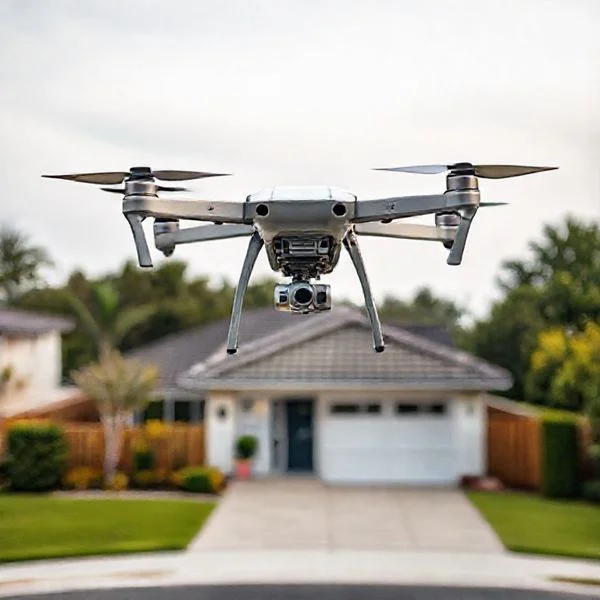
The Autel EVO series and Potensic Atom are currently the most comparable drones to DJI, offering similar 4K camera quality and flight stability. Many pilots prefer these alternatives because they frequently offer no geofencing restrictions and a higher spec-to-price ratio than the DJI ecosystem.
🎯 Key Takeaways
- The Potensic Atom is the leading budget-friendly rival to the DJI Mini series.
- Autel Robotics offers professional-grade cameras without strict geofencing limitations.
- Skydio remains the industry leader for autonomous flight and obstacle avoidance technology.
- FIMI and Hubsan provide high-end features like long-range transmission at lower costs.
- Check for US-based support and parts availability when choosing non-DJI brands.
If you are looking for a drone comparable to DJI, you are likely searching for three things: rock-solid flight stability, high-bitrate video, and a reliable transmission link that won’t drop out. While DJI dominates the market, brands like Autel Robotics and Potensic have closed the gap significantly. They now offer hardware that matches DJI’s specs while often bypassing the strict “Geofencing” restrictions that many professional pilots find frustrating.
Prime for Young Adults — 6 Months Free
Exclusive Offer Amazon Prime for Young Adults, Students and 18–24s get six months of Prime free, then half price.
Start 6 Months Free As an Amazon Associate I earn from qualifying purchases.
Finding a true alternative matters because you shouldn’t be locked into one ecosystem. Whether you want to escape DJI’s software limitations or simply want a better price-to-performance ratio, there are specific models that go head-to-head with the Mini, Air, and Mavic series. Below, we break down the direct matchups to help you find the right flight experience for your needs.
Direct Model Matchups: Sub-250g and Mini Drone Alternatives
Recommended Best Deal Products
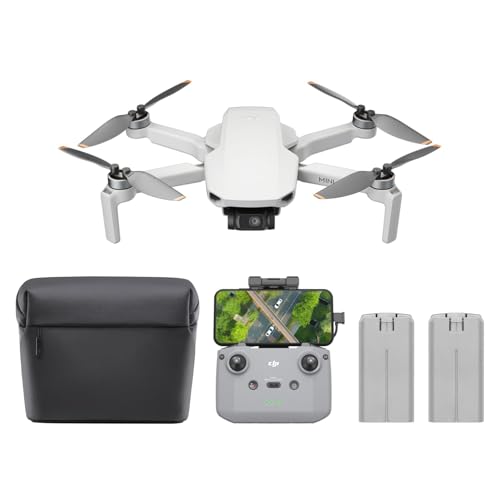


The sub-250g category is the most competitive space because these drones do not require FAA registration for recreational use. For years, the DJI Mini 4 Pro was the undisputed king, but two specific competitors have emerged as legitimate peers in terms of sensor quality and flight software.
The Potensic Atom: A True Mini 3 Rival
The Potensic Atom is currently the most direct competitor to the DJI Mini 3 and Mini 4K. Unlike cheaper “toy” drones, the Atom features a legitimate 3-axis mechanical gimbal, which is the baseline requirement for professional-looking, stable video. It mirrors the DJI experience with a dedicated remote controller and a sophisticated app that handles “QuickShots” like Follow Me, Waypoints, and Circle mode.
- Camera Quality: 4K at 30fps with a 12MP Sony sensor, comparable to the DJI Mini 3’s daylight performance.
- Flight Performance: Level 5 wind resistance, which keeps the drone stable in breezes up to 24 mph.
- Transmission: PixSync 3.0 provides a 6km range, offering a signal nearly as clean as DJI’s OcuSync 2.0.
Autel EVO Nano+: The Premium Lightweight Choice
If your priority is low-light performance in a small package, the Autel EVO Nano+ is the comparable match for the DJI Mini 4 Pro. It features a larger 1/1.28-inch CMOS sensor, which actually outperforms the Mini 3 in dark environments. Its RYYB color filter array is designed to soak up more light, making it a favorite for sunset and sunrise photography where DJI’s smaller sensors might struggle with noise.
- Obstacle Avoidance: Features three-way binocular vision sensors (front, back, and bottom), matching the safety features found in the DJI Mini series.
- PDAF + CDAF Autofocus: Provides near-instant focusing on moving subjects, a feature where many DJI clones typically fail.
Professional Power: Comparing Autel EVO and DJI Mavic Series
When you move into the “Pro” tier, you are looking for a drone that can replace a DJI Mavic 3. At this level, the primary competitor is the Autel EVO II Pro V3. This is the “heavy lifter” for those who need a 1-inch sensor but want to avoid DJI’s mandatory fly-safe database updates. It is widely considered the best non-DJI drone for photogrammetry, 3D mapping, and high-end cinematography.
Autel EVO II Pro V3 vs. DJI Mavic 3 Pro
The EVO II Pro V3 is the only consumer-grade foldable drone that truly challenges the Mavic 3 Pro’s dominance. The standout feature here is the adjustable aperture from f/2.8 to f/11. This allows you to control light levels without constantly swapping ND filters—a massive workflow advantage for professional shooters. While DJI uses a multi-lens system, Autel focuses on one massive, high-quality 6K sensor that delivers incredible dynamic range.
- Sensor Tech: 20MP 1-inch CMOS sensor capable of 6K video at 30fps and 4K at 60fps.
- No Geofencing: Unlike DJI, Autel does not prevent you from taking off in specific zones via software locks. You are responsible for following local laws, but the drone won’t “force” a landing or refuse to start.
- Transmission: SkyLink 2.0 technology offers a 15km range with 2.4GHz, 5.8GHz, and 900MHz tri-band hopping to defeat interference.
Key Feature Comparison: Obstacle Avoidance and Logic
One area where DJI usually wins is the “smoothness” of its autonomous flight. However, the EVO II Pro series utilizes 12 omnidirectional visual sensors coupled with a dual-core processor. This creates a 3D environment map in real-time that is comparable to DJI’s APAS 5.0. It doesn’t just stop before hitting a tree; it calculates a path around it. If you are filming yourself mountain biking or moving through a forest, the EVO II Pro’s “Dynamic Track 2.0” is the only system outside of DJI that can reliably maintain a lock while dodging obstacles.
Prime for Young Adults — 6 Months Free
Exclusive Offer Amazon Prime for Young Adults, Students and 18–24s get six months of Prime free, then half price.
Start 6 Months Free As an Amazon Associate I earn from qualifying purchases.In terms of bitrate, the EVO II Pro V3 outputs at up to 120Mbps. This ensures that when you are filming high-detail environments like forests or flowing water, you won’t see the “blocky” compression artifacts often found in lower-tier DJI alternatives. If you need a tool for commercial inspections or high-end YouTube content, this is the most comparable hardware on the market today.
Feature Analysis: Image Sensors, Transmission, and AI Flight Modes
When searching for a drone comparable to DJI, the hardware specs are usually where the comparison starts. DJI has long set the gold standard with their OcuSync transmission and Hasselblad-tuned sensors, but brands like Autel Robotics and Potensic are narrowing the gap significantly. It is no longer just about who has the most megapixels; it is about how that data is processed and transmitted back to your controller.
Sensor Tech: Beyond the Megapixel Count
The Autel EVO Lite+ is a prime example of a drone that matches, and in some cases surpasses, DJI’s mid-range offerings. While DJI’s Air series relies on excellent software processing, the Lite+ features a massive 1-inch CMOS sensor with an adjustable aperture. This is a game-changer for videographers who want to control light intake without constantly swapping ND filters.
- Low Light Performance: Large sensors on Autel drones often handle noise better in “blue hour” conditions compared to the smaller sensors on DJI Mini models.
- Color Grading: Many alternatives offer 10-bit Log profiles, giving you the same professional flexibility in post-production as a DJI Mavic 3.
- Bitrates: Look for drones offering 100Mbps or higher to ensure your 4K footage doesn’t suffer from compression artifacts during fast movement.
Signal Integrity and Smart Automation
One area where DJI usually dominates is transmission distance. However, the Potensic Atom utilizes Pixsync 3.0 technology, providing a stable 6km HD video transmission that rivals the reliability of DJI’s older OcuSync systems. Meanwhile, Skydio has carved out a niche in AI-driven flight. Their drones utilize six 4K cameras for 360-degree obstacle avoidance, creating a “bubble” of safety that even the most advanced DJI drones struggle to replicate in dense environments like forests or construction sites.
The Strategic Advantage: Why Pilots Choose Non-DJI Ecosystems
Choosing a drone comparable to DJI isn’t always about matching specs; sometimes, it is about gaining freedom that the DJI ecosystem doesn’t allow. Many professional pilots and hobbyists are migrating to brands like Autel or Freefly because of specific operational advantages that impact their daily workflow.
Bypassing the “No-Fly Zone” Red Tape
The most common reason pilots look for DJI alternatives is Geofencing. DJI’s “Fly Safe” database can be incredibly restrictive, sometimes preventing takeoff in legally flyable areas because of nearby private airfields or outdated map data.
- Pilot Responsibility: Brands like Autel do not implement “hard” geofencing. They provide the warnings, but they leave the ultimate “allow to fly” decision to the pilot.
- Efficiency: For commercial pilots on a tight schedule, not having to wait for a DJI unlock code can save hours of frustration on-site.
- Customization: Non-DJI drones often allow for more third-party app integrations, making them a favorite for specialized mapping and 3D modeling.
Data Privacy and Enterprise Security
For government contractors or high-security infrastructure inspections, data privacy is a non-negotiable factor. While DJI offers “Local Data Mode,” many organizations prefer drones made by US-based or “Blue UAS” approved companies like Skydio or Teledyne FLIR. These drones ensure that flight logs and imagery are never uploaded to foreign servers, providing a layer of security that is essential for corporate and sensitive missions. If your work involves sensitive proprietary data, a comparable drone from a security-focused brand is a strategic necessity rather than just a preference.
Prime for Young Adults — 6 Months Free
Exclusive Offer Amazon Prime for Young Adults, Students and 18–24s get six months of Prime free, then half price.
Start 6 Months Free As an Amazon Associate I earn from qualifying purchases.Conclusion
Finding a drone comparable to DJI is easier today than ever before. Whether you prioritize the raw imaging power of an Autel EVO, the unmatched AI tracking of a Skydio, or the budget-friendly portability of a Potensic, there is a high-quality alternative waiting to take flight. The “best” drone ultimately depends on whether you value a locked-in, polished ecosystem or the freedom and specialized features of an independent brand.
Next Steps: First, identify your primary “pain point” with DJI—is it the price, the geofencing, or the data privacy? Once you know that, use the comparisons above to pick the brand that solves that specific problem. Ready to make the switch? Check out our latest guides on drone accessories to ensure your new rig is fully equipped for its first mission!
❓ Frequently Asked Questions
How does the Potensic Atom compare to the DJI Mini series?
The Potensic Atom offers a 3-axis gimbal and 4K video that rivals the Mini 3, often at a significantly lower price point. While DJI has a more refined app, the Atom provides similar flight time and GPS stability for hobbyists.
Why would someone choose Autel over DJI for professional work?
Many professionals choose Autel because their drones do not require NFZ (No Fly Zone) unlocking, which can be a hurdle in time-sensitive environments. Additionally, the EVO II Pro series offers a 6K resolution option and interchangeable payloads.
Does Skydio offer better obstacle avoidance than DJI’s APAS?
Yes, Skydio drones utilize a more complex array of cameras and AI processing that allows for true 360-degree autonomous tracking in dense environments where DJI drones might stop or struggle.
What is the best budget drone comparable to DJI’s entry-level models?
The FIMI X8 Mini and Hubsan Zino Mini are excellent budget alternatives that provide high-resolution cameras and decent range for a fraction of the cost of a DJI Fly More Combo.
Are the camera sensors on alternatives like Autel as good as DJI?
Autel’s EVO Lite+ actually features a 1-inch sensor that many reviewers find superior to DJI’s mid-range sensors in terms of natural color science and night photography.
Is it harder to find accessories for non-DJI drones?
While DJI dominates the third-party market, major brands like Autel and Potensic have dedicated accessory ecosystems including ND filters, spare batteries, and specialized carrying cases available online.