What is a Military Drone? Types, Functions, and Roles
Commercial UAV Pilot & Aerial Cinematography Specialist at Drone Nestle · FAA Part 107 Remote Pilot Certification, Commercial UAS Operations · 10+ Years in Commercial UAV Operations, Flight Hardware Benchmarking & 4K Aerial Cinematography
A military drone is an unmanned aerial system (UAS) designed to conduct high-risk defense operations without a human pilot onboard. These platforms are primarily used for the ‘Three Ds’ (Dull, Dirty, and Dangerous) missions, ranging from long-range intelligence gathering to precision combat strikes.
🎯 Key Takeaways
- Military drones prioritize ISR (Intelligence, Surveillance, and Reconnaissance) for real-time battlefield data.
- Systems range from hand-launched tactical units to high-altitude long-endurance (HALE) platforms.
- The primary advantage is removing human pilots from immediate physical danger in hostile environments.
- Combat drones utilize precision-guided munitions to conduct surgical strikes with minimal collateral damage.
- Operational success depends on a network of ground control stations and satellite communication links.
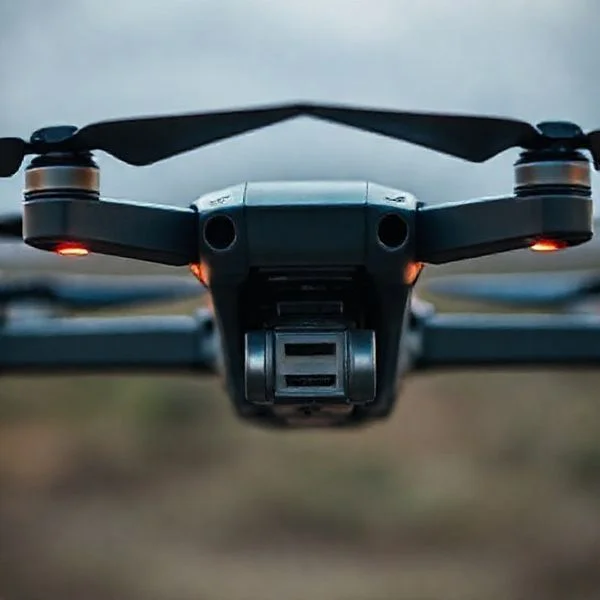
A military drone is a remotely piloted or autonomous aircraft designed specifically for defense and security operations. Unlike consumer models, these machines, often called Unmanned Aerial Vehicles (UAVs), are built to operate in contested environments for hours or even days at a time. They serve as the eyes and ears of a commander, providing real-time data without putting a pilot’s life at risk in a cockpit. At its core, a military drone is a force multiplier that allows for precision, persistence, and stealth in modern warfare.


Understanding these systems matters because they have fundamentally changed how global conflicts are managed. From tracking insurgent movements to conducting high-precision strikes, drones offer a level of situational awareness that was impossible just two decades ago. For anyone following defense technology, the distinction between a simple hobbyist quadcopter and a million-dollar strategic platform is vital for grasping the future of tactical security and international defense strategy.
Defining the Unmanned Aerial System (UAS) in Modern Defense
In military circles, experts rarely use the word “drone.” Instead, they refer to these platforms as Unmanned Aerial Systems (UAS). This terminology is important because the aircraft itself is only one part of the puzzle. A complete system includes the ground control station (GCS), the satellite data links, and the specialized maintenance crews. You aren’t just looking at a flying camera; you are looking at a networked asset that communicates across the globe in milliseconds.


The Five-Group Classification System
The Department of Defense categorizes drones into five distinct groups based on weight, operating altitude, and speed. Understanding these tiers helps you identify the drone’s specific tactical purpose:
- Group 1: Small, hand-launched units like the RQ-11 Raven. These weigh less than 20 pounds and provide over-the-hill reconnaissance for small squads.
- Group 2: Medium-sized tactical drones such as the ScanEagle. These require a catapult for launch and offer longer endurance for maritime or border patrol.
- Group 3: Larger tactical systems that usually require a runway. They carry more advanced sensors and can fly at altitudes up to 18,000 feet.
- Group 4: Large, high-endurance drones like the MQ-1 Predator. These are typically weaponized and fly long-range missions.
- Group 5: High-Altitude Long-Endurance (HALE) platforms like the RQ-4 Global Hawk. These operate above 50,000 feet and perform strategic signals intelligence.
By using this tiered system, military planners can match the right tool to the specific environment. A squad in a dense urban area needs a Group 1 drone for immediate visuals, while a regional commander needs a Group 5 platform to monitor an entire country’s border.
Core Mission Roles: From ISR Surveillance to Combat Strikes
The primary value of a military drone lies in its ability to perform “dull, dirty, and dangerous” missions. While public attention often focuses on combat, the vast majority of drone flight hours are dedicated to gathering information. Modern drones are designed to linger over a target for 24 hours or more, a feat that would physically exhaust a human pilot in a traditional jet. This “persistent gaze” is the defining characteristic of modern unmanned operations.


Intelligence, Surveillance, and Reconnaissance (ISR)
ISR is the backbone of all drone activity. It involves the systematic collection of data through various high-tech sensors. Unlike a satellite that passes over a target briefly, a drone can circle a specific compound for a full day. This allows you to build a pattern-of-life analysis, identifying who enters and leaves a location and at what times. This data is critical for planning ground operations or verifying a target before any action is taken.
Standard ISR capabilities include:
- Full-Motion Video (FMV): High-definition daytime and night-vision (infrared) feeds sent directly to soldiers on the ground.
- SIGINT (Signals Intelligence): Intercepting communication signals or electronic emissions to locate enemy transmitters.
- SAR (Synthetic Aperture Radar): Specialized radar that can see through clouds, smoke, or dust to identify hidden vehicles or structures.
Kinetic Operations and Precision Strikes
When a drone moves beyond observation into active engagement, it enters the realm of “kinetic” operations. This is the role of Unmanned Combat Aerial Vehicles (UCAVs). Platforms like the MQ-9 Reaper are equipped with laser-guided munitions, such as the Hellfire missile. The goal here is extreme precision. Because the drone can loiter and wait for the perfect moment, it can engage a target with significantly lower risk of collateral damage compared to a traditional carpet-bombing run or high-speed jet strike.
Furthermore, we are seeing the rise of “Loitering Munitions,” often called kamikaze drones. These are small, single-use drones that fly to a target area, wait for a specific threat to emerge, and then crash into it to deliver an explosive payload. This blurs the line between a traditional drone and a cruise missile, providing tactical flexibility to even the smallest infantry units.
Classification and Tiers: Categorizing Drones by Range and Altitude
Military drones are rarely categorized by just their looks. Instead, the defense industry uses a tiered system—often based on weight, operating altitude, and airspeed. This ensures that commanders know exactly which tool to reach for, whether they need to peek over the next hill or monitor an entire coastline from 60,000 feet. Understanding these classifications is essential for grasping how these machines fit into the broader tactical landscape.

The Five Groups of Military UAS
The U.S. Department of Defense classifies unmanned aircraft systems (UAS) into five distinct groups. This helps streamline logistics, training, and deployment across different branches of the military. While other nations may have slight variations, this five-group system is the gold standard for categorization.
- Group 1: Small, hand-launched drones like the RQ-11B Raven. These weigh less than 20 pounds and are used by individual squads for immediate “over-the-hill” visibility.
- Group 2: Medium-sized drones such as the ScanEagle. These usually require a catapult launch and offer a longer range without needing a full runway.
- Group 3: Tactical drones that weigh up to 1,320 pounds. An example is the RQ-7B Shadow, which provides persistent surveillance for entire brigades.
- Group 4 & 5: These are the heavy hitters, including the MQ-9 Reaper and RQ-4 Global Hawk. They fly at high altitudes and require significant runway infrastructure and satellite links.
Altitude and Endurance: MALE vs. HALE
Beyond weight, military drones are often defined by their “staying power” in the sky. MALE (Medium-Altitude Long-Endurance) drones typically fly between 10,000 and 30,000 feet for 24 hours or more. In contrast, HALE (High-Altitude Long-Endurance) drones go even higher, often reaching the stratosphere to act as “pseudo-satellites” for communication and wide-area intelligence gathering.
Strategic Advantages: The Three Ds of Unmanned Warfare
Why has the military shifted so heavily toward unmanned systems? It boils down to a concept known as the “Three Ds.” Drones excel in missions that are too Dull, Dirty, or Dangerous for human pilots. By removing the person from the cockpit, military forces can achieve objectives that were previously impossible or deemed too “expensive” in terms of potential human life lost.
Efficiency Through Persistence
Human pilots have physical limits—fatigue, hunger, and the natural degradation of focus over time. A drone, however, can be “handed off” between ground control stations across the globe. This allows a single aircraft to stay on station for days at a time, providing a “persistent stare” that is a game-changer for tracking movements in complex environments.
- Dull: Long-duration surveillance flights that would exhaust a human crew. Drones can circle a target for 30+ hours without a break.
- Dirty: Missions involving chemical, biological, or radiological hazards. Drones can fly into contaminated zones to take samples without risking a pilot.
- Dangerous: High-threat environments with heavy anti-aircraft presence. Losing a drone is a financial loss; losing a pilot is a national tragedy.
Precision and Specialized Payloads
Modern military drones are essentially flying platforms for advanced “accessories.” These payloads include laser designators, synthetic aperture radar, and high-definition thermal optics. These tools allow for surgical precision. Instead of sending a massive fleet of bombers, a single drone can identify a specific target and neutralize it with minimal collateral damage. This precision makes drones an essential tool for modern surgical strikes and urban operations where accuracy is paramount.
Conclusion
Military drones have evolved from simple remote-controlled targets into some of the most sophisticated technology on the planet. From hand-launched tactical units used by infantry to high-altitude surveillance platforms that monitor entire regions, these machines have redefined the parameters of modern defense. By mastering the “Three Ds,” they provide a level of persistence, safety, and precision that traditional manned aircraft simply cannot match. Understanding these roles helps us see the broader impact of unmanned tech on both the battlefield and the future of global security.
Next Steps: To learn more about how this technology impacts the civilian world, research how thermal imaging and long-range telemetry—once exclusive to the military—are now being used in search and rescue drones. Keeping an eye on these “trickle-down” technologies is the best way to stay informed about the future of flight.
Interested in the latest in unmanned aerial systems? Explore our other deep dives into drone technology and accessories today!
❓ Frequently Asked Questions
What is the difference between a UAV and a UAS?
A UAV refers only to the aircraft, while a UAS (Unmanned Aircraft System) includes the aircraft, the ground control station, and the communication data links required for operation. The military prefers the term UAS to emphasize the complete system complexity.
How are military drones classified by the Department of Defense?
The DoD classifies drones into five groups based on weight, operating altitude, and speed. Group 1 includes small, hand-launched systems like the Raven, while Group 5 includes the largest systems like the MQ-9 Reaper and RQ-4 Global Hawk.
What is meant by ‘Dull, Dirty, and Dangerous’ missions?
Dull refers to long-duration surveillance that would fatigue a human pilot; Dirty refers to environments with chemical or radiological hazards; and Dangerous refers to high-threat combat zones where losing an aircraft is preferable to losing a pilot.
How do operators control drones from thousands of miles away?
Pilots use secure satellite communication (SATCOM) links to send commands and receive real-time video feeds. This allows an operator in the United States to fly a drone located in a different continent via a ground control station.
What role does stealth technology play in military drone design?
Stealth technology, including radar-absorbent materials and low-observable shaping, allows drones like the RQ-170 Sentinel to operate in contested airspace. This makes them significantly harder for enemy air defense systems to detect and track.
Are tactical drones different from strategic drones?
Yes, tactical drones are smaller, short-range tools used by ground troops for immediate situational awareness. Strategic drones are much larger platforms used for theater-wide intelligence gathering and long-range strike missions at high altitudes.

Similar Posts