How Fiber Optic Drones Work: Spooling and Signal Tech
Commercial UAV Pilot & Aerial Cinematography Specialist at Drone Nestle · FAA Part 107 Remote Pilot Certification, Commercial UAS Operations · 10+ Years in Commercial UAV Operations, Flight Hardware Benchmarking & 4K Aerial Cinematography
Fiber optic drones utilize a physical micro-tether that unspools in-flight to transmit data via light, making them immune to radio frequency jamming. This system relies on high-speed optoelectronic transceivers to convert flight commands and high-definition video into light signals without the need for traditional antennas.
🎯 Key Takeaways
- Internal micro-spools deploy ultra-thin glass fiber to prevent drag and cable snapping.
- Onboard transceivers convert light pulses into electronic commands for the flight controller.
- Physical tethers eliminate the drone’s radio frequency signature for maximum stealth.
- Optical links provide massive bandwidth for uncompressed, zero-latency 4K video feeds.
- The system bypasses electronic warfare measures like GPS spoofing and signal jamming.
A fiber optic drone operates by replacing traditional radio frequency (RF) signals with a physical, ultra-thin strand of glass filament. This setup allows you to maintain a high-bandwidth, lag-free connection that is physically impossible to jam or intercept. While a standard drone relies on invisible waves prone to interference, a fiber optic drone “bleeds” its data through a tether, enabling clear 4K video transmission even in environments where signals are blocked by thick concrete or active electronic countermeasures.


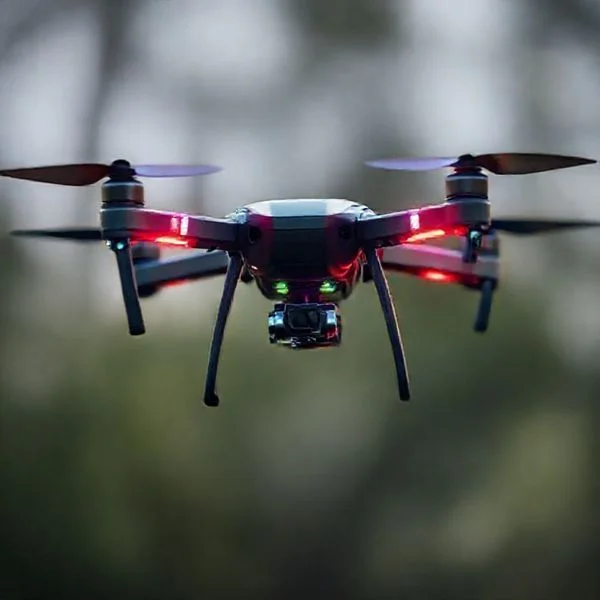
The real magic happens through a specialized spooling system that allows the drone to fly several kilometers away without the cable becoming a heavy anchor. This technology matters for high-stakes missions because it provides a “zero-signature” flight path. You aren’t just flying a drone; you are deploying a mobile, high-speed data pipe that functions perfectly in GPS-denied environments or deep underground bunkers where radio waves simply cannot reach.
The Mechanics of Micro-Fiber Spooling and High-Speed Deployment


The most common misconception about fiber optic drones is that they “pull” a cable behind them. If the drone had to drag several kilometers of cable across the ground, the friction and weight would snap the fiber or crash the aircraft within seconds. Instead, the drone carries the spool internally. As you fly, the drone “payouts” the cable, leaving a stationary trail of glass behind it. This means the drone only ever feels the weight of the remaining spool, not the weight of the cable already deployed in the air.


Onboard Payout Units (OPU) and Precision Winding
To prevent tangles at high speeds, manufacturers use a “dead-end” winding technique. The fiber is wound onto a stationary bobbin in a specific cross-pattern, similar to how high-end fishing reels or anti-tank missiles (like the TOW) operate. Because the spool itself doesn’t spin, there is no rotational inertia to overcome. The fiber simply uncoils from the center or the outer edge without any mechanical resistance.
- Tensionless Deployment: The fiber is coated in a specialized low-friction polymer. This allows it to slide off the spool with less than 10 grams of force.
- Micro-Fiber Dimensions: These cables are typically between 200 and 250 microns in diameter. For context, that is barely thicker than a human hair, yet it can withstand significant vertical tension.
- Bend Insensitivity: These drones use G.657.A2 fiber, which is designed to transmit light even when the cable is looped or bent around sharp corners in urban environments.
Managing Aerodynamic Drag and Snagging


Since the cable is stationary once it leaves the drone, wind resistance is your primary enemy. If you fly through a crosswind, the deployed cable can “sail,” creating a large arc that might snag on trees or buildings. To counter this, the flight software often includes “tether-aware” algorithms. These programs calculate the drone’s heading relative to the payout speed to ensure the cable is laid down as flat as possible. Key mechanical components include:


- Active Braking Systems: Small friction pads that prevent the spool from “over-spooling” if the drone suddenly stops.
- Ejection Shoots: Polished ceramic rings at the exit point that prevent the fiber from fraying against the drone’s chassis.
- High-Tensile Buffers: A thin layer of Aramid or Kevlar fibers bundled with the glass to provide “jerk” protection during aggressive maneuvers.
Fiber Optic Drones Made Easy: Your Essential Action Plan
This comprehensive guide dives into the mechanics of fiber optic drones—a cutting-edge alternative to traditional radio-controlled UAVs. In environments where radio frequency (RF) interference is high or electronic jamming is a threat, fiber optic technology allows for unhackable, high-bandwidth communication through a physical tether. Understanding how these systems work is essential for operators in specialized fields like industrial inspection, defense, and high-security cinematography. By following these steps, you will understand how light pulses translate into flight maneuvers and why this physical connection is the future of secure drone operation.
Step 1: Integrating the Fiber Spool and Dispenser
What you need: A micro-fiber optic spool (1km to 10km capacity), a lightweight dispenser housing, and a low-friction payout eyelet.
Instructions: The core of a fiber optic drone is the physical tether. You must mount a specialized spool onto the drone’s chassis, typically on the underside or rear. This spool holds several kilometers of hair-thin glass fiber, often reinforced with an aramid yarn (like Kevlar) for tensile strength. As the drone flies, the fiber must “pay out” or unspool passively. The design ensures that the fiber remains stationary in the air while the drone moves away from the launch point. You must align the payout eyelet to ensure the fiber does not snag on the drone’s propellers or landing gear. Proper mounting is vital because as the spool empties, the drone’s center of gravity shifts, requiring the flight controller to compensate for the weight loss.
Pro Tip: Use a “bobbin-style” dispenser where the fiber pulls from the center of the roll rather than the outside. This minimizes the physical force required to deploy the cable and prevents “snap-back” during sudden acceleration.
Step 2: Implementing Electronic-to-Optical Conversion (GCS)
What you need: A Ground Control Station (GCS), an SFP (Small Form-factor Pluggable) module, and a media converter.
Instructions: Because your flight commands start as electronic signals (binary code), they must be converted into light pulses to travel through the fiber. At the Ground Control Station, you connect your controller to a media converter. This device uses a laser or LED within an SFP module to pulse light at specific wavelengths—typically 1310nm or 1550nm. These pulses represent the stick inputs and telemetry requests you send. The converter must be high-speed to ensure that there is no delay between your hand movement and the light signal entering the glass core. This stage is crucial because any signal degradation at the source will lead to “bit errors” that could compromise flight stability over long distances.
Pro Tip: Ensure your SFP module matches the “Single-Mode” or “Multi-Mode” classification of your fiber tether. Mixing these will result in massive signal loss and a total loss of drone control.
Step 3: Transmitting Data via Total Internal Reflection
What you need: Single-mode optical fiber core and a protective cladding layer.
Instructions: Once the light enters the fiber, it travels through the glass core using the principle of total internal reflection. The light bounces off the boundary between the core and the cladding at a shallow angle, allowing the signal to travel at approximately 70% of the speed of light. Because the signal is contained within the glass, it is immune to electromagnetic interference (EMI) from power lines, radio towers, or jamming equipment. During this step, the physical integrity of the fiber is paramount. You must manage the “bend radius” of the cable; if the fiber bends too sharply (usually less than 30mm), the light will leak out of the core, causing a “macro-bend loss” and potentially severing the connection to the drone.
Pro Tip: Monitor the “Optical Return Loss” (ORL). If you see a sudden spike in signal reflection, it usually means the fiber is under physical stress or is about to snap.
Step 4: Decoding the Signal via the Onboard Media Converter
What you need: An onboard micro-SFP receiver and an integrated flight controller (FC) interface.
Instructions: At the drone end of the tether, the process reverses. The incoming light pulses strike a photodiode within the onboard media converter. This diode converts the photons back into electrical electrons. This digital data is then fed into the drone’s Flight Controller via a high-speed serial port (like UART or Ethernet). The drone’s firmware interprets these signals as standard PWM or DShot commands to the Electronic Speed Controllers (ESCs). This conversion happens in microseconds, providing a “hard-wired” feel to the flight experience. The weight of this onboard converter must be minimized—modern units weigh as little as 15–30 grams—to preserve the drone’s flight time and payload capacity.
Pro Tip: Use a media converter with an integrated heat sink. The laser diodes generate significant heat in a confined space, and overheating can cause the signal to “drift” or fail mid-flight.
Step 5: Managing Flight Dynamics and Tether Tension
What you need: Tension sensors and a flight controller with specialized “Tether Mode” firmware.
Instructions: Flying a fiber optic drone requires a different technique than free-flying. You must account for the “drag” of the tether. As the drone moves, the weight and air resistance of the trailing fiber create a physical pull on the aircraft. You must configure your flight controller to recognize this constant external force. Most fiber optic systems utilize a “tension-sensing” feedback loop. If the drone moves too fast and the fiber cannot unspool quickly enough, the sensor triggers a “braking” command to prevent the fiber from snapping. You must also plan your flight path to avoid “looping” around obstacles like trees or buildings, as a fiber optic drone cannot backtrack through a tangled line without risk of entanglement.
Pro Tip: Always fly with a slight “catenary curve” in the line. This slack acts as a shock absorber for sudden gusts of wind or rapid pitch changes.
Step 6: Facilitating High-Definition Video Return
What you need: 4K camera, H.265 encoder, and the fiber optic return path.
Instructions: One of the greatest advantages of fiber optic drones is the data bandwidth. While radio drones struggle to transmit 1080p video over long distances without lag, a fiber optic drone can send uncompressed 4K or even 8K video back to the operator. The camera data is encoded and sent “upstream” through the same fiber using a different wavelength of light (Wavelength Division Multiplexing). This allows for bi-directional communication on a single strand of glass. In this step, you verify that the video downlink latency is near-zero (typically under 1ms). This is critical for precision tasks like EOD (Explosive Ordnance Disposal) or navigating tight indoor spaces where visual feedback must be instantaneous.
Pro Tip: Since bandwidth is nearly unlimited, set your video bitrate to the maximum possible (e.g., 100Mbps+). This provides unparalleled clarity that radio drones simply cannot match.
Step 7: Executing Recovery and Fiber Disposal
What you need: Fiber cutters and a disposal container (if the fiber is non-retrievable).
Instructions: Once the mission is complete, the drone must be recovered. In many fiber optic systems, the tether is considered a “consumable.” If the drone has traveled through a complex path, it may be impossible to reel the fiber back in without it snapping or snagging. In these cases, you command the drone to land, and then use a mechanical cutter to sever the fiber at the GCS and the drone. The used fiber must be collected or disposed of according to environmental regulations. However, some high-end systems use a motorized winch to reel the fiber back onto the spool during the return flight. If using a retrieval system, you must synchronize the reel speed with the drone’s ground speed to avoid pulling the drone out of the sky.
Pro Tip: If the fiber is non-retrievable, use “biodegradable” optical fiber coatings if operating in sensitive ecological zones to minimize environmental impact.
✅ Final Checklist
- Verify that the SFP modules at both ends are cleaned with an optical pen to remove dust.
- Ensure the fiber spool is seated securely and the payout eyelet is free of burrs or sharp edges.
- Check that the flight controller’s PID gains are adjusted for the weight of the tether system.
- Confirm the bi-directional link is active and video latency is below 5ms.
- Test the emergency “line-cut” or “return-to-home” protocol in case the fiber breaks.
Important Notes:
- Safety Warning: Never look directly into the end of a fiber optic cable or SFP module while the system is powered. The invisible infrared laser can cause permanent retinal damage.
- Professional Help: If you experience frequent “frame drops” or signal loss, consult a fiber optic technician to check for “micro-fractures” in your spool using an OTDR (Optical Time Domain Reflectometer).
- Estimated Time and Cost: Setting up a fiber optic drone system typically takes 2–4 hours of configuration. Costs range from $2,000 for DIY kits to $50,000+ for military-grade jam-resistant systems.
Optoelectronic Conversion: How Light Becomes Flight Data


Once the physical connection is established, the drone must convert its electronic commands into pulses of light. Standard drones use a flight controller to send electrical pulses to a radio chip. In a fiber optic system, that radio chip is replaced by an Onboard Optical Transceiver. This hardware acts as a bridge, turning the 0s and 1s of digital flight data into laser flashes that travel through the glass filament at 200,000 kilometers per second.

Onboard Transceivers and Media Converters


Inside the drone’s hull, a small media converter takes the Ethernet or UART signals from the flight controller and the camera. It feeds these into a laser diode. This laser typically operates at a wavelength of 1310nm or 1550nm, which are the “sweet spots” for long-distance transmission with minimal signal loss (attenuation). Because the data is light-based, the drone can transmit massive amounts of information—up to 10 Gbps—without any of the packet loss associated with Wi-Fi or OcuSync.
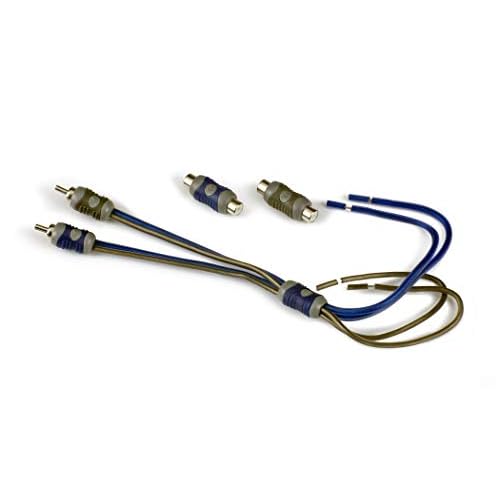


- Bi-Directional Communication (BiDi): Using Wavelength Division Multiplexing (WDM), the drone can send video “up” the fiber while simultaneously receiving control commands “down” the fiber on the same single strand.
- Zero Latency: Unlike digital radio links that require time-consuming encryption and compression, fiber optic signals move with near-zero latency, giving you “live” feedback that is essentially instantaneous.
- Immunity to EMI: Since glass is an insulator, the signal is immune to electromagnetic interference (EMI) from power lines, radio towers, or lightning.
Zero RF Signature: The Ghost in the Air

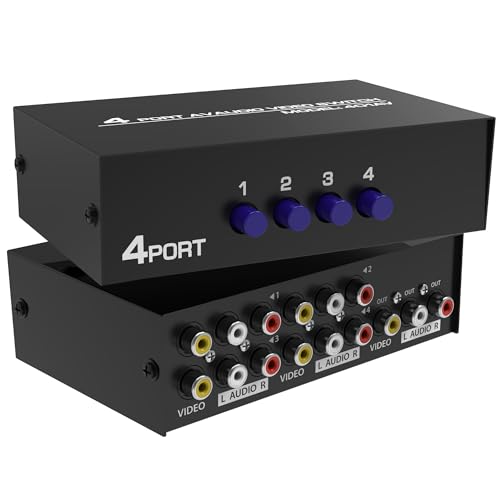

One of the most critical aspects of this hardware setup is the lack of a radio frequency signature. In a standard setup, a drone is a screaming beacon of 2.4GHz or 5.8GHz energy that can be spotted by any RF scanner. A fiber optic drone is electronically silent. There are no radio waves to detect, and there is no signal to jam. The control data is physically contained within the glass. This makes the drone invisible to “aeroscope” style detection systems that rely on sniffing out the link between the pilot and the aircraft.
Furthermore, because there is no transmitter, the drone consumes less battery power for communications. A traditional high-power radio link can drain significant wattage to maintain a signal over 5km; a laser diode requires only a fraction of that energy. This allows the drone to use that saved power for longer hover times or heavier camera payloads.
Strategic Advantages of Zero-RF Communication in Contested Airspace


In modern tactical and high-security environments, the biggest threat to a drone isn’t always a physical projectile; it is often electronic warfare. Traditional drones rely on radio frequencies (RF) to communicate with the operator. In contested airspace, these signals can be jammed, intercepted, or spoofed. Fiber optic drones bypass this vulnerability entirely by moving data through light pulses inside a physical cable, creating a closed-loop system that is invisible to electronic sensors.
Immunity to Electronic Warfare (EW) and Jamming
Because there is no wireless signal to disrupt, fiber optic drones are effectively “unjammable.” While an RF-based drone might lose its GPS link or control signal in the presence of a high-powered jammer, the fiber-connected drone continues to operate flawlessly. This makes them indispensable for specific high-stakes scenarios where signal reliability is non-negotiable:
- Industrial Inspections: Navigating areas with heavy electromagnetic interference (EMI), such as power plants, nuclear facilities, or near high-voltage lines that typically scramble wireless signals.
- Search and Rescue: Operating in collapsed buildings, underground bunkers, or deep caves where radio waves cannot penetrate thick concrete or earth.
- Disaster Response: Flying in areas where local communication infrastructure has been destroyed and the spectrum is crowded with emergency transmissions.
The Stealth Factor: Low-Probability of Intercept (LPI)
A wireless drone is like a beacon; its radio emissions can be detected by RF sensors from miles away, revealing the location of both the drone and the pilot. Fiber optic drones are “radio silent.” Since the data is contained entirely within the glass strand, there is no RF signature to track. This allows operators to conduct surveillance or sensitive reconnaissance without alerting anyone to their presence through electronic footprints. For security professionals, this “ghost” capability is the primary reason to adopt tethered fiber technology.


Comparing Fiber Optic Tethers vs. Traditional Radio Frequency Links


Choosing between a fiber optic setup and a standard RF link depends on the mission’s requirements. While RF offers the ultimate freedom of movement, fiber optics provide a level of data integrity and security that wireless technology simply cannot match, especially over long distances where signal decay becomes an issue.
Bandwidth and Latency: The Fiber Edge
One of the most significant advantages of fiber is the massive bandwidth. While RF links often struggle with video compression artifacts or “lag” (latency) as the drone flies further away, fiber optic cables can carry uncompressed 4K or even 8K video feeds with zero detectable delay. This real-time clarity is vital for precision tasks where every millisecond counts, such as EOD (Explosive Ordnance Disposal) or intricate structural repair.
- RF Links: Subject to signal degradation as distance increases; bandwidth is shared with other devices, leading to potential drops in frame rate.
- Fiber Links: Consistent 10Gbps+ signal quality regardless of distance (up to the length of the spool); immune to “noise” from other electronic devices in the vicinity.
Physical Constraints and Maneuverability
The trade-off for this high-speed security is the physical tether. Pilots using fiber optic drones must be mindful of their flight path to avoid “snagging” the line on trees, buildings, or debris. Modern micro-fiber spools are incredibly light—some cables are thinner than a fishing line—but they still require a different piloting mindset compared to the “go-anywhere” nature of wireless flight. However, for stationary or linear missions, the physical link is often more of a safety feature than a hindrance.
Practical Tip: When flying with a fiber tether, always plan a “breadcrumb” path. Avoid circling around objects; instead, fly in a way that allows the cable to lay flat behind the drone. If you must turn a corner, ensure you have enough slack to prevent the line from tensioning against sharp edges.
Conclusion
Fiber optic drones represent a fascinating shift in UAV technology, trading the total freedom of wireless flight for the absolute reliability of light-speed data. By mastering the mechanics of micro-spooling and leveraging the security of zero-RF communication, these drones can operate in environments that would be impossible for standard aircraft. Whether it is for high-security surveillance, deep-earth exploration, or navigating interference-heavy industrial sites, the physical fiber link is a powerful tool for specialized missions.
If you are ready to take your drone operations to the next level, start by researching micro-fiber spooling kits compatible with your airframe. Evaluate your typical flight environment to see if the “unjammable” nature of fiber optics could solve your connectivity challenges. Explore our other guides on drone accessories to stay ahead of the curve in UAV tech!
❓ Frequently Asked Questions
What is the mechanical process of unspooling the fiber?
The drone carries a specialized canister containing several kilometers of micro-fiber optic cable wound in a specific pattern. As the drone moves, the fiber is pulled out from the center of the spool (stationary payout), which prevents the wire from twisting or tangling even at high speeds.
How does data transmission work without a radio antenna?
Data is transmitted using lasers or LEDs that pulse through the glass core of the fiber optic cable. These pulses represent binary data; a transceiver on the ground and another on the drone decode these pulses into video streams and flight maneuvers instantly.
What happens if the fiber optic cable is cut during a mission?
If the cable is severed, the data link is immediately lost. Most fiber optic drones are programmed with ‘fail-safe’ protocols, such as an automated hover or an emergency landing, since they cannot receive ‘Return to Home’ commands via GPS if that is also being jammed.
Why is fiber optic technology vital for electronic warfare environments?
In modern conflict zones, radio frequencies are often heavily jammed to ground commercial drones. Because fiber optic drones do not rely on the electromagnetic spectrum for control, they remain fully operational even in the presence of powerful signal jammers.
How much weight does the fiber spool add to the drone?
Modern micro-fibers are incredibly thin, often less than 250 microns in diameter. A spool capable of reaching 5-10 kilometers typically weighs only a few hundred grams, allowing small FPV drones to carry them without significant loss of agility.
Can the drone reuse the fiber optic cable after a flight?
Generally, the fiber is considered a consumable item. Once deployed across a distance, it is difficult and time-consuming to retract and re-spool properly, so it is usually detached and discarded after the mission.

Similar Posts