Best Drone Buying Guide 2025: Top Models & Essential Tech
Commercial UAV Pilot & Aerial Cinematography Specialist at Drone Nestle · FAA Part 107 Remote Pilot Certification, Commercial UAS Operations · 10+ Years in Commercial UAV Operations, Flight Hardware Benchmarking & 4K Aerial Cinematography
Prioritize 4K/60fps video, 35-minute flight times, and omnidirectional obstacle avoidance when selecting a drone in 2025. This guide identifies the best-value models for every user persona, ensuring your investment meets the latest technical and legal standards.
🎯 Key Takeaways
- Prioritize drones with at least 35 minutes of real-world flight time.
- Ensure the model is Remote ID compliant for 2025 legal standards.
- Choose sub-250g drones to bypass many restrictive international flight regulations.
- Invest in ND filters to achieve cinematic motion blur in bright conditions.
- Look for O4 transmission systems for superior signal stability in urban areas.
In 2025, the best drone for your money is the one that balances regulatory ease with high-end imaging. For most hobbyists, the DJI Mini 4 Pro remains the gold standard because it stays under the 250g weight limit, avoiding many restrictive flight permits while delivering professional 4K/60fps HDR video. If you are a professional creator, the DJI Air 3S or Mavic 3 Pro are your go-to tools, offering dual-camera systems and larger sensors for superior low-light performance.
Staying current in 2025 means prioritizing drones with built-in Remote ID and omnidirectional obstacle sensing. These features are no longer “premium” extras; they are essential for legal compliance and protecting your investment. This guide breaks down exactly which models fit your specific pilot persona, ensuring you don’t overspend on industrial features you won’t use or underspend on a camera that cannot handle modern social media demands.


Top-Rated Drones of 2025: Categorized Recommendations for Every Pilot

The Everyday Explorer: Best for Travel and Hobbyists
If you want to pack a drone for a hike or vacation without a mountain of paperwork, the sub-250g category is your target. In 2025, these lightweight drones have evolved to include features previously reserved for massive rigs, such as true vertical shooting and 360-degree safety sensors. You can fly these in many jurisdictions with minimal registration, making them the ultimate “grab-and-go” tools.

- Top Recommendation: DJI Mini 4 Pro.
- Key Advantage: ActiveTrack 360 allows it to follow you through dense forests autonomously.
- Best For: Instagram/TikTok creators and casual travelers who need portability.
- Value Proposition: The highest image quality available without requiring a Part 107 license for every recreational flight.
The Visual Powerhouse: Best for Professional Cinematography


Professional work in 2025 requires more than just a clear picture; it requires dynamic range and focal flexibility. Prosumer models now feature multiple lenses, allowing you to switch from a wide-angle landscape shot to a compressed 70mm telephoto shot mid-flight. This eliminates the need for digital zoom, which destroys image quality.


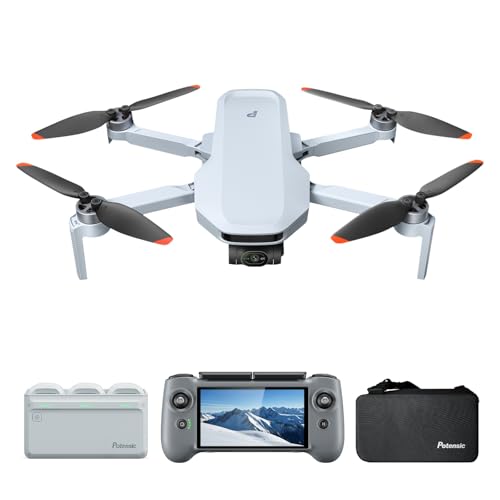
- Top Recommendation: DJI Mavic 3 Pro or DJI Air 3S.
- Key Advantage: Triple-lens systems and 10-bit D-Log M color profiles for intensive post-production.
- Best For: Real estate photographers, wedding videographers, and commercial filmmakers.
- Value Proposition: Provides a “cinema look” with 5.1K resolution that rivals ground-based professional cameras.
The Immersive Pilot: Best for FPV Enthusiasts


First-Person View (FPV) has shifted from a niche hobby to a mainstream storytelling tool. The latest 2025 models focus on “cinewhoop” styles, which are small, guarded drones that can safely fly indoors or close to people. These models provide a “bird’s eye” perspective that standard GPS drones simply cannot replicate.
- Top Recommendation: DJI Avata 2.
- Key Advantage: “Easy ACRO” features allow beginners to perform flips and rolls with one button.
- Best For: Adrenaline seekers and creators wanting high-speed, immersive action shots.
Drone Buying Made Easy: Your Essential Action Plan for 2025
The drone market in 2025 has reached an incredible peak of technological sophistication, blending artificial intelligence, high-end cinematography, and robust safety features into compact, foldable frames. Whether you are a professional filmmaker looking for the next cinematic masterpiece, a hobbyist wanting to explore your neighborhood, or a commercial operator needing precision mapping, the landscape has changed significantly over the last 12 months. This guide provides a comprehensive roadmap to navigating the complex world of flight regulations, hardware specifications, and software ecosystems to ensure you invest in a drone that fits your specific mission perfectly while avoiding costly beginner mistakes.
Step 1: Identify Your Primary Flight Mission
What you need: A clear list of your goals (e.g., travel photography, FPV racing, roof inspections) and a realistic assessment of your skill level.
Instructions: Before browsing retailers, categorize your needs. If you are a traveler, prioritize “Sub-250g” drones (like the DJI Mini series or Autel Nano) because they bypass many registration hurdles in various countries. If you are into high-stakes cinematography, look for drones with Micro Four Thirds sensors or Triple-Lens systems. For those seeking adrenaline, FPV (First Person View) drones provide an immersive “cockpit” experience but require much higher manual dexterity. Write down your “must-have” features vs. “nice-to-have” features. In 2025, even entry-level drones often feature 4K video, so if your goal is social media, don’t overspend on an 8K enterprise-grade machine that will produce files too large for your mobile editing workflow.
Pro Tip: Most beginners think they need the “best” drone, but in 2025, the “best” drone is the one you actually take with you. A massive professional drone often stays in the closet because it takes 15 minutes to set up, whereas a palm-sized drone can be in the air in 30 seconds.
Step 2: Decode the 2025 Sensor and Optics Specs
What you need: Basic knowledge of camera terminology (CMOS size, Aperture, Bitrate).
Instructions: Don’t get distracted by “Megapixel” counts; look at the physical sensor size. A 1-inch CMOS sensor or a 4/3-inch sensor will outperform a 48MP mobile-sized sensor every time, especially in low light. In 2025, look for drones capable of 10-bit D-Log M or HLG color profiles if you plan on color grading your footage. Check for “Variable Aperture” (e.g., f/2.8 to f/11), which is crucial for maintaining a 180-degree shutter rule without constantly changing physical ND filters. Ensure the drone supports at least 4K at 60fps for smooth motion, or 120fps if you intend to create high-quality slow-motion sequences for cinematic B-roll.
Pro Tip: Look for drones with “Dual Native ISO” capabilities. This 2025 standard feature allows you to capture incredibly clean footage in the blue hour or at night without the grainy “noise” that plagued older models.
Step 3: Verify Regulatory Compliance and Remote ID
What you need: Access to your local aviation authority website (e.g., FAA in the US, EASA in Europe, CAA in the UK).
Instructions: In 2025, Remote ID (the digital license plate for drones) is strictly enforced. Ensure the drone you are buying is “Standard Remote ID” compliant out of the box. Check the weight: if it is over 249 grams, you must register it with your national aviation body. Furthermore, investigate the “geofencing” policy of the manufacturer. Some brands, like DJI, have strict software locks on No-Fly Zones (NFZs), while others like Autel or Skydio may offer more flexibility but require more pilot responsibility. Verify if you need a commercial license (like the FAA Part 107) if you plan on using the drone for anything that facilitates a business, even just a monetized YouTube channel.
Pro Tip: Download an airspace awareness app like B4UFLY or AirControl immediately. These apps show real-time temporary flight restrictions (TFRs) that your drone’s built-in software might miss.
Step 4: Evaluate Transmission Range and Battery Ecosystems
What you need: A map of your typical flying area and a power management plan.
Instructions: Ignore the “15km range” claims on the box; these are measured in perfect laboratory conditions. In the real world, with Wi-Fi interference and buildings, expect 20-30% of the advertised range. Look for drones using the latest transmission protocols (like O4 or SkyLink 3.0), which utilize multiple frequency bands (2.4GHz, 5.8GHz, and sometimes 5.1GHz) to maintain a stable 1080p/60fps live feed. For batteries, check the “Flight Time.” While 45 minutes is the 2025 standard, “hover time” is less than “flight time.” Budget for a “Fly More” or “Premium” bundle that includes at least three batteries, as a single battery usually provides only about 25 minutes of high-intensity filming once you account for the “Return to Home” safety margin.
Pro Tip: Check if the drone supports USB-C PD (Power Delivery) charging. Being able to charge your drone batteries from a laptop brick or a high-capacity power bank in your car is a game-changer for day-long shoots.
Step 5: Assess Obstacle Avoidance and AI Safety Features
What you need: A comparison chart of “Omnidirectional” vs. “Forward/Backward” sensing.
Instructions: For 2025, “Omnidirectional Obstacle Sensing” is the gold standard. This means the drone has binocular vision or LiDAR sensors on the top, bottom, front, back, and sides. This is essential for features like “ActiveTrack” or “Follow Me” modes, where the drone autonomously chases a subject through complex environments like forests. Investigate the “APAS” (Advanced Pilot Assistance System) version. You want a system that can “bypass” obstacles smoothly rather than just stopping dead in the air. Also, check for “Return to Home” (RTH) intelligence; modern drones can now map their way back to you even if they lose GPS signal by using visual “breadcrumbs.”
Pro Tip: Never rely 100% on sensors. Small wires and thin tree branches are often invisible to obstacle avoidance sensors. Always maintain a visual line of sight (VLOS) during complex maneuvers.
Step 6: Select the Right Controller and Ecosystem
What you need: A preference for using your smartphone vs. a dedicated screen controller.
Instructions: You generally have two choices: a standard controller that clamps onto your smartphone, or a “Smart Controller” with a built-in high-brightness screen. In 2025, dedicated screen controllers are highly recommended. They prevent your phone battery from dying, stop incoming calls from interrupting your flight feed, and usually have much brighter screens (1000+ nits) than a standard iPhone or Android, which is vital for seeing what you are filming in direct sunlight. Additionally, research the manufacturer’s app. Check the App Store or Play Store reviews for the drone’s companion app—if the app is buggy or crashes frequently, the most expensive hardware in the world won’t save your flight experience.
Pro Tip: If you choose a controller that uses your phone, ensure you have a “sun hood” accessory. Without it, you will likely spend more time squinting at your reflection than actually framing your shots.
Step 7: Account for the Total Cost of Ownership (TCO)
What you need: A calculator and a list of essential accessories.
Instructions: The price on the tag is rarely the final cost. Factor in a high-speed microSD card (V30 or V60 rated for 4K/8K video), which can cost $40-$100. Most importantly, budget for “Accident Protection” (like DJI Care Refresh). For roughly 10-15% of the drone’s cost, these plans offer “no-questions-asked” replacements if you crash. You should also consider a set of ND (Neutral Density) filters, which act as sunglasses for your drone and are necessary for achieving that “cinematic motion blur” in daylight. Finally, if your drone is over 249g, include the $5-$20 registration fee and any mandatory insurance required in your specific region for liability.
Pro Tip: Buying a “Bundle” (Fly More Combo) is almost always $150-$200 cheaper than buying the batteries, charging hub, and carrying case separately later on.
✅ Final Checklist
- Verify that the drone is “Remote ID” compliant and registered with the FAA/CAA if necessary.
- Confirm the sensor size is at least 1/1.3-inch for high-quality 4K 2025 standards.
- Ensure you have at least 3 batteries to provide a minimum of 75-90 minutes of total field time.
- Check that your microSD card is U3/V30 rated to handle high-bitrate video writing.
- Update all firmware (Drone, Controller, and Battery) before your first takeoff.
Important Notes:
- Safety First: Never fly near airports, wildfires, or large crowds. Respect privacy laws and local “No Drone Zone” ordinances.
- When to Seek Professional Help: If you experience a “flyaway” or a significant crash, do not attempt to repair internal gimbal ribbons or motors yourself unless you are an experienced electronics technician; send it to an authorized service center to maintain your warranty.
- Estimated Time and Cost: Researching and purchasing takes 3-5 hours. Initial setup and firmware updates take 1 hour. Entry-level 2025 drones start at $400, while prosumer setups range from $1,200 to $2,800.
Technical Benchmarks: 2025 Standards for Camera, Range, and AI Features
The New Floor: 4K/60fps and 10-Bit Color


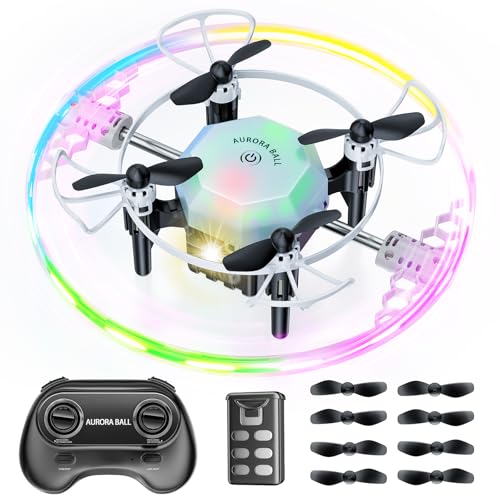
Do not buy a drone in 2025 that maxes out at 4K/30fps. Modern displays and social platforms now favor the fluid motion of 60fps, especially for action sequences. Furthermore, 10-bit color depth has become a must-have benchmark. It allows the sensor to record over a billion colors, preventing “banding” in sky shots and giving you the flexibility to color grade your footage to a professional standard.

- Sensor Size: Look for at least a 1/1.3-inch sensor for hobbyist use, or a 1-inch (or larger) CMOS for professional work.
- Bitrate: Ensure the drone supports at least 150 Mbps to avoid compression artifacts during fast movement.
- Vertical Mode: Native vertical shooting (rotating the gimbal 90 degrees) is essential for high-quality social media content.
Autonomy and Transmission: The Safety Standard
Transmission technology has leaped forward. In 2025, you should expect OcuSync 4.0 (O4) or equivalent technology. This ensures a stable 1080p/60fps live feed even in high-interference urban environments. Range is less about how many miles you can fly and more about the “penetration” of the signal through trees and buildings near the pilot.


- Omnidirectional Obstacle Sensing: Your drone should “see” in every direction simultaneously to prevent side-impact crashes during automated tracking.
- Waypoint Flight: This allows you to pre-program a flight path for repeatable, perfectly smooth shots.
- Advanced RTH (Return to Home): Modern drones now calculate the safest, most battery-efficient path back to you, navigating around obstacles rather than just flying over them.
Essential Accessories and Add-ons to Maximize Your Flight Experience


Buying the drone is only the first step. To truly unlock the potential of a 2025-model aircraft, you need a support ecosystem that keeps you in the air longer and ensures your footage looks professional. The “Fly More” bundles offered by many manufacturers are a great starting point, but specialized accessories often make the difference between a frustrating afternoon and a successful shoot.
Power and Storage Solutions
In 2025, high-resolution sensors (5.1K and 8K) are standard, meaning data management is more critical than ever. You cannot rely on standard SD cards; you need high-speed sustained write capabilities to avoid dropped frames or corrupted files. Furthermore, flight times have plateaued around the 30-45 minute mark, making intelligent power management essential.
- V30/V60 Grade microSD Cards: Always carry at least two 128GB or 256GB cards with a minimum V30 rating to handle the high bitrate of modern log-format video.
- Portable Power Stations: For remote pilots, a 500Wh portable power station is now a “must-have” to recharge batteries in the field, as most 2025 drones support fast-charging via USB-C PD.
- Battery Heating Bags: If you plan on flying in northern climates, these bags keep your lithium-polymer cells at optimal temperatures, preventing sudden voltage drops in cold weather.
Cinematic and Protective Gear
Modern drones have incredible cameras, but they often struggle with “shutter flutter” in bright sunlight. Neutral Density (ND) filters are the sunglasses for your drone, allowing you to maintain a natural motion blur by keeping your shutter speed at double your frame rate. Additionally, physical protection for your investment is paramount when traveling to rugged locations.
- Circular Polarizer (CPL) Filters: Essential for cutting glare on water or glass, making colors more saturated in landscape shots.
- Hard-Shell Tactical Cases: While soft bags are lightweight, a crush-proof, IP67-rated hard case is necessary for air travel and harsh environments.
- Signal Boosters/Range Extenders: In areas with high signal interference, parabolic reflectors or high-gain antennas can help maintain a stable OcuSync or equivalent video link.
Regulatory Landscape: Compliance Requirements and Safety Features for 2025

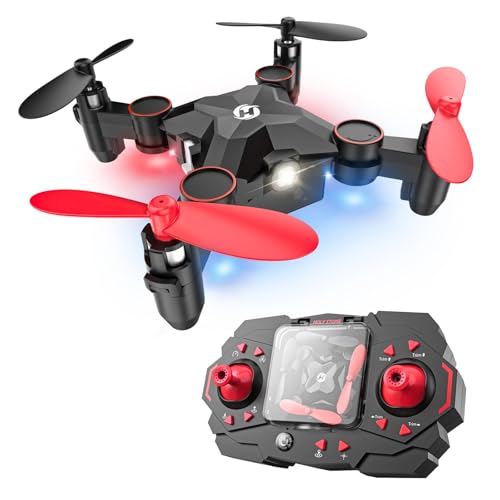

The regulatory environment has matured significantly, and 2025 marks a turning point for integrated compliance. Modern drones are no longer just flying cameras; they are highly regulated IoT devices. Understanding the intersection of local laws and the built-in safety tech of your drone is vital for avoiding heavy fines and ensuring public safety.

Remote ID and Global Compliance
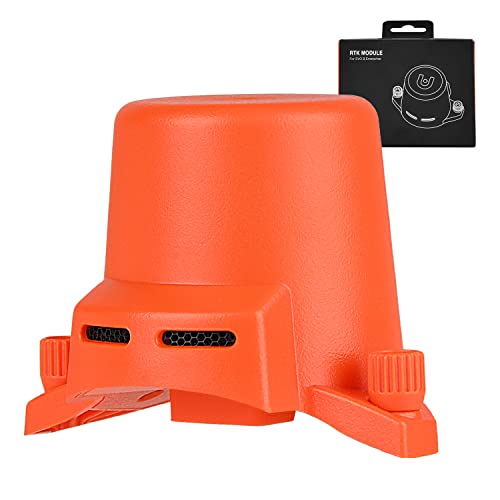
Remote ID is now a non-negotiable standard in the United States, Europe, and many parts of Asia. This “digital license plate” broadcasts your drone’s position, altitude, and serial number. When shopping in 2025, you must ensure your drone is natively compliant to avoid the need for clunky external broadcast modules.


- Native Remote ID: Ensure the drone is FAA-compliant (USA) or carries the appropriate C-Class label (C0 to C4) for European Union operations.
- Geo-Fencing 2.0: Look for drones with updated “Safe Fly” databases that include real-time temporary flight restrictions (TFRs) for sporting events or wildfires.
- Weight Thresholds: The 249g “category” remains the “gold standard” for casual pilots, as it bypasses many of the more stringent pilot certification requirements in various jurisdictions.
Advanced AI Safety and Obstacle Avoidance
Safety tech has moved beyond simple “stop-before-hit” sensors. The 2025 generation of drones utilizes omnidirectional binocular vision and LiDAR to map environments in real-time, allowing for complex pathfinding even in dense forests or urban canyons. This reduces pilot stress and protects your expensive hardware from “pilot error” crashes.
- 360-Degree APAS (Advanced Pilot Assistance Systems): Top-tier models now feature “nosing-around” capabilities, where the drone autonomously finds a path around an obstacle rather than just hovering in place.
- ADS-B Receivers (AirSense): High-end prosumer drones now include receivers that alert the pilot if manned aircraft (planes or helicopters) are approaching the same airspace.
- Enhanced Return-to-Home (RTH): Modern RTH now calculates the most wind-efficient path back to the takeoff point, accounting for battery life and wind resistance in real-time.
Conclusion
The drone market in 2025 offers an incredible balance of high-end cinematography and sophisticated safety automation. Whether you are looking for a sub-250g travel companion or a robust professional tool, the key is to prioritize battery ecosystem, sensor size, and regulatory compliance. By investing in the right accessories and staying informed about local flight laws, you ensure that your drone remains a valuable asset for years to come. Your next step is to identify your primary use case—photography, racing, or recreation—and choose the model that fits your specific workflow. Grab your extra batteries, check your firmware, and take to the skies!
❓ Frequently Asked Questions
Which drone is best for travel in 2025?
The sub-250g category remains the best for travel, as these drones often bypass the need for weight-specific permits in many countries while still offering 4K video.
What does Remote ID compliance mean for my purchase?
Remote ID is a ‘digital license plate’ required by the FAA and other agencies; ensure any drone you buy in 2025 has this hardware built-in to avoid legal issues.
How do ND filters improve my aerial cinematography?
Neutral Density (ND) filters act like sunglasses for your drone, allowing you to use slower shutter speeds for smoother, more cinematic motion blur in daylight.
Are older 2023 or 2024 models still worth buying?
Yes, provided they support the latest firmware updates and Remote ID, though you may miss out on the improved AI tracking found in 2025 models.
Why is transmission range important if I must fly within line-of-sight?
A higher rated transmission range (like 15km+) ensures a stronger, interference-resistant signal even at short distances in signal-heavy environments like cities.
What sensor size should professional photographers look for?
Pros should aim for at least a 1-inch CMOS sensor or a Micro Four Thirds system to ensure high dynamic range and low-light performance.

Similar Posts