Predator Drone Price: How Much Does an MQ-9 Reaper Cost?
Commercial UAV Pilot & Aerial Cinematography Specialist at Drone Nestle · FAA Part 107 Remote Pilot Certification, Commercial UAS Operations · 10+ Years in Commercial UAV Operations, Flight Hardware Benchmarking & 4K Aerial Cinematography
A single MQ-9 Reaper unit costs approximately $32 million, whereas the now-retired MQ-1 Predator historically cost between $4 million and $5 million. However, a full military mission system—which typically includes four aircraft, ground control stations, and satellite links—often costs upwards of $100 million.
🎯 Key Takeaways
- The MQ-9 Reaper unit cost is approximately $32 million today.
- Total mission systems often exceed $100 million for full deployment.
- Operational costs average $3,500 to $5,000 per flight hour.
- The MQ-1 Predator is retired and no longer in active production.
- Drone operation is significantly cheaper than manned fighter jets like the F-35.
If you are looking for a quick answer, a single General Atomics MQ-9 Reaper costs approximately $32 million. This “unit cost” covers the aircraft itself, including its sensors and flight systems. By comparison, the older MQ-1 Predator was a relative bargain, originally costing between $4 million and $5 million per unit before it was retired from U.S. Air Force service in 2018.


Understanding these prices matters because the “predator drone” has evolved from a simple surveillance tool into a sophisticated, multi-mission platform. When you ask about the price, you are likely seeing two different numbers: the price for one airplane and the price for a full operational system. This guide breaks down those costs so you can see exactly where the millions of dollars are going.
Breakdown of Unit Cost: MQ-1 Predator vs. MQ-9 Reaper
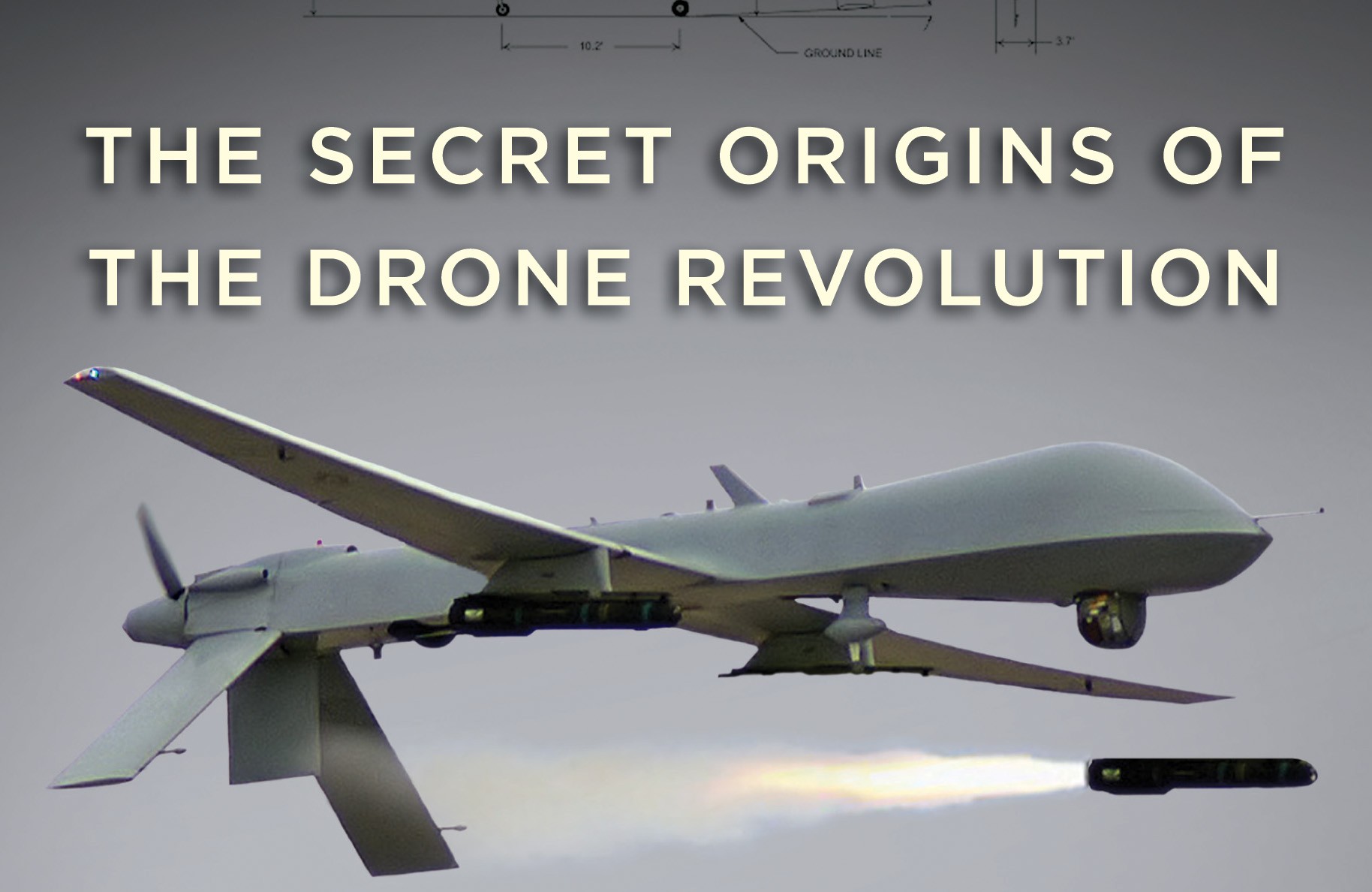
The price jump from the MQ-1 to the MQ-9 represents a massive leap in capability. The MQ-1 Predator was essentially a motorized glider with a camera. It was designed for “eyes in the sky” missions. The MQ-9 Reaper, often called the Predator B, is a significantly larger and more powerful “hunter-killer” aircraft. This difference in purpose is reflected directly in the sticker price.

The Legacy MQ-1 Predator Price
The original MQ-1 Predator had a “flyaway cost” of roughly $4.03 million in early 2000s dollars. This price made it almost “disposable” by military standards. If an MQ-1 was lost due to engine failure or enemy fire, the financial hit to the Department of Defense was relatively minor. Its low cost was driven by its simple Rotax 914 engine—the same type found in many light civilian aircraft—and a basic sensor suite.
- Unit Cost: ~$4 million
- Engine: 115 hp piston engine
- Primary Role: Intelligence, Surveillance, and Reconnaissance (ISR)
- Status: Retired (replaced by the MQ-9)
The Modern MQ-9 Reaper Investment
The MQ-9 Reaper costs roughly $32 million because it is a true combat aircraft. It features a Honeywell TPE331-10 turboprop engine producing 900 shaft horsepower. This allows it to carry fifteen times more ordnance than the original Predator. A large portion of that $32 million goes into the MTS-B Multi-Spectral Targeting System. This sensor ball provides high-definition infrared, laser designators, and long-range optics that can identify a license plate from miles away.
- Unit Cost: ~$32 million (varies by Block 1 or Block 5 version)
- Engine: 900 hp turboprop engine
- Payload: 3,850 lbs of internal and external stores
- Key Components: AN/DAS-1 MTS-B sensor suite and AN/APY-8 Lynx II radar
Everything You Need to Know About the Cost of a Predator Drone
Determining the price of a Predator drone is a complex undertaking because these aircraft are rarely sold as individual units. Instead, they are part of integrated systems involving ground control stations, satellite links, and specialized maintenance contracts. This guide will walk you through the various layers of pricing—from the base “flyaway” cost of the airframe to the massive operational expenses required to keep one in the air. Whether you are conducting academic research, defense budgeting analysis, or are simply a military aviation enthusiast, understanding these financial components is vital for a clear picture of modern unmanned aerial vehicle (UAV) economics.


Step 1: Distinguish Between Model Generations
What you need: Access to Department of Defense (DoD) budget archives, GAO reports, or General Atomics product specifications.
Instructions: The first step in calculating cost is identifying which “Predator” you are referencing. The original MQ-1 Predator, which became iconic in the early 2000s, has been officially retired by the U.S. Air Force. Its successor, the MQ-9 Reaper (often called the Predator B), is the current standard. While a legacy MQ-1 airframe might have cost roughly $4 million to $5 million in early 2000s currency, the modern MQ-9 Reaper airframe carries a significantly higher price tag, ranging from $16 million to $32 million depending on the specific block configuration. You must research the specific “Block” number (such as Block 5), as hardware upgrades to the engine and power systems can swing the price by millions of dollars per unit.
Pro Tip: Always check the fiscal year of the data you are viewing; inflation and “economies of scale” during peak production years can make 2010 pricing data very different from 2024 projections.
Step 2: Calculate the Flyaway Cost vs. Total System Cost
What you need: A calculator and an understanding of “Unit Procurement Cost” definitions.
Instructions: It is a common mistake to cite the price of a single drone as the total cost of the program. In military procurement, drones are usually purchased in “sets” or “systems.” A standard MQ-9 Reaper system typically consists of four aircraft, a Ground Control Station (GCS), and a primary satellite link. While a single aircraft might be $30 million, a complete four-aircraft system often exceeds $100 million to $120 million. When analyzing “how much” a Predator costs, you must specify if you are talking about the “flyaway cost” (just the plane) or the “total weapon system cost” (the plane plus everything required to make it fly). Ensure you are comparing apples to apples when looking at different defense contracts.
Pro Tip: If you see a news report citing a $200 million price tag for a drone, they are likely including the cost of specialized hangars and initial spare parts kits.
Step 3: Factor in the Sensor Suite and Avionics
What you need: Technical specifications for the Multi-Spectral Targeting System (MTS) and Synthetic Aperture Radar (SAR).
Instructions: A Predator drone is essentially a flying camera and sensor platform. The airframe itself is relatively inexpensive compared to the high-end optics it carries. The Raytheon MTS-B electro-optical/infrared (EO/IR) sensor ball, which allows the pilot to see high-definition video from miles away, can cost between $1 million and $3 million alone. If the drone is equipped with a Lynx Multi-mode Radar for seeing through clouds and smoke, add another $2 million to $5 million. When calculating the total price, you must account for these “payloads.” A “hollow” airframe is useless for military operations; the value lies in the glass and silicon tucked inside the nose and underbelly.
Pro Tip: Modular payloads mean the price can change per mission; a drone configured for signals intelligence (SIGINT) will be far more expensive than one configured for basic reconnaissance.
Step 4: Account for Ground Control Stations (GCS) and Data Links
What you need: Information on fixed vs. mobile GCS configurations.
Instructions: A Predator drone cannot operate without its “cockpit,” which remains on the ground. A single Ground Control Station, which looks like a high-tech shipping container filled with servers and pilot consoles, can cost between $2 million and $6 million. Furthermore, the drone requires a robust satellite communication (SATCOM) link to operate beyond line-of-sight. The hardware for these links, including large C-band or Ku-band satellite dishes, adds significant capital expenditure. You must factor in the cost of these ground-based components because, unlike a manned fighter jet where the cockpit is built-in, the Predator’s “brain” is a separate, expensive purchase that requires its own maintenance and power supply.
Pro Tip: Modern GCS units are now being designed as “Dual Control,” allowing one station to manage multiple take-offs and landings, which slightly improves cost-efficiency.
Step 5: Estimate Munitions and Armament Expenses
What you need: Current market pricing for AGM-114 Hellfire missiles and GBU-12 Paveway II laser-guided bombs.
Instructions: If the drone is being used for “hunter-killer” missions, you must add the cost of expendable ordnance. A single AGM-114 Hellfire missile costs approximately $150,000. An MQ-9 Reaper can carry up to 16 of these missiles in certain configurations, though four is more common. Laser-guided bombs like the GBU-12 cost roughly $25,000 to $30,000 per unit. When a drone returns from a mission having deployed its full payload, it has “spent” nearly a million dollars in munitions alone. For a comprehensive cost guide, you should calculate the “per-sortie” armament cost based on the expected mission profile (e.g., a standard patrol vs. an active combat engagement).
Pro Tip: Don’t forget the cost of the launchers and racks; these are permanent hardware that must be maintained even if no missiles are fired.
Step 6: Analyze Hourly Operating and Maintenance (O&M) Costs
What you need: Air Force O&M data spreadsheets (often found in annual budget justifications).
Instructions: The purchase price is just the beginning. The cost to fly a Predator drone is measured in “cost per flight hour.” For the MQ-9 Reaper, this is estimated to be between $2,500 and $5,000 per hour. While this is significantly cheaper than an F-35 (which can cost $35,000 per hour), drones fly much longer missions. A 20-hour “combat air patrol” (CAP) can cost $100,000 in fuel, wear-and-tear, and lubricants. Over the 20-year lifespan of the airframe, the maintenance and fuel costs will eventually exceed the original purchase price of the aircraft. Detailed budgeting must include the “depot-level” maintenance, where the aircraft is stripped down and rebuilt every few thousand flight hours.
Pro Tip: The Predator’s Honeywell TPE331 turboprop engine is highly reliable, but specialized technicians are required for its upkeep, which drives up labor costs.
Step 7: Factor in Personnel and Training Costs
What you need: Manpower requirements for a standard “Combat Air Patrol” (CAP) orbit.
Instructions: A Predator drone is “unmanned,” but it is certainly not “unstaffed.” A single drone orbit (keeping one drone in the air 24/7) requires a massive team of roughly 150 to 200 people. This includes pilots, sensor operators, intelligence analysts, maintainers, and communications experts. The cost of training a single drone pilot can exceed $100,000, and their salaries—along with benefits and housing—constitute the largest portion of the drone’s long-term lifecycle cost. To find the “real” price, you must divide the total personnel budget by the number of active drones. You will find that the human element is actually the most expensive part of the “unmanned” system.
Pro Tip: Remember that for every hour of flight video captured, dozens of analysts are paid to watch and interpret that data, adding to the “hidden” cost of operation.
Step 8: Review Foreign Military Sales (FMS) Premiums
What you need: DSCA (Defense Security Cooperation Agency) notifications of pending sales to foreign allies.
Instructions: If you are looking at how much a Predator drone costs for a country like the UK, France, or India, the price will be much higher than what the U.S. Air Force pays. This is due to Foreign Military Sales (FMS) administrative fees, specialized training packages, and “Total Package Approach” (TPA) requirements. For example, a sale to an ally might be valued at $3 billion for 15 drones. This sounds like $200 million per drone, but the contract includes 10 years of spare parts, the construction of runways, and 24/7 technical support from General Atomics contractors. Always distinguish between “domestic price” and “export price.”
Pro Tip: ITAR (International Traffic in Arms Regulations) compliance often requires specific hardware “downgrades” for export, which ironically can sometimes cost more due to the engineering required to remove sensitive features.
✅ Final Checklist
- Identified the specific model (MQ-1 vs. MQ-9) and Block version.
- Differentiated between “Flyaway Cost” and “Total System Cost.”
- Included the price of sensor suites (MTS-B, SAR, etc.) in the final estimate.
- Calculated the cost of Ground Control Stations and Satellite equipment.
- Accounted for recurring Hourly Operating Costs and Personnel salaries.
Important Notes:
- Legal Warning: Predator-class drones are ITAR-restricted military hardware and cannot be purchased or owned by private individuals or civilian corporations.
- Variable Pricing: Prices fluctuate annually based on Department of Defense contract negotiations and production volume.
- Estimated Cost: A single MQ-9 Reaper airframe costs approximately $30 million, while a full 4-aircraft system with GCS costs roughly $120 million.
The ‘System’ Price: Understanding Ground Infrastructure and Logistics
You will often see news reports stating that a drone purchase cost $100 million or more. This does not mean a single drone got three times more expensive overnight. Instead, the military rarely buys a single aircraft. They buy a “system.” In the world of General Atomics drones, a standard system package usually consists of four aircraft, a Ground Control Station (GCS), and the satellite communications hardware required to fly them from the other side of the planet.

Ground Control Stations (GCS) and Satellite Links
The drone itself is only half of the equation. You also need a place for the pilot and sensor operator to sit. A modern Ground Control Station looks like a high-tech shipping container filled with servers, ergonomic pilot seats, and wrap-around HD displays. These stations cost several million dollars each. Furthermore, because these drones operate via satellite, the specialized high-bandwidth satellite terminals required for “Beyond Line of Sight” (BLOS) operations add significant weight to the total contract price.
- Ground Control Station: The “cockpit” where the pilot and operator work.
- Satellite Link: Required for controlling the drone from thousands of miles away.
- Price Impact: Can add $10M–$20M to the total procurement package.
Logistics, Training, and Initial Spares
When a foreign military or the U.S. Air Force signs a contract for Reapers, the price includes the “tail” of the aircraft. This includes specialized toolsets, initial spare parts (like extra engines and landing gear), and training for the maintenance crews. For example, if a country buys four MQ-9s for a total of $120 million, the breakdown usually looks like this: $64M for the drones, $20M for the ground stations, and $36M for the logistics and support infrastructure. This ensures the drones don’t just sit in a hangar because a $50 bolt broke.
The “System Cost” is the most accurate way to look at the real-world price of operating a Predator-class drone. While the $32 million unit price gets you the airframe, the $100M+ system price gets you a functional, deployable unit capable of sustained operations. You aren’t just buying a plane; you are buying a 24/7 surveillance and strike capability.
Operational Expenses: Comparing Cost per Flight Hour to Manned Aircraft
When discussing the price of a Predator or Reaper drone, the sticker price is only half the story. The real value for defense departments lies in how much it costs to keep these machines in the sky compared to traditional fighter jets. For military planners, the “Cost per Flight Hour” (CPFH) is the metric that truly determines the fleet’s long-term budget.
The Efficiency of the MQ-9 Reaper
An MQ-9 Reaper costs significantly less to operate than a manned aircraft like the F-16 or the F-35. While a modern stealth fighter can cost anywhere from $25,000 to $40,000 per hour to fly, the Reaper typically cruises at around $3,500 to $5,000 per hour. This massive gap is why drones are the preferred choice for “dull, dirty, and dangerous” missions that require constant eyes on a target.
- Fuel Consumption: The Reaper’s Honeywell turboprop engine is incredibly fuel-efficient, consuming a fraction of the kerosene required by a roaring jet engine.
- Pilot Safety and Training: Because the pilot remains in a ground-based cockpit, there is zero risk to human life. This eliminates the need for expensive onboard life-support systems and reduces the insurance and recovery costs associated with manned flight.
- Extreme Loiter Time: A Reaper can stay airborne for over 20 hours. To achieve that with an F-16, you would need multiple mid-air refuelings and several pilot rotations, which exponentially increases the mission cost.
Maintenance and Manpower Realities
It is a common misconception that “unmanned” means “unmanned.” While the pilot is off-site, the maintenance tail for a Predator drone is still significant. However, the airframe is simpler than a supersonic jet. Technicians don’t have to maintain ejection seats, pressurized cockpits, or complex oxygen systems. This streamlined maintenance cycle allows for higher sortie rates and fewer “hangar queens” compared to traditional tactical aircraft.
Procurement Factors: What Influences the Final Government Price Tag
If you look at various government contracts, you’ll see wild variations in price. One year a Reaper might be listed at $16 million, and the next, a “system” purchase might average out to $30 million per unit. This is because you aren’t just buying the aircraft; you are buying the modular technology and infrastructure required to make it an effective tool.
Sensors, Payloads, and Specialized Software
The “empty” airframe is actually the most affordable part of the package. The price skyrockets based on the “eyes” and “ears” you install on the drone. A standard MQ-9 is packed with the Multi-Spectral Targeting System (MTS-B), but various mission-specific upgrades can add millions to the final invoice.
- Gorgon Stare: This advanced sensor pod allows the drone to track multiple targets across an entire city simultaneously. Adding this capability significantly increases the unit price.
- Armament Packages: Equipping a drone with Hellfire missiles or GBU-12 Paveway II laser-guided bombs requires specialized hardware interfaces and secure firing software.
- Electronic Warfare Suites: Pods designed for jamming enemy signals or intercepting communications are highly specialized and often cost as much as the drone itself.
Ground Control Stations and Global Links
A Predator drone is useless without its “brain” on the ground. A single “unit” price in a contract often includes the Ground Control Station (GCS), which is essentially a high-tech cockpit housed in a mobile trailer. These stations require secure, high-bandwidth satellite links (SATCOM) to operate from the other side of the world. When you buy a Reaper, you are also paying for the encrypted communication hardware that prevents the drone from being hacked or hijacked mid-flight. Essentially, the price reflects a global communication network, not just a flying wing.
Conclusion
While the $16 million to $30 million price tag of an MQ-9 Reaper seems astronomical, it represents a highly cost-effective alternative to traditional manned aviation. By removing the pilot from the cockpit, the military saves millions in fuel, maintenance, and training costs over the life of the aircraft. For the casual drone enthusiast, these figures serve as a reminder of the vast gulf between consumer-grade photography drones and the heavy-duty tech used in modern theater operations.
If you are interested in the technology behind these giants, your next step should be researching civilian-grade long-range telemetry and thermal imaging accessories. These “mini-Reaper” components are becoming increasingly accessible for commercial search and rescue operations. Ready to see what your own drone is capable of? Explore our latest guides on pro-sumer drone accessories and take your aerial capabilities to the next level!
❓ Frequently Asked Questions
What is the difference between unit cost and total system cost?
Unit cost refers to the price of a single aircraft. Total system cost, which can exceed $100 million, includes a package of usually four aircraft, the mobile ground control station, satellite communication equipment, and initial spares.
How does the Reaper’s cost compare to an F-35 fighter jet?
An MQ-9 Reaper is significantly more affordable, costing about $32 million per unit compared to the F-35, which ranges from $80 million to over $100 million per aircraft, with much higher hourly flight costs.
Can a private citizen or company buy a Predator drone?
No, these are military-grade platforms manufactured by General Atomics and are subject to strict ITAR regulations, meaning they are only sold to the U.S. government and approved allied nations.
What are the primary factors that increase the price of an MQ-9?
The final price is heavily influenced by the sensor payload, such as high-definition EO/IR cameras, synthetic aperture radar (SAR), and specialized electronic warfare suites.
How much does the Ground Control Station (GCS) cost alone?
A standalone mobile Ground Control Station can cost several million dollars, as it contains the specialized pilot interfaces and satellite data link hardware needed for long-range control.
Are there cheaper alternatives to the MQ-9 Reaper?
Yes, smaller tactical drones like the RQ-7 Shadow or MQ-1C Gray Eagle offer different price-to-performance ratios, though they lack the Reaper’s heavy payload capacity.

Similar Posts